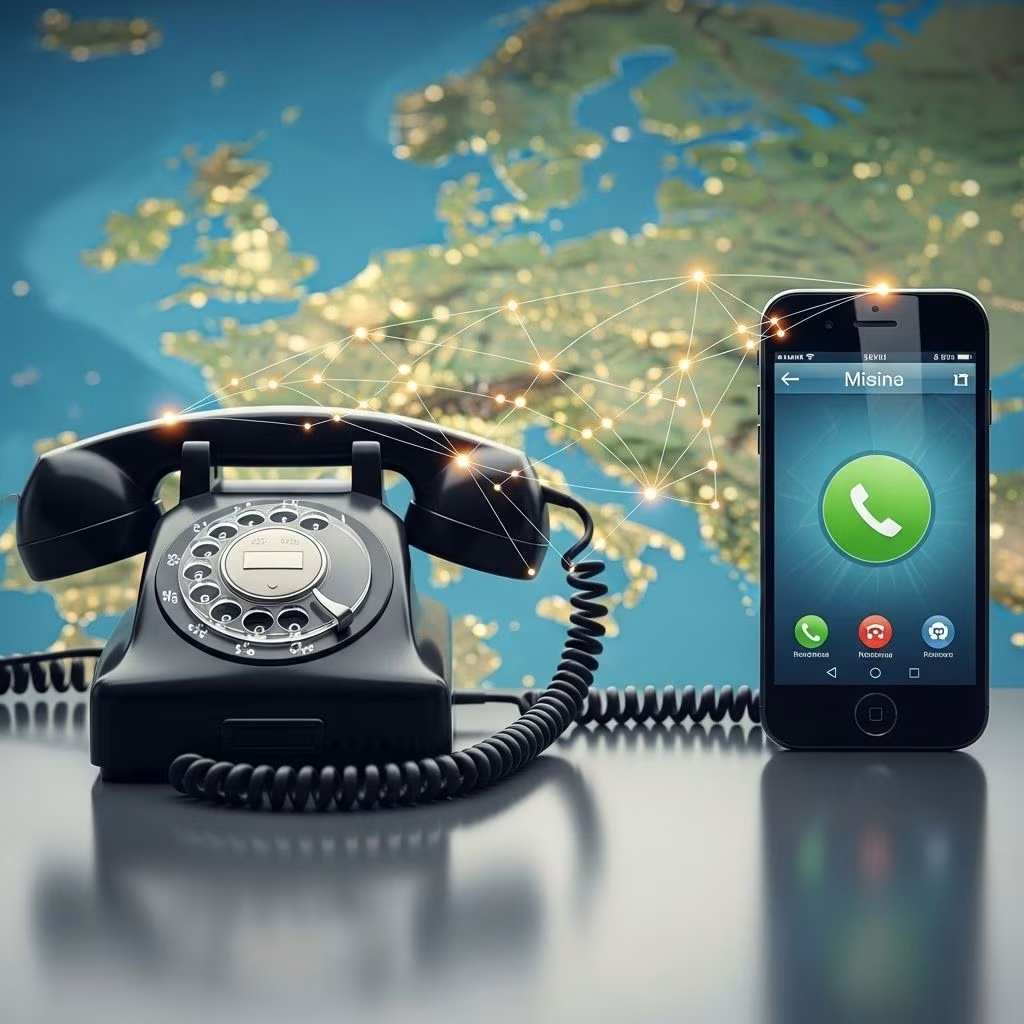
How to Call to and from Europe: Phones, Dialing Codes, and Practical Travel Tech
Traveling to the UK or continental Europe often means staying connected for convenience and safety. Mastering European phone systems, understanding dialing procedures, and optimizing tech usage can save you money and avoid hassle. This guide provides practical steps for calling to, from, and within Europe, including tips for using your smartphone, managing roaming costs, and selecting the best communication tools for travelers.
Contents
- Understanding European Phone Systems
- Basic Dialing Instructions for International Calls
- Dialing from a Mobile Phone: Global Access
- Calling Europe from US or Canadian Landlines
- Calling the US/Canada from European Landlines
- Comprehensive Table of European Country Codes
- Phones in Europe: Options and Smart Tips
- SIM Cards, Phone Cards & International Plans
- Using Your Smartphone in Europe
- Frequently Asked Questions (FAQs)
Understanding European Phone Systems
European phone numbers and dialing conventions can be confusing to visitors. Following a few key principles makes connecting much easier:
- Most European phone numbers begin with a zero, known as the “trunk code”—this is dropped when dialing from abroad (with notable exceptions, such as Italy).
- Phone number length can vary; landlines and mobiles often use different formats within the same country.
- Country codes are essential for international calls—each country has a unique code used when dialing in from abroad.
Basic Dialing Instructions for International Calls
Regardless of device type, international dialing requires a sequence of access codes and country codes. Here’s how to format an international phone number:
- International Access Code (varies by country you are calling from)
- Country Code of the country you are dialing
- Area Code and Local Number, omitting the initial 0 where applicable
Example for France: To call the Paris hotel 01 47 05 25 45 from the US, dial 011 33 1 47 05 25 45.
Dialing from a Mobile Phone: Global Access
For mobile phones, international dialing is streamlined:
- Press and hold the 0 key until the + symbol appears (the universal code for international access).
- Enter the country code and then the number (drop the starting 0 from the area code or mobile prefix, except for Italy).
Example: To reach a Paris hotel from any mobile globally: +33 1 47 05 25 45.
Calling Europe from US or Canadian Landlines
For calls from a US or Canadian landline to Europe:
- Dial 011 (international access code)
- Follow with the country code
- Add area/city code and the local phone number (without the initial 0)
Example: US to Paris: 011 33 1 47 05 25 45
Calling the US/Canada from European Landlines
To reach the US or Canada from a European country:
- Dial 00 (Europe’s international access code)
- Then 1 (North American country code)
- Then the area code and phone number
Example: France to US: 00 1 425 771 8303
Comprehensive Table of European Country Codes
| Country | Country Code | Country | Country Code |
|---|---|---|---|
| Austria | 43 | Ireland | 353 |
| Belgium | 32 | Italy | 39* |
| Bosnia-Herzegovina | 387 | Latvia | 371 |
| Croatia | 385 | Montenegro | 382 |
| Czech Republic | 420 | Morocco | 212 |
| Denmark | 45 | Netherlands | 31 |
| Estonia | 372 | Norway | 47 |
| Finland | 358 | Poland | 48 |
| France | 33 | Portugal | 351 |
| Germany | 49 | Slovakia | 421 |
| Gibraltar | 350 | Slovenia | 386 |
| Great Britain & Northern Ireland | 44 | Spain | 34 |
| Greece | 30 | Sweden | 46 |
| Hungary* | 36 | Switzerland | 41 |
| Iceland | 354 | Turkey | 90 |
* Note: For international calls to Italy, do not drop the initial 0 from the local phone number. For long-distance calls within Hungary, dial 06, then the area code and number.
Phones in Europe: Options and Smart Tips
European phone infrastructure used to rely heavily on pay phones and local phone cards, but use has plummeted in recent years. However, knowing your options remains helpful, especially for emergencies.
- Pay phones: Still present in some cities; operate via coins, local phone cards, or credit cards. Typically, these accept country-specific insertable phone cards (a German phone card will not work in Austria, for example).
- Hotel phones: Widely available; you can usually make local and international calls, but be aware of potential surcharges.
- Mobile phones: The most common tool for travelers—works simply if configured appropriately for international use.
SIM Cards, Phone Cards & International Plans
To avoid excessive roaming charges, explore various communication strategies:
- Local SIM cards: Purchase a prepaid SIM or eSIM once in Europe. This gives you a local number and access to domestic rates for calls, texts, and data. Your phone must be unlocked to accept a foreign SIM card.
- International phone cards: These cards offer low rates for calls within Europe or back to the US/Canada and are especially handy if you occasionally use hotel or pay phones. Most provide a toll-free access number and a PIN; instructions may not always be in English, but using translation apps can help.
- US carrier international plans: Major carriers (such as Verizon and AT&T) offer daily international plans that let you use your US number abroad for a flat rate per day—this can be an easy, though sometimes pricier, solution for short trips.
Be sure to:
- Check compatibility: Make sure your phone will work in your destination(s) by contacting your carrier and asking about supported bands and unlock status.
- Understand eSIM options: Many newer smartphones support eSIMs, offering flexible access to local or international data packages without a physical card swap.
- Monitor surcharges: Some hotel or public phones levy extra service fees for card use, potentially negating savings from an international calling card.
Using Your Smartphone in Europe
Today’s European traveler relies primarily on smartphones—these serve as your lifeline for navigation, information, and communication.
- Messaging and internet: Connect to Wi-Fi at hotels, cafés, or public hotspots to use internet calling apps (e.g., WhatsApp, Skype, FaceTime, Viber, Signal) for free or low-cost calls and messages.
- Roaming charges: The main risk for high costs is data roaming. Control charges by using Wi-Fi wherever possible, turning off data roaming, or buying a local or international plan suited to your trip.
- Calling and texting: Calls are easy and often cost-effective with the right plan or app; texts usually cost just a few cents. Data usage can mount up quickly if not managed.
Pro Traveler Tips:
- Turn off data roaming unless you have purchased an international data package, to prevent surprise charges.
- Use Wi-Fi for everything but emergencies; download maps and travel guides to use offline.
- Consider purchasing a European SIM or eSIM online before your trip—some providers mail SIMs to your home or provide eSIM QR codes via email.
Frequently Asked Questions (FAQs)
Q: How do I dial a European number from my mobile in the US?
A: Start with the + symbol (press and hold 0), then the country code (e.g., 33 for France), then the number without the initial zero.
Q: What is the best way to avoid roaming charges?
A: Use Wi-Fi for calls and data whenever possible, disable data roaming on your phone, or purchase a local SIM or dedicated international plan from your carrier.
Q: Is it cheaper to buy a SIM card in Europe or to use my US carrier’s plan?
A: Buying a local SIM or eSIM is usually cheaper for longer trips or if you require significant data; US carrier international plans may be more convenient for short stays or light usage.
Q: Can I use the same phone card in different European countries?
A: No, each country typically issues its own phone cards; a card from Germany, for example, will not work in an Austrian pay phone.
Q: Do I always drop the zero when dialing internationally?
A: Yes, except for Italy, where the initial zero must be dialed even from abroad.
Key Takeaways for the Connected Traveler
- Prepare your phone before leaving: unlock it and learn your carrier’s roaming policies.
- Use Wi-Fi to minimize calling and data costs.
- Familiarize yourself with country codes and international dialing procedures.
- Consider a SIM, eSIM, or international phone card for convenience and savings.
With these tools and strategies in mind, travelers to the UK and Europe can stay connected, avoid high bills, and keep communication simple and effective throughout their journey.
References
- https://www.islands.com/1745172/convenient-affordable-solution-making-phone-calls-europe-rick-steves-phone-cards/
- https://www.ricksteves.com/travel-tips/phones-tech/call-uk-europe
- https://www.youtube.com/watch?v=670QR7Lii78
- https://community.ricksteves.com/travel-forum/tech-tips/calling-on-a-mobile-phone-in-europe
- https://www.ricksteves.com/travel-tips/phones-tech
- https://www.ricksteves.com/travel-tips/phones-tech/data-roaming
- https://www.ricksteves.com/watch-read-listen/video/travel-talks/mobile-device
- https://www.ricksteves.com/travel-tips/phones-tech/stay-connected-in-europe