Monet’s Gardens at Giverny: Where Art and Nature Blossom Together
The lush gardens designed and nurtured by Claude Monet in Giverny, France, are more than just a horticultural wonder—they are the living canvas behind some of the most beloved paintings in modern art. When visitors pass through the gates of the estate today, they are greeted by a vibrant, fragrant world where art and nature intertwine. Monet’s devotion to his gardens transformed both the landscape and the art world forever.
The Birth of a Garden and an Artistic Vision
Claude Monet first arrived in Giverny in April 1883. He was instantly enchanted by the rural tranquility and the possibilities the land offered. Renting (and later purchasing) a property with a modest orchard situated between Normandy and the Île-de-France region, Monet began what would become a lifelong project: turning the grounds into a botanical masterpiece, meticulously designed as only a painter could envision. This project would ultimately give rise to two famed gardens: the Clos Normand and the Water Garden.
The Clos Normand: A Riot of Color
In front of Monet’s pink house lies the Clos Normand, a dazzling flower garden renowned for its exuberant color and artistic composition. Monet approached gardening as he did painting—thinking in broad color fields, playing with heights, and contrasting textures. Instead of the original fruit orchard, he planted symmetrical rows of flowers, dense trellises, bursting clusters of azaleas, hydrangeas, irises, foxgloves, and hundreds of climbing roses. Each month brings its own symphony of color, from the vivid hues of spring bulbs to the glowing golds and reds of autumn blooms .
- Seasonal Splendor: The garden transforms throughout the year—lilacs and irises in spring, peonies and roses in early summer, followed by chrysanthemums and nasturtiums as the seasons progress.
- A Painter’s Touch: Monet grouped flowers in masses and layered plants by height and color so that “each bed would be a painting in its own right.”
From Orchard to Artistic Experiment
Monet didn’t simply grow flowers for beauty’s sake. He once said, “I perhaps owe it to flowers that I became a painter.” His garden was both laboratory and subject; he closely studied how sunlight, shade, and water altered the appearance of colors. Monet’s garden allowed him a profound connection to the natural world, turning the property into an endless supply of inspiration for his evolving art .
The Water Garden: East Meets West
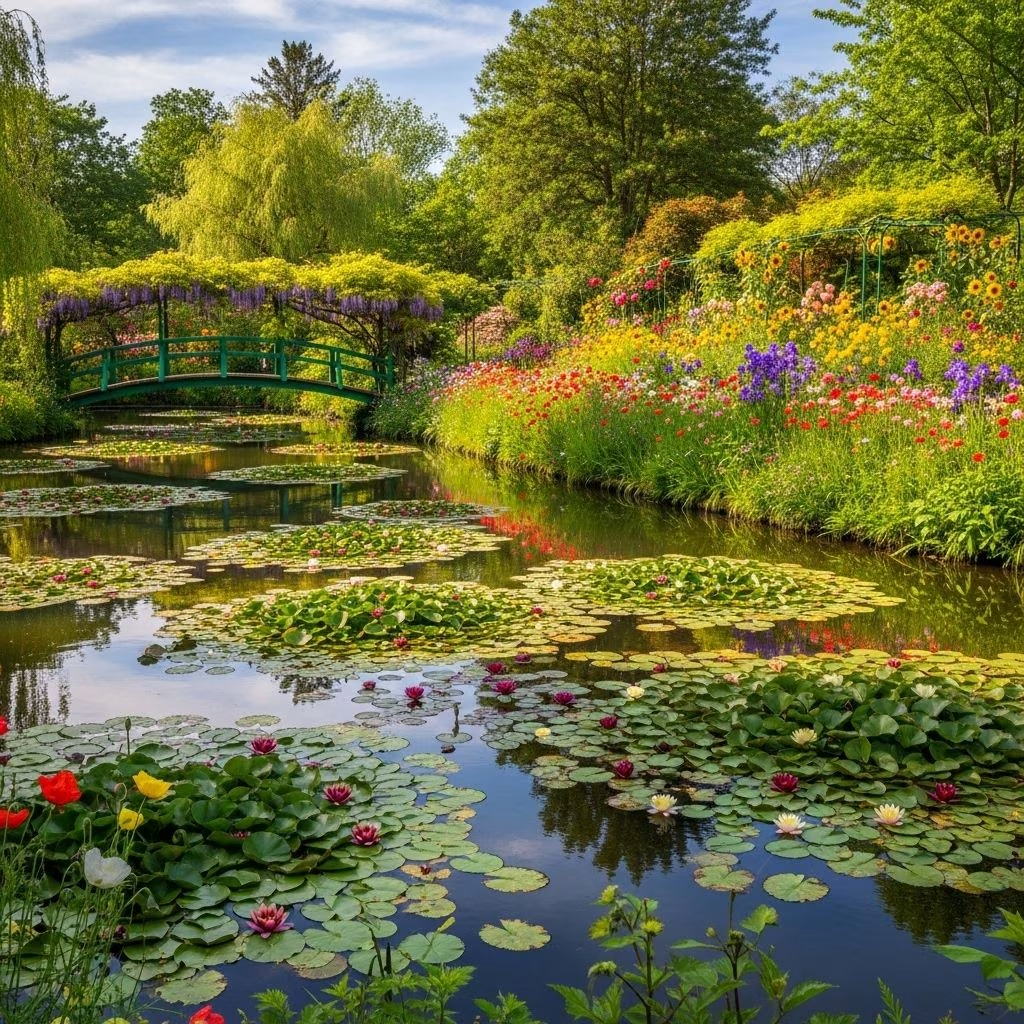
In 1893, Monet expanded his estate by acquiring land across the road and railway, an area he transformed into the legendary Water Garden. Obtaining permission to divert an arm of the Epte River, he created a series of pools graced with Japanese bridges, willows, bamboo thickets, and floating beds of water lilies (nymphaeas). This part of the garden, drawing clear inspiration from the Japanese woodblock prints Monet avidly collected, became the focal point for some of his most innovative works .
- Japanese Influences: Monet’s admiration for Japanese art led to the construction of arched bridges painted green and lush plantings of wisteria, bamboo, and azalea, giving the ponds an exotic yet tranquil feel.
- The Water Lilies: Monet planted his famous nymphaeas here, which would become the central motif in his late career.
- The Japanese Bridge: Covered in trailing wisteria, this now-iconic structure appears in countless paintings, most notably Water Lilies and Japanese Bridge (1899).
The Gardens in Monet’s Art
Both gardens became not just a sanctuary for Monet, but the principal motifs of his art from the 1890s through the end of his life. Paintings such as The Water Lily Pond (1899), Path Through the Irises (1914–17), and Morning on the Seine near Giverny (1897) reveal how Monet’s close observation of light, color, and seasonal change in his gardens revolutionized his approach to painting .
- In the Water Lilies series, Monet explored the reflection of sky, clouds, and trees upon the still water, blurring the boundaries between realism and abstraction.
- The exuberantly planted Clos Normand served as a stage for experiments in depth, color gradation, and compositional dynamism.
Preserving and Restoring Monet’s Gardens
After Monet’s death in 1926, the garden and house suffered periods of neglect, especially during World War II. By the mid-20th century, both the house and the grounds were in dire need of restoration. Thanks to the dedication of Gérald Van der Kemp and gardener Gilbert Vahé, as well as a host of art lovers and botanists, the legacy of Monet’s creation was revived.
- Restoring the House & Studios: The house’s pastel exteriors, blue shutters, and iconic yellow dining room were restored, along with Monet’s studio and his remarkable collection of Japanese prints.
- Garden Reconstruction: Working from old photos, plant lists, and the memories of Monet’s family and friends, the gardens were meticulously re-planted. Where Monet’s chosen varieties were unavailable, close substitutes with similar colors and forms were used .
- Fundraising & International Effort: French and international donors, including Japanese Princess Matsukata, contributed to the ambitious restoration project.
Design Choices and Plant Selection
Maintaining the authenticity of Monet’s vision required intensive research and practical adaptation:
- Styrofoam containers were used for planting due to a lack of traditional materials.
- Concrete posts, painted green to blend in, replaced expensive wooden stakes.
- Paths were widened and bordered with brick for the comfort and safety of visitors, all while striving to preserve the garden’s ambiance and original look .
Visiting Giverny: A Timeless Experience
Today, Monet’s house and gardens in Giverny are managed by the Fondation Claude Monet and welcome hundreds of thousands of visitors annually. Walking through the flower-lined alleys, over the softly arched Japanese bridges, and beside pools teeming with water lilies, it is easy to feel the spirit of Monet at every turn. The estate is a pilgrimage site for fans of art, garden lovers, and those seeking an immersion into a living impressionist painting.
Tips for Visitors
- Best Time to Visit: The gardens are at their most spectacular from late April to early October. Each season offers distinct displays—spring for bulb flowers, summer for water lilies, and early autumn for late bloomers like dahlias and asters.
- Photographs & Paintings: Many visitors bring sketchbooks or canvases to capture the ephemeral beauty that inspired Monet.
- Getting There: Giverny is about an hour’s train ride from Paris to Vernon, followed by a short taxi or shuttle ride.
What You’ll See
- The House: Wander through Monet’s living spaces, admire his collection of Japanese prints, and step into the luminous blue sitting room and sun-filled studio.
- The Clos Normand: Stroll among the aligned flower beds, under metal arches draped with climbing roses, and along straight walks that dissolve into an ever-changing tapestry of color.
- The Water Garden: Cross the Japanese bridge, observe the interplay of light and foliage reflected in the water, and appreciate the quietude that so moved Monet in his later years.
Art and Nature: The Lasting Legacy of Giverny
Monet’s ambition was not only to paint landscapes; he sought to paint light itself. The Giverny gardens were a daily experiment, their fleeting effects documented in brushstrokes that became ever looser and more abstract as his eyesight declined and his vision expanded. In cultivating the Clos Normand and the Water Garden, Monet transcended traditional art, redefining both the garden and the painter’s role. His courage to embrace change, experiment with color, and observe nature’s transformations continues to inspire gardeners and artists alike .
| Section | Main Features | Influence on Art |
|---|---|---|
| Clos Normand | Dense flower beds, climbing roses, geometric planting, seasonal progression | Inspired color experiments, depth, and dynamic compositions |
| Water Garden | Water lilies, Japanese bridge, willow and bamboo, tranquil ponds | Became subject of Water Lilies series, blurred boundaries between realism and abstraction |
Frequently Asked Questions (FAQs)
Q: What are the two main sections of Monet’s Giverny gardens?
A: The gardens are divided into the Clos Normand (flower garden) near the house and the Water Garden (with water lilies and Japanese bridge) across the road .
Q: Why did Monet design the gardens at Giverny?
A: Monet designed the gardens as a source of artistic inspiration and a personal sanctuary, creating an ever-changing landscape to feed his fascination with light and color .
Q: Can I visit Monet’s home and gardens?
A: Yes, they are open to the public from spring through autumn and attract visitors from all over the world.
Q: Are the gardens kept as Monet designed them?
A: Yes, great care is taken to maintain the gardens true to Monet’s original vision, with attention to authentic plantings and layout .
Q: How did Monet’s gardens influence his art?
A: The gardens became both his muse and his subject, inspiring his most famous paintings—including the water lily series—and transforming his technique toward abstraction .
Monet’s Enduring Inspiration
Monet’s gardens at Giverny stand as an enduring testament to the power of creativity, patience, and a profound love for both art and nature. His dual passion for painting and gardening blossomed into a legacy visited by legions of admirers. Each year, these lush, living canvases offer the same harmony of color and tranquility Monet once cherished, reminding all who visit and view his art of the timeless connection between the artist and his environment.
References
- https://www.alethea-magazine.com/THE-HISTORY-OF-GIVERNY-Claude-Monets-house-and-garden
- https://beyondexhibitions.com/blog/did-you-know-monets-garden-has-two-sections-a-look-at-givernys-botanical-masterpiece
- https://www.mdig.fr/en/discover-the-museum/explore-impressionism/themes/monet-s-garden-in-giverny/
- https://claudemonetgiverny.fr/en/decouvrir/timeline/
- https://www.dailyartmagazine.com/claude-monets-garden-giverny/
- https://www.ricksteves.com/watch-read-listen/read/articles/monets-gardens-in-giverny
- https://en.wikipedia.org/wiki/Fondation_Monet_in_Giverny
- https://www.insightvacations.com/blog/discovering-monet-in-giverny/
- https://dyckarboretum.org/gardens-of-france-monet-at-giverny/
- https://www.aceculturaltours.co.uk/blog/monets-house-at-giverny