Warsaw: Poland’s Dynamic Capital of Resilience and Revival
Warsaw, Poland’s bustling capital, stands as a city of remarkable contrasts—at once a symbol of the nation’s tragic past and its irrepressible spirit of renewal. While it may not exude the old-world charm of Kraków, Warsaw’s vibrancy is rooted in its modern energy, compelling museums, reconstructed Old Town, and unique blend of history and innovation. Exploring Warsaw is to experience the heart and soul of 21st-century Poland—a city that emerged, quite literally, from the ashes.
At a Glance: Top Warsaw Highlights
- Museum of the History of Polish Jews: An exceptional, immersive journey through centuries of Jewish presence in Poland.
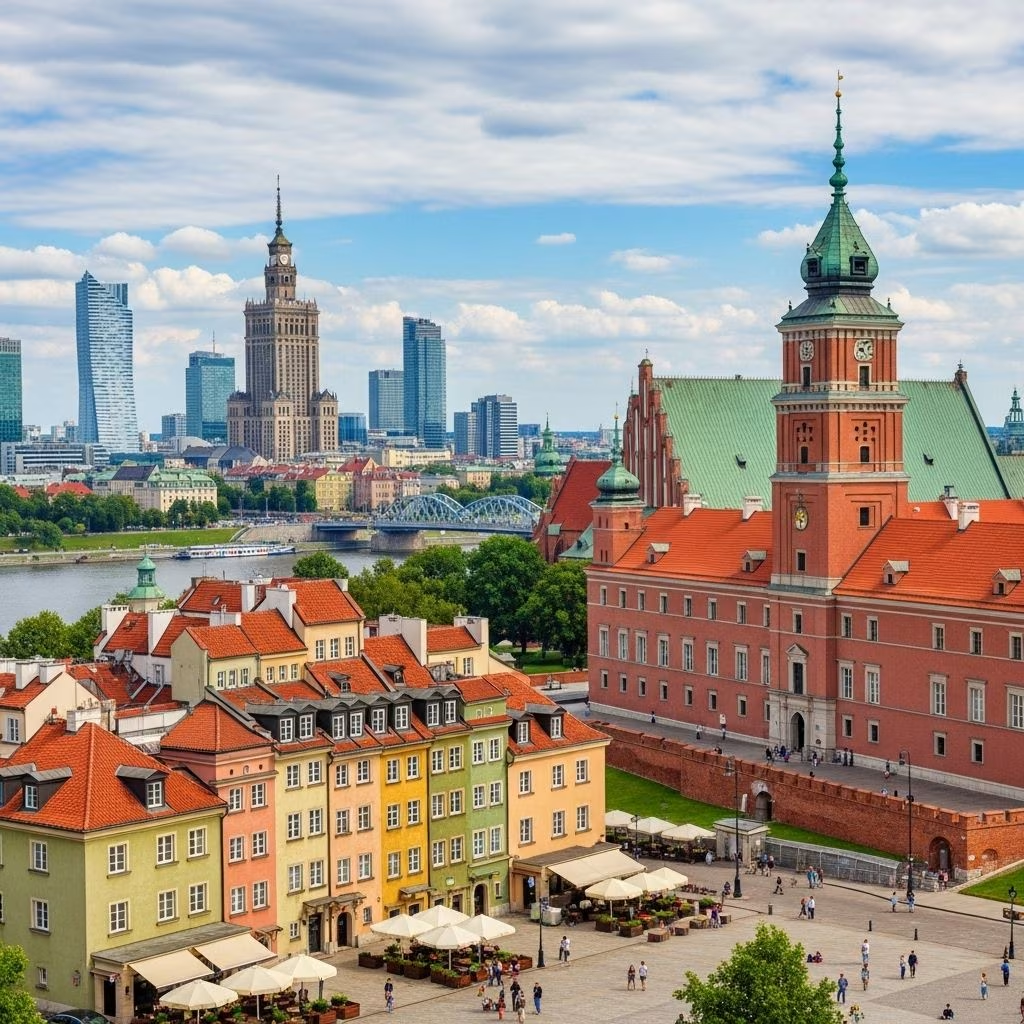
- Castle Square & Royal Castle: The colorful hub of Old Town with the reconstructed palace, monuments, and vibrant cafés.
- Old Town Market Square: A re-creation of Warsaw’s prewar glory, with distinct pastel facades and bustling atmosphere.
- National Museum: Home to the best of Polish artwork, including lesser-known but remarkable artists.
- Warsaw Uprising Museum: A cutting-edge space telling the harrowing and heroic story of the 1944 Uprising.
- Copernicus Science Center: An interactive, family-friendly science museum offering hands-on exhibits in English.
- Łazienki Park: A sprawling oasis of greenery, dotted with peacocks and neoclassical structures, featuring the iconic Chopin monument.
- Museum of Warsaw: Explores the city’s history through well-curated exhibits and films in English.
- Marie Skłodowska-Curie Museum: An homage in her birthplace to the Nobel laureate who pioneered research on radioactivity.
Introducing Warsaw: Poland’s Phoenix City
Set astride the Vistula River, Warsaw is Poland’s largest city and vibrant capital. Far from the somber, gray metropolis some imagine, it is a place brimming with life, culture, expressive architecture, and creativity at every turn. Its blend of bustling boulevards, lively outdoor cafés, neoclassical palaces, and gleaming skyscrapers makes it the stage upon which the drama of Polish history continues to unfold.
Most of Warsaw was decimated during World War II, yet today it radiates the spirit of a city determined to recover its place in the world. Nowhere is this more evident than in the gorgeous Old Town, rebuilt mural by mural in the mid-20th century. Aside from its historical treasures, Warsaw is renowned for its world-class museums, dynamic culinary scene, lush parks, and the proud legacy of Poles such as Chopin and Marie Curie.
The Old Town: Warsaw’s Heart Reborn
The UNESCO-listed Old Town is a masterclass in postwar reconstruction. After near-total destruction in the 1940s, Varsovians painstakingly rebuilt every square, every painting on a facade, every brick of historic city walls from pre-war sketches and paintings. Today, the Old Town exudes charm and vibrancy, with cobbled streets, lively markets, and an array of colorful homes hugging the Market Square (Rynek Starego Miasta).
- Castle Square: The entrance to Old Town, dominated by the Royal Castle and the column of King Sigismund III Vasa, who shifted Poland’s capital from Kraków to Warsaw in the late 16th century.
- City Walls: Partly original, partly restored, offering a glimpse into the city’s medieval defenses.
- Outdoor Cafés: Popular with locals and visitors alike, perfect for sampling Polish pastries such as pączek (jelly doughnut).
The careful re-creation of this district not only revives the spirit of Warsaw’s glorious days prior to the war but has become a symbol of Polish resilience worldwide.
Must-See Museums: Where Warsaw’s History Lives
Museum of the History of Polish Jews
This outstanding museum offers a sweeping narrative of a millennium of Jewish presence in Poland, from medieval times through the devastation of the Holocaust, and into the present. Its blend of immersive exhibits, interactive technology, and artifacts tells an emotional, sometimes painful, but ultimately hopeful story of cultural richness and continuity. It is a must for anyone seeking to understand not just Polish but European history.
Royal Castle
Once the seat of Polish monarchs, the Royal Castle was completely rebuilt after WWII, its pristine façade and lavishly restored interiors standing in tribute to Warsaw’s royal heritage. Visitors can explore ornate halls brimming with period furnishings, royal portraits, and original 18th-century features that miraculously survived the war.
National Museum
This significant museum houses a trove of Polish artwork, much of it little-known internationally but of great local importance. Highlights include the romantic historical canvases of Jan Matejko and the Młoda Polska (Young Poland) movement, as well as rare medieval religious art and contemporary pieces. The museum delivers an insightful introduction to the country’s visual culture.
Warsaw Uprising Museum
Arguably Warsaw’s most moving museum, the Uprising Museum uses cutting-edge displays, films, photographs, and genuine relics to capture the drama of the 1944 Warsaw Uprising. Visitors encounter the human courage and deep tragedy of this failed but heroic attempt to free Warsaw from Nazi occupation. The interactive elements compel reflection on the cost of resistance and the value of freedom.
Copernicus Science Center
For families or science enthusiasts, this state-of-the-art center delivers a hands-on, multilingual exploration of science, technology, and discovery. Engaging exhibits, laboratory spaces, and live demonstrations make science fun and accessible for all ages, cementing its reputation as Warsaw’s top family attraction.
Museum of Warsaw
Located in a collection of colorfully reconstructed townhouses fronting the Old Town Market Square, this museum brings Warsaw’s past alive through a variety of artifacts, multimedia exhibits, and a compelling English-language film that encapsulates the city’s turbulent evolution.
Marie Skłodowska-Curie Museum
Situated in the house where the two-time Nobel laureate was born, this museum is a pilgrimage for anyone interested in science and women’s history. It chronicles the life and work of Marie Curie, with memorabilia, documents, and displays on her pioneering research into radioactivity.
Parks & Public Spaces: The Green Lungs of Warsaw
Łazienki Park
Warsaw’s grandest park is an expansive haven of calm where locals relax amid leafy avenues, serene ponds, and open-air monuments. The park is sprinkled with elegant neoclassical pavilions, the most iconic being the Palace on the Isle. Music fans gather for summer Chopin concerts at the composer’s monument, creating an enchanting al fresco experience.
- Wildlife: Strutting peacocks roam freely among the park’s statues and canals.
- Cultural Venues: Łazienki is also home to galleries, an amphitheater, and museums.
Life in Modern Warsaw: A City Reborn
While historical memory is ever-present, Warsaw today buzzes with a cosmopolitan edge. Modern glass towers pierce the skyline, especially in the business district, while hip bars, gourmet restaurants, and fashionable boutiques line its boulevards. The city’s café culture is thriving; locals savor espresso and pastry at outdoor tables, especially along Nowy Świat and Krakowskie Przedmieście boulevards.
Noteworthy, too, is Warsaw’s dynamic nightlife—whether it’s live jazz in dimly lit clubs, vodka tastings in contemporary bars, or open-air summer festivals. The city’s creative pulse is reflected in its burgeoning arts scene, with innovative galleries and independent theaters contributing to a flourishing cultural landscape.
Practical Tips for Visiting Warsaw
- Getting Around: Warsaw’s transit system is efficient, with trams, buses, and a growing metro network. The city is also bike-friendly and many core sights are walkable.
- Best Time to Visit: Late spring through early autumn is ideal, when outdoor cafés and park events are in full swing.
- Cuisine: Be sure to try hearty pierogi (dumplings), żurek (sour rye soup), and sweet pączki. For a true taste of hospitality, pair a meal with Polish vodka or craft beer.
- Tickets & Museums: Many museums have free or discounted entry one day a week. English descriptions and audio guides are widely available.
- Language: Polish is the official language, though English is commonly spoken in tourist areas and attractions.
Key Attractions: Summary Table
| Attraction | Type | Highlights |
|---|---|---|
| Museum of the History of Polish Jews | History Museum | Extensive narrative, interactive exhibits, Jewish heritage |
| Royal Castle | Palace/Museum | Opulent interiors, historical art, state rooms |
| Old Town Market Square | Public Square | Reconstructed architecture, vibrant cafés, marketplace atmosphere |
| National Museum | Art Museum | Polish masters, Art Nouveau, rotating exhibitions |
| Warsaw Uprising Museum | History Museum | WWII history, interactive, emotional storytelling |
| Łazienki Park | Urban Park | Chopin monument, neoclassical pavilions, summer concerts |
| Copernicus Science Center | Science Museum | Hands-on exhibits, family-friendly, live demos |
| Marie Skłodowska-Curie Museum | Science/History Museum | Personal artifacts, Nobel history, interactive displays |
Unmissable Warsaw Experiences
- Stroll Revitalized Boulevards: Wander Nowy Świat and Krakowskie Przedmieście to soak up the energy and eclectic architecture.
- Attend a Park Concert: Enjoy live Chopin performances beneath the open sky in Łazienki Park during the summer.
- Taste Polish Sweets: Grab a pączek (jelly doughnut) at a neighborhood café for a classic Polish treat.
- Tap into Nightlife: Sample Polish vodka at a local bar or discover Warsaw’s jazz scene in intimate clubs.
- Family Adventure: Spark kids’ curiosity at Copernicus Science Center with hundreds of interactive experiments and exhibits.
Frequently Asked Questions (FAQs)
Q: Why was so much of Warsaw rebuilt after WWII?
A: Warsaw was almost entirely destroyed during WWII due to intense bombing and the destruction that followed the failed 1944 Warsaw Uprising. The determination of its residents led to an ambitious citywide reconstruction program after the war, with Old Town meticulously recreated using historical paintings and records.
Q: Is Warsaw a good destination for families?
A: Absolutely. Family-friendly attractions like the Copernicus Science Center and expansive parks (especially Łazienki Park) provide interactive and open spaces perfect for children. Many museums also offer engaging activities for younger visitors.
Q: How many days should I spend in Warsaw?
A: To enjoy Warsaw’s highlights at a comfortable pace, plan for at least two to three days. This lets you experience the main museums, wander the Old Town, relax in the parks, and sample local flavors without rushing.
Q: Do I need to speak Polish to visit Warsaw?
A: While Polish is the official language, English is widely spoken in major attractions, hotels, restaurants, and among younger residents. Most museums also provide English interpretation or audioguides.
Q: What’s unique about Warsaw compared to other Polish cities?
A: Warsaw stands out for its dramatic story of destruction and rebirth, visible in its diverse urban landscape. Unlike Kraków’s medieval charm, Warsaw is a showcase for both reconstructed history and ambitious modern development, reflecting the indomitable spirit of the Polish people.
References
- https://www.youtube.com/watch?v=j7NxeQ0fJpw
- https://www.ricksteves.com/europe/poland/warsaw
- https://www.ricksteves.com/watch-read-listen/video/tv-show/poland
- https://www.ricksteves.com/watch-read-listen/video/tv-show/poland-rediscovered
- https://community.ricksteves.com/travel-forum/poland/warsaw
- https://www.ricksteves.com/watch-read-listen/read/articles/warsaw-reborn
- https://www.ricksteves.com/europe/poland