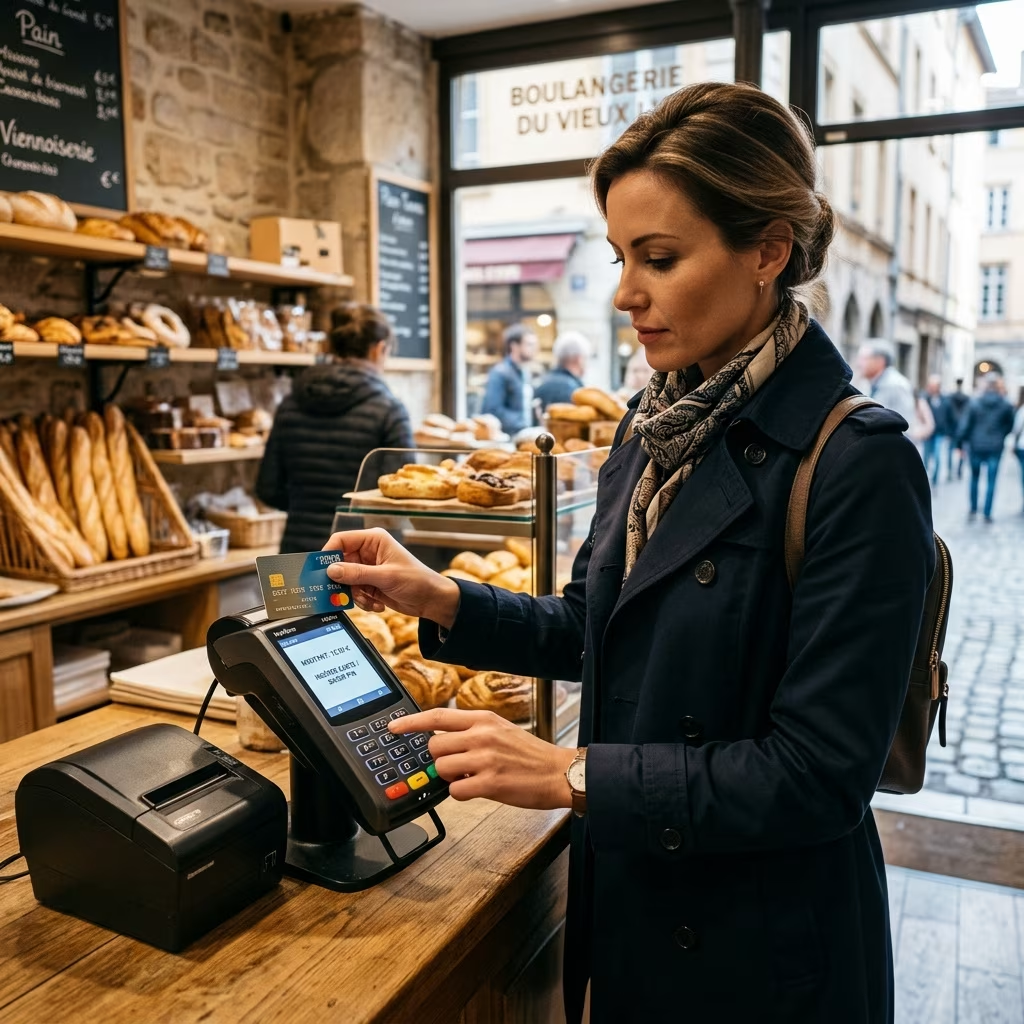
Understanding Chip-and-PIN Cards: Your Essential Guide for European Travel
As international travel rebounds, one aspect catches many Americans off guard: how money moves while abroad has changed. Those days of traveler’s checks and swapping cash at kiosks are mostly gone. Instead, Europe’s payment ecosystem now orbits around chip-and-PIN cards, contactless payments, and mobile wallets. This article deciphers how to handle your money across Europe, making purchases and ATM withdrawals seamless—and secure—whether you’re sipping espresso in Paris or hopping a train in Munich.
How Chip-and-PIN Cards Work
Modern European checkout relies on EMV (Europay, MasterCard, Visa) technology: credit and debit cards equipped with an embedded computer chip. Instead of swiping a magnetic stripe or signing for a charge, you insert your chip card into the payment terminal and authenticate the purchase by typing a four-digit Personal Identification Number (PIN) on a keypad. This system is a proven defense against card fraud and data theft.
- What’s different? Unlike most U.S. cards, which still prioritize “chip-and-signature,” Europe expects you to enter a PIN. Attended terminals in shops and restaurants often accept chip-and-signature cards (with the cashier offering a receipt for signature), but unattended machines may reject your card without a PIN.
- Where it matters: Buy train tickets from a kiosk, pay highway tolls, or fuel up at self-service gas stations—these all typically require cards with a chip and a true PIN.
- U.S. bank cards: Today, most U.S.-issued credit and debit cards feature a chip and allow you to set a four-digit PIN. Check before departure.
The Rise of Contactless and Mobile Payments
EMV technology has further evolved into contactless payment. Cards and mobile phones now allow tap-to-pay transactions at millions of European points of sale. Check your card for the “wave” symbol or set up Apple Pay, Google Pay, or another mobile wallet as a backup.
- Contactless payments are fast, secure, and widely accepted across the continent.
- Most purchases under a set limit (e.g., €50) require only a tap—no PIN or signature needed.
- If prompted, you can still insert your card’s chip and enter your PIN, or you may be asked to sign for larger amounts.
Before You Go: Cards, PINs, and Preparations
Preparation is key to avoiding awkward moments at foreign cash registers—or worse, being unable to get vital cash in an emergency. Here’s a checklist of what to do before departure:
- Check your cards’ expiration dates. Renew any cards set to expire soon.
- Request and memorize a four-digit PIN for each card you plan to use, both debit and credit. Some banks may need days or weeks to issue a PIN, often mailing it separately.
- Set up contactless payment options with your card provider or smartphone wallet; practice using them at home to build confidence.
- Increase your daily ATM withdrawal limit if you anticipate needing larger amounts of cash. Making fewer, larger withdrawals can save you on flat per-transaction fees.
- Bring a backup card—ideally from a separate financial institution—in case of loss or technical trouble.
- Bring a small cash reserve (e.g., $100–$200 in U.S. dollars) for unforeseen situations. Never pack large amounts of foreign currency; better rates and convenience come from ATM withdrawals after arrival.
Paying in Europe: How Transactions Play Out
Here’s what you should expect at the point of purchase or when withdrawing cash in Europe:
- Shops and restaurants: Cashiers expect to take your card and either hand you a terminal or bring the machine to you. With chip-and-signature cards, you’ll be prompted to sign a receipt. With chip-and-PIN, you’ll be prompted for your PIN.
- Unattended kiosks (train stations, metro, parking meters, self-service fuel pumps): Many of these only accept chip-and-PIN credit or debit cards. Some may fail to process U.S. cards lacking PIN “priority,” resulting in declined or incomplete transactions.
- ATMs: European ATMs universally accept debit cards with Visa or Mastercard logos and a four-digit PIN. Credit cards can also dispense cash (as a costly cash advance) in a pinch—but only with a PIN. Declined transactions can occur if you enter the wrong PIN repeatedly or if your card triggers a bank’s fraud protection.
If you hit a snag at a kiosk, try another card or seek a manned ticket window if possible. Many travelers buy both directions of train tickets at once to avoid getting stranded without payment options when returning from remote locations.
Common Confusions: Signature vs. PIN and Card Acceptance
The reality for Americans: Even with a chip and four-digit PIN, U.S. cards may still operate as “chip-and-signature” abroad. This means:
- Many merchants’ terminals automatically print a receipt for you to sign, rather than prompt for your PIN, even if you have one.
- Unattended kiosks are programmed for “chip-and-PIN priority”—they’ll require your PIN, and cards that lack this priority may be rejected.
- In places where a PIN is required (Swiss train kiosks, French toll booths, Dutch or German ticket machines), signature-only cards usually won’t work. Always carry some cash or use an international debit card with a PIN as backup.
| Location | Card Type Accepted | Typical Authentication | Tip / Gotcha |
|---|---|---|---|
| Hotels & Stores | Chip-and-signature & Chip-and-PIN credit/debit | Signature or PIN | Staff can usually process either. |
| Unattended ticket kiosks | Chip-and-PIN only | PIN | U.S. cards often declined. Have cash or try debit card with PIN. |
| Self-service gas stations | Chip-and-PIN debit/credit | PIN | May reject U.S. credit cards; carry cash or prepaid card as backup. |
| ATMs | Debit (Visa/MasterCard) | PIN | Most reliable cash access for Americans. |
Security, Fraud Prevention, and Card Safety Abroad
Travelers’ main risks abroad mirror those at home: theft, fraud, and the hassle of blocked cards. Here are crucial security steps:
- Keep your cards and cash in a money belt or hidden pouch, never loose in pockets or backpacks.
- Do not write your PIN on the card or keep it in your wallet; memorize it and shield the keypad whenever you type it.
- Be vigilant at ATMs: Scan for “skimmers” or devices overlaid on the card slot and cover the keypad when typing your PIN. Beware of distractions or scams at cash machines, especially in crowded areas.
- If your card is lost or stolen, contact your bank immediately and have backup funds available.
- Some banks allow you to put travel notices on your cards (though less necessary with modern fraud detection, it may help.)
Alternative Payment Options & What Not to Bring
With cashless payments on the rise, the following tools are either outdated or disadvantageous for most travelers:
- Travelers’ checks: Virtually obsolete. Difficult to cash, with high fees and poor rates.
- Prepaid cash cards: Not widely accepted and often have high activation and withdrawal fees.
- Foreign cash: Avoid carrying large amounts of euros or other currencies from home; better rates are found at ATMs abroad.
When Things Go Wrong: Troubleshooting Payment Complications
Payment problems still arise—but nearly always have a workaround.
- If your credit card won’t work at a kiosk or pump, try using your debit card with PIN (it is more likely to be accepted).
- Try another card: If you bring cards from two separate banks, at least one should process successfully if the other is blocked for fraud.
- Seek a staffed location: Ticket counters or attended payment desks can often swipe or input your card manually.
- Have spare cash, especially when outside large cities or in remote regions.
- Some travelers buy train or transit tickets online in advance to sidestep kiosk issues entirely.
Quick Reference: Money Musts for Europe
- Have at least two different cards (ideally from different issuers or networks—Visa, Mastercard, etc.).
- Memorize your four-digit PINs. No letters or special characters allowed.
- Enable contactless payment on your card or phone for speed and security.
- Carry some cash for emergencies, especially in rural areas or at markets.
- Don’t bring old-school travelers’ checks or large amounts of U.S. dollars.
Frequently Asked Questions (FAQs)
Q: Are chip-and-PIN cards absolutely required for Europe?
No, but they provide the broadest acceptance, especially at unmanned fuel pumps, kiosks, and toll booths. Many shops, hotels, and restaurants can still process chip-and-signature and contactless cards.
Q: Can I use my U.S. debit card in European ATMs?
Yes. U.S. debit cards with a Visa or Mastercard logo and a four-digit PIN work at most European ATMs. Use debit for cash withdrawals, not for purchases.
Q: What if my card is declined at a self-service machine?
Try another card, use a debit card with a PIN, or seek the assistance of a staffed counter. Keep cash as a last resort.
Q: Will mobile wallets like Apple Pay work in Europe?
Increasingly, yes! Many European terminals accept mobile wallets. Test your wallet at home before travel and carry a physical card as backup.
Q: What’s the best way to safeguard my bank cards on the road?
Keep your card and PIN information separate, never write down your PIN, and use ATM machines in secure, well-lit locations. Monitor your account activity and set up alerts if available.
Pro Tips for a Smooth Trip
- Before travel, notify your bank of your destinations to minimize transaction blocks (some issuers still recommend this).
- Modern contactless cards are highly secure—use them in place of swiping or inserting at every opportunity.
- In rural Europe, cash can still rule—especially for markets and small businesses. Always have enough for a taxi, meal, or situation where cards aren’t viable.
- Always take receipts and track purchases for your records and in case disputes arise.
- Download your banking app for quick balance and fraud checks, and know your international customer service numbers before you leave home.
Final Thoughts
European travel is easier and safer than ever for Americans who understand the essentials of chip-and-PIN banking and modern payment technology. Invest a little preparation—set your PINs, pack backup cards, and embrace contactless payments. You’ll avoid money mishaps and instead focus on the memories that matter.
References
- https://www.ricksteves.com/travel-tips/money/travel-checklist-money
- https://www.tripadvisor.ca/ShowTopic-g274881-i262-k10382355-Credit_card_chip_and_pin-Hungary.html
- https://community.ricksteves.com/travel-forum/general-europe/chip-and-pin-credit-cards-e02cb889-ead4-4aa8-8873-f4b53eca4616
- https://www.ricksteves.com/travel-tips/money/bank-card-precautions
- https://www.bogleheads.org/forum/viewtopic.php?t=408281
- https://www.ricksteves.com/travel-tips/money/chip-pin-cards
- https://boards.cruisecritic.com/topic/1274688-credit-card-use/
- https://www.ricksteves.com/watch-read-listen/video/travel-talks/mobile-device