Tallinn, Estonia: Medieval Heart and Modern Soul on the Baltic
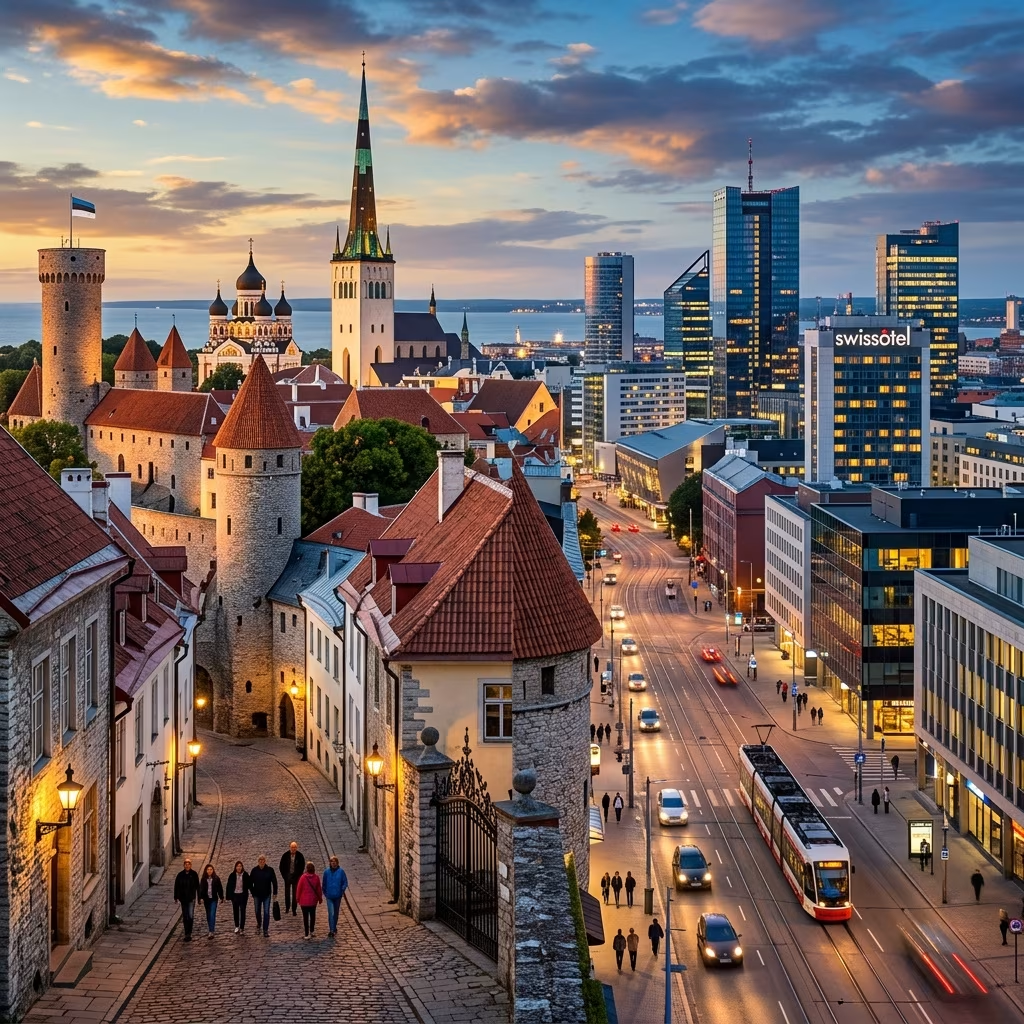
Perched on the northern coast of Estonia along the Gulf of Finland, Tallinn delights visitors as one of Europe’s best-preserved medieval cities. Beyond its UNESCO-listed Old Town, the capital reveals vibrant neighborhoods, poignant history, artistic ingenuity, and a captivating national spirit. Since regaining independence in 1991, Tallinn has transformed into a dynamic city where cobblestone streets meet bohemian cafés and historic ramparts overlook innovative art museums. This guide covers the essentials for discovering Tallinn’s layered past and lively present.
An Old Town of Towers and Legends
At the heart of Tallinn lies its fairy-tale Old Town, encircled by robust stone walls topped with red-spired watchtowers. Enter through stately medieval gates and step into a network of narrow cobbled streets, each lined with colorful gabled merchant houses, age-old guild halls, quaint squares, and hidden courtyards. Recognized by UNESCO, this historic center remains the best-preserved medieval city in Northern Europe, its skyline punctuated by the pointed spires of ancient churches and robust fortifications.
- Town Hall Square (Raekoja Plats): The bustling nucleus of Old Town, hosting markets, open-air cafés, and the original Gothic Town Hall.
- City Walls and Towers: Over 20 towers still stand guard, including Kiek in de Kök, which offers sweeping city views and tunnels beneath the ramparts.
- St. Olaf’s Church: Once the tallest structure in the world, this spire provides panoramic vistas from its observation platform.
- Viru Gate: These iconic twin towers form a fairy-tale entrance to the city’s ancient core.
- St. Catherine’s Passage: A medieval alley lined with artisan workshops in surviving convent buildings.
The Old Town divides naturally into the upper hilltop Toompea, home to the castle and grand cathedrals, and the bustling lower town, where merchants and guilds established Tallinn’s commercial legacy. Wander both for a true sense of the capital’s medieval might and lively streetlife.
Echoes of Empires: Estonia’s Tumultuous History
Tallinn’s cityscape is more than just a surviving medieval marvel; it’s a living museum of Estonia’s turbulent journey. Shaped by Danish, Teutonic, Swedish, Polish, Russian, Nazi, and Soviet powers, the city’s walls have withstood centuries of hardship and renewal. The post-Soviet awakening is especially vivid—nearly every corner speaks to Estonia’s enduring national pride and independence.
- Toompea Castle: Now home to Estonia’s Parliament, this hilltop stronghold conjures centuries of foreign rule and local resilience.
- Alexander Nevsky Cathedral: This lavish Russian Orthodox church crowns Toompea Hill, a striking symbol of Czarist influence with its onion domes and ornate mosaics.
- Vabamu Museum of Occupations and Freedom: A must-visit for context, this museum chronicles the traumatic occupations under Nazi and Soviet regimes, highlighting stories of repression, resistance, and the path to freedom.
Hanseatic League Heritage: Europe’s Medieval Marketplace
As a former member of the Hanseatic League, Tallinn was a thriving center of trade linking Northern Europe and Russia. The wealth of medieval merchants funded grand guildhalls and stone warehouses still standing today. Trace the city’s emergence as a hub of commerce through its:
- Great Guild Hall: Now the Estonian History Museum, this 15th-century building hosts interactive exhibits on trade, local life, and the Hanseatic League’s impact.
- Merchant Houses and Guildhalls: Wander Vene, Pikk, and Lai streets to spot merchant crests, traceried facades, and steep Gothic roofs.
- Holy Spirit Church: Noted for its intricately carved altar and medieval clock, this was the community hub for the city’s citizens.
Beyond the City Walls: Creative Quarters and Modern Culture
While Tallinn’s Old Town captivates with medieval ambiance, the city’s energy spills far beyond its ramparts into neighborhoods transformed by creative renewal. Former factories, railway depots, and warehouses now pulse with the energy of the city’s young generation. Key districts to explore:
- Telliskivi Creative City: A repurposed industrial complex packed with artist studios, innovative galleries, hip cafés, design shops, and performance venues—this is Tallinn at its trendsetting best.
- Rotermann Quarter: An urban renewal area east of Old Town, blending contemporary glass-clad architecture with preserved brick warehouses, buzzing with restaurants, boutiques, and artsy markets.
- Balti Jaam Turg (Rail Market): Adjacent to the railway station, this modern market complex serves up fresh produce, local delicacies, street food stalls, eco-products, and vintage finds, making it one of the Baltics’ best market scenes.
Gardens, Parks, and Palaces: Tallinn’s Green Heart
For a breath of fresh air and a glimpse of Russia’s imperial influence, head east of the center to Tallinn’s Kadriorg Park. Commissioned by Peter the Great for his empress Catherine (Kadriorg is “Catherine’s Valley” in Estonian), this elegant expanse is perfect for leisurely walks or picnics amid baroque gardens, ornate fountains, and tranquil lily ponds.
- Kadriorg Palace: A pastel-pink rococo palace built by Russia’s czar, now housing the Kadriorg Art Museum’s European art collection.
- Kumu Art Museum: Estonia’s leading modern art museum, its striking contemporary building set in the park and featuring national and international exhibitions.
- Pirita: Just a short ride from the Old Town, Pirita is known for its wide sandy beach, marina, forest cemetery, and the 14th-century ruins of St. Bridget’s Convent.
- Estonian Open-Air Museum: Set in a forest on the city’s edge, this collection of relocated historic farmhouses, windmills, and village churches offers evocative insight into rural Estonian life.
Seaside Marvels: Maritime Tallinn
Tallinn’s fortunes always depended upon its access to the sea. Today, the city’s revitalized waterfront is home to one of Europe’s most innovative maritime museums, as well as modern promenades with stunning views across the Baltic.
- Seaplane Harbour (Lennusadam): Housed in an immense WWI-era seaplane hangar, this museum displays everything from historic ships and submarines to interactive seafaring exhibits—kids and adults alike will love boarding a real submarine or exploring icebreakers moored in the adjacent harbor.
- Port of Tallinn: Serving as a busy ferry gateway to Helsinki and Stockholm, the terminals are also a hub for cruise arrivals bringing waves of global visitors.
Tallinn’s Soviet Shadows: KGB Secrets and Concrete Icons
Though Estonia’s independent spirit shines, reminders of the Soviet era remain part of the city’s complex identity. Certain sites provide a glimpse into life under occupation:
- Hotel Viru & KGB Museum: Once the top hotel for foreign guests, this Soviet skyscraper houses a museum on the 23rd floor revealing ingenious KGB eavesdropping methods and clandestine operations conducted on the premises.
- Surviving Soviet Architecture: Beyond the Old Town, watch for pastel apartment blocks, monumental statues, and the striking television tower—once the Soviet Union’s tallest building outside Moscow.
- Vabamu Museum of Occupations and Freedom: Along with Nazi and Soviet artifacts, this riveting museum presents oral histories, personal belongings, and reconstructed prison cells, illuminating Estonia’s era of repression and the resilience of its people.
The Singing Revolution: Estonia’s Peaceful Quest for Freedom
One of the most inspiring chapters in Tallinn’s recent history is the Singing Revolution. From 1987 to 1991, massive gatherings of Estonians filled the Song Festival Grounds in defiance of Soviet rule, peacefully demanding independence through communal singing. This unique, nonviolent protest—where nearly a quarter of the population joined in song—culminated in the restoration of sovereignty in 1991.
- Lauluväljak (Song Festival Grounds): The site where over 100,000 people gathered to sing for freedom, forming a central monument to the power of national culture and peaceful resistance.
- Annual and five-year Song Festivals: Continuing this tradition, the grounds welcome thousands of singers and spectators for concerts celebrating Estonian music and spirit.
Estonia’s peaceful revolution not only won admiration worldwide but also shaped Tallinn’s identity as a city where communal creativity conquers adversity.
Essential Tallinn Experiences
- Climb the winding staircase of St. Olaf’s Church for the best views in the city.
- Sample Estonian flavors with black bread, herring, wild-berry jam, craft beer, and pastries at Old Town cafés or the Balti Jaam Market.
- Watch locals and visitors mingle on Town Hall Square under the gaze of the medieval Town Hall, especially during summer festivals or winter markets.
- Explore the boutiques and studios of Telliskivi for unique Baltic design and souvenirs.
- Stroll leafy Kadriorg Park or hike the Pirita seaside path for a change of pace from medieval streets.
- Dive into Estonia’s layered story at the Vabamu Museum, History Museum, or Open-Air Museum—each providing different perspectives on identity and survival.
Pro Tips for Enjoying Tallinn
- Plan for at least two full days to see both Old Town highlights and the innovative districts beyond.
- Wear sturdy shoes—cobblestones can be uneven, especially after rain.
- Many top sites are compact and walkable from the Old Town, but consider the efficient tram system or taxis for reaching outlying museums or beaches.
- To avoid daytime cruise crowds, explore in early morning or late afternoon. Evenings in Tallinn are lively but less congested, with local music, bars, and night markets enlivening the squares.
Frequently Asked Questions (FAQs)
Q: What makes Tallinn’s Old Town so unique?
A: Tallinn’s Old Town is the best-preserved medieval city center in northern Europe. Its cobbled lanes, merchant houses, and stone towers remain remarkably intact, creating a fairy-tale atmosphere that evokes centuries of Hanseatic wealth and Baltic trade.
Q: What are some must-see museums in Tallinn?
A: Don’t miss the Vabamu Museum of Occupations and Freedom for compelling 20th-century history, the Estonian History Museum for medieval to modern life, and the Seaplane Harbour for interactive maritime exhibits.
Q: How has Tallinn changed since regaining independence?
A: Since 1991, Tallinn has scrubbed away Soviet scars and embraced innovation. It now boasts bustling creative districts, renowned digital innovation, restored landmarks, and a palpable sense of national pride.
Q: What food specialties should visitors try in Tallinn?
A: Local cuisine highlights include rye bread, smoked fish (like herring), wild mushroom soup, Estonian cheeses, honey beer, and marzipan confections.
Q: Is Tallinn easy to navigate for international travelers?
A: Yes, Tallinn is compact and welcoming, most locals speak English, transport is efficient, and the main sights are walking distance within the Old Town and nearby districts.
References
- https://www.youtube.com/watch?v=kqBKgO9UZLM
- https://www.ricksteves.com/watch-read-listen/video/tv-show/helsinki-and-tallinn-baltic-sisters
- https://www.ricksteves.com/europe/estonia/tallinn
- https://www.ricksteves.com/watch-read-listen/read/articles/estonia-singing-revolution
- https://www.youtube.com/watch?v=c7O7E-WlVjc
- https://www.ricksteves.com/watch-read-listen/read/articles/tallinn-estonia
- https://community.ricksteves.com/travel-forum/estonia/tallinn-visit-with-tour-recommendation
- https://www.smithsonianmag.com/travel/rick-steves-europe-tallinn-estonia-13196681/
- https://www.ricksteves.com/europe/estonia