Nazaré: Where the Atlantic Surf Meets Old-World Portugal
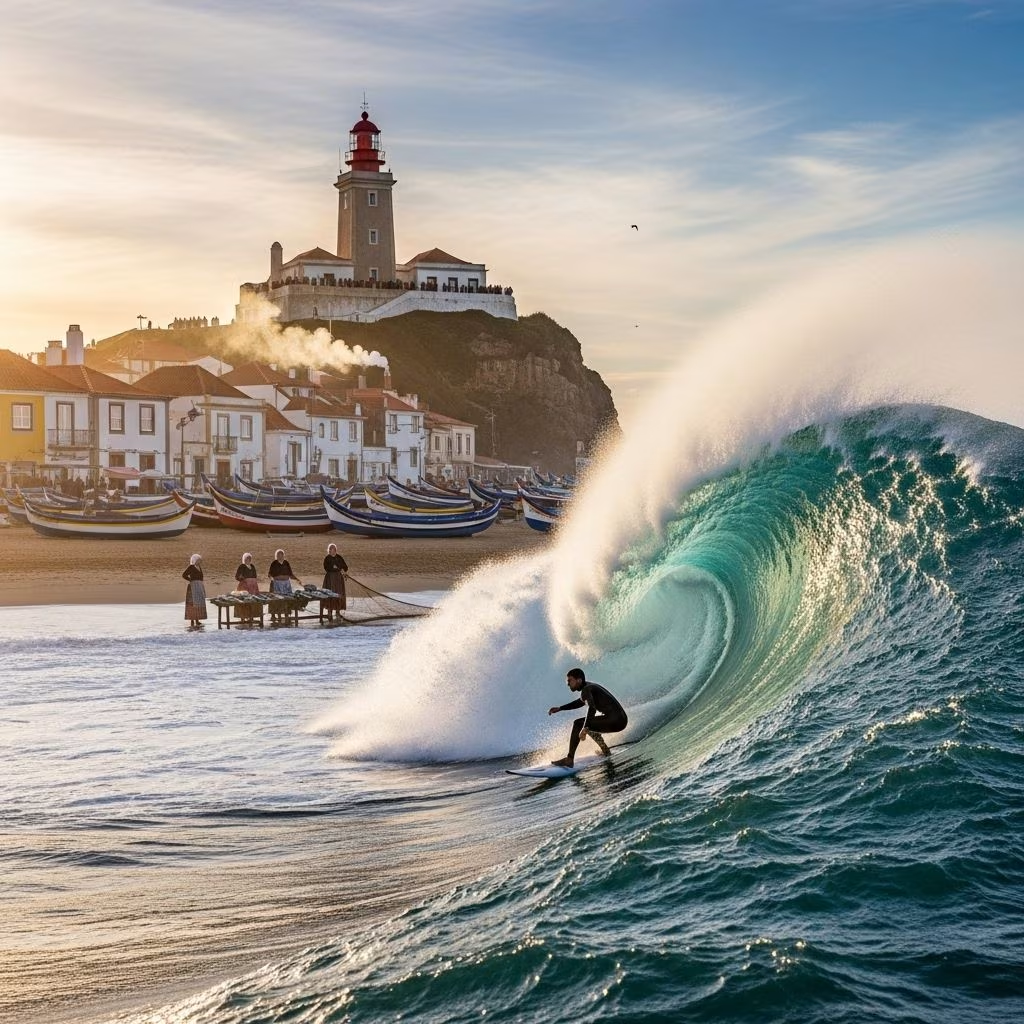
Tucked along Portugal’s wild Atlantic coast, about two hours north of Lisbon, Nazaré stands as a living tapestry of traditions, community spirit, and natural beauty. Once a remote fishing enclave, today it balances a vibrant tourist life with the preservation of unique old-world customs. With its golden beach, dramatic cliff-top vistas, intricate stonework, and a rhythm of festivals and daily rituals, Nazaré offers visitors far more than a simple seaside escape.
The Dual Character of Nazaré
Nazaré skillfully combines romantic, time-honored Portuguese culture with the buzz of a busy resort. Here, the echo of ancient fishing life coexists with laughter from beachgoers and music drifting from lively boardwalks. The heart of Nazaré beats with both nostalgia and energy, making it equally rewarding for those seeking authenticity and for families wanting classic beach fun.
- Stroll sun-bleached lanes lined with old apartments and fresh laundry.
- Relax on one of the country’s widest, most impressive beaches.
- Watch locals in vibrant costumes, from widows renting rooms to fishermen tending nets.
- Enjoy open-air folk performances and impromptu celebrations year-round.
A Stroll Through Nazaré: Layout and Lifeblood
Nazaré’s town structure is simple yet inviting. Narrow, mostly pedestrian lanes stretch away from a spacious sandy beach. The town’s layout invites endless wandering—from the beachfront bustle up to the scenic heights of Sítio, and into the backstreets where everyday life unfolds much as it has for generations.
- The sweeping beach forms the centerpiece, bordered by boardwalks, market streets, and a smattering of local bars and shops.
- The southern reach is marked by a new harbor, where today’s working boats reside, while the north is capped by Sítio, an old town perched on dramatic cliffs.
A walk through Nazaré reveals:
- Women in traditional petticoats, often seen selling dried fish or tending to grandchildren.
- Men in signature checked shirts, stocking caps tucked with cigarettes and fishhooks—a nod to the town’s maritime roots.
- Markets bustling with the morning’s catch, seasonal produce, and handwoven wares.
Amidst it all, visitors discover a proudly local way of life: soccer games in alleyways, curbside hibachis smoking with fresh sardines, and the gentle clink of cups at sidewalk cafés. With around 15,000 inhabitants, Nazaré feels both intimate and alive.
Sítio: Nazaré’s Historic Cliff-Top Village
Overlooking the Atlantic, Sítio is the cultural and historic soul of Nazaré. It sits atop the cliffs at the northern tip, accessible via a funicular or a winding hillside path that rewards each step with sweeping views. Although it now blends with the town below, Sítio has long felt like its own distinct community, complete with a church, a small museum, and a bustling main square.
- Stone memorials pay tribute to mariners and explorers, notably Vasco da Gama, who paused here before his historic voyage to India.
- The square is animated by festivals, markets, and daily gatherings, echoing centuries of tradition.
- An adjacent tiny chapel marks a legendary spot: the hiding place of the statue of the Black Madonna during Moorish rule, rediscovered after 400 years during the Christian Reconquista.
From here, the view stretches over red-tiled rooftops and endless blue waters. In the evening, golden clouds drift over the Atlantic as locals and visitors gather for sunset, often to the sound of folk music. Sítio serves as both sanctuary and stage—a symbol of both Nazaré’s resilience and its openness to the world.
Traditions Alive: Folk Dance and Music
One of Nazaré’s proudest assets is its community of folk musicians and dancers. These vibrant performances aren’t staged for tourists alone—they are a living, breathing part of local culture, passed down through generations.
- The town’s oldest folk group, established in 1934, still rehearses, performs, and inspires—dancing in traditional attire and keeping Nazaré’s music alive.
- On fair afternoons or during festivals, you’ll spot groups on the beach or sidewalk, performing atop intricate Portuguese mosaic stonework.
- The backbone of these performances is the community itself—many dancers today are children or grandchildren of those who formed the troupe decades earlier.
For visitors lucky enough to catch these revels, the folk shows are more than entertainment—they’re a joyous slice of deep-rooted Portuguese life, filled with catchy rhythms, colorful costuming, and an undercurrent of pride. Even if crowds gather, the authenticity endures, and a spontaneous sense of festivity is always at hand.
The Changing Face of the Fishing Life
Nazaré’s existence is inseparable from the sea. For centuries, fishing shaped its economy, daily rhythm, and even social structure. Today, much of the commercial fishing has moved to the new harbor built a half hour’s walk south of the main beach. Yet, echoes of the past remain everywhere:
- Colorful wooden boats—once a constant sight on the sand, pulled in by teams or oxen—now serve as ornaments and reminders of history.
- Squadrons of sun-dried, salted fish hang crucified on nets, drying in the amber light of midday, carrying forward preservation techniques centuries old.
- Even after the working boats moved, the shore is alive with telltale signs—nets being mended, fish cleaned by hand, and children learning the trade from elders.
Local ladies still sell their sun-dried fish along the boardwalk, calling out descriptions and offering samples. While some delicacies, like salty mackerel, are “an acquired taste,” others—such as the prized gooseneck barnacles (percebes)—are both a culinary challenge and a local favorite, harvested from perilous rocks near the cliffs.
Modernity Meets Tradition: Tourism and the Spirit of Nazaré
Nazaré owes as much to its popularity as a holiday destination as it does to its authenticity. During the summer, the town pulses with energy: umbrellas line the shore, children dash through the surf, and the scent of grilled sardines mingles with salty air.
- In high season, accommodation bookings are essential—from rented rooms in family-run homes to hotels overlooking the sand.
- During spring and fall, the pace slows and the town’s character shines—a quieter surf, more room to explore, deeper exchanges with locals.
Despite the waves of change, many locals remain anchored to tradition. Most families have ties to the original fishing trade, and even newcomers to tourism wear their heritage proudly—revealed in language, customs, food, and festival.
Tourism vs. Tradition Table
| Tourist Influence | Traditional Elements |
|---|---|
| Modern hotels and vacation rentals | Widows offering rooms in family homes |
| Surf schools and beach bars | Folk dancing and live local music |
| Restaurants serving international cuisine | Open-air fish grilling and sun-drying |
| Souvenir shops, fashion boutiques | Markets with handwoven goods |
A Culinary Tapestry: Sampling Nazaré’s Cuisine
Nazaré’s food is as much about tradition as it is about taste. The bounty of the Atlantic informs daily meals, with a focus on simple freshness and bold flavors. Savoring the catch of the day, often processed by time-honored methods, is an essential part of the Nazaré experience.
- Grilled sardines, smoked over charcoal, embody the coastal cuisine at its most elemental.
- Salted and dried mackerel, herring, and other local fish—prepared just as generations ago—are sold by the handful or arranged on platters in cozy tavernas.
- The adventurous should try percebes (gooseneck barnacles): tough to harvest, expensive, but highly prized, eaten simply boiled with sea salt.
- Don’t miss the pastries made in local bakeries, nor the robust local wines served in traditional eateries.
Whether grabbing a beachside snack or sitting for a family meal, Nazaré’s food represents history, community, and Portugal’s love for honest fare.
Practical Tips for Visiting Nazaré
- Getting There: Nazaré is accessible by car, bus, or private transfer from Lisbon (about two hours). Parking near the cliffs can be limited in summer.
- Seasonality: Busy in July and August; quieter and more authentic off-season. Spring and early autumn offer mild weather and fewer crowds.
- Accommodations: Options range from contemporary hotels to traditional guest rooms rented by locals. Book ahead during peak summer.
- Don’t Miss: Take the funicular up to Sítio for panoramic vistas and historic seminary. Sample dried fish from a boardwalk vendor. Time your visit for a festival or folk performance.
Frequently Asked Questions (FAQs)
Q: What is Nazaré most famous for?
A: Nazaré is renowned for its wide sandy beach, powerful Atlantic surf (including record-setting waves for surfers), and enduring fishing traditions. Its dramatic cliffside setting and local festivals make it unique among Portugal’s coastal towns.
Q: When is the best time to visit Nazaré?
A: Late spring and early autumn are ideal. While summer boasts lively crowds and full sun, the shoulder seasons offer a quieter, more local experience and comfortable weather.
Q: Are there still traditional fishing boats and practices to see?
A: Yes. While most fishing boats now dock at the modern harbor, you can still observe historic painted boats on the sand as well as sun-drying fish and traditional net-mending along the boardwalk.
Q: What cultural events can I see in Nazaré?
A: Throughout the year, especially in summer, Nazaré hosts folk music and dance performances, religious festivals, and local fairs. Check for spontaneous dances in Sítio or along the beach, and time your visit to soak up these authentic displays of local pride.
Q: How do I reach the cliff-top village of Sítio?
A: A funicular railway connects Nazaré’s beach with Sítio. Alternatively, you can ascend by road (walkable though steep), with rewarding views at every turn.
Experience Nazaré: Where Time, Tide, and Tradition Meet
To visit Nazaré is to move between centuries: to bask in sun and sea while sensing the unbroken chain of custom, family, and community. Whether drawn by the waves, the music, the food, or the warmth of its people, every traveler leaves with a deeper appreciation for the places where tradition lives on, undimmed by time.
References
- https://www.gosanangelo.com/story/travel/2017/10/06/rick-steves-seaside-traditions-portugals-nazare/725994001/
- https://www.ricksteves.com/watch-read-listen/read/articles/nazare-a-beach-town-with-traditions
- https://blog.ricksteves.com/blog/nazare-portugal/
- https://www.youtube.com/watch?v=z_bATp8P354
- https://blog.ricksteves.com/blog/portugal-nazare/
- https://www.ricksteves.com/watch-read-listen/video/nazare-beer-barnacles
- https://community.ricksteves.com/travel-forum/portugal/3-days-in-nazare