Welcome to the Best of the Balkans: Slovenia, Croatia, Bosnia-Herzegovina & Montenegro
Straddling sparkling Adriatic coasts, rugged alpine valleys, hilltop towns, and rich histories, Slovenia, Croatia, Bosnia-Herzegovina, and Montenegro offer travelers an unforgettable journey through the heart of the Balkans. With so much to see and so many routes to consider, this guide provides a two-week itinerary packed with the best experiences and practical advice to help you plan the perfect adventure.
How to Plan Your Trip: Setting Priorities
With a limited timeframe and abundant must-see sights spread across different countries, setting travel priorities is key. Below are recommendations for trip durations ranging from just a few days to three weeks, ensuring you cover as many highlights as possible:
- 3 days: Focus on Dubrovnik, Croatia’s scenic southern gem.
- 5 days: Add Mostar (Bosnia-Herzegovina) and the historic city of Split to experience more varied culture and architecture.
- 7 days: Choose between a relaxing island visit (Korčula or Hvar), a drive into Montenegro’s dramatic Bay of Kotor, or an in-depth exploration of Bosnia via Sarajevo.
- 8 days: Extend your route to include the stunning waterfalls and lakes at Plitvice National Park.
- 10 days: Venture into Slovenia to experience Lake Bled and the rugged Julian Alps.
- 12 days: Delve into Ljubljana, Slovenia’s charming capital, or allocate more time to Croatia’s Dalmatian islands.
- 14 days: Add the Istrian Peninsula, famous for its Italian-style ambiance and port towns.
- 16+ days: Fill in missed highlights such as the Karst, Zagreb (Croatia’s capital), or revisit the southern islands.
- 18-21 days: Seek out lesser-known gems such as Logarska Dolina, Piran, Mljet, or venture into coastal Slovenia.
Travelers with extra days can immerse themselves in towns like Ptuj, Opatija, and more hidden islands or coastal villages scattered throughout the region.
Rick’s Best Two-Week Croatia/Slovenia/Balkan Itinerary
This itinerary offers an optimal pace, balancing sightseeing, relaxation, and authentic experiences. Designed for travel by car and public transport where needed, it starts in Slovenia and follows a logical route south through Croatia, with excursions into Bosnia-Herzegovina and Montenegro.
Day-by-Day Breakdown
| Day | Destination | Activity | Overnight |
|---|---|---|---|
| 1 | Lake Bled | Arrive at Ljubljana Airport, shuttle to Lake Bled | Lake Bled |
| 2 | Lake Bled | Relax, explore the lake, castle, island, hiking | Lake Bled |
| 3 | Julian Alps / Ljubljana | Drive through scenic Alps, arrive in Ljubljana | Ljubljana |
| 4 | Ljubljana | Explore the capital, historic center, market, river | Ljubljana |
| 5 | Karst / Piran / Rovinj | Drive through Karst region to Slovenian Riviera and into Rovinj via Piran | Rovinj |
| 6 | Rovinj | Explore Rovinj; optional side trip to Opatija or Pula | Rovinj |
| 7 | Plitvice Lakes | Drive via Istrian hill towns and Opatija to Plitvice National Park | Plitvice |
| 8 | Split | Hike Plitvice, drive to Split, drop off car | Split |
| 9 | Split | Explore Split’s Roman and medieval sights | Split |
| 10 | Hvar or Korčula | Ferry to Hvar or Korčula, enjoy island life | Hvar / Korčula |
| 11 | Hvar or Korčula | Relax, swim, and explore | Hvar / Korčula |
| 12 | Dubrovnik | Ferry to Dubrovnik | Dubrovnik |
| 13 | Dubrovnik | Explore the Old Town, city walls, museums | Dubrovnik |
| 14 | Mostar or Kotor | Day-trip to Mostar (Bosnia-Herzegovina) or Montenegro’s Bay of Kotor | Dubrovnik |
Essential Highlights by Region
- Lake Bled and Julian Alps (Slovenia): Famous for its crystal-clear lake, picturesque island church, and cliffside castle, set against the peaks of the Julian Alps.
- Ljubljana (Slovenia): A compact, lively capital filled with Baroque and Art Nouveau architecture, riverside cafes, and vibrant markets.
- Karst Region & Piran: Split between dramatic limestone landscapes and Slovenia’s Adriatic coast, featuring caves, wines, and Venetian-style Piran.
- Istria (Croatia): Italian-tinged cuisine, Roman ruins (notably in Pula), charming hill towns, and the romantic coastal city of Rovinj.
- Plitvice Lakes (Croatia): UNESCO-listed park of waterfalls, turquoise lakes, and lush forests—best explored on foot with hiking trails and wooden walkways.
- Split (Croatia): Roman heritage shines in Diocletian’s Palace, vibrant markets, and lively Riva waterfront.
- Dalmatian Islands (Hvar/Korčula): Famed for lavender fields, glamorous marinas (Hvar), and medieval walled towns (Korčula).
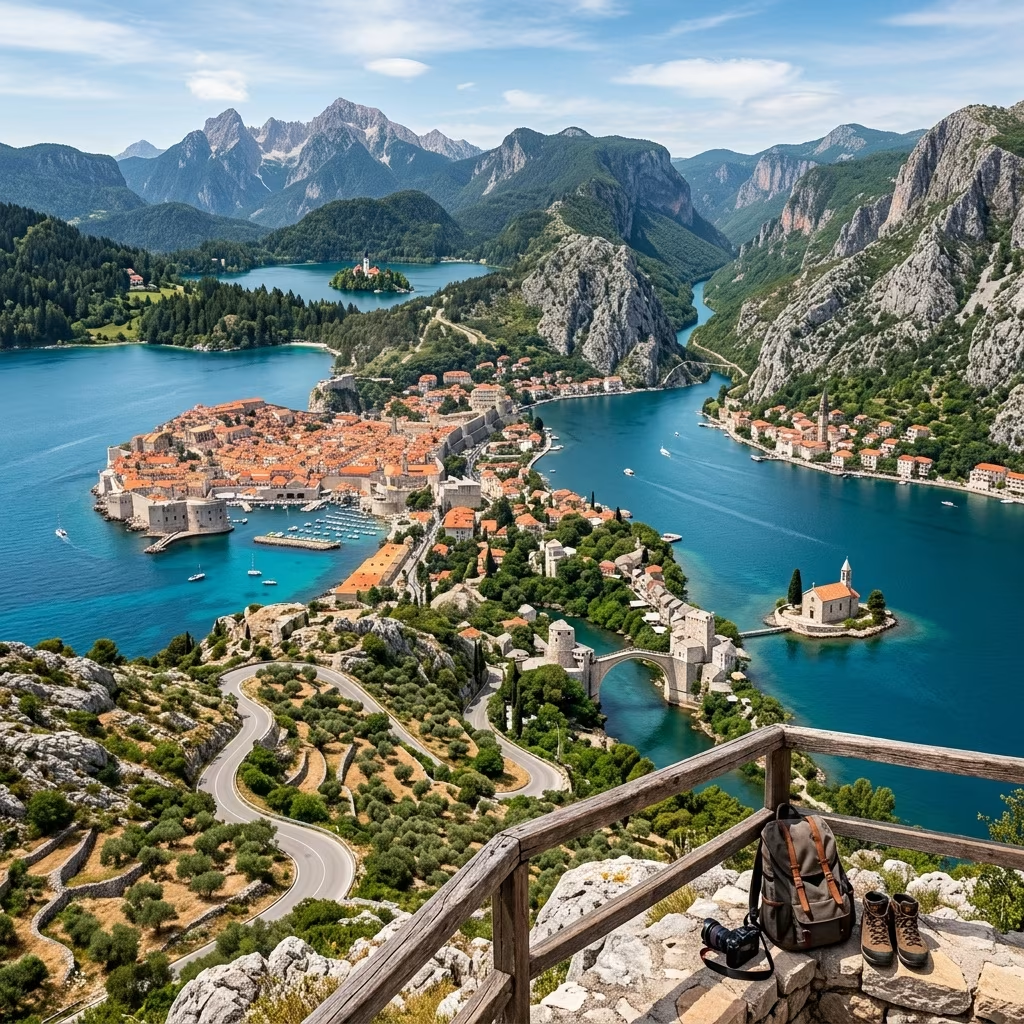
- Dubrovnik (Croatia): The ‘Pearl of the Adriatic’—remarkable walls, red-roofed Old Town, and rich maritime history.
- Mostar (Bosnia-Herzegovina): Renowned for its stunning Ottoman-era bridge and vibrant East-meets-West ambience.
- Kotor and Montenegro’s Bay: Deep fjord-like bay, medieval ramparts, mountainous scenery—one of Europe’s most dramatic coastlines.
Route Planning & Transportation Tips
Distances in the Balkans can be deceiving, with winding routes, border crossings, and ferry transfers adding to travel times. Consider these tips:
- Focus on either Southern Croatia and Bosnia-Herzegovina or Northern Croatia and Slovenia if short on time. Plitvice Lakes is the geographic midpoint and a worthwhile stop for both routes.
- To avoid high cross-border car rental fees, return your vehicle in Slovenia and travel onward by bus or train to Croatia, where another car can be rented for the southern leg.
- Some destinations—such as Split, Dubrovnik, and the islands—are well-served by ferries and buses; a car is less essential here.
- Affordable internal flights connect major cities, including convenient links between Sarajevo and Zagreb.
- Allow for extra time at borders, especially during high summer season.
Extending Your Itinerary: More Destinations to Consider
If you have three weeks or flexibility for an extended journey, enrich your itinerary with these additions:
- Zagreb: The cultural and political heart of Croatia—museums, historic districts, and lively public squares.
- The Karst: Explore remarkable cave networks like Postojna and Škocjan in Slovenia’s limestone heartland.
- Logarska Dolina: Slovenia’s most beautiful alpine valley, famous for pristine scenery and outdoor pursuits.
- Ptuj: Slovenia’s oldest town, teeming with medieval and Roman history.
- Opatija: Belle Époque resorts and coastal glamour on Croatia’s northern seaside.
- Coastal Villages: Like Piran (Slovenia), Mljet (Croatia), and hidden Adriatic islands, offering tranquility and distinctive charm.
Frequently Asked Questions (FAQs)
Q: How should I divide my time between the main regions?
A: If time is limited, spend more days in Dubrovnik, Split, and the Dalmatian Coast for classic Adriatic sights; for alpine and Central European charm, devote more time to Slovenia’s Lake Bled, Julian Alps, and Ljubljana.
Q: Is it better to travel by car or public transport?
A: Both have their advantages. Renting a car gives flexibility for exploring small towns, national parks, and rural areas. Major cities and islands are easily accessed by bus, train, or ferry, where parking may be limited or unnecessary.
Q: When is the best time to visit?
A: Late spring (May–June) and early fall (September–October) offer the best balance of pleasant weather, thinner crowds, and lower prices compared to the busy July–August period.
Q: Do I need a visa to travel between these countries?
A: Most visitors from North America, the EU, UK, Australia, and New Zealand do not need a visa for short stays; always check current requirements before travel, especially regarding changes in the Schengen zone.
Q: What currencies are used?
A: Slovenia and Montenegro use the euro. Croatia switched to the euro in 2023. Bosnia-Herzegovina uses the convertible marka (BAM).
Q: What are some must-try regional dishes?
A: Try čevapi (grilled sausages) in Bosnia; fresh seafood, black risotto, and pasticada (beef stew) in Croatia; truffle pasta and seafood in Istria; and potica (walnut roll cake) in Slovenia.
Travel Tips & Recommendations
- Accommodations: Book city hotels and island rooms well in advance for summer travel.
- Ferry schedules: Check ferry routes and times when planning island stays—some may operate less frequently outside peak season.
- Language: English is widely spoken in tourist areas; learning a few local words is appreciated.
- Safety: The region is generally safe for travelers, but standard precautions apply.
- Local experiences: Attend folk festivals, sample local wines, and explore traditional markets for cultural immersion.
Sample Packing List for the Region
- Comfortable walking shoes (for cobbled towns and national parks)
- Swimming gear (for coasts and lakes)
- Weather-appropriate clothing (variable between mountains and coast)
- Travel adapter (Type C and F plugs)
- Light rain jacket
Make the Most of Your Balkan Adventure
Whether you’re captivated by the sapphire waters of the Adriatic, enchanted by medieval alleyways, or awed by alpine vistas, this two-week itinerary lets you savor the best of Slovenia, Croatia, Bosnia-Herzegovina, and Montenegro. Adapt the route to suit your interests and pace—each region promises rewarding discoveries for every kind of traveler.
References
- https://www.ricksteves.com/europe/slovenia-croatia-itinerary
- https://www.ricksteves.com/watch-read-listen/video/travel-talks/croatia-slovenia
- https://community.ricksteves.com/travel-forum/croatia/croatia-slovenia-itinerary-help-1st-time-there
- https://www.ricksteves.com/watch-read-listen/video/tv-show/croatia-adriatic-delights
- https://community.ricksteves.com/travel-forum/croatia/21-nights-ish-in-slovenia-and-croatia
- https://community.ricksteves.com/travel-forum/slovenia/slovenia-and-croatia-for-13-days-too-much-or-too-rushed
- https://community.ricksteves.com/travel-forum/croatia/itinerary-help-with-slovenia-and-croatia
- https://community.ricksteves.com/travel-forum/croatia/11-day-croatia-slovenia-itinerary
- https://www.ricksteves.com/europe/croatia
- https://community.ricksteves.com/travel-forum/croatia/the-best-of-croatia-and-slovenia-in-12-14-days