Amboise: Loire Valley’s Timeless Gem
Straddling the banks of the mighty Loire River, Amboise is more than a gateway to some of France’s most magnificent castles—it’s a city where history, art, and culture have mingled for centuries. Famous for welcoming Leonardo da Vinci to its midst and serving as a royal residence, Amboise enchants modern visitors just as it did Renaissance kings and visionaries.
The Loire Valley: A Landscape Shaped by Royalty
The Loire River gently meanders through central France, demarcating the traditional border between the country’s north and south. This natural barrier became a magnet for French nobility, particularly during the Renaissance. With the rise of 16th-century hunting-obsessed monarchs, fortified medieval castles gave way to elegant palaces and lush gardens, transforming the Loire Valley into a landscape studded with architectural marvels and rich in stories.
- The Loire is France’s longest river—historically the farthest the Moors reached in their European incursion.
- Hundreds of châteaux, each reflecting distinct eras and purposes, edge its banks.
- Amboise stands at its widest span, making it pivotal both strategically and culturally.
Amboise: Where Leonardo da Vinci Found Home
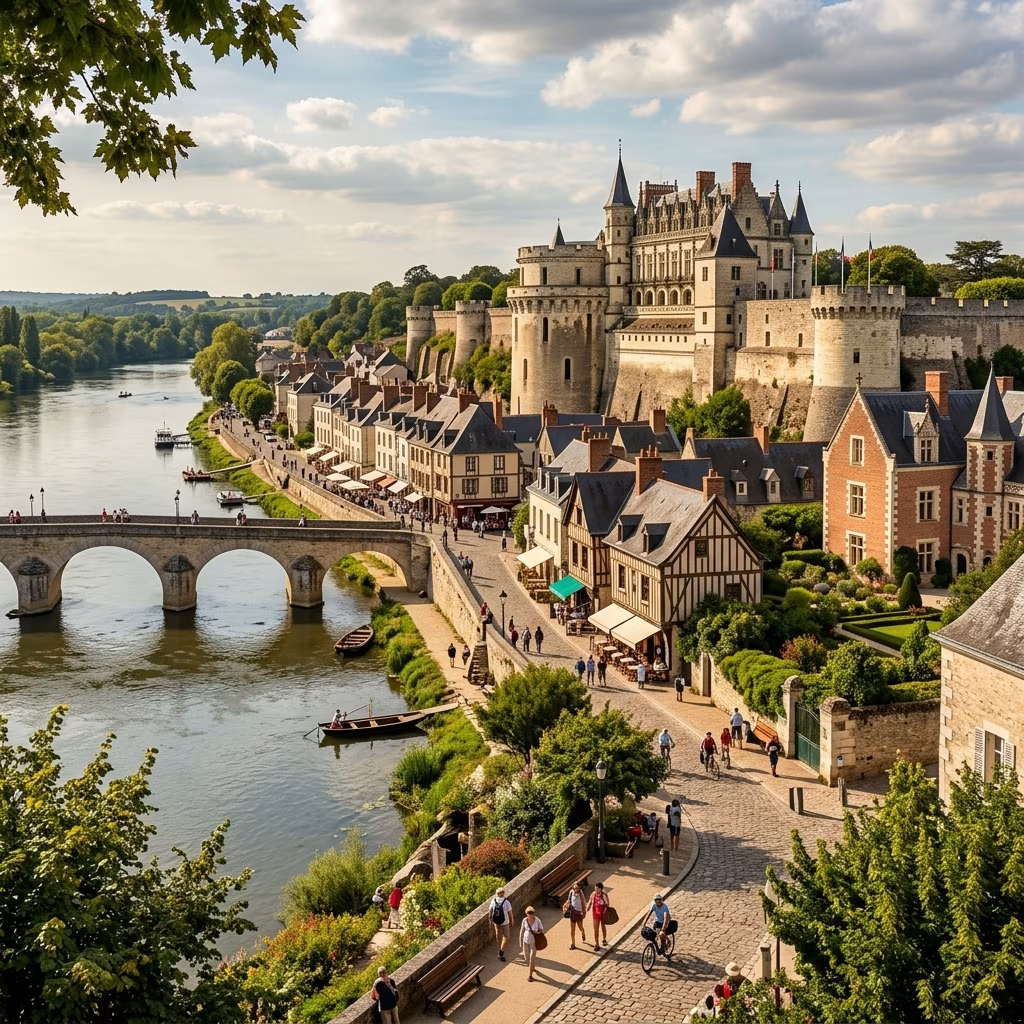
Nestled beneath a majestic hilltop castle, Amboise’s old quarter hums with energy and the echoes of past grandeur. A city has flourished here since Roman times, but it was the French Renaissance that secured its place in history.
The Arrival of Leonardo
In 1516, Leonardo da Vinci journeyed from chaotic Rome to Amboise at the invitation of King François I. Seeking fresh inspiration and more harmonious working conditions, Leonardo brought with him treasured paintings—including the Mona Lisa—and a mind bursting with inventions.
- He was welcomed as “first painter, engineer, and architect to the King.”
- His résumé included blueprints for tanks, flying machines, and extending ladders—illustrating his boundless creativity.
- Leonardo spent his final years in Amboise, dying there in 1519.
Château du Clos-Lucé: Leonardo’s Final Workshop
The king gifted Leonardo the Château du Clos-Lucé, a stately yet inviting palace just steps from the royal château. Here, Leonardo lived, worked, and hosted cultural gatherings—his legacy reverberates in its halls to this day.
- The château features:
- A charming rampart walk and a 16th-century chapel.
- Beautifully restored rooms that evoke daily Renaissance life, complete with period furnishings and music.
- Inventive models and interactive displays, inspired by his sketches.
- The estate survived the French Revolution due in part to the savvy of sympathetic owners who convinced revolutionaries Leonardo was philosophically aligned with their cause.
Today, visitors roam two floors of Clos-Lucé, while private areas of the estate remain family-held—a testament to both respect for history and living tradition.
Château Royal d’Amboise: The Crown Above the Loire
Dominating the skyline, the Château Royal d’Amboise is a blend of medieval fortification and Renaissance elegance. As a favorite royal residence, it attracted illustrious guests—and witnessed episodes both inspiring and tragic.
Design Genius and Tragic Kings
- Charles VIII, king and chief builder of the château’s main wing, died in a bizarre accident—striking his head on a doorway en route to a tennis match.
- Leonardo himself is said to have had a hand in its architectural enhancements.
The Chapel and the Mystery of Leonardo’s Grave
The château’s exquisite Gothic chapel, built with soaring arches and intricate carvings, is where a simple stone slab marks what tradition claims is Leonardo’s tomb. Two plaques (one in French, one in Italian) commemorate the site, yet historians continue to debate the final resting place of the legendary genius.
Exploring the Château
- Travel through centuries of style: from Gothic grandeur to Renaissance refinement and on to 19th-century renovations.
- Climb the imposing Minimes Tower, rising 130 feet with five spiraled ramps—built wide enough for mounted soldiers to ascend in a rush.
- Enjoy panoramic vistas across the Loire and the historic Golden Island, the only sizeable, floodproof island in the river—home to a church, sports fields, and a hostel.
| Era | Architectural Highlights | Notable Figures |
|---|---|---|
| 15th-16th centuries | Gothic chapel, Renaissance halls, Minimes Tower | Charles VIII, François I, Leonardo da Vinci |
Amboise Today: A Lively Town with Regal Roots
Despite its relatively modest population (about 14,000 residents), Amboise exudes the confidence of a much larger city—perhaps a lingering effect of its distinguished past as once the second capital of France. Many grand mansions still stand discreetly behind plain facades, symbols of a town quietly proud of its wealth and heritage.
Strolling the Heart of Amboise
- The bustling, pedestrian-only Rue Nationale remains the town’s main artery, just as it was in the era of kings.
- Explore boutiques, cozy cafés, and artisanal shops lining atmospheric lanes.
- Seasonal markets fill the squares with fresh produce, local cheeses, and artisan specialties.
- Grand stone bridges connect neighborhoods on either side of the river.
Amboise as a Home Base: The Gateway to the Châteaux
For travelers to the Loire Valley, Amboise is an ideal starting point. Its strategic location and connections offer easy access to a constellation of world-famous castles:
- Château de Chenonceau: Known as the “Ladies’ Chateau” for the powerful women who shaped its destiny.
- Château de Chambord: The grandest Loire castle, with dizzying turrets and a vast forest park.
- Château de Cheverny: Pristine, stately, and the inspiration for Hergé’s Marlinspike Hall in the Tintin comics.
- Château de Blois: A puzzle box of styles reflecting four royal dynasties in one building.
- Château de Villandry: Famed for its exquisitely designed Renaissance gardens.
Visitors need not even rent a car—train links and public transport make Amboise accessible and convenient for day trips throughout the region.
Italian Inspiration: The Renaissance Comes to the Loire
The Loire’s cultural flowering can be traced to encounters with Italy. When French rulers and aristocrats traveled south, they returned brimming with enthusiasm for Italian Renaissance art, garden design, and culinary refinement. They invited Italian artists and thinkers to transform their palaces and towns—none more celebrated than Leonardo da Vinci.
- Renaissance styles in architecture, painting, and landscaping abound throughout Amboise and its environs.
- Dining traditions emphasize fine wine, artisan cheese, and a ritual appreciation for the culinary arts.
A Taste of Amboise: Wine, Cheese, and Elegant Dining
French savoir-faire is as alive in Amboise’s kitchens as in its châteaux. Enjoy indulgent meals filled with local specialties and world-class wines:
- Goat cheeses: Sainte-Maure de Touraine, Selles-sur-Cher, Valençay, Pouligny-Saint-Pierre
- Cow cheeses: Dreux, Langres, Reblochon
- Classic dishes: Freshwater shrimp, escargot with garlic butter, slow-roasted duck (“the chicken of France”)
Le fromage, vin rouge, et pain—cheese, red wine, and bread—sum up the soul of Loire Valley dining, inviting guests to linger over every flavor.
Exploring Beyond the Castle Walls
The magic of Amboise lies not only in its grand castles but also in the rhythms of its streets and the stories shared by its people.
- Take a leisurely walk along the riverbank paths and enjoy serene views as the Loire reflects the changing light.
- Photograph the bustling markets set against centuries-old stone buildings.
- Relax in cafés where time slows and the past feels tantalizingly close.
Practical Tips for Visiting Amboise
- Accommodations: Amboise offers a range of places to stay, from charming inns to renovated manor houses.
- Transport: The town is well served by trains and buses, making car-free travel easy.
- Season: The Loire Valley’s gentle climate is best from late spring to early fall.
- Language: While French is the norm, tourist areas offer services in English and other languages.
Frequently Asked Questions (FAQs)
Q: Why is Amboise important in French history?
A: Amboise served as a favored royal residence during the Renaissance and was home to several French kings, as well as to Leonardo da Vinci in his final years.
Q: Can you visit Leonardo da Vinci’s home in Amboise?
A: Yes, the Château du Clos-Lucé is open to the public, featuring restored rooms, interactive exhibits of Leonardo’s inventions, and beautiful gardens.
Q: What other castles are easily accessible from Amboise?
A: Chenonceau, Chambord, Cheverny, Blois, and Villandry are all within easy reach, making Amboise a perfect base for exploring the region.
Q: What’s the best way to get around the Loire Valley if you stay in Amboise?
A: Train and public transportation options are excellent, so it’s not necessary to rent a car unless you prefer countryside drives.
Q: What foods should visitors try in Amboise?
A: Sample local goat and cow cheeses, Loire Valley wines, escargot, freshwater seafood, and traditional roasted meats.
Why Amboise Still Captivates
With its riverside beauty, rich tapestry of history, and the enduring influence of Leonardo da Vinci, Amboise is not just a stop on the Loire trail—it’s a place where the past feels vividly alive and the welcome to travelers is as warm as ever. Whether you come for world-class castles, Renaissance wonders, or a simple glass of wine by the river, Amboise offers delights to nourish spirit and senses alike.
References
- https://www.ricksteves.com/watch-read-listen/video/dinner-in-amboise
- https://www.ricksteves.com/watch-read-listen/read/articles/amboise-charming-visitors-since-leonardo-da-vinci
- https://www.ricksteves.com/watch-read-listen/video/tv-show/season-8/frances-loire-chateau-country
- https://www.youtube.com/watch?v=BBdOB-Egow0
- https://blog.ricksteves.com/blog/tag/amboise/
- https://community.ricksteves.com/travel-forum/france/amboise-as-a-base
- https://www.youtube.com/watch?v=3ADE2aWo-9k
- https://blog.ricksteves.com/blog/video-travel-bite-amboise-france/
- https://www.ricksteves.com/europe/france/loire