Christmas in Austria: Heartwarming Traditions in the Land of ‘Silent Night’
The festive swirl of sights, sounds, and smells during Christmas in Austria makes winter in this corner of Europe an experience like no other. This is the birthplace of the world’s most beloved carol, Silent Night, and a place where centuries-old customs, music, and celebrations fill December with a special kind of magic. In Austria, Christmas is not a hurried, commercial sprint—it’s a slow unfolding of rituals, family gatherings, and communal joy, deeply rooted in faith, folklore, and music.
The Austrian Approach to Christmas: Early Starts and Leisurely Traditions
Unlike the fast-paced holiday rush seen elsewhere, Austrians savor Christmas with a relaxed, ‘stop-and-smell-the-strudel’ mindset. Preparations commence four Sundays before Christmas with the beginning of Advent, a season of anticipation leading to December 24th. The holiday is celebrated as a reflective progression, each day saying farewell to ordinary time and welcoming the spirit of Christmastide.
The Rituals of Advent
Advent is central to the Austrian Christmas calendar, marking the ‘arrival’ of Jesus. Families craft or purchase an Adventkranz (Advent wreath), traditionally made from fir or spruce branches. Four candles are artistically arranged on the wreath and illuminated one after another on each of the four Sundays leading up to Christmas Eve, symbolizing increasing anticipation.
- Advent Wreath (Adventkranz): Often adorned with ribbons and pinecones, it is a social centerpiece. Each Sunday, an additional candle is lit, bringing the family together in ritual and song.
- Advent Calendars: Children count down the days with elaborate calendars, opening a new window each day to reveal chocolates or biblical verses.
Markets, concerts, baking sessions, and evening walks beneath twinkling lights define these four weeks of joyful expectancy. Streets, homes, and churches are filled with music, gingerbread scents, and the warm glow of candles.
December 5: The Mayhem and Merriment of Krampus Day
No summary of Christmas in Austria is complete without the raucous prelude of Krampus Day on December 5th. In Alpine villages, the frightening—but playful—figure of Krampus takes to the streets. Dressed in shaggy fur, donning horns, bulging eyes, and a lolling red tongue, Krampus parades through town, clanging enormous cowbells and rattling heavy chains.
- Purpose of Krampus: Krampus is St. Nicholas’s mischievous companion, sent to remind children to behave well.
- Traditional Activities: The chase is more play than menace. Children and adults retaliate by pelting Krampus with snowballs, and laughter rings out as the ‘beast’ attempts to scare kids into good behavior.
- Symbolic Meaning: Krampus’s antics are a reminder of the dual nature of Christmas: both its sacred message and its playful traditions.
Salzburg: Christmas in the Rome of the North
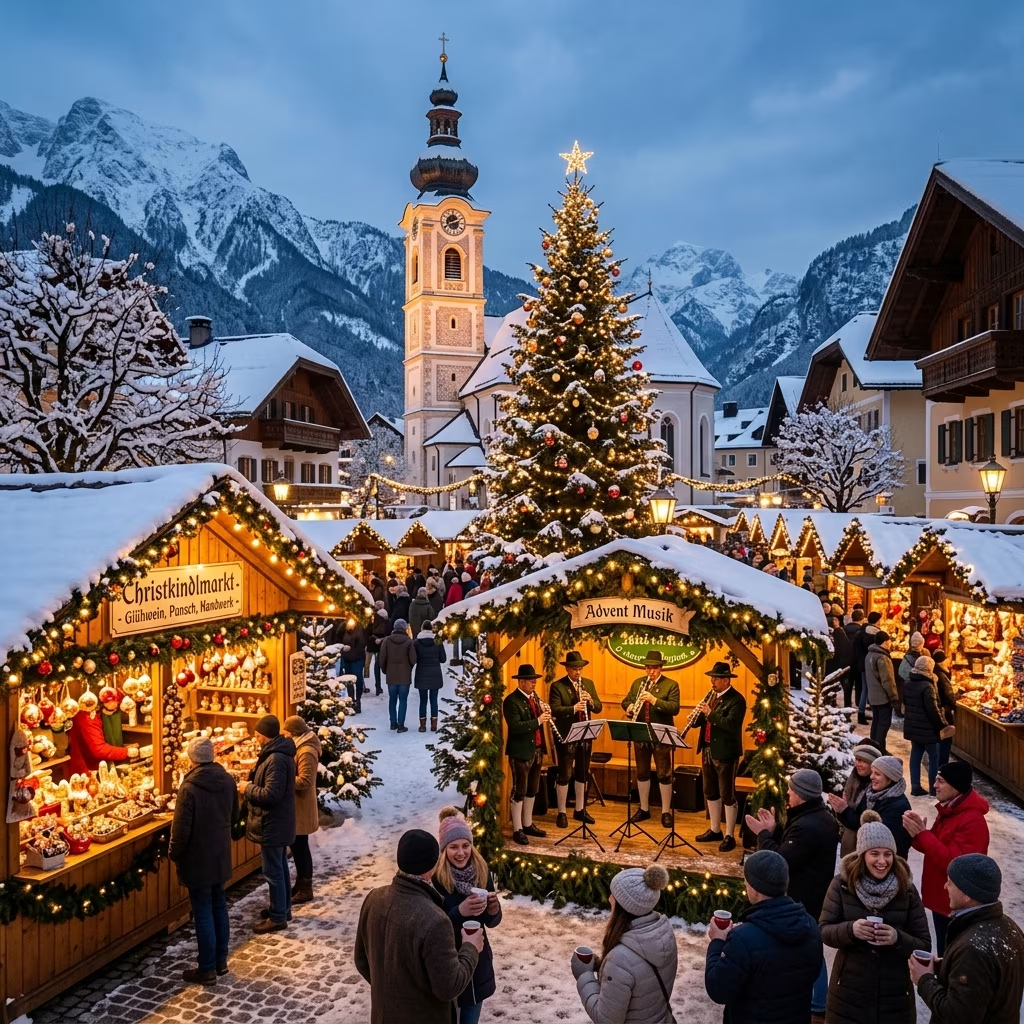
The elegant city of Salzburg, known as ‘the Rome of the North,’ provides a majestic setting for Christmas. Its baroque Old Town nestles beneath imposing fortresses and is laced with bustling Christmas markets, where the aroma of roasted almonds and mulled wine fills the air. Shoppers stroll between ornate market stalls seeking hand-carved toys, delicate ornaments, and seasonal treats. Overhead, festive lights reflect off cobbled lanes, adding to the atmosphere of Alpine wonder.
Festivities and Traditions in Salzburg
- Cathedral and Christmas Mass: Salzburg’s grand cathedral—modeled after St. Peter’s in Rome—hosts Christmas Mass, a highlight of the holiday. The service, led by the archbishop, is elevated by the soaring voices of the cathedral choir and the orchestra filling the loft. Locals gather in great number to connect faith with exquisite music.
- Market Celebrations: Shoppers flock to the city’s Christmas markets (Weihnachtsmärkte) for last-minute gifts, seasonal decorations, and traditional sweets.
- Gun Salutes: High above the city, traditional gunners discharge blank volleys from ramparts, echoing customs once believed to drive away evil spirits and now carried on for fun and spectacle.
‘Silent Night’: The Soul of Austrian Christmas
No song is more intrinsically linked to the spirit of Christmas in Austria than ‘Stille Nacht’, known to the world as ‘Silent Night’. Over 200 years ago, this carol was sung for the first time in the small village of Oberndorf, near Salzburg, destined to become the planet’s most widely beloved Christmas song.
The Story Behind ‘Silent Night’
The carol’s origins are simple and profound:
- Joseph Mohr: A humble village priest and poet, wrote the words on Christmas night, inspired by the peaceful stillness after visiting a newborn baby.
- Franz Gruber: The organist in neighboring Arnsdorf, set Mohr’s poem to a gentle melody, composing it for voice and guitar because the church organ wasn’t working.
On Christmas Eve in 1818, the carol was performed for the very first time in Oberndorf’s little church. Its message of peace and simplicity was an instant comfort, echoing across generations and borders. The church where this took place was later replaced by the Silent Night Chapel, now a pilgrimage site for carolers and visitors worldwide.
Commemorations and Pilgrimage
- In Arnsdorf, where Gruber lived, Christmas Eve brings communities together for musical services held in the very house where the carol’s music was composed.
- Each year, villagers and travelers join candlelit processions from Arnsdorf to Oberndorf, retracing Mohr’s journey through the cold December air.
- At the Silent Night Chapel, songs and hymns fill the night air, creating a deeply spiritual and communal moment.
The Global Magic of ‘Silent Night’
The worldwide resonance of ‘Silent Night’ is considered nearly miraculous. Neither Mohr nor Gruber were celebrities; the song’s spread was organic, propelled by its universal message of peace and hope. Today, Austria proudly preserves the carol’s heritage with museums, memorials, and commemorative events in Salzburg, Oberndorf, Arnsdorf, and other Alpine towns associated with its creators.
| Town | Significance |
|---|---|
| Oberndorf | Site of first ‘Silent Night’ performance and the Silent Night Chapel |
| Arnsdorf | Home of Franz Gruber, composer of ‘Silent Night’ |
| Salzburg | Region connected to both creators and ongoing musical celebrations |
Modern Austrian Christmas: Preserving Joyful Traditions
Today, Austria keeps its Christmas traditions vibrantly alive. Village squares glow with market stalls, families gather for hearty meals and sing carols, and time-honored crafts are as popular as ever. Alongside faith-based observances, the playful and communal aspects of the season are equally valued.
- Family Gatherings: Christmas Eve is a private affair for most Austrians, centered on a meal with close relatives, singing, and reflection.
- Gift Giving: Presents are exchanged on Christmas Eve, after dark. Traditionally, children believe the ‘Christkind’ (Christ Child) brings gifts, not Santa Claus.
- Music and Caroling: Singing—especially ‘Silent Night’—remains at the heart of the holiday, with groups gathering in churches and public places to celebrate through song.
- Holiday Foods: Gingerbread, Christmas cookies, roasted meats, and hot drinks like Glühwein (mulled wine) are seasonal staples.
The Universal Message of Peace
The traditions, customs, and music of Christmas in Austria blend religious reverence with a warm, inclusive spirit. From bustling markets to quiet snow-covered chapels, the Austrian holiday honors both sacred and earthly joys. And, through ‘Silent Night,’ its longing for universal peace continues to unite people across the world every December.
Frequently Asked Questions (FAQs)
Q: What is the significance of the Advent wreath in Austria?
A: The Advent wreath (Adventkranz) serves as both a religious object and a family tradition in Austrian homes. Lighting each candle on the four Sundays before Christmas symbolizes the growing anticipation for Jesus’s arrival and encourages families to spend time together in reflection and celebration.
Q: Who or what is Krampus, and is he dangerous?
A: Krampus is a costumed figure representing a horned, furry devil who playfully ‘punishes’ naughty children in the days before Christmas. Although his appearance can be frightening, Krampus parades are intended for harmless fun, with lots of laughter and snowball throwing from children and adults alike.
Q: Why is Salzburg important for Christmas celebrations in Austria?
A: Salzburg, with its baroque beauty and musical tradition, is a center for many Christmas celebrations. Its cathedral is renowned for Christmas Mass, while its bustling markets offer traditional gifts and foods. The city is also closely associated with ‘Silent Night,’ the world-famous carol first performed nearby.
Q: Where was ‘Silent Night’ first performed?
A: ‘Silent Night’ was first performed on Christmas Eve 1818 in the village church of Oberndorf, near Salzburg, by Joseph Mohr and Franz Gruber. The carol has since become a global symbol of peace and hope.
Q: What are some typical Austrian Christmas foods?
A: Traditional foods include gingerbread, spiced cookies, fruit breads, roasted meats, potato dishes, and warm beverages such as Glühwein. Family feasts are often the highlight of Christmas Eve celebrations.
References
- https://blog.ricksteves.com/blog/tag/salzburg/
- https://blog.ricksteves.com/blog/austria-christmas/
- https://www.ricksteves.com/watch-read-listen/read/articles/christmas-in-austria
- https://www.youtube.com/watch?v=EJFGwyH7wvM
- https://community.ricksteves.com/travel-forum/austria/help-in-deciding-to-spend-christmas-or-new-years-in-vienna
- https://www.ricksteves.com/watch-read-listen/read/articles/christmas-markets
- https://www.ricksteves.com/watch-read-listen/video/tv-show/pledge-spe/european-christmas-pledge-special