The Revolutionary Heartbeat of St. Petersburg
St. Petersburg, once the imperial capital of Russia and the vibrant heart of czarist power, is a city where the ornate facades of the past stand as silent witnesses to historic upheaval. From the glittering days of the Romanovs to the tumult of the 1917 Revolution, the city’s streets, palaces, and churches still echo with the clashes and hopes that redefined a nation. Today, visitors to St. Petersburg find not only reminders of its imperial grandeur but also clear traces of its revolutionary fate, woven throughout its museums, architectural icons, and resilient spirit.
The Street Where Revolution Was Born
In the early months of 1917, St. Petersburg—then called Petrograd—became the center stage for a momentous transformation. The city’s disaffected workers and hungry citizens rose up, their rage fueled by czarist misrule and the privations of World War I. The February Revolution swept away Czar Nicholas II, ending more than three centuries of Romanov rule. For a brief, uncertain interlude, a provisional government struggled to hold power—but another storm was coming. Just months later, Vladimir Lenin and his Bolsheviks staged their own uprising, the “October Revolution,” seizing control in the name of the people and launching the Soviet era. Not long after, the fate of the last czar and his family was sealed: Nicholas II and his kin were executed, the Romanov dynasty finished in tragedy and silence.
Revolution’s Relics: Where History Was Made
- The Battleship Aurora now floats as a museum on the Neva River. In popular history, it was a blank shot from the Aurora’s artillery that signaled the Bolshevik assault on the Winter Palace, the beginning of the October uprising. Crowds surged across Palace Square, inspired by Lenin’s promises of bread and freedom, as the fate of Russia hung in the balance.
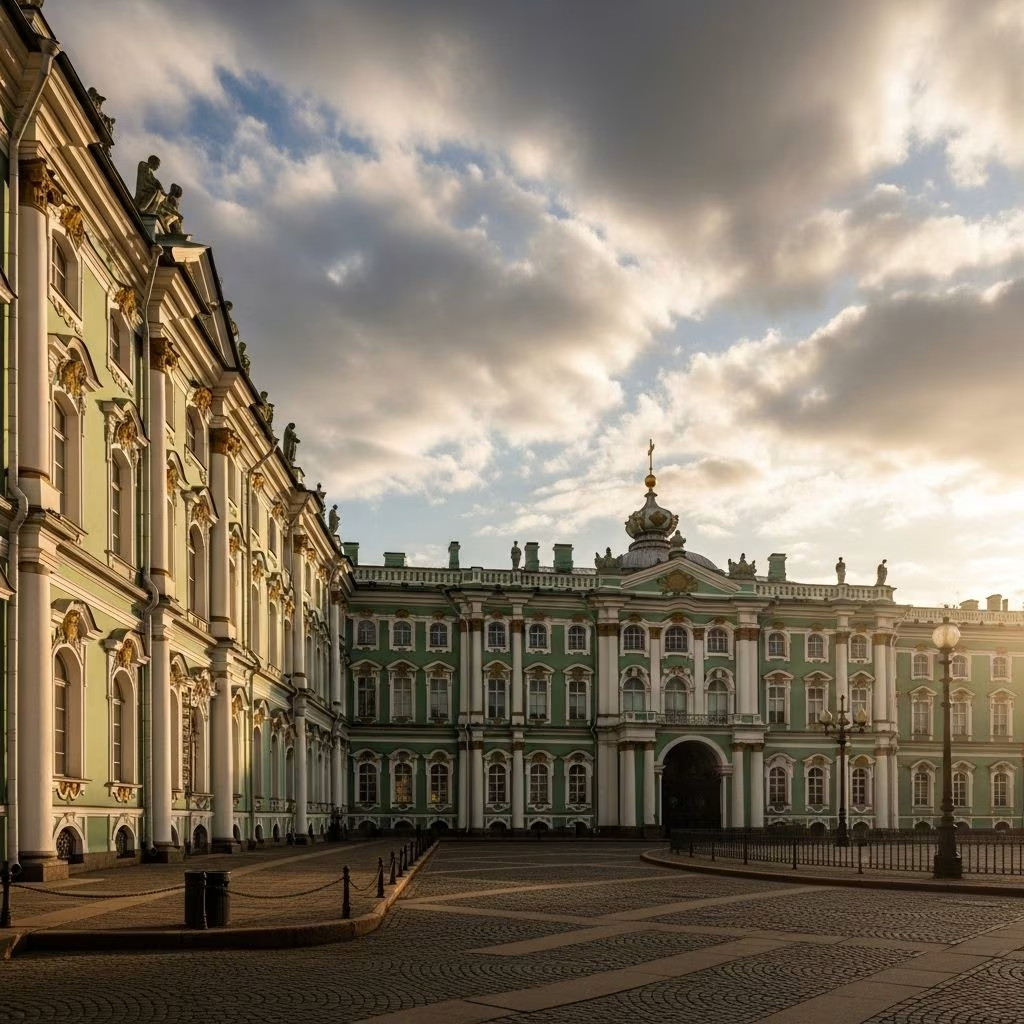
- The Winter Palace, now the world-renowned Hermitage Museum, was the seat of the provisional government. Revolutionaries stormed its lavish halls in scenes that later became iconic in Soviet films—turning the old royal power center into a symbol of people’s victory. Today, visitors walk through these same corridors, surrounded by treasures of art collected long before and after the turmoil.
Seeds of Revolution: Reforms, Riots, and Romanovs
Though the 1917 revolution was sudden, its roots dug deep into Russian soil. In 1861, Czar Alexander II freed Russia’s serfs, liberating millions but giving them scant land or support. The abrupt upheaval left many peasants bewildered and destitute, sparking riots and unrest across the country. Discontent festered not only among the ex-serfs but also among radical intellectuals dissatisfied with the slow pace of reform.
Turmoil turned deadly in 1881, when an assassin fatally bombed Alexander II as he drove through the streets of St. Petersburg. The site is now immortalized by the Church on Spilled Blood, a dazzling structure adorned with gilded domes and intricate mosaics—a fairy-tale image set amid the city’s baroque grandeur. Still, this shrine was never just a memorial; for the Bolsheviks, who despised all symbols of czarist rule, the very existence of such monuments seemed an affront.
Churches in the Crossfire: Sacred Spaces Repurposed
In the wake of the revolution, czarist churches became lightning rods for the Bolsheviks’ anger. During the 1917 uprising, the Church on Spilled Blood was vigorously looted, echoing a wider campaign against religious institutions throughout the city. That era saw:
- The Peter and Paul Fortress, where mobs desecrated the Romanov tombs inside the cathedral of Sts. Peter and Paul, ransacking a burial place that had once embodied dynastic continuity.
- The Kazan Cathedral, renowned for housing the venerated icon of Our Lady of Kazan, was transformed into a Museum of Atheism—its sacred function erased, its treasures marooned in secular hands.
- Other churches met similarly unexpected fates, converted into swimming pools, ice-hockey arenas, and storage centers. The Bolsheviks’ secular zeal left scars that would only begin to heal generations later.
The Return of Orthodoxy
Today, the churches of St. Petersburg are enjoying a remarkable restoration. The cathedral at Peter and Paul Fortress, resplendent with Orthodox symbolism, now welcomes pilgrims and tourists alike. The remains of Nicholas II and his family, retrieved and interred here, have been canonized by the Russian Orthodox Church as martyrs. Centuries of conflict have given way to a new embrace of faith and historical memory, transforming these places once more into cornerstones of Russian identity.
Museums and Masterpieces: Art’s Revolutionary Journey
Amid upheaval, St. Petersburg’s storied collections of art also underwent transformation. The city’s wealthy aristocrats had amassed significant works from European masters—especially French Impressionists and Post-Impressionists like Matisse and Picasso. These paintings graced grand townhouses and became symbols of refined cosmopolitan taste.
After the Bolshevik victory, the new government confiscated these collections, absorbing them into state museums such as the Hermitage and the Russian Museum. Former owners were exiled or fled abroad, but their cultural legacy remained: today, these same masterpieces draw art lovers from all over the world, who can contemplate them in spaces once reserved for the elite.
Imperial Echoes and Contemporary Contrasts
St. Petersburg remains both a city of splendid architecture and reminders of hardship. Along the city’s boulevards and waterways, pastel palaces, gardens, and statues reflect the ambitions of Peter the Great and generations of Romanov rulers. Yet a walk through the city also reveals sites where revolutions flared, where sacred spaces became secularized, and where history’s tides washed fortunes away and restored them anew.
Legacy of the Romanovs
- Former imperial landmarks like the Winter Palace and Peterhof still inspire awe, their facades and gardens bearing the marks of czarist opulence as well as revolution’s scars.
- St. Petersburg’s architectural harmony—a vision brought to life by Peter the Great and successors—remains a point of local and national pride, fascinating not just Russian citizens but guests from around the globe.
- Recent years have seen a resurgence of nostalgia for the Romanovs, as Russians come to appreciate the artistry and craft of a bygone era—even as the harsh lessons of history linger in collective memory.
Modern St. Petersburg: A City Reclaimed
Contemporary St. Petersburg is a testament to resilience and renewal. The city has reclaimed its status as Russia’s cultural showcase. Orthodox traditions, spectacular art, and restored monuments now flourish in spaces once emptied by ideology. The Hermitage dazzles with global treasures. The lately reopened churches are alive with the glow of gold and faith. The volatile past has become the backdrop to daily life, as locals and visitors rediscover the city’s enduring soul.
Frequently Asked Questions (FAQs)
What started the Russian Revolution in St. Petersburg?
The revolution began with widespread unrest among workers, soldiers, and peasants, fueled by economic hardship, czarist mismanagement, and war exhaustion. The February 1917 uprising led to the abdication of Czar Nicholas II and the end of the Romanov dynasty, followed by the Bolsheviks’ seizure of power in October 1917.
Which sites in St. Petersburg are linked to the revolution?
Key revolutionary sites include the Battleship Aurora (whose blank shot signaled the uprising), the Winter Palace (scene of the Bolshevik assault), the Peter and Paul Fortress (with the Romanov tombs), and several churches that experienced looting and repurposing by revolutionaries.
How did the revolution affect religion and churches in St. Petersburg?
Revolutionaries looted and repurposed many churches, turning cathedrals into secular museums, storage, or sports facilities. Orthodox religious practice was suppressed but has made a strong comeback since the collapse of the Soviet Union.
Where can visitors see revolutionary art and cultural treasures today?
Major museums such as the Hermitage and Russian Museum display many artworks confiscated during the revolution from aristocratic collections, including masterpieces by French Impressionists and Russian artists.
How is the legacy of the Romanovs viewed in St. Petersburg today?
The Romanov family, once vilified by the revolution, is now often viewed with nostalgia and reverence, symbolized by the restoration of their tombs and the canonization of Nicholas II and his family by the Russian Orthodox Church.
Key Sights of Revolutionary St. Petersburg: Quick Reference Table
| Site | Role in Revolution | Current Function |
|---|---|---|
| Battleship Aurora | Signal for Bolshevik uprising | Museum ship on Neva River |
| Winter Palace | Stormed by Bolsheviks, seat of provisional gov’t | Hermitage Museum |
| Peter and Paul Fortress | Site of Romanov tombs, looted during revolution | Historical museum, cathedral restored |
| Church on Spilled Blood | Memorial to assassinated Alexander II, looted | Restored cathedral, major tourist site |
| Kazan Cathedral | Converted to secular use (Museum of Atheism) | Orthodox cathedral, active parish |
Experiencing the Past Today
For travelers, St. Petersburg offers an unrivaled window into Russia’s turbulent journey—from imperial heights, through revolution, to spiritual and cultural renaissance. Every church dome, palace arcade, and museum room tells a story not just of what was lost, but what has endured and been reimagined for a new age. The revolutionary spirit, once aimed at tearing down the old order, has now become part of a complex heritage—one that continues to draw, challenge, and inspire all who walk these storied streets.
References
- https://www.ricksteves.com/watch-read-listen/read/articles/russia-revolution-st-petersburg
- https://www.youtube.com/watch?v=bDu-mQCP2bs
- https://www.ricksteves.com/watch-read-listen/read/articles/st-petersburg-grand-city-of-the-czars
- https://www.ricksteves.com/watch-read-listen/read/articles/st-petersburg-russias-showcase
- https://www.ricksteves.com/watch-read-listen/read/articles
- https://www.ricksteves.com/europe/russia/st-petersburg
- https://blog.ricksteves.com/blog/tag/russia/page/2/
- https://vancouversun.com/travel/city-of-czars-retains-regal-splendour