Exploring the Czech Republic: Prague and Beyond
The Czech Republic lies at the crossroads of Central Europe, offering a distinctive blend of architectural grandeur, vibrant history, hearty cuisine, and welcoming hospitality. While Prague dazzles as the crown jewel, the country’s heart beats just as strongly in its storybook towns, rolling hills, and time-honored traditions. This comprehensive guide presents an immersive look at both iconic and offbeat destinations, local flavors, travel strategies, and the rich cultural tapestry awaiting discovery.
Why Visit the Czech Republic?
- Prague: A city of Gothic, Baroque, and Art Nouveau marvels, lively squares, and a romantic riverfront.
- Charming Countryside: Discover lesser-known towns, rural landscapes, and fairy-tale castles.
- History & Culture: From medieval power struggles to 20th-century resilience, stories run deep everywhere.
- Food & Drink: Savor traditional Czech dishes and sample world-class local beer.
- Accessibility: Compact, affordable, and easy to explore with excellent transport links.
Prague: The Golden City of a Hundred Spires
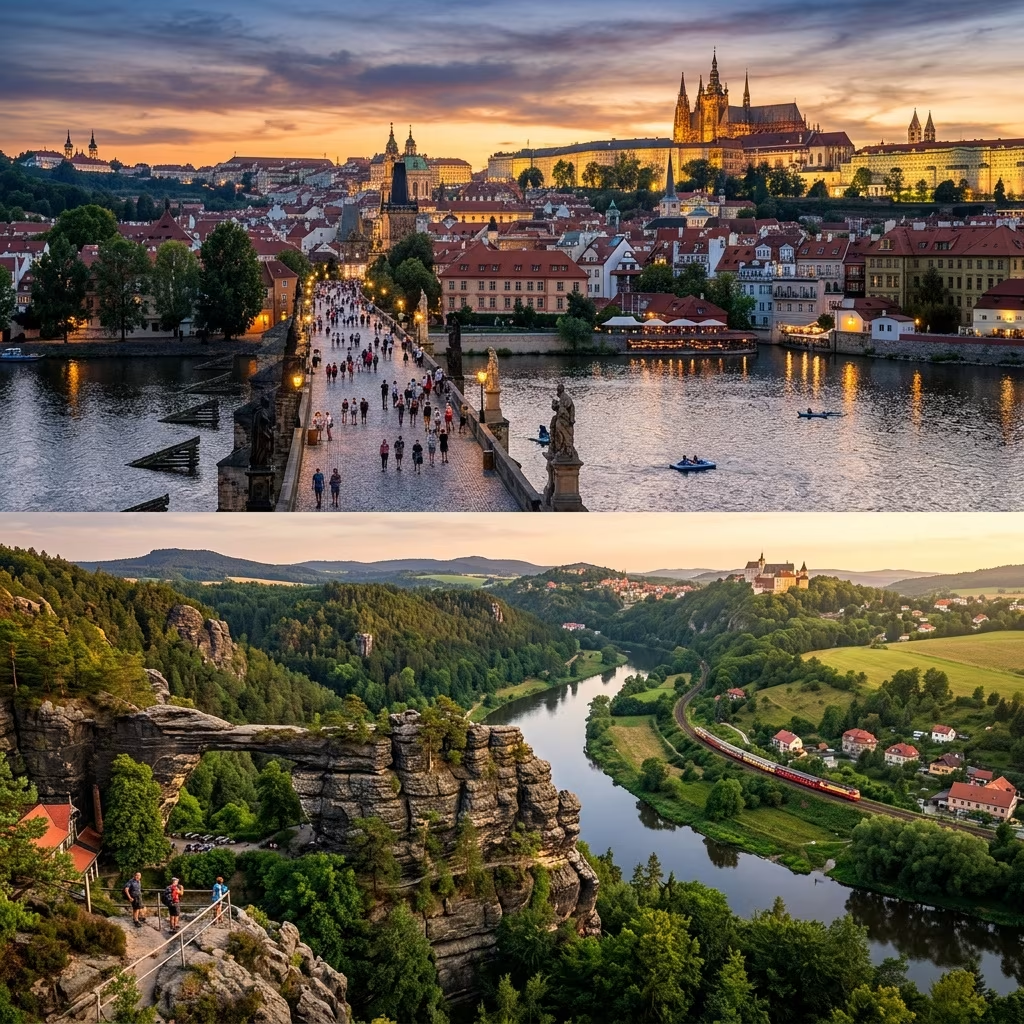
Prague, the Czech capital, makes an unforgettable first impression. Largely spared by 20th-century conflicts, its cobbled lanes reveal centuries of architectural splendor. The city invites exploration on foot, each quarter revealing a layer of its multifaceted story.
Key Neighborhoods & Sights
- Old Town (Staré Město): Marvel at the Old Town Square, the Astronomical Clock, and winding medieval passages bustling day and night.
- Lesser Town (Malá Strana): Cross the romantic Charles Bridge to tree-shaded squares and colorful Baroque buildings at the foot of the castle hill.
- Prague Castle (Pražský Hrad): The sprawling castle complex dominates the skyline. Visit St. Vitus Cathedral, the Royal Palace, ancient Golden Lane, and the story-rich tomb of St. Wenceslas.
- Jewish Quarter (Josefov): Explore the moving history and unique heritage of the Jewish community in its synagogues, the Old Jewish Cemetery, and the Jewish Museum.
- Wenceslas Square: The modern heart of Prague, site of demonstrations, celebrations, and vibrant city energy.
- Vyšehrad: A quieter, atmospheric hilltop district overlooking the Vltava River, steeped in legend.
Arts, Culture, and Everyday Life
- Music: Enjoy classical concerts, jazz clubs, and musicians enlivening the streets year-round.
- Art Nouveau: Notice the harmonious curves and colorful facades of Prague’s much-loved floral Art Nouveau architecture.
- Pubs and Cafés: Join locals for acclaimed Czech beer and hearty food in lively historic cellar pubs or elegant cafés recalling Prague’s literary past.
Prague: Self-Guided Walks and Tours
Get the most from your Prague visit with self-guided strolls:
- Old Town & Charles Bridge Walk: Traverse medieval streets, pause in picturesque squares, and cross the iconic Charles Bridge with its baroque statues and sweeping views.
- Wenceslas Square Loop: Absorb the city’s modern pulse and historical milestones in this broad, grand boulevard.
- Vyšehrad Exploration: Seek out legends, panoramic outlooks, and rare tranquility in one of Prague’s oldest settlements.
Consider adding in-depth museum stops:
- Museum of Medieval Art
- Mucha Museum: Celebrates the celebrated Art Nouveau painter Alphonse Mucha.
- Prague Castle Complex Tours
Beyond Prague: The Heart and Soul of the Czech Republic
True Czech character often shines brightest beyond the capital. The Republic is rich with preserved small towns, rolling landscapes, castles, and a tapestry of living tradition. These destinations combine history, natural beauty, and warm village charm.
Classic Day Trips from Prague
- Kutná Hora: Once a prosperous silver mining town, featuring the mind-bending Bone Church (Sedlec Ossuary) and St. Barbara’s Cathedral.
- Terezín (Theresienstadt): Tour the memorial and museum at the chilling former WWII concentration camp and ghetto.
- Karlštejn Castle: Built to house the Bohemian crown jewels, Karlštejn is a Gothic fortress set in picturesque forested hills.
- Křivoklát Castle: A medieval castle with impressive towers, art, and authentic atmosphere.
- Konopiště Castle: The lavishly decorated residence of Archduke Franz Ferdinand, complete with trophy rooms and peacocks.
- Karlovy Vary (Carlsbad): A grand 19th-century spa town renowned for its hot springs, pastel mansions, and the annual film festival.
Český Krumlov: A Fairytale Town
Located on a dramatic bend in the Vltava River, UNESCO-listed Český Krumlov enchants with its Renaissance and Baroque core, castle with theater and gardens, and lively music scene. Wandering its winding lanes is like stepping back in time. Sample local cuisine and enjoy riverside cafés while soaking up sweeping views over the red rooftops and towers.
Moravian Towns and Treasures
- Olomouc: Famous for grand squares, a 35-meter Holy Trinity Column, and a lively university and bar scene. Sample the notorious “stinky” cheese with fresh local beer.
- Kroměříž: Home to an impressive chateau and elaborate baroque gardens, a UNESCO World Heritage site.
- Moravský Krumlov: Known for its historic castle and hosting Alphonse Mucha’s epic canvas series, the Slav Epic.
Czech Countryside: Southern and Eastern Jewels
- Třeboň: Picturesque spa town famous for carp fisheries, Renaissance squares, and castle parklands.
- Telč: Boasts one of Europe’s most beautiful main squares, lined with colorful Renaissance and Baroque houses.
- Třebíč: Features a Jewish Quarter and unique basilica, part of UNESCO world heritage.
- Slavonice: A quiet border town with ornate sgraffito facades and peaceful atmosphere.
- Moravský Krumlov: Artistic heritage and castle prowess, surrounded by gently rolling hills.
Wallachia: Tradition in the East
- Štramberk: Known for its gingerbread-like tower and regional folk charm.
- Rožnov pod Radhoštěm: Open-air museum village preserving Moravian folk architecture and tradition.
- Pustevny: Mountain retreat with fanciful wooden architecture and access to scenic hiking trails.
Mikulov and the Wine Region
Discover rolling vineyards in the sun-splashed south.
- Mikulov: Town crowned by a grand chateau and surrounded by wine cellars and limestone hills.
- Pavlov and the Pálava Hills: Ancient wine villages, archaeological sites, and panoramic walking trails.
- Lednice and Valtice: Linked by a landscape park, these twin chateaux epitomize aristocratic grandeur and host wine tastings as part of a UNESCO Heritage area.
Practical Tips for Czech Republic Travel
Planning ahead ensures you get the most out of your visit. Here’s how to travel smart and savor local culture with ease.
When to Go
- Spring (April–June): Blossoming parks, fewer tourists, mild temperatures.
- Summer (July–August): Festivals abound, skies are sunny, attractions are lively but busy.
- Autumn (September–October): Gorgeous fall colors, wine and harvest celebrations, lower crowds.
- Winter (November–March): Medieval squares glitter with Christmas markets and snowy romance, though daylight is brief.
Festivals and Holidays
- Prague Spring Festival: World-class music concerts each May and June.
- Easter Markets: Hand-painted eggs, folk crafts, and sweet treats
- Christmas Markets: Twinkling lights, mulled wine, festive cheer throughout December.
- International Film Festival: Held annually in Karlovy Vary in early summer.
Sample Itineraries
- 3 Days: Focus on Prague highlights and one easy day trip (e.g., Kutná Hora).
- 7–10 Days: Add Český Krumlov, Terezín, Karlštejn, Karlovy Vary, and a Moravian town, such as Olomouc or Mikulov.
- Two Weeks: Explore the variety of the whole country at a relaxed pace, delving into scenic countryside and local traditions.
Getting Around the Czech Republic
Though distances are short, the variety is broad. Plan your transport for maximum efficiency.
- Trains: Reliable, scenic, and well-connected between cities and towns.
- Buses: Widespread service, often quicker for rural destinations not directly linked by train.
- City Transit: Prague’s metro, trams, and buses offer extensive coverage. Buy tickets for your entire journey before boarding.
- Car Rental: Useful for reaching small villages and exploring at your own pace, though unnecessary in Prague.
Czech Culture: History, Language, and Cuisine
A Brief History
- The Czech lands were a center of power during the Holy Roman Empire and the Habsburg dynasty.
- Prague played a pivotal role in the Protestant Reformation and 20th-century nationhood movements.
- Modern Czech identity emerged after World War I, with the founding of Czechoslovakia in 1918. Democracy was challenged during Nazi occupation and four decades of Communism before the Velvet Revolution of 1989 set the country on its current course.
Language Essentials
Czech is the official language. While English is widely understood in tourist areas, learning a few Czech phrases will be appreciated by locals.
- “Dobrý den” (DOH-bree den) – Good day
- “Prosím” (PRO-seem) – Please
- “Děkuji” (DYEH-koo-yee) – Thank you
Local Cuisine and Beer
- Hearty Fare: Savor beef goulash, roast pork with dumplings (vepřo-knedlo-zelo), and creamy sauces.
- Cheese: Try Olomouc’s renowned aromatic cheese with dark bread and onions.
- Beer (Pivo): Locally brewed pale lagers, like Pilsner Urquell and Budvar, are national treasures, best enjoyed in friendly pubs (“hospodas”).
- Sweets: Treat yourself to trdelník (sweet pastry baked over an open flame) and fruit-filled kolache.
Staying, Eating, and Money Matters
- Accommodations: Choose from boutique hotels, family-run guesthouses (penzion), or charming historic inns. Booking in advance is wise during summer and festivals.
- Dining: Try local restaurants for a full meal or small cafés for coffee and cakes. Beer gardens offer a social environment, especially in summer.
- Money: The Czech Republic uses the Czech koruna (CZK). While many places accept credit cards, have some cash for markets, small towns, and tips.
Useful Safety and Practical Information
- Tap water is safe to drink throughout the country.
- Public Wi-Fi is widespread in cities and tourist areas.
- Emergencies: The general emergency number is 112.
Frequently Asked Questions (FAQs)
Q: Is Prague safe for tourists?
A: Prague is considered very safe. Like in any popular destination, be mindful of pickpockets, especially in crowded areas and on public transport.
Q: Can I visit the Czech Republic with only English?
A: Yes, English is widely spoken in Prague and larger tourist centers. Basic Czech phrases are helpful and show respect, especially in rural areas.
Q: What’s the best way to travel between Czech towns?
A: Trains and buses offer reliable, affordable access to most towns and regions. Renting a car provides flexibility for exploring remote villages and countryside.
Q: Is tap water safe to drink?
A: Yes, tap water is safe and clean throughout the Czech Republic.
Q: When is the best time to visit Czech towns outside Prague?
A: Late spring through early fall (May–September) offers the mildest weather, festivals, and lively markets. Winters are peaceful, with magical holiday atmospheres.
Planning Tools
- Maps: Free tourist maps are available at local info centers. Consider downloading offline maps for rural adventures.
- Guidebooks: Invest in a comprehensive guide to deepen historical and local insight, particularly when exploring off the main tourist circuits.
- Travel Apps: Translation, city transit, and digital tickets can simplify your experience.
Final Tips for a Memorable Visit
- Savor each town’s unique pace—linger in squares, savor a beer, and join in local festivals.
- Sample regional foods, from Moravian wines to Bohemian pastries.
- Respect local customs—quiet in churches, greetings in shops, and recycling in cities.
- Plan a mix of famous sights and unscripted wanderings for the richest memories.
References
- https://store.ricksteves.com/shop/p/prague-guidebook
- https://www.ricksteves.com/watch-read-listen/video/tv-show/czech-republic-beyond-prague
- https://www.ricksteves.com/tours/czech-republic
- https://www.ricksteves.com/watch-read-listen/video/tv-show/season-8/prague
- https://www.youtube.com/watch?v=isiXydJSK6s
- https://www.ricksteves.com/europe/czech-republic
- https://community.ricksteves.com/travel-forum/czech/which-book-book-to-buy
- https://www.tripadvisor.com/ShowTopic-g274707-i96-k6631317-Rick_Steves_travel_guide_good-Prague_Bohemia.html