Normandy’s D-Day Beaches: A Living Memorial
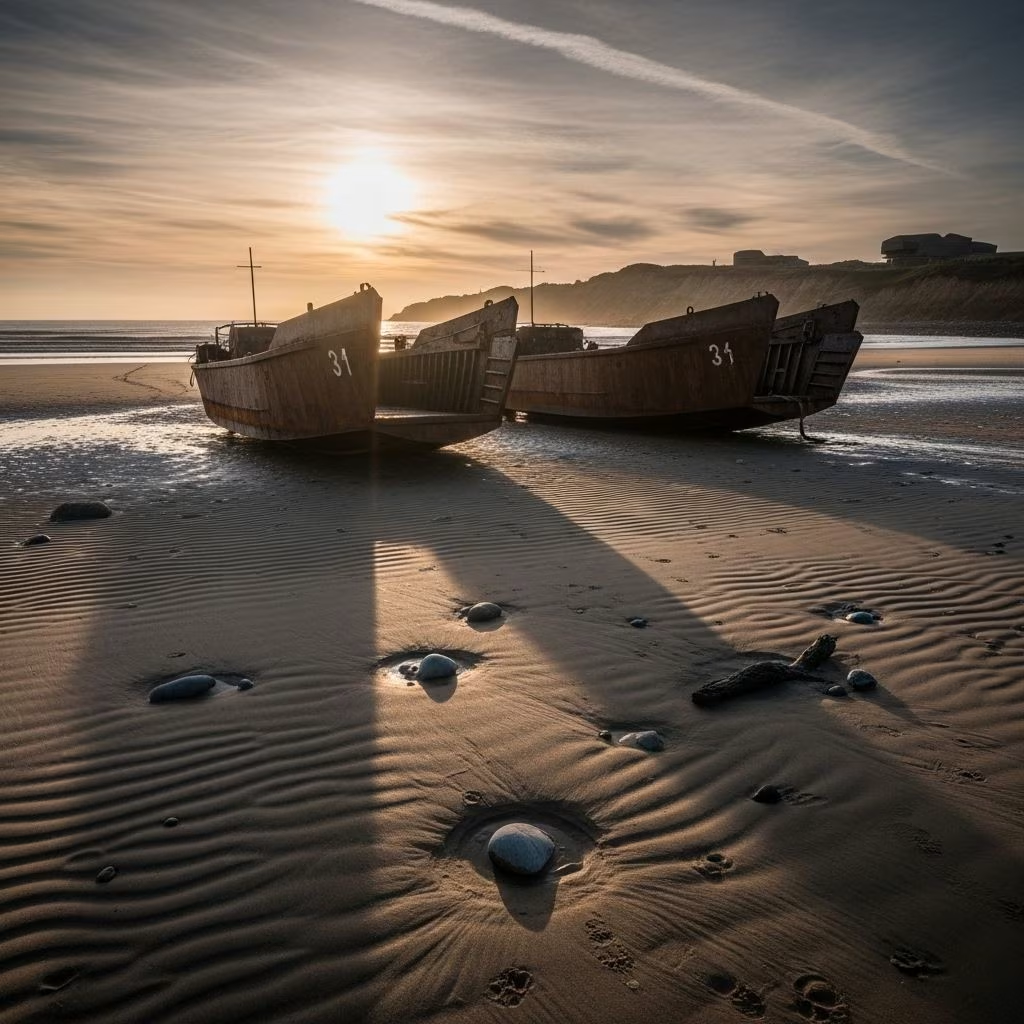
The tranquil coastline of Normandy, stretching over 54 miles from Utah Beach in the west to Sword Beach in the east, is etched in history as the landing point of the Allied invasion on June 6, 1944. These serene beaches, marked by poignant memorials, cemeteries, and relics, stand as everlasting reminders of the largest military operation ever staged — an event that marked the turning point in World War II and sealed the fate of Nazi-occupied Europe.
Why Visit Normandy’s D-Day Beaches?
- To pay tribute to the courage and sacrifice of the Allied soldiers who landed here.
- To connect with history at some of the world’s most important WWII museums and memorials.
- To witness the breathtaking coastal landscapes that now contrast with their violent past.
- To gain a deeper understanding of the enormous logistical achievement and human cost of D-Day.
The Geography and Scope of D-Day
The Allied landings spanned five designated beach sectors: Utah, Omaha, Gold, Juno, and Sword. Each sector tells a story of courage, logistics, and heartbreak, with numerous museums and monuments documenting every aspect of the invasion. The beaches today are scattered with remnants of bunkers, war debris, and memorials to the fallen, woven into the peaceful countryside and fishing villages of Normandy.
Essential D-Day Sites
- Utah Beach: Westernmost assault site, where the US 4th Infantry landed. Features an excellent museum and memorials to American paratroopers.
- Omaha Beach: The bloodiest landing spot, immortalized in film and visited for its chilling fortifications and American Cemetery above the shore.
- Gold Beach: Main British landing site, with displays recounting detailed engineering feats and fierce resistance.
- Juno Beach: Canadian landing area, home to a major interpretive center detailing the Canadian sacrifice.
- Sword Beach: Easternmost beach, including the site of British and Free French actions near Ouistreham.
- Arromanches: Site of the remarkable “Port Winston” artificial harbor, still visible today with remnants along the coast.
- Pointe du Hoc: Dramatic cliffs scaled by US Rangers; preserves massive bomb craters and captured German bunkers.
- Longues-sur-Mer Battery: Well-preserved German gunnery position with original artillery pieces still in place.
- Ste-Mère-Église: The first town liberated by American paratroopers; famous for the paratrooper caught on the church spire.
- Normandy American Cemetery: Overlooking Omaha Beach, this solemn site is the final resting place for nearly 10,000 US servicemen.
Brief History: D-Day, June 6, 1944
Dawn broke on June 6, 1944, as the largest armada ever assembled crossed the English Channel. Allied bombing, paratrooper drops, and naval barrages preceded tens of thousands of infantry storming the beaches. The objective: breach Nazi Germany’s formidable Atlantic Wall and begin the liberation of Western Europe.
The cost was tremendous. Over 4,400 Allied soldiers died that day. Yet by nightfall, the beachheads were secured. The turning tide of war had begun.
In-Depth: Normandy’s Major D-Day Beaches
Utah Beach
Utah Beach, the westernmost of the D-Day landing sites, was crucial for the Allies to rapidly link with paratroopers dropped nearby and move northwest toward Cherbourg’s deep-water port. The US 4th Infantry Division stormed ashore here with fewer casualties than elsewhere, aided by favorable tides and airborne supports.
- Visit the Utah Beach Museum, built on the original German defensive position and featuring a B-26 bomber, tanks, landing craft, and immersive multimedia exhibits.
- The 82nd and 101st Airborne Memorials honor paratroopers who secured key bridges and towns inland on the eve of the invasion.
- The nearby town of Ste-Mère-Église is famed for the paratrooper mannequin permanently suspended from its church tower, commemorating John Steele’s ordeal.
Omaha Beach
Perhaps the most storied and tragic of the landings, Omaha Beach saw the US 1st and 29th Infantry Divisions land under murderous machine-gun and artillery fire, with waves decimated along the wide, exposed sands. Over 2,400 Americans died here that day, and relics of the battle — concrete bunkers, tank traps, and pillboxes — remain stark reminders along the shoreline.
- Normandy American Cemetery: A must-visit, with nearly 10,000 white crosses and Stars of David on manicured lawns, overlooking the sea. A new visitor’s center presents moving personal stories, artifacts, maps, and an orientation film.
- The monuments and surviving fortifications on Omaha Beach itself are accessible via several parking areas, with interpretive panels and memorials.
Gold Beach
Gold Beach was stormed primarily by British forces, tasked with capturing Arromanches and pushing inland to link with American and Canadian sectors.
- Arromanches: The site of the ingenious Mulberry Harbor, the world’s first prefabricated harbor, assembled within days from modular concrete caissons floated across from England. Large sections of the harbor are still visible and accessible at low tide.
- Visit the Musée du Débarquement in Arromanches, which tells the dramatic story of the engineers and logistics behind the harbor’s construction, supported by original artifacts and detailed models.
Juno Beach
The Canadians’ key landing point, Juno Beach, saw heavier resistance than expected, but Canadian forces overcame fortified defenses and pushed farther inland than any other Allied forces on D-Day.
- The Juno Beach Centre explores Canada’s WWII contribution and postwar peacekeeping role, with interactive exhibits and emotional personal stories.
- Monuments in the towns of Courseulles-sur-Mer and Bernières-sur-Mer honor the Canadian soldiers’ sacrifices.
Sword Beach
Sword Beach was a British operation, with strong support from Free French commandos and armor units. The ultimate objectives were to seize Caen and link up with airborne units at the Pegasus Bridge east of the Orne.
- The Ouistreham sector includes a restored World War II bunker and the Commandos Memorial.
- The Pegasus Bridge Memorial chronicles the bold glider assault that secured vital crossings ahead of the main invasion.
Beyond the Beaches: Key Sites and Memorials
- Pointe du Hoc: These imposing cliffs were scaled by US Army Rangers under heavy fire to neutralize a critical German gun battery. Visitors can explore craters, ruined bunkers, and a memorial to the fallen Rangers.
- Longues-sur-Mer Battery: Unique for still having its original German naval guns in place, this site offers a stunning panorama of the invasion coastline and interpretive paths around the preserved bunkers.
- Commonwealth War Cemeteries: British, Canadian, and other Allies rest in beautifully maintained cemeteries such as Bayeux and Beny-sur-Mer, each poignant in its own way.
- German War Cemetery at La Cambe: Sobering and distinct for its dark crosses and mass graves, this site offers a place for reflection on the shared losses of war.
Arromanches and the Mulberry Harbor
No visit to Normandy is complete without exploring Arromanches. This small seaside town became ground zero for a marvel of wartime engineering: Port Winston. Within days after the landings, the Allies assembled a massive pre-fabricated harbor using concrete caissons, sunken ships, floating piers, and a four-mile protective breakwater. This harbor enabled the rapid unloading of men, equipment, and vehicles, crucial to sustaining the invasion push. Giant chunks of the harbor are still present, scattered along the coast and at sea, inviting visitors to walk up close and marvel at this improbable feat.
How the Mulberry Harbor Worked
| Component | Description |
|---|---|
| Concrete Caissons | Giant hollow blocks floated across the Channel then sunk to form artificial breakwaters |
| Blockships | 17 obsolete ships scuttled to form the initial protective barrier |
| Floating Roadways | Pontoons supporting nearly a mile of floating roads for vehicles |
| Unloading Wharves | Modular dock platforms for offloading men and materiel |
Planning Your D-Day Beaches Visit
To truly appreciate Normandy’s significance and absorb its many stories, plan to spend at least one or two full days exploring. Many choose to base themselves in Bayeux, a charming town conveniently located for touring all major sites.
Tips for Visitors
- Rent a car for maximum flexibility, as most beaches and memorials are spread out and public transportation options are limited.
- Book a guided tour to deepen your understanding. Numerous seasoned guides and group tours are available, each offering unique insights and narratives.
- Allow plenty of time at each major site, especially the illuminated visitor centers at the American Cemetery, Juno Beach, Utah Beach, and Arromanches.
- Consider starting early to avoid crowds, especially during the peak travel season and anniversary dates in early June.
- Wear sturdy footwear for walking sandy terrain, grassy cemeteries, and coastal paths.
- Bring a rain jacket and layers, as Normandy’s weather can be unpredictable.
- Pause for reflection; these sites are places of remembrance and dignity.
Other Historic Attractions Nearby
- Bayeux Tapestry: Before or after touring the landing beaches, visit Bayeux’s museum to view the famous tapestry chronicling the Norman conquest of England in 1066.
- Medieval Bayeux Cathedral: A stunning landmark in the heart of Bayeux, worth a visit for its architecture and tranquility.
Frequently Asked Questions (FAQs)
How much time do I need to visit the D-Day beaches?
Aim for at least a full day, preferably two or more, to cover the major beaches, museums, and cemeteries. Dedicated enthusiasts may want to spend several days to see both well-known sites and lesser-known battlefields or monuments.
What is the best base for exploring the D-Day sites?
Bayeux is highly recommended for its proximity to most major sites, its picturesque old town, and wide range of accommodations and dining options.
Are guided tours worth it?
Absolutely. Local guides offer deep expertise, stories, and context that enrich the experience far beyond what you’ll find in guidebooks. They can customize visits to special interests or family history.
Is it necessary to visit all five beaches?
While impossible to see every site in one day, even visiting just a few beaches, a cemetery, and a museum offers powerful insights. Prioritize sites that resonate with your interests or heritage.
Are there special commemorations?
Major anniversary years (2024 was the 80th) feature international ceremonies, parades, reenactments, and special exhibits. These bring increased crowds but also rare opportunities to meet veterans and witness living history.
Travel Essentials and Resources
- Numerous guidebooks offer thematic driving routes and comprehensive site lists—ideal for self-guided adventurers.
- Many museums provide multilingual displays and visitor guides for independent travelers.
- Cafés, picnic areas, and shops are available in the major towns and some museum grounds.
- Accessibility varies; most museums offer ramps and services for visitors with reduced mobility, though beach access may involve walking on sand or uneven ground.
Legacy: Normandy’s Enduring Message
Today, Normandy’s D-Day beaches host millions of visitors annually from around the globe. Veterans and their families come to honor comrades, while historians, travelers, and students reflect on the scale of sacrifice and the cost of freedom. The beauty of the Normandy coast, with its lush fields and quiet seas, sits forever in contrast with the violence it once witnessed. As you visit, take the time to mourn, to understand, and to carry forward the lessons of D-Day: courage, cooperation, and peace.
References
- https://www.ricksteves.com/europe/france/d-day-beaches
- https://www.ricksteves.com/watch-read-listen/video/tv-show/normandy
- https://blog.ricksteves.com/cameron/2019/06/postcards-normandy
- https://www.ricksteves.com/watch-read-listen/video/normandy-d-day
- https://www.ricksteves.com/travel-tips/travel-classes/monday-night-travel/normandy-d-day
- https://www.ricksteves.com/watch-read-listen/read/articles/utah-beach-normandy-d-day
- https://community.ricksteves.com/travel-forum/trip-reports/trip-report-normandy-may-2025