Civita di Bagnoregio: Italy’s Timeless Jewel on the Hill
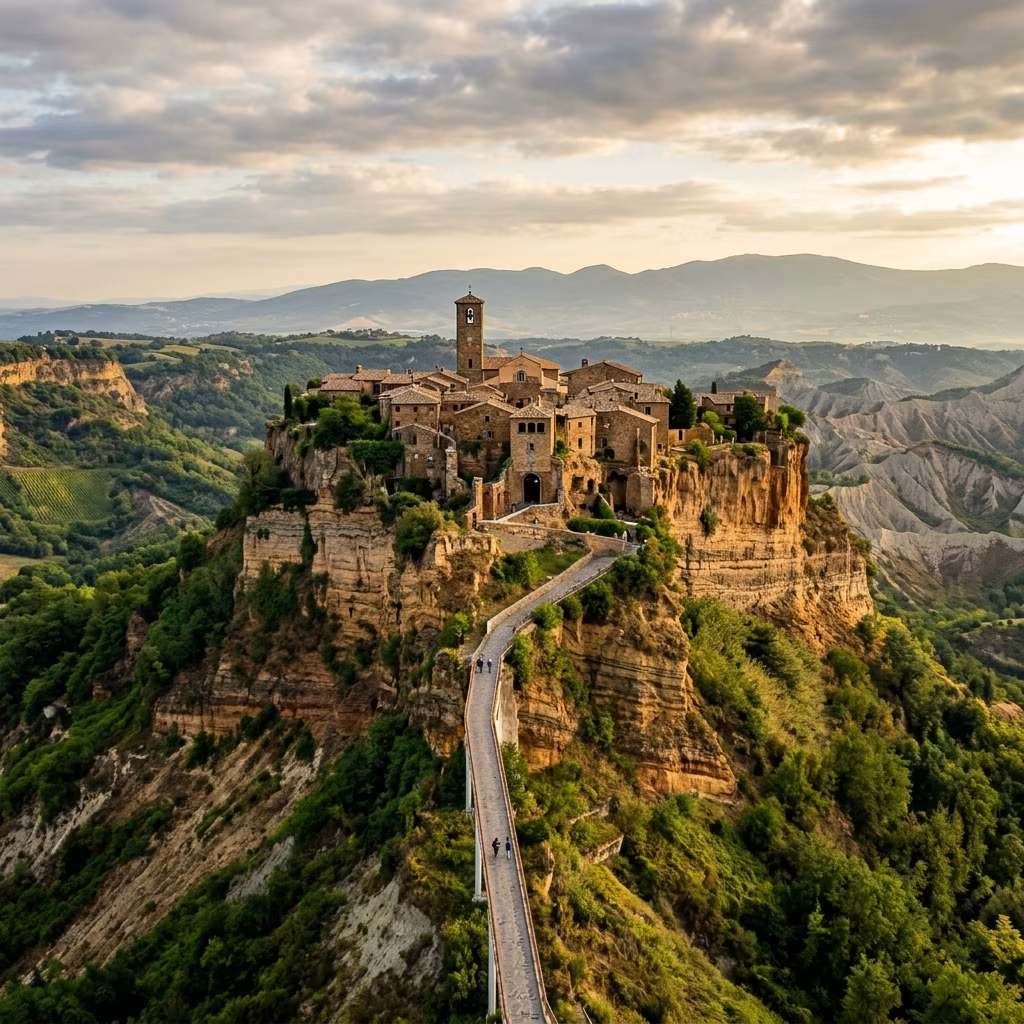
Nestled atop a defiant crest high above central Italy’s wild canyonland, Civita di Bagnoregio stands as a quiet marvel, untouched by the chaos of modern tourism. Unlike more famous neighbors such as Siena or Assisi, Civita’s relative obscurity has only preserved – and enhanced – its atmosphere of enchanting antiquity and quietude. Here, the relentless work of wind and rain, rather than bustling crowds, shape the rhythms of daily life.
A Town Carved by Time and Nature
Civita di Bagnoregio owes both its protection and its peril to its dramatic setting. Perched on a slender pinnacle of fragile volcanic tuff and clay, the town surveys a grand, wind-sculpted canyon—a view equal parts beautiful and haunting. Over millennia, erosion has steadily eaten away the town’s foundations. The once-wide earth saddle that anchored Civita to its village neighbor, Bagnoregio, has been steadily reduced to a slender path, then to nothing at all. Photographs displayed around the town reveal the vanished donkey trail, now lost to the ages.
- The only access to Civita today is a long, narrow footbridge—a modern lifeline that snakes above the yawning chasm. No vehicles, save for supply mopeds or emergency carts, ply its length.
- Year by year, wind, rain, and earthquakes gnaw at the cliff, threatening Civita’s very existence. It’s a poignant reminder that the town is ever suspended between creation and oblivion.
Crossing the Footbridge: A Step into History
The journey to Civita begins long before you actually reach its stone threshold. Park near Bagnoregio and stroll across the remarkable pedestrian bridge. The ascent offers sweeping views of the valley and the silhouette of Civita’s honey-colored buildings rising above, perched on sheer cliffs.
- On busy days, especially weekends, locals ferry supplies in on Vespas and load small carts to arrange deliveries to the town’s homes and restaurants.
- Every visitor—even the postman—must cross on foot, preserving the peace and quiet of the village streets.
Passing through the massive stone entryway—originally carved by the Etruscans over 2,500 years ago and later adorned with a 12th-century Romanesque arch—you quite literally cross a threshold between centuries.
Life Inside the Medieval Walls
Once inside, Civita reveals its charms slowly. Rather than a checklist of must-see landmarks, the town is itself a living museum—a place to wander, contemplate, and soak in its tactile history. The cobblestones beneath your feet have been worn smooth by centuries of use, each building telling a silent story.
- Civita lacks formal attractions: No guided orientation tours, few museums, and no gaudy souvenir shops vie for your attention. Instead, every winding lane, archway, and window box draped with geraniums is an invitation to linger.
- Ivy and wildflowers embrace arches and walls. Staircases climb whimsically, beckoning artists and photographers alike.
- Watch elderly residents tending small gardens or feeding the ever-present local cats—now, in fact, among Civita’s most numerous inhabitants.
Population, People, and Preservation
The story of Civita is one of resilience, adaptation, and quiet loss. Like many rural Italian villages, it has struggled to retain its people. The lure of Italy’s metropolitan buzz has drawn the youth away; the frail are more practically cared for in nearby towns. Today, the village’s permanent population has dwindled to a handful of full-time residents.
- Weekend urbanites and artists have begun to acquire and restore houses, infusing renewed energy—yet also transforming Civita into a tranquil weekend retreat rather than a bustling community.
- The full-time families who remain primarily serve visitors through restaurants, cafés, and bed-and-breakfasts.
Yet for all its challenges, nothing in Civita is abandoned. Restorations are diligently managed, and homes are maintained with visible notes of local pride—a determined pushback against both erosion and indifference.
The Piazza: The Heartbeat of Civita
At the center of Civita lies a broad, open piazza—a sun-drenched plaza that channels the life of the village. Here, residents and visitors gather in the shade of ancient buildings. It is both a social meeting ground and the stage for some of Civita’s most cherished traditions and festivities.
- The piazza hosts:
- Wild donkey races during annual celebrations each June and September. Townspeople cheer as costumed locals and their four-legged companions dash around the square in a burst of good-natured competition.
- Living nativity pageant during Christmastime, involving the whole community in a sacred recreation of biblical scenes.
- Local festivals marking harvests, saints, and historical anniversaries.
- Simple pleasures abound: Sit at a café on the piazza, strike up a polite conversation, and enjoy the slow, connected rhythm of small-town life—a social jigsaw where every passerby, be it a longtime resident, a returning son, or a curious traveler, fits into the evolving tapestry.
A Taste of Tradition: Olive Oil and Bruschetta
No visit to Civita is complete without savoring its local specialties. Locally produced olive oil and simple, fresh ingredients showcase centuries of culinary heritage.
- Olive oil production: Many restaurants proudly display timeworn olive presses—some as much as 1,500 years old. Until the 1960s, villagers operated them with blindfolded donkeys, crushing the valley’s olives into fragrant oil. Today, the presses are lovingly preserved as centerpiece artifacts.
- Bruschetta: The region’s classic treat is bread toasted on an open fire, doused with local olive oil, gently rubbed with garlic, and topped with chopped tomatoes. Served as a snack or with an antipasto plate, its flavor lingers—marking your memory of Civita long after you depart.
Every meal here speaks of the land’s resilience and the gentle hands of its people. Local restaurants offer seasonal fare sourced from the surrounding valley and, for a few hours, visitors and residents alike share in flavors untouched by time.
Planning Your Visit
Many travelers discover Civita as a day trip from Rome or as a serene stop between Orvieto and Viterbo. The town’s unique isolation can present logistical challenges, but these are easily navigated with advance planning—and richly rewarded by the experience.
- Getting there: Civita is reached by car or regional bus to Bagnoregio, followed by a walk across the footbridge. Parking is available (for a small fee) outside the pedestrian area.
- Accessibility: The ascent to Civita is steep and the bridge long, so sturdy footwear is recommended. Those with mobility challenges may find access difficult, but electric shuttle carts are sometimes provided for special needs.
- Accommodations: While some visitors come for just a few hours, staying overnight allows you to experience the quiet evenings and soft dawns when day-trippers have departed, and the town truly becomes your own.
Recommended activities during your stay include:
- Wandering the labyrinthine lanes and quiet alleyways
- Photographing the ever-changing light on the golden stone buildings
- Relaxing in the piazza to enjoy local gelato or a glass of regional wine
- Chatting with residents, whose stories shape a deeper connection with the village
- Exploring small artisan shops and galleries featuring local crafts
Frequently Asked Questions (FAQs)
Q: Why is Civita di Bagnoregio called the “dying town”?
A: Civita is often referred to as the “dying town” because its volcanic cliffs are steadily eroded by wind and rain, gradually shrinking its footprint and threatening its very existence. Population loss has also contributed, although restoration efforts and tourism are helping preserve it.
Q: How do you reach Civita di Bagnoregio?
A: The only access is across a long footbridge from the town of Bagnoregio. Visitors must park outside the pedestrian area and walk or take a shuttle if available.
Q: Is Civita suitable for children or those with mobility issues?
A: The bridge is steep and the streets cobbled, making access challenging for strollers or wheelchairs, though electric carts are sometimes provided.
Q: What is the best time to visit Civita di Bagnoregio?
A: Spring and autumn offer mild weather and vibrant scenery. Weekdays and off-season provide the quietest experience, while summer and festival dates can be livelier.
Q: Are there places to stay or eat within Civita?
A: Yes, a handful of charming guesthouses, bed-and-breakfasts, and family-run trattorias serve overnight guests and day-trippers. Local specialties, especially olive oil and bruschetta, are a must-try.
Final Thoughts
Civita di Bagnoregio is a living testament to the endurance of beauty, tradition, and the fierce resistance of a community facing nature’s slow but relentless siege. Every cobblestone, sun-warmed wall, and plate of crisp bruschetta tells a story of a place both endangered and eternal—a jewel on the hill, beckoning travelers to step quietly into history’s embrace.
References
- https://www.youtube.com/watch?v=pG45OwYbFwo
- https://www.islands.com/1739100/rick-steves-best-hill-towns-in-italy-civita-di-bagnoregio-crowd-free/
- https://www.ricksteves.com/watch-read-listen/read/articles/civita-di-bagnoregio-italy
- https://www.ricksteves.com/europe/italy/civita-di-bagnoregio
- https://www.heraldnet.com/life/rick-steves-on-civita-di-bagnoregio-italys-dead-hilltop-town/
- https://www.ricksteves.com/watch-read-listen/video/tv-show/italy-hill-towns
- https://www.sfgate.com/travel/ricksteves/article/Italy-s-Civita-di-Bagnoregio-Jewel-on-the-Hill-3445324.php