Siena’s Palio: Five Centuries of Fierce Tradition
The Tuscan hill town of Siena is famed for its striking medieval architecture—and perhaps even more for the spirit that animates its people. Each summer, that spirit erupts spectacularly in the Palio di Siena: a raucous, medieval horse race that has defined the city’s identity for over 500 years. For Sienese, as one local puts it, “You’re born… there’s the Palio… and then you can die.”
What Is the Palio?
The Palio di Siena is more than a horse race. It’s a passionate citywide ritual that takes place twice every year, on July 2 and August 16. The whole city pours its energy into these brief, electrifying events—90 seconds of wild, bareback racing that decide a year’s worth of neighborhood pride and rivalry. The origin of the modern Palio dates to the 17th century, but Siena’s tradition of public games and contests stretches much further back, into the Middle Ages.
- Location: The race takes place in Piazza del Campo, the city’s majestic, shell-shaped central square.
- Frequency: Each year, races are held on July 2 (Palio di Provenzano) and August 16 (Palio dell’Assunta).
- Duration: The race itself lasts about 90 seconds, but preparations and celebrations span weeks.
The Contrade: Siena’s Fierce Neighborhoods
Siena’s heart beats through its 17 contrade (districts or wards), each serving as a close-knit community within the city. Every contrada has its distinct animal mascot, colors, coat of arms, and centuries-old traditions. Pride in the contrada runs deep: it begins at birth, shapes social life, and reaches fever pitch as the Palio approaches.
- Contrada Mascots: Examples include the Porcupine, Unicorn, She-Wolf, Eagle, and Panther.
- Community Life: Every contrada has its own church, fountain, and social center. Celebrations, baptisms, and even funerals are organized by the contrada.
- Rivalries: Old feuds and fierce alliances add intense emotion to the competition.
Of the 17 contrade, 10 are selected by lottery to compete in each Palio. This system allows every district a regular chance to participate but elevates the stakes, as some may have to wait for years to race for glory.
Preparations: Rituals and Pageantry
To the Sienese, the Palio is sacred. Preparations begin weeks in advance and are steeped in ritual and tradition, culminating in a multi-day spectacle that engulfs the city.
Key Phases Before the Race
- Horse Selection: Each contrada’s racing horse is chosen by lottery. As soon as a horse is assigned, the neighborhood celebrates and begins pampering it in “five-star” stables—as much a symbol of pride as any participant.
- Jockeys: Most jockeys are professional outsiders, fiercely courted and, sometimes, secretly bribed.
- The Blessing: On race day, each contrada’s horse and jockey receive a solemn blessing in their parochial church: “Go, and return a winner.”
- Flag Displays: Neighborhood streets and windows fill with flags and banners in contrada colors. Locals wear scarves and sashes to show allegiance.
Pageantry and Processions
On the day of the race, the city transforms into a kaleidoscope of medieval costumes, pageants, and excitement. Drummers, flag-throwers, and costumed processions cross the ancient streets in a display of unity and rivalry. The festivities build anticipation—an emotional crescendo setting the stage for the race.
The Piazza del Campo: World’s Most Intense Race Track
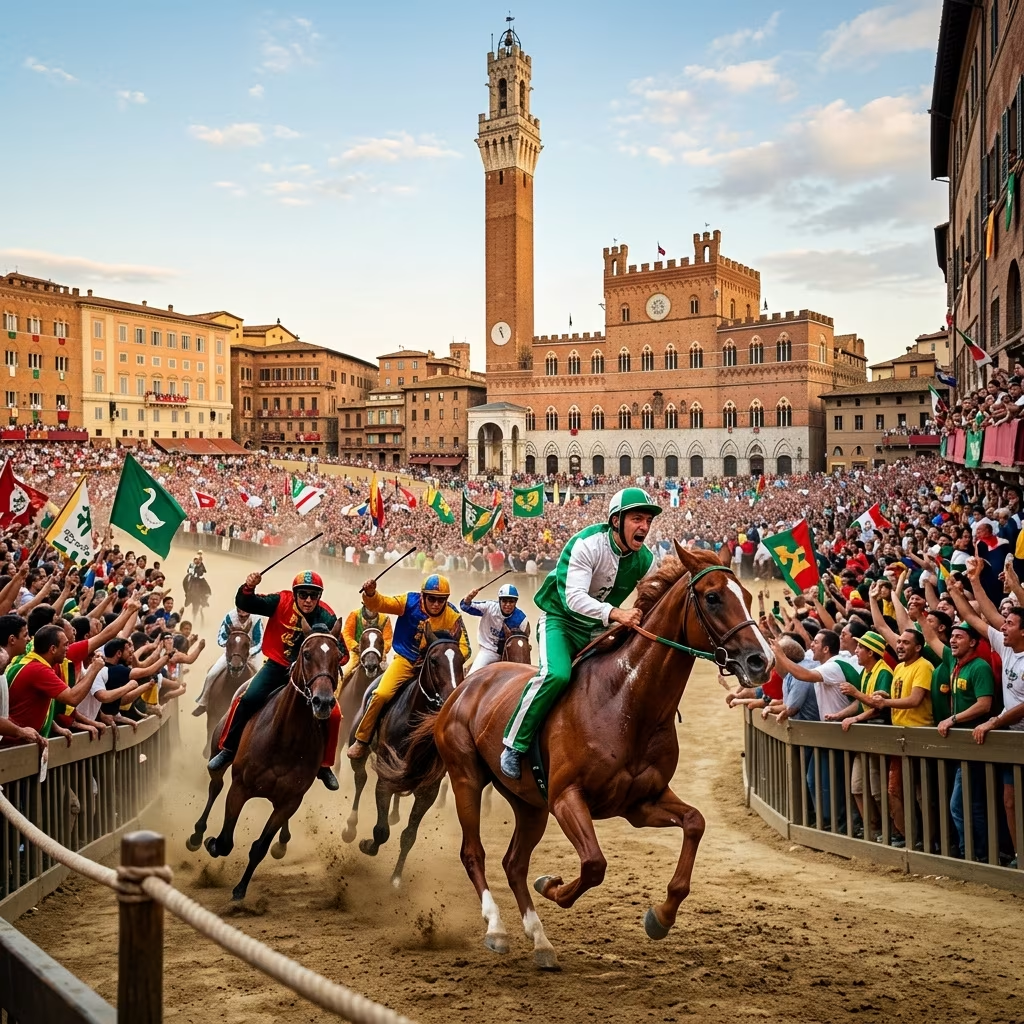
Piazza del Campo, Siena’s vast shell-shaped main square, is the arena where the drama of the Palio unfolds. Spectators fill the piazza shoulder to shoulder; viewing from the central infield is free (though it’s hot and crowded), while bleacher seats and window spots in nearby apartments command a premium.
- Track: Yellowish dirt is specially laid over the stone paving to form the racecourse, which loops around the square with two sharp turns and a notoriously dangerous curve known as San Martino.
- Seats: Standing-room in the square is free; bleacher and balcony seats are coveted (and expensive).
- Atmosphere: The energy is electric—locals chant, musicians perform, and tension builds as the horses make their way into the arena.
The Race: Ninety Seconds of Chaos
After hours of buildup, silence suddenly falls over the square. Ten bareback riders guide their snorting horses to the starting line, jockeying for the best position. A stretch of rope is dropped to signal the start—when it falls, all bets are off.
- Rules (or Lack Thereof): Once the race begins, the only real rule is that anything goes. Jockeys commonly whip one another, and collisions (sometimes with dramatic spills) are part of the spectacle.
- Laps: The race covers three laps of the piazza, taking about ninety seconds.
- Strategy: Cunning, aggression, and luck matter as much as speed.
- Horses: The horse is the true contender; a jockeyless horse (if its rider falls off) can win, and occasionally has.
When victory finally comes—often amid chaos, tangled reins, and roaring crowds—the winning contrada’s loyalists erupt in triumphant celebration that spills out from the piazza into the winding city streets.
A Victory Like No Other
The winning contrada experiences euphoria beyond words. Immediately after the race, the victors charge from the campo to Siena’s cathedral, bearing their horse and jockey in triumphant procession and singing the district anthems. Locals weep, laugh, and celebrate in a surge of emotion that continues late into the night and often for days afterwards.
- The Palio Banner: The prize is a hand-painted silk banner (il Palio), displayed in the contrada’s museum and revered for years to come.
- Celebration: Waves of exuberant citizens parade through the city—cries of “Lupa! Lupa! Lupa!” (if the she-wolf contrada wins) ring down medieval alleys.
- Tradition: If a contrada hasn’t won for many years, the festivities are even deeper and more heartfelt. Some victories end decades-long dry spells.
Only those born and raised in Siena can fully understand the emotional weight of the Palio. Outsiders, however, can still witness—if not wholly comprehend—the raw, transcendent joy that pours from generation to generation each summer.
The Meaning of the Palio: More Than a Race
The Palio is a symbol of civic pride, identity, and the fierce independence that has characterized Siena for centuries. The event unites families and friends, rekindles old rivalries, and tells the ongoing story of Siena’s people. It’s at once a sport, a pageant, a religious rite, and a living piece of medieval heritage. For visitors, it’s an unforgettable immersion into another era—where the passions of the Middle Ages blaze as brightly as ever.
Experiencing the Palio: Tips for Visitors
- Arrive Early: The piazza fills up hours before the race; the best viewing spots are taken well in advance.
- Know the Calendar: Main races are on July 2 and August 16, but trial runs and festivities occur for several days beforehand.
- Expect Crowds: Siena’s population swells during the Palio; accommodation and tickets must be booked early.
- Join the Community: Don a contrada scarf, cheer with local fans, and soak in the communal energy.
Some visitors prefer the comfort of reserved seats or a window in a local apartment, while the bravest jostle with the masses in the center of the arena. Either way, the Palio is an event best experienced by becoming part of the passionate crowd.
Comparison: The Palio vs. Other European Festivals
| Festival | Location | Frequency | Main Event | Duration |
|---|---|---|---|---|
| Palio di Siena | Siena, Italy | Twice a year | Bareback horse race | ~90 seconds (plus days of festivity) |
| Running of the Bulls | Pamplona, Spain | Annually (July) | Bull running and fights | Week-long |
| Oktoberfest | Munich, Germany | Annually (Sept–Oct) | Beer festival | 16-18 days |
Frequently Asked Questions (FAQs)
Q: Can anyone attend the Palio?
A: Yes, the Palio is open to everyone, though crowds are intense and certain seats or balconies require advance tickets or local connections.
Q: How dangerous is the race?
A: The Palio is risky for both jockeys and horses—bareback riding and sharp turns make spills frequent. Safety has improved but thrills (and risks) remain part of the spectacle.
Q: Do the contrade ever change?
A: The 17 districts have remained largely unchanged for centuries, and their traditions are carefully preserved by local families and historical societies.
Q: What does the winning contrada receive?
A: The winning district is awarded the Palio banner, a hand-painted silk prize, and enormous bragging rights. Celebrations last long into the night and are deeply emotional for residents.
Q: Is the Palio appropriate for children?
A: While the event is family-friendly, the density of the crowds and intensity of the spectacle mean parents should be cautious, especially with younger children.
Palio Vocabulary Glossary
- Palio: The name of both the race and the precious banner awarded to the victors.
- Contrada (plural: contrade): A neighborhood or district of Siena, with its own identity and traditions.
- Piazza del Campo: The main square and the site of the Palio race.
- Jockey: Rider, usually a professional, hired for the race.
- Bareback: Riding without a saddle, as required in the Palio.
Preserving a Living Heritage
The Palio remains one of Europe’s most vivid living traditions, undiminished after centuries. Its blend of spectacle, ritual, and local pride invites visitors and locals alike to become, for a day, part of the pageantry of Siena’s history. As the city’s banners wave and the contrade rejoice or grieve, the Palio endures—a timeless celebration of community and the thrill of the race.
References
- https://blog.ricksteves.com/blog/tag/palio/
- https://www.youtube.com/watch?v=_clMjoa9d1s
- https://www.ricksteves.com/watch-read-listen/read/articles/siena-palio
- https://blog.ricksteves.com/blog/siena-palio/
- https://community.ricksteves.com/travel-forum/italy/siena-s-palio-fa75eb5d-bfb0-45fc-a979-ea7d7d89869c
- https://blog.ricksteves.com/blog/palio-roberto-bechi/
- https://www.sfgate.com/travel/article/Rick-Steves-Siena-s-amazing-race-defines-city-11734483.php