Los Angeles Over the Years: A Century in the City of Angels
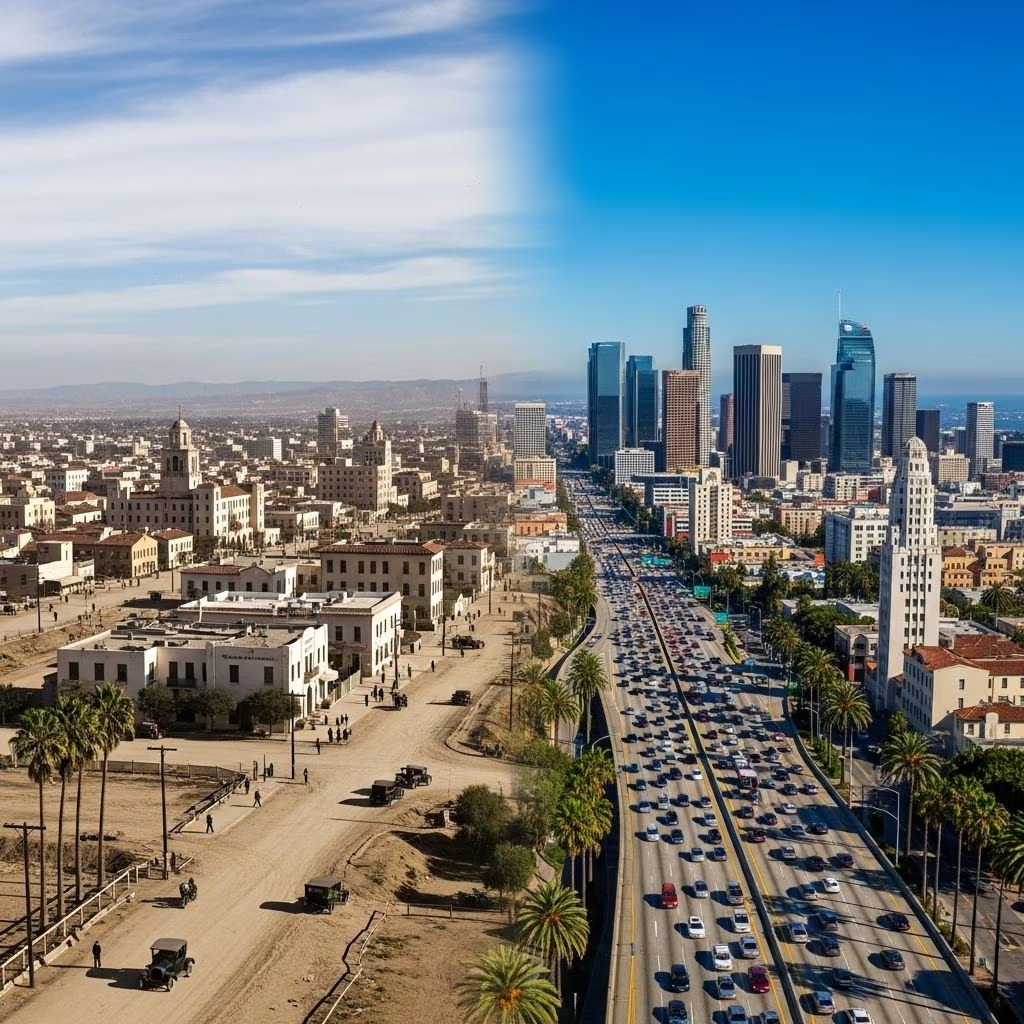
Los Angeles, known to many as the City of Angels, La-La Land, and Tinseltown, is a vibrant mosaic of cultural history, cinematic achievements, and enduring landmarks. This article takes you on a journey spanning more than one hundred years, tracing LA’s transformation from a fledgling metropolis into one of the world’s most iconic cities—from sandy beaches and palm-lined streets to historic events and unforgettable personalities.
Introduction: From a Quiet Town to a Global Icon
Founded in 1871, Los Angeles has grown at a phenomenal pace, especially in the last century. Its sunny climate, dramatic landscape, and magnetic allure have drawn dreamers and doers alike, leading to a city that never ceases to reinvent itself. Join us as we cruise the freeways of LA’s past, present, and future, exploring major moments, views, and people who define it.
Hollywood’s Rise: 1930s to 1950s
Walt Disney’s Early Studios (1934)
The 1930s saw Walt Disney, who had begun crafting his entertainment empire a decade earlier, working from his studios in Burbank. Rare photographs capture Disney interacting with animals—such as a penguin—illustrating both his whimsical genius and the pioneering spirit that would eventually revolutionize animation and theme parks across the globe.
- Disney’s early years marked the start of LA’s dominance in entertainment.
- Burbank studios became centers of innovation and creativity.
The Hollywood Sign: Transformation Begins (1935)
By 1935, the legendary Hollywood sign was a fixture in the hills. However, the sign faced challenges—most notably, the “H” letter tumbling down in 1949. The Hollywood Chamber of Commerce stepped in, both restoring the iconic “H” and shortening the sign from “Hollywoodland” to “Hollywood,” representing LA’s growing global influence in cinema and beyond.
- The sign’s changing identity reflects Hollywood’s evolving place in cultural history.
- Restoration efforts symbolize LA’s dedication to preserving its heritage.
Griffith Observatory: A Dream Realized (1935)
Sixteen years after philanthropist Griffith Jenkins Griffin’s death in 1919, the Griffith Observatory opened its doors in 1935. Quickly becoming one of LA’s most visited—and, in recent years, Instagrammed—landmarks, the observatory is a testament to the city’s commitment to science, public education, and panoramic views.
- Griffith’s vision fostered community access to science and astronomy.
- Today, the observatory remains central to LA’s collective identity.
Everyday Life: Walking to Work in 1937
In the late 1930s, people commonly walked to work along LA’s streets—a striking contrast to modern freeway culture. The absence of today’s infamous “rush hour” symbolized a simpler era, where mobility was just beginning to reshape urban life.
- Pedestrian life dominated LA prior to the expansion of its road networks.
- Urbanization and car culture radically transformed mobility.
Old Hollywood Glamour: Rita Hayworth (1939)
In 1939, LA’s streets were graced by stars like Rita Hayworth, often seen near Warner Bros. Studio. Then married to Edward C. Judson, Hayworth’s dazzling career—and personal life—reflected the whirlwind romance and drama of Old Hollywood.
- Hollywood became synonymous with celebrity culture and glitz.
- Stars’ presence fueled local lore and international fascination.
Beachside Cookouts and Retro Swimsuits (1940)
The 1940s in Los Angeles featured beachside cookouts, with young Angelenos donning retro swimsuits. At a time when communal gatherings and open fire pits defined social life, LA’s beaches were central to the city’s identity.
- LA’s coastline provided a setting for leisure, celebration, and connection.
- Vintage swimwear and cookouts evoke nostalgia for a bygone era.
Conflict and Change: The War Years and Labor Movements
Zoot Suit Riots (1943)
June 1943 saw Los Angeles engulfed in the Zoot Suit Riots, a violent series of clashes involving U.S. servicemen and young Mexican-Americans. The riots exposed underlying tensions around race, class, and identity, leaving a complex legacy that resonates in LA’s social history.
- The riots highlighted discrimination and cultural strife in wartime America.
- LA’s diverse population faced extraordinary challenges during WWII.
Studio Strikes: The Fight for Workers’ Rights (1945)
Labor unrest peaked in October 1945, when film workers went on strike against Warner Bros. Studio. Picket lines and clashes with Burbank police underscored the struggle for fair treatment and better working conditions, echoing labor movements nationwide.
- Entertainment industry strikes reshaped labor relations in Hollywood.
- Worker advocacy led to lasting changes in studio policies.
Cityscape and Smog: Sunset Boulevard and Hollywood Hills (1945–1949)
The post-war years also saw urban expansion and environmental challenges. By 1949, smog problems in Los Angeles were evident, with aerial views of the Cahuenga Parkway and Hollywood Hills often obscured by heavy haze. Yet, against this backdrop, iconic landmarks like palm trees along Sunset Boulevard stood as symbols of LA’s enduring charm.
- Industrialization led to air quality issues, shaping environmental policy.
- LA’s natural beauty persisted amid rapid growth and modernization.
The Golden Age: Lights, Glamour, and Iconic Moments
Hollywood by Night: Neon and Nostalgia (1951)
In the early 1950s, the neon glow of Hollywood Boulevard illuminated legendary venues like the Pantages Theatre and the Broadway Hollywood Building. The bustling nightlife and glamorous ambiance captured the essence of LA’s entertainment capital.
- Hollywood’s dazzling signs and marquees became icons of the city.
- Nights on the boulevard embodied the city’s energy and charisma.
Retro Cars and Skyline Romance (1951)
The Los Angeles skyline, as seen from retro cars in the 1950s, evoked romance and adventure. Cruising through the city in vintage vehicles remains a beloved motif in film and photography—the ultimate blend of California style and freedom.
- Classic cars symbolize California’s love affair with the automobile.
- Skyline views connect generations through shared imagery.
CinemaScope and Industry Innovation (1953)
1953 marked the era of CinemaScope widescreen films, beginning with the premiere of The Robe at Grauman’s Chinese Theatre (now TCL Chinese Theatre). This momentous occasion revolutionized film production and viewing, further cementing LA’s place in movie history.
- Innovations like CinemaScope changed how films were made and experienced.
- The Chinese Theatre remains a mecca for film premieres and Hollywood lore.
Defining Landmarks and Lasting Influence
| Landmark/Event | Year | Significance |
|---|---|---|
| Griffith Observatory | 1935 | Cultural and educational hub, panoramic city views |
| Hollywood Sign restoration | 1949 | Symbol of global entertainment |
| Zoot Suit Riots | 1943 | Highlighted racial and social tensions |
| CinemaScope Premiere | 1953 | Major innovation in film history |
Cultural Impact: Celebrities, Music, and Lasting Memories
From the Beatles’ unforgettable performance at the Hollywood Bowl to the allure of Sunset Boulevard, certain moments live eternally in LA’s cultural narrative. The mixing of celebrities, musicians, and everyday Angelenos has created a potent blend of myth and memory.
- LA remains a stage for music, film, and popular culture events that shape the city’s vibe.
- Landmarks like the Hollywood Bowl and Sunset Boulevard evoke nostalgia for locals and tourists alike.
Transformation and Resilience: LA in the Modern Era
The last several decades have tested Los Angeles’s resilience. From the televised drama of the O.J. Simpson freeway chase to seasonal wildfires that challenge the city’s safety and spirit, LA continues to adapt, embrace change, and focus on community growth.
- Emerging issues like environmental sustainability and traffic congestion are now central challenges.
- LA’s diverse neighborhoods and rich tapestry of immigrant communities push the city forward.
Frequently Asked Questions (FAQs)
Q: What is the significance of the Hollywood sign in LA’s culture?
The Hollywood sign represents the global reach and aspirational spirit of the entertainment industry that defines LA. Its restoration and preservation are symbolic of the city’s dedication to its storied history.
Q: How did LA’s entertainment industry shape its identity?
Hollywood studios, stars, and movie innovations like CinemaScope made Los Angeles the world’s premier entertainment capital, influencing fashion, culture, and commerce far beyond city limits.
Q: Why did the Zoot Suit Riots occur, and what was their aftermath?
The Zoot Suit Riots in 1943 stemmed from tension between servicemen and Mexican-American youth, revealing broader issues of race and inequality in the city. The events led to lasting social change and increased recognition of LA’s multicultural roots.
Q: What landmarks should visitors not miss in Los Angeles?
- The Hollywood Sign
- Griffith Observatory
- Sunset Boulevard
- Hollywood Bowl
- TCL Chinese Theatre
Each landmark offers a unique window into the city’s history and culture.
Q: How has LA’s car culture evolved over the decades?
From walking commutes in the 1930s to massive freeways and iconic retro cars, LA’s transportation culture reflects both its rapid growth and unending fascination with mobility and independence.
Final Thoughts: A City in Motion
Los Angeles over the years is more than a sequence of memorable events or famous faces—it’s a dynamic city shaped by countless moments of change, challenge, and celebration. From the dawn of Hollywood’s golden age to the social tumult of wartime and the innovations that continue to push boundaries, LA’s story is one of collective resilience and individual dreams.
- The spirit of Los Angeles endures—in its iconic landmarks, bustling streets, and diverse communities.
- As LA faces the future, it remains true to its legacy: a place where anything seems possible, and every day brings a new chance to make history.
References
- https://www.wgbh.org/news/local/2016-05-06/when-good-housekeeping-was-almost-a-well-social-movement
- https://www.goodhousekeeping.com/life/travel/g28198631/los-angeles-over-the-years/
- https://digital.library.cornell.edu/catalog/hearth6417403_1335_005
- https://digital.library.cornell.edu/catalog/hearth6417403_1418_003
- https://www.goodhousekeeping.com
- https://www.simplystreep.com/articles/200303goodhousekeeping/