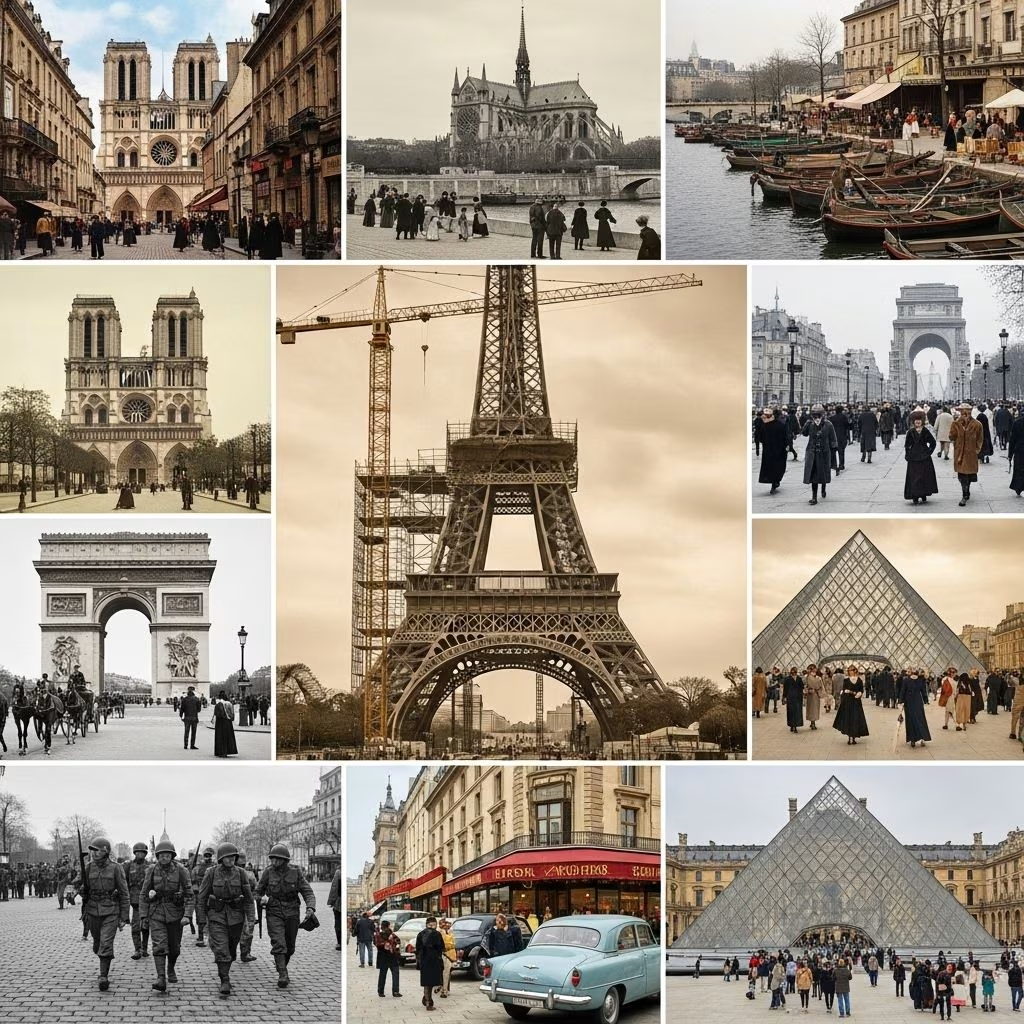
Paris Through the Ages: A Visual Journey in Photographs
Paris, the City of Light, has captivated millions for centuries through its romance, artistry, and architecture. Photographs of Paris serve not only as memories, but as visual testimonies to the city’s evolution, capturing upheaval, elegance, and resilience. From the earliest daguerreotypes in the 19th century to iconic images of world fairs, floods, and everyday life, each photo tells a story woven into the fabric of French history.
The Dawn of Photography in Paris
The legacy of Paris as a center of photography began in 1839 when Louis Daguerre publicly unveiled his revolutionary daguerreotype process, marking the city as the birthplace of modern photography. The invention allowed for remarkably detailed images, transforming the way Parisians—and the world—saw themselves and their city. Early photographs documented royal landmarks, bustling boulevards, and the city’s everyday residents. These images became vital records as Paris underwent radical change.
- 1839: Daguerreotype announced in Paris – Earliest detailed images of monuments and citizens.
- 1860: Haussmann’s Renovation – City officials commission photographers to document “old Paris” before its transformation.
- Charles Marville – His work preserved endangered neighborhoods and archways soon lost to modernization.
Transforming the City: Haussmann’s Paris
Mid-19th century Paris witnessed dramatic urban renewal under Baron Georges-Eugène Haussmann. Photography played a unique role, archiving the vanishing medieval streetscapes before grand boulevards and uniform facades replaced them. The city’s archives—like collections at the Musée Carnavalet—offer a window into these changes, where the photographic lens preserved the memory of demolished quarters for future generations.
Documentary to Artistry
What began as a documentary effort shifted over time, as photographers sought to capture not only the reality but the poetry of Paris. The rise of pictorialism, black and white artistry, and eventually color photography allowed the streets, bridges, and cafes to assume a more evocative, sometimes nostalgic light.
Early 20th Century: Paris in Transition
Thousands of historic photographs taken between 1916 and 1970 chronicle the city’s evolution address by address. Commissioned by the Commission du Vieux Paris, these images often show neighborhoods at risk—apartment buildings before demolition, shops, industrial complexes, and iconic monuments. As Paris grew, so did its photographic archive, capturing transitions, daily life, and fleeting moments that defined eras.
- Photos by Charles Lansiaux and Edouard Desprez: 1916–1930 (glass plate images)
- Later years: Storage as slides, expanded city coverage
- Survivals: Residents posing before soon-lost homes, street scenes immortalized before change
- CC0 1.0 Public Domain Licensing: Many historic images now freely available for public use
Iconic Events in Parisian History Captured Through Photography
The Great Paris Flood of 1910
In January 1910, relentless rain led to the infamous flooding of the Seine, paralyzing the city for more than a week. Photographs from the time show boats navigating submerged streets, sandbags surrounding treasured landmarks, and the ingenuity of Parisians in the face of disaster.
- Submerged streets and evacuations
- Impact on daily life: transit, homes, and businesses compromised
- Sandbagged monuments: The Medici Fountain protected during bombardments
World’s Fairs: 1889 and Beyond
Expositions Universelles (World’s Fairs) served as stages for innovation and art. The 1889 fair famously saw the completion of the Eiffel Tower, its iron structure captured in stunning photographs, emblematic of Paris’s ongoing transformation. Historic images also display elaborate pavilions, bustling crowds, and fireworks lighting up the night sky.
- Construction and inauguration of the Eiffel Tower
- Panoramic vistas of exhibition grounds
- Photography as celebration of progress
The Paris Métro: Engineering and Everyday Life
Early photos document the building and expansion of the Paris Métro. Workers pose beside colossal machinery digging tunnels, while candid street scenes capture commuters and the changing landscape surrounding new stations.
- Construction scenes: laborers and machinery
- Rise of urban transportation
- Impact on neighborhoods and city life
Parisian Landmarks and Neighborhoods Across Time
The Heart of the Latin Quarter
Landmarks such as Rue de la Parcheminerie (now home to the Abbey Bookshop) and Rue de la Bûcherie (future site of Shakespeare & Company) were immortalized long before legendary bookshops arrived. Photographs offer glimpses of their modest origins, transformations, and vibrant street life.
- Early 20th-century street scenes: shops, facades, locals at leisure
- Bookshops, cafes, and historic buildings through the decades
Luxembourg Gardens
Images from the gardens highlight moments of peace and peril: a man reading amid WWI turmoil, protections against bombardments, and tranquil fountains frequented by generations.
- Leisure and resilience in public spaces
- Mysterious details: Saucisse balloon, sandbagged fountains
The Rhythm of Daily Life
Aside from grand events, Parisian photographers repeatedly captured the ordinary: market scenes, children playing, the hustle of commuters, and spontaneous gatherings along the Seine. These photographs reveal the timeless vitality and community spirit of the city.
- Morning routines at bakeries and cafes
- Young and old enjoying Paris’s parks and boulevards
- Moments of joy, humor, and resilience amidst adversity
Unique Aspects of Parisian Photography
| Period | Photographic Focus | Key Contributors |
|---|---|---|
| 1830s–1860s | Documentation, urban architecture, daily life | Louis Daguerre, Charles Marville |
| 1860s–1910s | Preservation, transformation, modernization | Musée Carnavalet archives, Commission du Vieux Paris |
| 1910s–1930s | Neighborhoods, monuments, social change | Charles Lansiaux, Edouard Desprez |
| 1930s–1970s | Expansion, daily life, artistic interpretation | Parisian photographers (varied) |
The Evolution of Photography Techniques in Paris
Parisian photography evolved with technology. From glass plate negatives of the early 20th century—now digitized and georeferenced—to hand-held cameras that democratized image making, each era influenced what and how Paris was seen. Exhibition prints transitioned from monochrome to vibrant color, while modern digital platforms allow global audiences to browse these archives with ease.
- Daguerreotype, calotype, salted prints: Early methods producing singular, detailed images.
- Glass plates and slides: Commission du Vieux Paris collection’s format from 1916–1970.
- Public digitization: Georeferenced, indexed, and freely available archives for research and reuse.
Preserving Paris in the Photographic Archive
As the city faced wars, floods, and modernization, the intent behind photographing Paris shifted from mere documentation to conscious preservation. Today, thousands of historic images—digitized and accessible online—link past to present, serving educators, historians, and travelers eager to understand Paris in depth. Urban archeologists, archivists, and citizens have worked for decades to restore, inventory, and digitize these treasures, ensuring their survival for future generations.
Paris as Muse: The City in the Artistic Imagination
Beyond documentation, Paris inspired generations of photographers to seek artistic expression. The city’s streets, architecture, and atmosphere provided endless material, from Eugene Atget’s poetic urban vignettes to dramatic nighttime scenes and vibrant color studies. Paris became not only a backdrop but a muse, inspiring new forms of visual storytelling.
Modern Paris: A Continuum of Change and Wonder
Photographs from the late 20th and early 21st centuries continue the tradition: snapshots of protests, celebrations, urban renewal, and the timeless grace of Parisian life. Today, anyone can virtually stroll through historic Paris, comparing old images to modern street views, noting changes, and savoring what remains unchanged.
- Digitized archives: Accessible online maps showing locations and dates of historic photos
- Interactive elements: Browse images by arrondissement, address, or monument
- Comparison: Past and present converge in visual dialogue
Frequently Asked Questions (FAQs)
Q: Where can I find and browse historic photos of Paris online?
A: The Commission du Vieux Paris has a user-friendly online archive of over 10,000 digitized images from 1916 to 1970, sorted by arrondissement and address.
Q: What kinds of Parisian scenes do historical photographs capture?
A: They depict everything from major landmarks, neighborhood streets, shops and homes before demolition to events like the Great Paris Flood of 1910, Métro construction, and daily life in parks and cafes.
Q: Are historic Paris photos in the public domain?
A: Many photos by official commissions are now available under the CC0 1.0 Public Domain license for personal and creative reuse, with some requiring further authorization for commercial use.
Q: How did the purpose of photographing Paris change through history?
A: At first, photography was a tool for straightforward documentation, but over time, it shifted to artistic, preservationist, and expressive aims as the city evolved.
Q: What are some famous locations frequently captured in historic Paris photos?
A: The Eiffel Tower, Luxembourg Gardens, various bridges over the Seine, bustling market streets, and the Latin Quarter are among the most frequently photographed sites.
Conclusion: Paris in Photographs—A Living Archive
From the advent of photography to the digital era, Paris has been shaped and remembered through images both iconic and intimate. Photographs have chronicled the city’s tragedies and triumphs, unveiling its beauty, mystery, and endless capacity for renewal. For travelers, romantics, and historians alike, the photographic souvenirs of Paris invite us to look closer—reminding us that while cities change, their spirit endures in each captured frame.
References
- https://news.mit.edu/2018/book-catherine-clark-paris-history-photography-0816
- https://secretsofparis.com/french-culture/historic-paris-photos-online/
- https://photographpreservationprogram.hsites.harvard.edu/harvards-history-photography-timeline-text-only
- https://www.afrenchcollection.com/20-amazing-historical-photos-of-paris/
- https://www.dailyartmagazine.com/paris-early-photographs/
- https://frenchcountryadventures.com/the-first-colors-of-paris/
- https://parishistoryofourstreets.com/photos-old-and-new/
- https://www.aaa.si.edu/collections/photographs-artists-their-paris-studios-10228