Historic Amusement Park Rides That Still Thrill
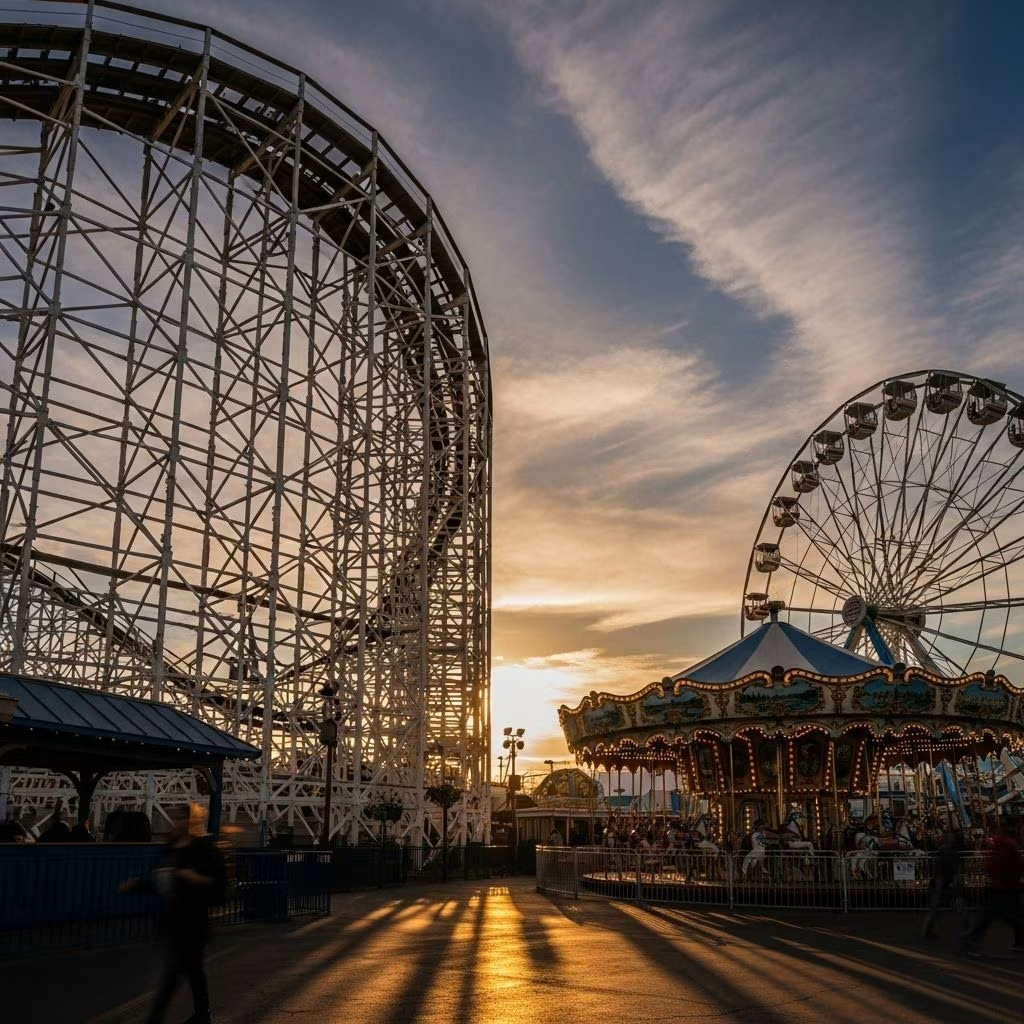
Amusement parks are often celebrated for their newest, most technologically advanced rides. Yet, there’s something singularly charming about the time-tested classics—the whirring carousels, clattering wooden coasters, and whimsical dark rides—that bridge generations with every spin or scream. These legendary attractions not only showcase feats of engineering and imagination but also evoke deep nostalgia, preserving a rich tapestry of entertainment history.
Why Historic Rides Captivate Us
What is it about these rides that commands such enduring affection? For many, the answer lies in:
- Nostalgia: Families have shared these experiences since childhood, returning year after year to ride with children and grandchildren.
- Craftsmanship: Many historic rides feature hand-carved woodwork, original paint, and artisanal details rarely found on modern rides.
- Ingenious design: Early ride engineers pushed the limits of available technology, resulting in inventive thrills that still charm riders.
- Cultural heritage: Preserved rides are living artifacts, offering insight into what delighted previous eras and how amusement culture evolved.
The Most Enduring Amusement Park Rides
Across the world, certain rides have stood the test of time, surviving technological revolutions, fires, wars, and the ever-shifting tastes of the public. Below is a curated look at some of the most historic amusement park rides still in operation or remembered fondly for their innovation and longevity.
Luna Park’s Scenic Railway — Melbourne, Australia (1912)
Luna Park Melbourne is home to the world’s oldest continually operating roller coaster, the Scenic Railway. Opened in 1912, it features a unique brakeman who rides along to control the train’s speed manually. The coaster offers stunning ocean views and remains a bucket-list attraction for coaster enthusiasts.
- Type: Wooden roller coaster
- Current status: Still thrilling guests with original layout
- Notable feature: One of the rare brakeman-operated coasters globally
Leap-the-Dips — Lakemont Park, Pennsylvania, USA (1902)
Touted as the oldest roller coaster in the world still in operation, Leap-the-Dips at Lakemont Park began whisking passengers over its undulating wooden track in 1902. In 1996, it was designated a National Historic Landmark and later restored so that today’s visitors can experience early coaster thrills firsthand.
- Type: Side-friction wooden roller coaster
- Restored: 1999, after a decade-long closure
- Cultural importance: Last of its kind and a relic of pre-safety restraint coaster engineering
Knoebels Grand Carousel — Knoebels Amusement Resort, Pennsylvania, USA (1913/1948)
This hand-carved, artfully restored grand carousel delights with its “brass ring” game—one of the only places in America where guests can still reach for a brass ring to win a free ride. The carousel’s horses were mostly carved by master artisans of the early 20th century, and its music is played on an original organ.
- Type: Carousel/Merry-Go-Round
- Signature feature: Grab-the-brass-ring challenge
- Historic charm: Intricate woodcraft and original 48-key Frati band organ
Santa Cruz Beach Boardwalk’s Giant Dipper — California, USA (1924)
Arguably one of California’s most iconic rides, the Giant Dipper offers panoramic views of the Pacific Ocean and a bumpy, high-speed journey to match. Since 1924, this wooden roller coaster has weathered earthquakes, fires, and changing amusement tastes, emerging as the symbol of the historic seaside park.
- Type: Wooden roller coaster
- Current operation: Near continuous, except for brief maintenance/tragedy-related closures
- Notable: Listed on the National Register of Historic Places
National Historic Landmarks: The Golden Age of Coasters
The first surge of American amusement ride innovation spanned the late 19th and early 20th centuries. Here are several landmark coasters and rides that shaped the industry:
| Ride Name | Location | Year Opened | Type | Key Fact |
|---|---|---|---|---|
| Switchback Railway | Coney Island, NY | 1884 | Gravity Railway | America’s first modern coaster |
| Loop the Loop | Atlantic City, NJ | 1901 | Vertical Loop Coaster | First vertical loop in the U.S.A. |
| Giant Wheel (Ferris Wheel) | Chicago, IL (Columbian Exposition) | 1893 | Ferris Wheel | First true Ferris wheel, 264 feet high |
| The Whip | Various | 1914 | Flat Ride | Known for its “whip” motion on corners |
William F. Mangels Company Rides
Many classic rides from the early 20th century were creations of the William F. Mangels Company. Iconic Mangels inventions include The Whip, Wave Swinger, and their ornate carousels, which still operate in several U.S. locations today. These rides typify mechanical artistry and resilient design.
Kennywood Park’s Jack Rabbit — Pennsylvania, USA (1920)
Opened in 1920, Jack Rabbit is one of Kennywood’s signature wooden roller coasters. It is renowned for its “double dip,” a sudden drop that gives riders a memorable “airtime” sensation. The ride’s layout has changed little over a century, providing authentic thrills for coaster fans and families alike.
- Notable Feature: “Double dip” airtime hill
- Status: Still in operation in its original park
Conneaut Lake Park’s Blue Streak — Pennsylvania, USA (1938)
The Blue Streak is an enduring, traditional wooden coaster built amid the Great Depression, known for its classic out-and-back design. Although it has changed hands and faced periods of neglect, the ride has been periodically restored and remains a beloved feature for Northeastern coaster aficionados.
Rye Playland Dragon Coaster — New York, USA (1929)
An Art Deco masterpiece, the Dragon Coaster winds through a faux stone dragon structure, delighting generations with its vintage style and rattle. The coaster, like its host park, is recognized as a National Historic Landmark and continues to evoke vintage seaside amusement charm.
Idlewild’s Rollo Coaster — Pennsylvania, USA (1938)
Constructed using timber sourced from the park’s own grounds, Rollo Coaster exemplifies rustic amusement design with its modest drops and lush, shaded setting. It is a favorite for younger visitors, seasoned coaster fans, and received ACE Coaster Classic status for its authenticity.
Coney Island Wonder Wheel — New York, USA (1920)
No trip to Coney Island is complete without a spin on the Wonder Wheel, an eccentric Ferris wheel where some gondolas slide along tracks, heightening the suspense midway through the ride. Since 1920, it has delivered memorable views and gentle thrills above the Boardwalk.
Santa Monica Pier Carousel — California, USA (1922)
This photogenic, hand-carved carousel appears in countless films and on innumerable family photo albums. It anchors the historic pier and features exquisitely restored horses, paying tribute to the artistry and romance of the golden age of amusement.
The Enduring Appeal: What Makes These Rides Stand Out?
- Most retain original mechanics and detailed finishes, even after restorations.
- They are landmarks, often protected by historical societies or government heritage lists.
- They provide a tangible link between past and present, making them must-rides for multiple generations.
- Many are set in iconic locations—seaside parks, regional fairgrounds, or urban promenades steeped in history.
Tips for Experiencing Classic Amusement Rides
- Seek out parks renowned for preservation, not just innovation.
- Visit off-peak to soak in the ambiance without crowds.
- Don’t rush—allow time to read plaques and appreciate historical displays.
- Capture photos and share stories to inspire future generations to preserve these treasures.
Global Gems: Not Just in the USA
While many storied rides are found in America’s classic parks, several international gems are still spinning, creaking, and swooping abroad:
- Prater’s Wiener Riesenrad (Vienna, Austria): This Ferris wheel, built in 1897, is one of the world’s oldest and starred in “The Third Man.”
- Bakken’s Rutschebanen (Denmark): Opened in 1932, it’s Europe’s oldest functioning wooden coaster and is brakeman-operated.
- Blackpool Pleasure Beach Big Dipper (UK): Since 1923, this out-and-back coaster has defined seaside thrills in Britain.
Preservation Efforts and Recognition
Organizations such as the American Coaster Enthusiasts (ACE) and local preservation groups play a vital role in protecting and restoring these legendary rides. National historic designation often shields these cultural treasures from demolition and provides funding for continued operation and public education.
Frequently Asked Questions (FAQs)
Q: What qualifies a ride as ‘historic’?
A ride is commonly considered historic if it is among the oldest of its kind, features innovative design elements of its era, and has maintained much of its original structure or mechanics. Many historic rides are designated by preservation societies or listed on official heritage registers.
Q: Are historic amusement rides safe to ride?
Yes. Although older in design, rides that remain operational must pass modern safety inspections and are often retrofitted with contemporary safety mechanisms. Preservation efforts usually balance authenticity with current safety standards.
Q: Where can I find the oldest amusement park rides in the U.S.?
Top destinations include Lakemont Park in Pennsylvania (Leap-the-Dips), Luna Park in Melbourne (Scenic Railway), Santa Cruz Beach Boardwalk (Giant Dipper), and Coney Island (Wonder Wheel).
Q: Why haven’t more historic rides survived?
Factors include fire, neglect, evolving public interests, cost of maintenance, and changing land use. Parks that value heritage and preservation are key to saving these irreplaceable attractions for future generations.
Conclusion: The Value of Riding History
Every spin on a vintage carousel, every thunderous run along a weathered wooden coaster, transports riders through decades of joy and innovation. Historic amusement park rides are not only feats of engineering—they are shared memories, local landmarks, and a testament to the enduring need for wonder. Preserving and celebrating them means safeguarding the magic for tomorrow’s adventurers, one glorious ride at a time.
References
- https://en.wikipedia.org/wiki/List_of_amusement_rides
- https://www.youtube.com/watch?v=0JGwjSs9cIE
- https://www.napha.org/Resources/Facts-Figures/Great-Moments-in-Amusement-Park-History
- https://www.youtube.com/watch?v=sAZQJbgquPY
- https://www.napha.org/Resources/Facts-Figures/Operating-Classic-Amusement-Park-Rides
- https://www.themeparkinsider.com/discussion/thread.cfm?page=1057
- https://racingnelliebly.com/secret-places/early-thrill-rides-dared-our-ancestors%EF%BF%BC/