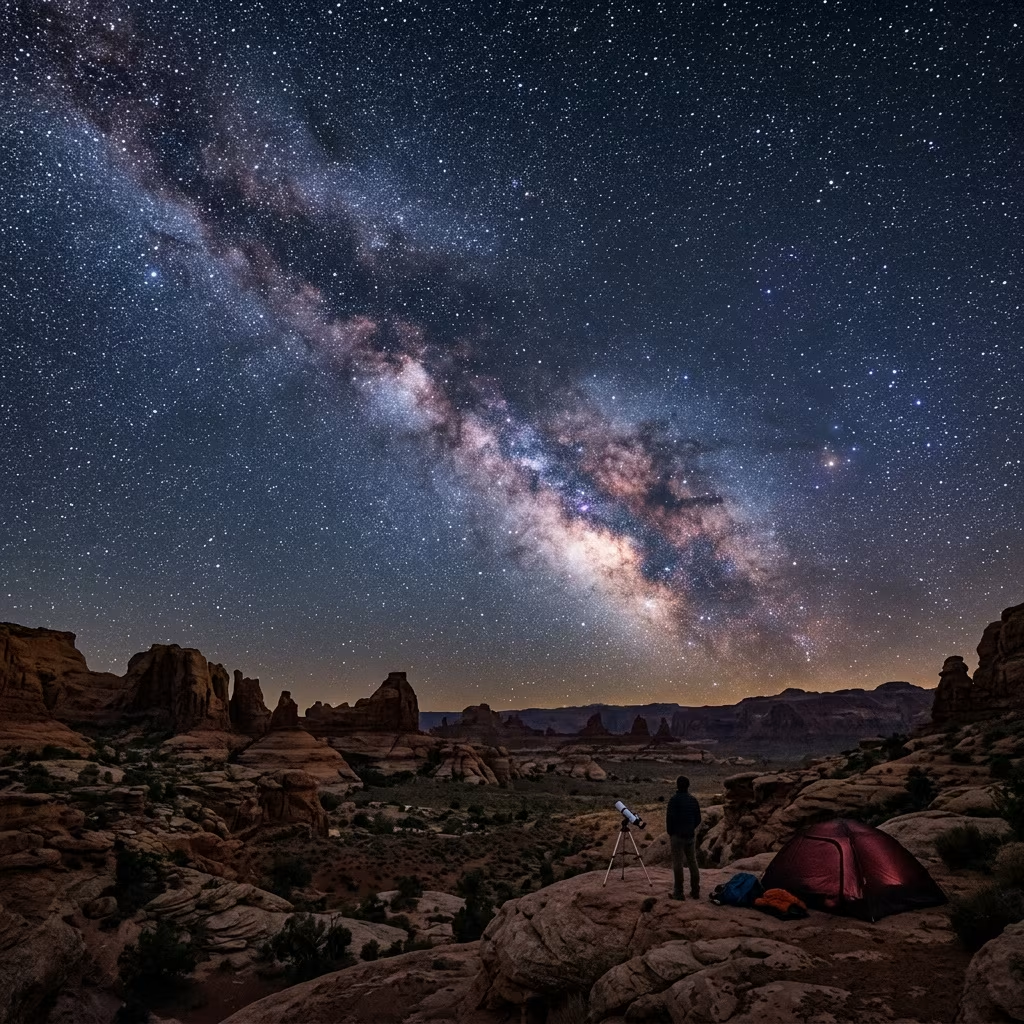
If you dream of standing beneath a vast velvet sky, awash in starlight and the ethereal glow of the Milky Way, the United States offers an abundance of prime stargazing spots. Whether you’re an amateur astronomer, a seasoned astrophotographer, or simply looking for a magical family adventure, these dark-sky destinations deliver breathtaking cosmic views and educational experiences. Read on for a guide to America’s most awe-inspiring stargazing locations.
Why Stargazing in the US is Unique
From windswept deserts to rugged mountaintops and lush forest clearings, the US boasts some of the world’s darkest skies. Many of these destinations are certified International Dark Sky Parks or Reserves, a designation earned by strictly controlling light pollution and fostering a culture of night sky preservation. Even in less remote regions, dedicated astronomy parks and observatories open the cosmos to curious minds of all ages.
What Makes a Spot Ideal for Stargazing?
- Minimal light pollution: The further from urban lights, the more stars you’ll see. Dark sky parks and remote nature areas are best.
- Clear, dry air: Arid climates and high elevations reduce atmospheric distortion, revealing sharper, brighter stars.
- Wide horizon views: Open terrain and high-altitude plateaus allow panoramic vistas
for meteor showers and planetary risings. - Accessibility: While remote is often better, many parks have visitor centers, guided night hikes, and campsites for families and newcomers.
America’s Best Stargazing Spots: From National Parks to Secret Getaways
Here are 21 of the most acclaimed stargazing destinations across the United States, each offering unique cosmic spectacles, convenient amenities, or a sense of celestial solitude.
1. Big Bend National Park, Texas
Nestled against the Rio Grande and surrounded by the Chihuahuan Desert, Big Bend is one of the least light-polluted national parks in the US. Here, on clear nights, over 2,000 stars, the Milky Way, and even planets like Jupiter and Saturn are vividly visible. The park offers ranger-led night sky programs and is designated as an International Dark Sky Park.
- Best time: Winter and early spring for crisp, cloudless nights
- Highlights: Chisos Basin, River Road, Persimmon Gap
- Tips: Night sky events are seasonal—check schedules in advance
2. Cherry Springs State Park, Pennsylvania
Often topping US stargazing lists, Cherry Springs sits atop a 2,300-foot plateau in rural northern Pennsylvania. Recognized as a Bortle 1 class sky—some of the darkest measured in America—it features a dedicated astronomy field, a public viewing area, and is famed for Black Forest Star Party each September.
- Best time: Late summer and early fall
- Highlights: Milky Way core, regular meteor showers, year-round stargazing field
- Tips: Bring star charts, red flashlights, and warm clothing for chilly mountain nights
3. Bryce Canyon National Park, Utah
The otherworldly rock formations and high altitude (8,000+ feet) of Bryce Canyon create crisp, clear viewing for amateur and experienced stargazers. Certified as a Dark Sky Park, Bryce hosts annual Astronomy Festivals and regular ranger-led telescope tours.
- Best time: Spring through fall
- Highlights: Hoodoo amphitheaters by moonlight, June Astronomy Festival
- Tips: Attend guided astronomy programs for deep sky insights
4. Death Valley National Park, California and Nevada
With vast salt flats and dry desert air, Death Valley is a world-renowned haven for star chasers. The park’s bowl-shaped terrain and seclusion from urban lights make it possible to spot the Milky Way casting visible shadows on the ground during new moon periods. Death Valley is also a Gold Tier International Dark Sky Park.
- Best time: Autumn through early spring (milder temperatures)
- Highlights: Mesquite Flat Sand Dunes, Badwater Basin, annual Dark Sky Festival
- Tips: Bring ample water and plan for dramatic temperature swings between day and night
5. Denali National Park, Alaska
From late August through April, Denali’s high latitude and wilderness allow not just brilliant starlight, but regular displays of the aurora borealis. With no light pollution, the night sky is spectacularly crisp. Summer brings midnight sun, so the best stargazing is during the shoulder seasons.
- Best time: September to March (for auroras)
- Highlights: Northern lights, winter constellations, breathtaking mountainscapes
- Tips: Dress in layers and prepare for frigid nighttime temperatures
6. Mauna Kea, Hawaii
The extinct volcano Mauna Kea stands nearly 14,000 feet above sea level and above much of the planet’s atmosphere, creating some of the sharpest night skies anywhere. Its summit hosts many international telescopes, while visitors can join stargazing gatherings at the Mauna Kea Visitor Information Station (mid-mountain).
- Best time: Year-round (but check for closures and weather advisories)
- Highlights: Southern Hemisphere constellations, rare comet sightings
- Tips: Summit visits require permits—acclimate to altitude at the visitor center
7. Natural Bridges National Monument, Utah
Noted as America’s first International Dark Sky Park, Natural Bridges is both a desert landscape and an astronomer’s dream. Iconic sandstone arches frame nebulae, constellations, and the Milky Way, making it popular with astrophotographers and families alike.
- Best time: Spring through fall (for mild nighttime temperatures)
- Highlights: Kachina, Sipapu, and Owachomo arches
- Tips: Bring a tripod or telescope for dramatic long-exposure shots
8. Great Basin National Park, Nevada
Far removed from the lights of Las Vegas, Great Basin offers pristine sky conditions, a high-elevation observatory, and frequent night sky programs. The park is also home to the annual Astronomy Festival each September.
- Best time: Summer and fall
- Highlights: Wheeler Peak stargazing, Solar System Walk, guided telescope nights
9. Glacier National Park, Montana
With vast wilderness and little development, Glacier’s night sky is sublime. Look for special star parties at Apgar and Logan Pass, and take advantage of the park’s mountain vistas for expansive sky views.
- Best time: Late summer and early fall
- Highlights: Glacier star parties, Milky Way photography
10. Chaco Culture National Historical Park, New Mexico
A UNESCO World Heritage site, Chaco blends ancient Puebloan ruins with some of the darkest skies in North America. The park’s observatory offers public telescope nights and expert-led astronomy sessions.
- Best time: April to October
- Highlights: Ruins by starlight, ancient solstice markers, seasonal dark sky festivals
11. Craters of the Moon National Monument, Idaho
This volcanic landscape, filled with lava tubes and cinder cones, earned Dark Sky Park certification for its jet-black skies. The wide-open terrain and high elevation are perfect for viewing meteor showers and planets.
- Best time: Spring and fall for the best visibility and cool nights
- Highlights: Ranger star parties, Perseids meteor shower viewing
12. Headlands International Dark Sky Park, Michigan
This forested peninsula offers 600 acres of protected old-growth forest stretching into the waters between Lake Michigan and Lake Huron. Headlands hosts regular public astronomy events and is known for rare sightings of the aurora borealis during winter months.
- Best time: Summer (for warmth) or winter (for northern lights)
- Highlights: Lakefront sky reflections, guided educational programs
13. Pisgah Astronomical Research Institute (PARI), North Carolina
Located deep within Pisgah National Forest, PARI is both a research institution and public astronomy center. Visitors can access high-tech telescopes, participate in STEM workshops, and enjoy guided stargazing programs under some of the darkest skies in the Southeast.
- Best time: Autumn, for clear, steady weather
- Highlights: Public programs, historic NASA satellite tracking
14. Badlands National Park, South Dakota
The park’s rugged buttes and open prairies set the stage for dazzling constellations and meteor showers. Night sky events include ranger programs and the annual Astronomy Festival, which draws enthusiasts from around the Midwest.
- Best time: Summer (for dry, clear weather)
- Highlights: Perseid meteor shower, Milky Way viewing
15. Rocky Mountain National Park, Colorado
The high-elevation tundra and subalpine terrain of Rocky Mountain National Park make for clear, thin air—an ideal environment for stargazing. The park frequently hosts night sky festivals and public astronomy nights.
- Best time: Late spring to early fall
- Highlights: Trail Ridge Road star viewing, annual night sky events
16. Grand Canyon National Park, Arizona
The vast canyon offers unobstructed 360-degree sky views from either rim. Grand Canyon is a designated Dark Sky Park and hosts an annual Star Party in both the South and North Rim sections, where astronomers set up dozens of telescopes for visitors.
- Best time: June (for the Star Party), autumn for solitude
- Highlights: Telescope clusters at Mather Point, ranger talks
17. Joshua Tree National Park, California
With minimal development and arid climate, Joshua Tree is a magnet for astrophotographers. During moonless nights, the Milky Way gleams above signature Joshua trees and desert rock formations, drawing artists and astronomers year-round.
- Best time: Autumn to spring
- Highlights: Star trails, meteor showers, spring wildflower skies
18. Antelope Island State Park, Utah
Located on the Great Salt Lake, Antelope Island’s remote, wide-open expanses and limited development ensure exceptionally dark skies. The park holds an annual Dark Sky Festival and offers hiking, biking, and wildlife viewing by day.
- Best time: Spring and fall festivals
- Highlights: Park rangers’ astronomy talks
19. White Sands National Park, New Mexico
This unique spot, blanketed in brilliant white gypsum sand dunes, doubles as a cosmic mirror under starlit skies. White Sands offers monthly Full Moon Nights events and occasional star parties with local astronomers guiding telescopic journeys.
- Best time: Year-round during new moons
- Highlights: Moonlit dunes, guided night hikes
20. Acadia National Park, Maine
Renowned for its coastal scenery, Acadia also boasts one of the darkest stretches of night sky on the East Coast. The park partners with local astronomy clubs to host events, especially during the annual Acadia Night Sky Festival each September.
- Best time: Late summer and fall
- Highlights: Cadillac Mountain sunrise, Night Sky Festival
21. Great Sand Dunes National Park, Colorado
The tallest dunes in North America create a surreal stargazing amphitheater. As a designated Dark Sky Park, Great Sand Dunes offers ranger programs, robust camping access, and prime views for meteor showers and lunar eclipses.
- Best time: Late spring through fall
- Highlights: Family-friendly night hikes, sandboarding under the stars
Handy Stargazing Tips
- Check moon phases: New moon nights reveal the most stars; avoid full moon periods for deep sky viewing
- Bring the right gear: Red flashlight, binoculars or telescopes, blankets or reclining chairs, star maps or mobile sky apps
- Clothing: Dress in layers, even in summer—the best viewing is often after midnight when temperatures drop sharply
- Time your visit for meteor showers: Notable events include the Perseids (August), Geminids (December), and Quadrantids (January)
- Minimize light: Dim all artificial lights and use red lamps to preserve night vision
Table: At-a-Glance — Best Stargazing Locations by Region
| Region | Top Stargazing Spot | Notable Features |
|---|---|---|
| West | Big Bend National Park, TX | Darkest skies, frequent meteor showers |
| Southwest | Grand Canyon NP, AZ | Star parties, vast 360-degree views |
| Mountain West | Bryce Canyon NP, UT | Astronomy festivals, expert programs |
| Midwest | Headlands Dark Sky Park, MI | Aurora borealis, forest clearings |
| East | Cherry Springs SP, PA | Bortle 1 sky, star party events |
| Alaska/Hawaii | Denali NP, AK, Mauna Kea, HI | Aurora, international observatories |
Frequently Asked Questions (FAQs)
Q: What is a Dark Sky Park?
A: An International Dark Sky Park is a protected area recognized for exceptional night sky quality, limited artificial lighting, and public education efforts.
Q: When is the best time to stargaze in the US?
A: New moon weeks offer the clearest sky views. Some parks shine brightest in early spring or autumn when weather is clear and temperatures are moderate.
Q: Can I bring children to stargazing events?
A: Absolutely! Nearly all parks host family-friendly night programs, and stargazing is a magical way to inspire curiosity about space and nature in kids of all ages.
Q: What equipment do beginners need?
A: Start with the naked eye to see constellations and bright planets. Binoculars can reveal star clusters, and many parks offer free telescope viewing at events.
Q: What should I do if the weather is cloudy?
A: Many observatories and science centers have indoor exhibits, planetarium shows, or educational tours—even on cloudy nights, astronomy buffs can engage in hands-on learning.
Stargazing Safety and Etiquette
- Respect wildlife and fellow stargazers by keeping noise and lights to a minimum
- Pack out all trash and leave no trace
- Camp only in designated areas where permitted
- Bring sufficient water, snacks, and emergency supplies—many top sites are remote
Make the Most of Your Next Starry Escape
From moonlit dunes to the silent deserts of the Southwest, and high mountain meadows to dense forest heavens, America’s 21 best stargazing sites provide unforgettable encounters with the night sky. Choose a destination, check for local astronomy events, pack a red flashlight, and let the universe reveal its wonders above you.
References
- https://www.loveexploring.com/gallerylist/89998/americas-best-spots-for-stargazing
- https://www.lonelyplanet.com/articles/best-stargazing-usa
- https://dnr.illinois.gov/recreation/stargazing/bestlocationstostargaze.html
- https://www.space.com/stargazing/10-of-the-best-stargazing-locations-in-north-america
- https://mountainhouse.com/blogs/general/best-stargazing-in-usa
- https://darksky.org/what-we-do/international-dark-sky-places/all-places/
- https://www.npca.org/articles/1806-see-a-sky-full-of-stars-at-these-certified-dark-sky-parks