7 Essential Exercises to Prevent and Control Leaky Bladder
Urinary incontinence, or a leaky bladder, is a common but often embarrassing issue affecting millions of men and women around the world. While medications and medical interventions are available, many cases of mild to moderate bladder leakage can be greatly improved—or even reversed—through targeted exercises and a few key lifestyle modifications. This guide covers seven evidence-based exercises and supporting habits to help you strengthen your pelvic floor, enhance bladder control, and improve overall quality of life.
Understanding Why Bladder Control Matters
A strong pelvic floor is essential for maintaining urinary continence. The pelvic floor is a network of muscles, ligaments, and tissues that supports the bladder, uterus (in women), and intestines. Weakness in these muscles—commonly caused by pregnancy, aging, surgery, obesity, or high-impact exercise—can lead to leaks, especially when coughing, sneezing, laughing, or exercising.
Fortunately, simple, regular exercises can train and rehabilitate the pelvic floor. These moves, alongside lifestyle adjustments, offer a non-invasive way to manage or prevent leaks.
1. Kegel Exercises
Kegels are the most widely recommended exercise for strengthening the pelvic floor. Developed in the 1940s by Dr. Arnold Kegel, this move targets the muscles that control the urethra and bladder.
- Identify the right muscles: Imagine you are trying to stop the flow of urine or hold back gas. The muscles you use are your pelvic floor muscles.
- Perform the exercise: Tighten and lift these muscles. Hold for 5 seconds, then relax for 10 seconds.
- Repeat this sequence 10 to 15 times per session, aiming for three sessions a day.
Tip: Avoid tightening your abdomen, thighs, or buttocks. Breathe normally, and don’t hold your breath.
2. Pelvic Floor Ball Squeeze
This move not only fires up your pelvic floor, but also tones your inner thighs and abdominals—muscle groups that help stabilize the pelvis and support bladder function.
- Sit upright in a sturdy chair with your head and spine aligned, shoulders over hips.
- Place a small exercise ball or a firm pillow between your knees or thighs.
- Squeeze the ball tightly, engaging your inner thighs and consciously activating your pelvic floor muscles at the same time.
- Hold the squeeze for 10 seconds, then release.
- Perform 10 repetitions, and do two to three sets per day.
For a challenge: Sit upright without leaning back against the chair’s backrest to engage your core more deeply.
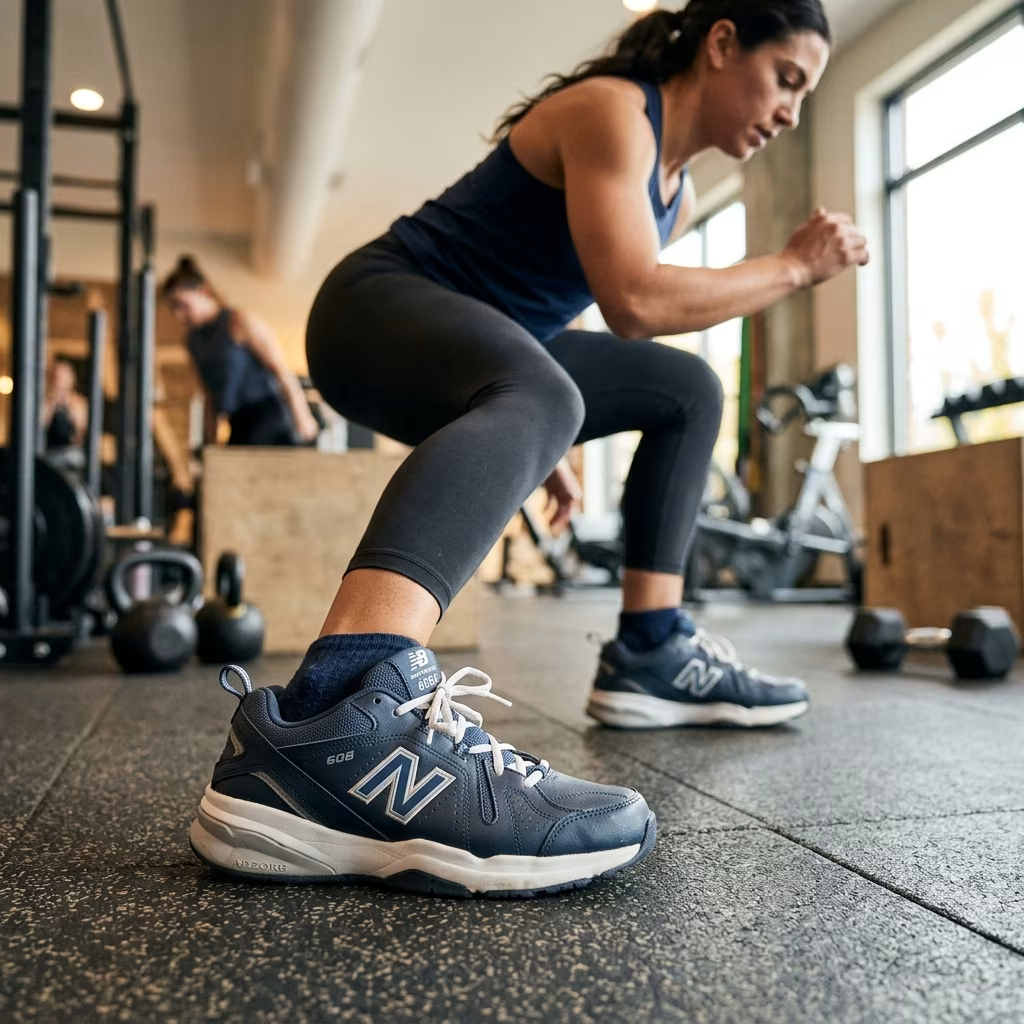
3. Squats with a Pulse
Squats are a classic lower-body exercise that can be tweaked to target the pelvic floor. Adding a pulse at the bottom of the squat increases activation of these muscles.
- Stand with feet shoulder-width apart, toes pointed forward.
- Inhale and lower into a squat as if you’re sitting in a chair, keeping your weight in your heels.
- At the bottom, pulse gently up and down an inch or two for 3–5 pulses.
- Focus on gently lifting your pelvic floor during the pulses.
- Return to standing and repeat 10–15 times for two to three sets.
4. The Elevator Lunge
The Elevator Lunge is a dynamic move that works the glutes, hips, and core while cuing the pelvic floor to contract and relax in rhythm.
- Stand tall with feet together.
- Step one leg forward into a lunge while keeping your torso upright.
- Imagine your pelvic floor as an elevator: as you lower into the lunge, lift your pelvic floor muscles up to the first floor (a light contraction); at the bottom, increase to the second floor (medium contraction); then return to a light contraction as you rise back up.
- Repeat for 10 lunges per side, alternating legs.
This mindful approach synchronizes movement with pelvic control, reinforcing muscle coordination.
5. Pelvic Floor Activators (Bridges with Pelvic Focus)
Bridges are excellent for engaging the glutes and lower core, areas that support pelvic stability. Adding a pelvic floor focus helps target incontinence directly.
- Lie on your back, knees bent, feet flat on the floor hip-width apart.
- Inhale to prepare, then exhale and squeeze your pelvic floor as you lift your hips off the floor into a bridge.
- Pause at the top for a count of 5 seconds, maintaining the pelvic floor contraction.
- Lower slowly and relax your muscles fully.
- Repeat 10–15 times for two or three sets.
6. Bladder Training and Timed Voiding
In addition to exercise, retraining your bladder can build endurance and functional control.
- Keep a Bladder Diary: Record each time you urinate or experience leaks for 2–3 days to determine your baseline interval between bathroom trips.
- Set a Target Interval: Add 15 minutes to your current average interval. For example, if you go every hour, aim for 1 hour 15 minutes before the next trip.
- Delay the Urge: If you feel the need to go early, use Kegels or deep breathing to hold off for five more minutes when possible.
- Gradually Increase: Every week, increase the interval by 5–15 minutes. Over time, this helps stretch your bladder’s capacity and bolsters your confidence.
- Record and Reinforce: After 4–8 weeks, compare your new diary to your baseline to track progress.
This behavioral approach is proven in research to reduce frequency and urge incontinence over time.
7. Running with Pelvic Engagement
Contrary to popular belief, running isn’t automatically off limits for people with leaky bladders—if done with proper form:
- Lean slightly forward from your ankles (like a ski jumper), which shifts pressure onto the front side of the pelvis.
- Engage the core and pelvic floor throughout your run to support the bladder and reduce incontinence risk.
Consider consulting a pelvic health physiotherapist for a gait assessment and personalized tips if you’re a regular runner or plan to return to running after symptoms develop.
Supporting Lifestyle Habits
Exercise works best when combined with certain lifestyle adjustments to minimize leaks. Here are expert-recommended strategies:
- Maintain a healthy weight to reduce pelvic pressure.
- Limit bladder irritants such as caffeine, alcohol, and acidic foods.
- Don’t hold urine too long. Waiting until your bladder is overfull increases the likelihood of leakage, especially with weak pelvic muscles.
- Practice double voiding: After urinating, stand up, sit back down, and try to go again to ensure your bladder is fully empty.
- Quit smoking: Frequent coughing increases pelvic strain and can worsen incontinence.
- Replace high-impact workouts with Pilates, yoga, or other low-impact strengthening forms if symptoms are triggered by activities like running or jumping.
- Consult a pelvic floor physical therapist if you have trouble isolating muscles or symptoms persist despite exercise.
Common Mistakes to Avoid
- Using only the wrong muscles (buttocks, thighs, or abs) instead of isolating the pelvic floor.
- Holding your breath during pelvic floor contractions. Always breathe evenly.
- Only doing fast, short squeezes. Mix short and long holds to build endurance and strength.
- Stopping Kegels or exercises once symptoms improve. Ongoing maintenance is key.
- Rushing bladder training; consistency and patience are essential for long-term improvement.
Quick Reference Table: Top Bladder Control Exercises
| Exercise | Main Target | How Often | Key Benefit |
|---|---|---|---|
| Kegels | Pelvic floor | 3x daily, 10–15 reps | Increases baseline strength, reduces leaks |
| Ball Squeeze | Inner thighs, pelvic floor | 2–3 sets daily | Improves muscle coordination, core stability |
| Squats with Pulse | Legs, glutes, core, pelvic floor | 2–3 sets, 10–15 reps | Enhances lower body strength & bladder support |
| Elevator Lunge | Hips, glutes, pelvic floor | 10 reps/leg/day | Improves muscle control with movement |
| Bridges | Glutes, core, pelvic floor | 2–3 sets, 10–15 reps | Builds endurance & coordination |
| Bladder Training | Bladder timing | Daily | Reduces urgency, increases intervals |
| Running Form | Pelvic engagement | With every run | Allows safer cardio, supports continence |
Frequently Asked Questions (FAQs)
Q: How long does it take for pelvic floor exercises to help a leaky bladder?
A: Most people notice improvement after 4-8 weeks of consistent daily practice. However, some may require a few months for maximum benefits, especially if the muscles are very weak at the start.
Q: Can men benefit from these bladder control exercises?
A: Absolutely. Men also have pelvic floor muscles and can experience incontinence, especially after prostate surgery or with age. The exercises outlined above are effective for both men and women.
Q: Are Kegels safe to do during pregnancy?
A: Yes, with a healthcare provider’s approval, Kegels are generally considered safe during pregnancy and may help prevent or reduce postpartum leaks. Always consult your doctor or midwife for individualized advice.
Q: When should I see a specialist about bladder leakage?
A: If you experience persistent, sudden, or severe leaks that don’t improve after a few months of these exercises, or if incontinence is interfering with your daily life, see a urologist or pelvic floor specialist for evaluation.
Q: Is surgery ever necessary for urinary incontinence?
A: Surgery is typically reserved for severe or refractory cases when conservative measures have failed. Most people can find significant improvement or resolution with exercise, bladder training, and lifestyle changes.
Takeaway: Regain Confidence with the Right Moves
Dealing with bladder leaks can be frustrating, but you don’t have to accept it as part of life. By practicing these seven essential exercises and embracing supportive habits, you strengthen your pelvic floor, regain bladder control, and boost your confidence. Remember, consistency and patience are key—stick with your program and consider seeking professional guidance if results are slow or symptoms persist. Your bladder—and quality of life—will thank you.
References
- https://www.nhs.uk/conditions/urinary-incontinence/10-ways-to-stop-leaks/
- https://www.prevention.com/fitness/a20480398/exercises-to-prevent-a-leaky-bladder/
- https://www.health.harvard.edu/diseases-and-conditions/the-bladder-workout-tame-incontinence-without-surgery
- https://www.prevention.com/health/a20429153/18-tips-to-control-incontinence/
- https://www.prevention.com/fitness/workouts/a20466790/pelvic-floor-exercises-to-prevent-urinary-incontinence/
- https://www.prevention.com/health/a20500900/do-kegels-work/
- https://www.prevention.com/health/a61480961/natural-fixes-solutions-for-incontinence/
- https://www.prevention.com/health/a20433394/incontinence-prevention-and-solutions/
- https://www.prevention.com/health/a20467778/your-no-shame-guide-to-making-incontinence-leaks-a-thing-of-the-past/
- https://www.niddk.nih.gov/health-information/urologic-diseases/bladder-control-problems/prevention