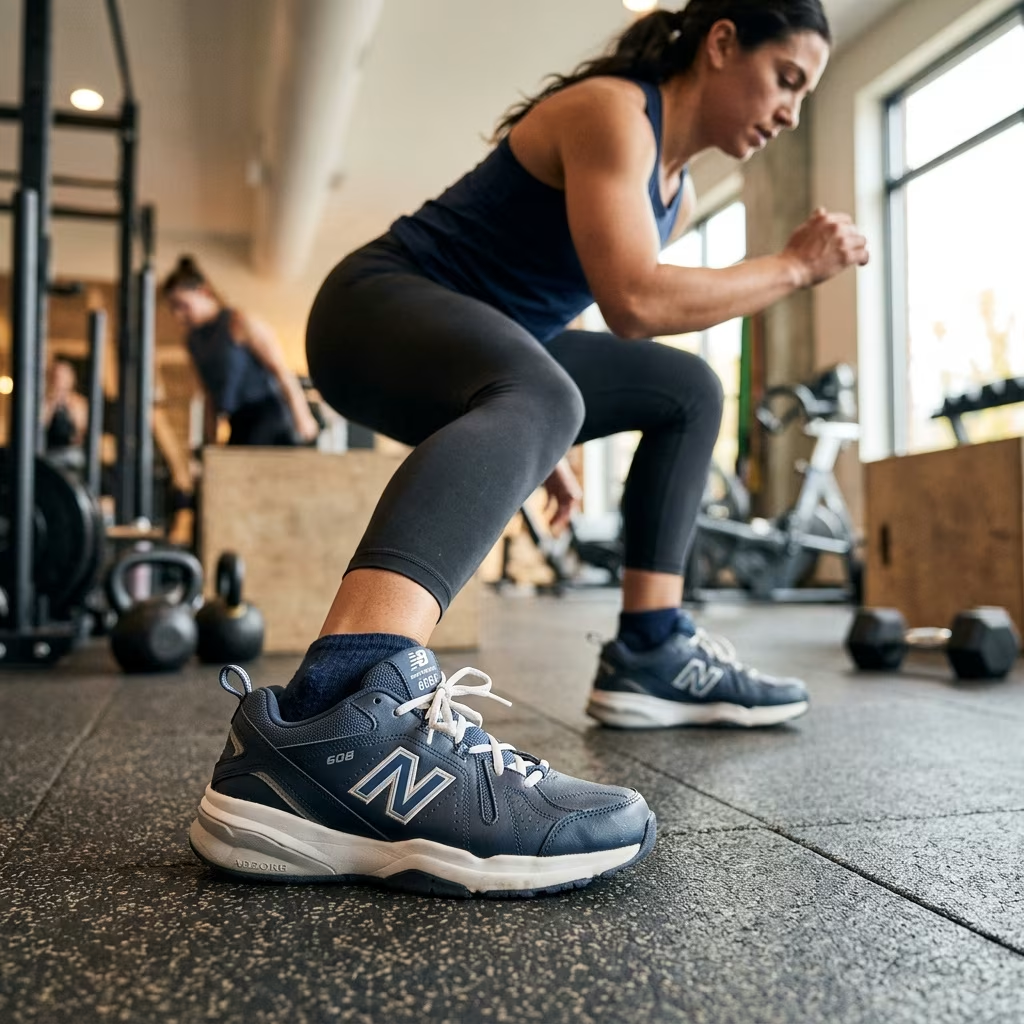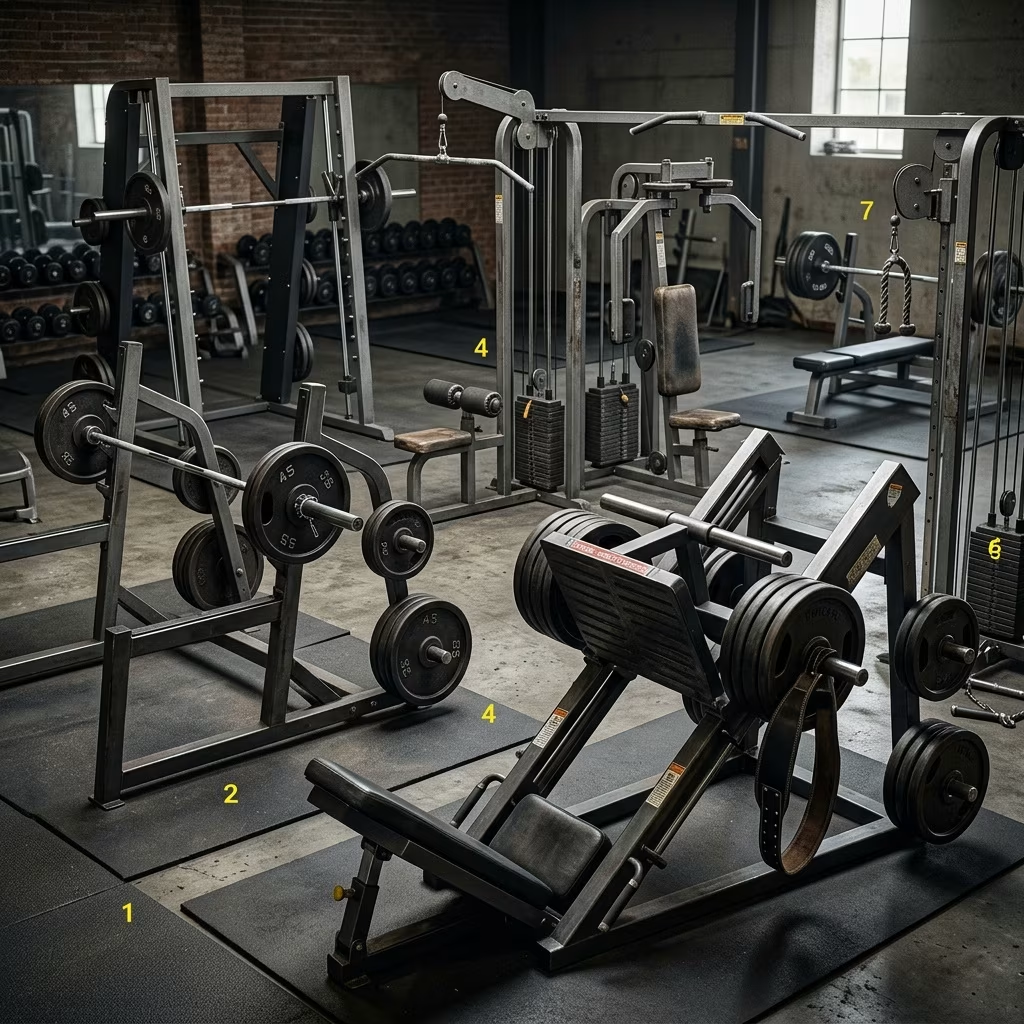
If you stride into the gym expecting every piece of equipment to be equally safe, think again. While fitness facilities are designed to promote health, certain machines and weights carry a higher risk of misuse and injury. Below, we break down the seven most dangerous pieces of gym equipment, explain why they’re hazardous, and offer actionable tips for using them safely. Protect your health and maximize your results by following this comprehensive guide.
1. Treadmills
Arguably the most popular cardio machine, treadmills are also among the most accident-prone pieces of equipment in the gym. While they’re excellent for heart health and fat loss, treadmills can be unforgiving when used incorrectly.
- Common injuries: Falls, sprains, friction burns, and in severe cases, head trauma.
- Main causes: Loss of balance, distraction (such as using a mobile device), improper speed selection, or stepping off while the belt is still moving.
Safety tips:
- Always use the safety clip or emergency stop key.
- Start at a low speed and increase gradually; never jump onto a moving treadmill.
- Wear suitable, non-slip footwear.
- Focus on your form and surroundings — avoid distractions like texting.
- Keep children away from treadmills, both in motion and when stopped.
2. Leg Press Machines
The leg press machine looks like a safe way to build lower-body strength, especially when compared to heavy free weights. However, improper use or loading with excessive weight can cause catastrophic injuries.
- Common injuries: Knee ligament tears, lower back strain, and in extreme cases, spinal compression or leg fractures.
- Main causes: Using too much weight, locking out the knees during the press, or poor seat alignment.
Safety tips:
- Never lock your knees during the movement — always maintain a slight bend at the top.
- Start with a moderate weight, focusing on form over load.
- Adjust the seat so that your knees do not lower past a 90-degree angle.
- Engage your core and avoid arching your back to prevent spinal strain.
3. Smith Machines
The Smith machine provides a guided barbell track, often marketed as a safer alternative to free weight lifting. However, its fixed movement path can lead to unnatural joint angles and false sense of security.
- Common injuries: Shoulder, knee, and lower back strain; joint misalignment issues.
- Main causes: Performing exercises not designed for fixed-path movement, overloading the bar, or skipping proper technique.
Safety tips:
- Use the Smith machine only for exercises that fit its track, such as controlled squats or bench presses, and with caution.
- Keep loads manageable and perform slow, controlled reps.
- If unsure about proper use, seek guidance from a certified trainer.
4. Seated Leg Extension Machines
Seated leg extension machines isolate the quads but can place tremendous stress on the knees if used incorrectly, especially with heavy weights or poor seat adjustment.
- Common injuries: Knee pain, ligament and tendon strain, cartilage damage.
- Main causes: Overloading the machine, hyperextending the knees, or failing to align the knee joint with the machine’s axis of rotation.
Safety tips:
- Match the machine’s pivot point with your knee to avoid lateral or twisting forces.
- Control the movement — avoid snapping the leg to full extension or rapidly lowering the weight.
- For knee pain, consider alternative quad exercises like squats or step-ups.
5. Lat Pull-Down Machines (Behind-the-Neck Variations)
Lat pull-downs are excellent for upper back development, but the behind-the-neck variation can be extremely hazardous, especially for those with limited shoulder mobility.
- Common injuries: Rotator cuff tears, shoulder impingement, neck strain.
- Main causes: Pulling the bar behind the head forces the shoulders into a risky position, often placing unnatural stress on tendons and muscles.
Safety tips:
- Always lower the bar in front of your chest, keeping elbows slightly forward.
- Avoid pulling the bar behind your head — most trainers do not recommend this method.
- Limit weight to what you can control smoothly while maintaining proper posture.
6. Ab Crunch Machines
Crunch machines may seem innocuous, but improper form or loading can strain the back and neck. They often reinforce poor posture and target superficial muscles without improving core stability.
- Common injuries: Neck strain, lower back pain, abdominal muscle pulls.
- Main causes: Using hands to pull the neck, jerking the body, excessive weight, and improper seat or pad alignment.
Safety tips:
- Perform ab crunches with focus on the core — avoid using your hands or neck to generate movement.
- Select a weight that allows full control and steady, slow movement.
- Prioritize form over repetitions; stop if you feel pain, especially in the neck or lower back.
7. Loaded Barbells and Free Weights
While free weights are foundational for building strength, they represent a double-edged sword: they encourage muscle recruitment and growth, but improper use can result in severe injuries. Injuries related to dropping weights, improper lifting technique, and lack of safety precautions are common.
- Common injuries: Sprains, strains, fractures, joint dislocations, head or foot trauma from dropped weights.
- Main causes: Lifting weights too heavy for your current strength, poor form, no spotter for challenging lifts, or careless racking/unracking.
Safety tips:
- Always warm up appropriately before heavy lifts.
- Ask for a spotter when attempting maximal or unfamiliar loads.
- Check equipment (bars, benches, collars) before each set.
- Never drop weights unless expressly allowed in the facility.
- Pay attention to your limits and progress weight gradually.
Comprehensive Table: Risk Factors and Prevention
| Equipment | Common Injuries | Main Causes | Prevention Tips |
|---|---|---|---|
| Treadmill | Falls, sprains, burns | Distraction, loss of balance | Use safety key, focus on workout, never step on/off while moving |
| Leg Press | Knee/spine injuries | Excessive weight, locking knees | Keep slight knee bend, adjust seat, controlled motion |
| Smith Machine | Joint strain | Unnatural movement path, poor technique | Use appropriate exercises, slow reps, moderate weight |
| Leg Extension | Knee pain, ligament damage | Hyperextension, misalignment | Align joint with pivot, controlled extensions |
| Lat Pull-Down | Shoulder injuries | Behind-the-neck pulls | Pull to chest, avoid behind-neck method |
| Ab Crunch Machine | Neck/back injury | Poor form, excessive load | Control weight, proper posture, do not pull on neck |
| Free Weights | Sprains, fractures | Overloading, poor form | Warm up, use spotter, check equipment |
General Gym Safety Tips
Regardless of which equipment you use, following best practices will significantly lower your risk of injury:
- Read instructions and ask staff or trainers for a demonstration if unsure about any machine.
- Check equipment for wear or damage before use, especially moving parts and cables.
- Maintain proper form and posture during all movements, not just heavy lifts.
- Gradually increase intensity rather than jumping to maximum weight or speed.
- Wipe down sweat and dry hands/equipment to avoid slips.
- Report malfunctioning equipment immediately to gym staff.
Why Injuries Occur: Underlying Risk Factors
Many gym injuries result from a combination of equipment design and user behavior. Common contributing factors include:
- Lack of knowledge or technique — especially for new users or those trying advanced exercises.
- Poor equipment maintenance or faulty safety features.
- Attempting more weight or reps than physically manageable.
- Ignoring bodily signals of pain or fatigue.
- Overcrowding leading to distraction or rushed form.
Frequently Asked Questions (FAQs)
Q: Are certain gym machines riskier than free weights?
A: Yes, some machines lock your body into unnatural movement paths or create a false sense of security, increasing the risk of joint injuries or misuse if not used with correct technique. Free weights pose risks mainly from improper lifting form or excessive load.
Q: Can beginners safely use all types of gym equipment?
A: Beginners should receive guidance on proper usage, starting with lower-risk machines and lighter weights. Some equipment, like the Smith machine or heavy barbells, is best introduced under supervision.
Q: How often should gym equipment be inspected for safety?
A: Facilities should inspect equipment daily for visible damage, with scheduled maintenance at least monthly. Report any issues, like frayed cables or wobbly seats, immediately to staff.
Q: What is the most important step to prevent injuries?
A: Using proper form and progressing gradually with weight or intensity is crucial. Combining this with regular equipment checks and awareness minimizes most risks.
Final Thoughts: Staying Safe and Strong
No gym equipment is inherently “bad,” but each poses unique risks if used improperly. By knowing which machines demand extra caution and adopting best practices, you’ll maximize your workouts while minimizing downtime from injuries. When in doubt, consult with certified trainers, and always prioritize safety over ego in the gym.
References
- https://akfit.com/blogs/own-your-fitness/safety-concerns-with-exercise-equipment
- https://newsletter.barbend.com/p/5-potentially-dangerous-gym-machines-you-should-rethink
- https://nutroone.com/en/2024/02/05/fitness-equipment-safety/
- https://gymdesk.com/blog/gym-safety-best-practices-prevent-injuries-emergencies/
- https://sfhealthtech.com/blogs/post/exercise-safety-checklist
- https://www.mensjournal.com/health-fitness/9-machines-you-should-never-use
- https://t-nation.com/t/the-most-dangerous-gym-equipment-of-all-time/283520
- https://www.youtube.com/watch?v=IsUHmQiCs6M