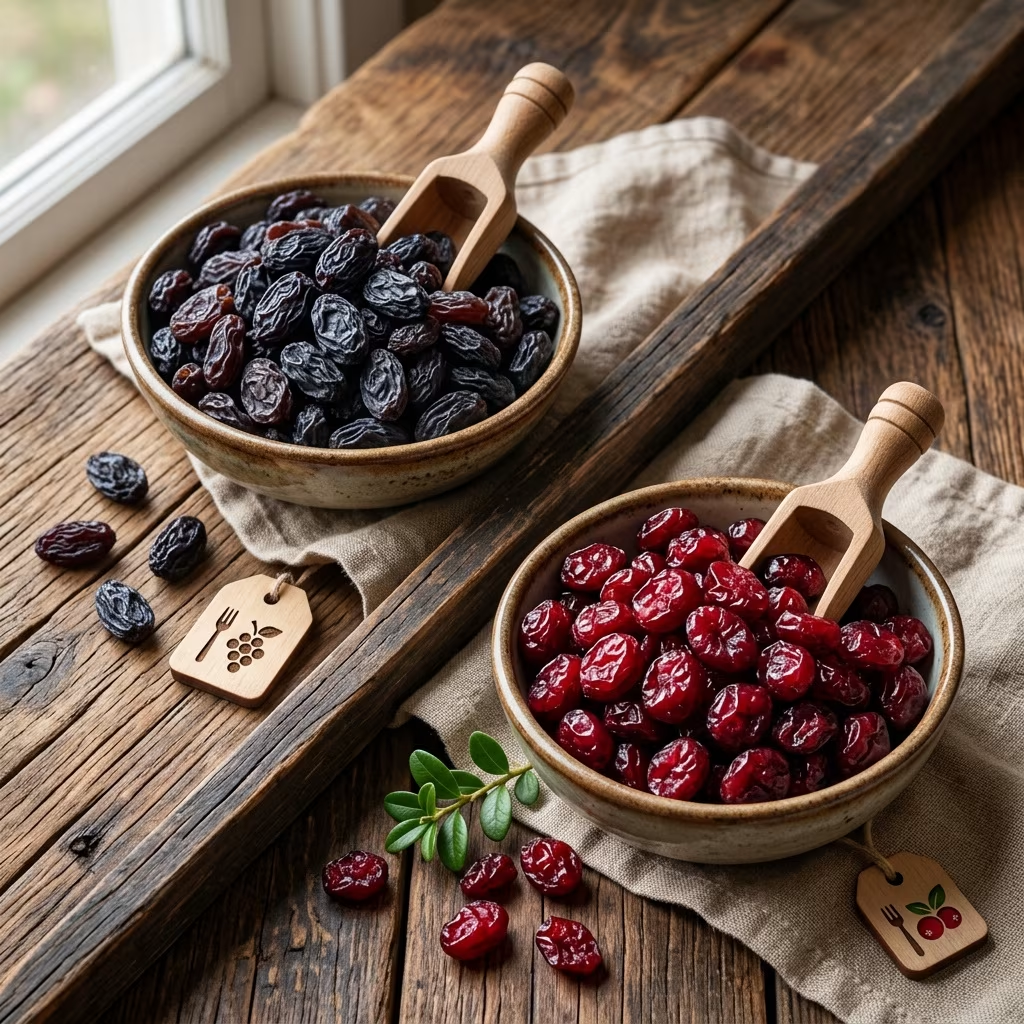
Dried fruit has long held a place in healthy snacking, adding sweetness to trail mixes, salads, cereals, and even baked goods. Among the countless options available, raisins and dried cranberries consistently rank as popular favorites. But when it comes to nutrition, sugar content, and overall health benefits, which of these shriveled fruits comes out on top? Here’s a detailed, side-by-side analysis that breaks it all down for you.
Why the Raisins vs. Dried Cranberries Debate Matters
Choosing between raisins and dried cranberries can impact more than just flavor. Both play a role in shaping the nutritional profile of your meals and snacks. With natural vs. added sugar, fiber content, vitamins, minerals, and calories on the line, making an informed choice helps support a balanced diet. Let’s break down how these contenders stack up against each other in the key nutritional categories.
Nutritional Breakdown: Raisins vs. Dried Cranberries
| Nutrient | Raisins (per 1.5 oz/42 g) | Dried Cranberries (per 1.5 oz/42 g) |
|---|---|---|
| Calories | 120 | 123 |
| Protein | 1.2 g | 0.03 g |
| Fat | 0.2 g | 0.6 g |
| Total Sugar | 24 g* | 26 g* |
| Carbohydrates | 11% DV | 11% DV |
| Fiber | 6% DV | 9% DV |
| Sodium | 4 mg | 1 mg |
| Calcium | 2% DV | 0.4% DV |
| Iron | 4% DV | 1% DV |
| Magnesium | 3% DV | 0.5% DV |
| Potassium | 9% DV | 0.5% DV |
| Folate (Vitamin B9) | 2 mg | 0 mg |
*Most sugar in raisins is natural, while most in dried cranberries is added.
Calories: A Close Contest
Both raisins and dried cranberries are relatively calorie-dense due to the dehydration process, which removes water and concentrates natural sugars and nutrients. For a single small serving (around 1.5 ounces or the equivalent of a snack box), raisins clock in at 120 calories, while dried cranberries contain 123 calories. The difference is marginal, but if you’re watching your caloric intake closely, raisins offer a slight edge.
Protein: Raisins Provide More
Neither fruit is a significant source of protein—it’s simply not their role in your diet. Nonetheless, raisins supply about 1.2 grams of protein per serving, compared to a minuscule 0.03 grams in dried cranberries. While not a game-changer, those seeking to add small amounts of protein to snacks or trail mixes will get a bit more from raisins.
Fat Content: Both Modest Choices
For those looking to keep dietary fat low, both options are suitable. Raisins contain just 0.2 grams of fat per serving, while dried cranberries slightly increase that number to 0.6 grams. Both are negligibly small amounts in the context of a daily diet.
Sugar Showdown: What’s Really Sweet?
Dried cranberries and raisins are high in sugar, but the source of the sugar is what truly matters for health:
- Raisins: Most of the sugar is naturally occurring from the grapes used to make them.
- Dried Cranberries: Most brands add sugar during processing to balance cranberry tartness. This bumps up the total sugar and results in added sugar content.
The American Heart Association recommends no more than 25 grams of added sugar per day for women and 36 grams for men. That makes it especially important to read labels on dried cranberries and choose unsweetened or reduced-sugar options when possible.
Carbohydrates: Evenly Matched
Both raisins and dried cranberries contribute about 11% of your daily value for carbohydrates per serving. This makes sense given their role as dried fruit, meant to provide quick-releasing energy and sweetness. For athletes or those needing quick carb boosts, either is suitable in moderation.
Filling Up on Fiber
Dietary fiber content is one area where dried cranberries marginally outpace raisins: dried cranberries provide 9% daily value, compared to 6% in raisins. Fiber is important for:
- Supporting gut health and digestion
- Helping you feel full so you resist overeating
- Slowing blood sugar spikes that follow sweet snacks
However, the difference in fiber is modest per serving, and both fruits can contribute toward your fiber goals.
Sodium: Minimal in Both Fruits
Barely measurable, raisins contain about 4 mg of sodium per serving, and dried cranberries just 1 mg. Both are well within the range recommended for low-sodium diets.
Calcium: Raisins’ Advantage
Raisins contain about 2% of your daily calcium value per serving, compared to only 0.4% in dried cranberries. Calcium is essential for maintaining strong bones and supporting muscle function, so raisins are the better choice for those seeking a convenient calcium boost.
Iron Content: Raisins Again Lead
When it comes to iron, raisins have a clear advantage—4% of the daily value per serving vs. 1% for dried cranberries. Iron supports oxygen transport in the blood, energy levels, and overall cellular function.
Other good iron sources include:
- Red meat
- Dark leafy greens
- Seafood
- Beans
Magnesium and Potassium: Raisins Shine Again
Raisins not only beat dried cranberries in magnesium (3% daily value vs. 0.5%) but absolutely outperform them in potassium, delivering 9% of your daily needs—comparable to a small banana—while dried cranberries barely register at 0.5%. Potassium is vital for nerve signaling, muscle contractions, and nutrient transport into cells.
Magnesium plays a role in heart function, energy metabolism, and blood sugar regulation.
Folate: A Special Win for Raisins
Folate (Vitamin B9) supports cell function and DNA synthesis. Raisins contain 2 mg per serving, while dried cranberries offer none. Adequate folate intake may help reduce the risk
References
- https://www.prevention.com/food-nutrition/a19828540/raisins-vs-dried-cranberries/
- https://www.soupersage.com/compare-nutrition/raisins-vs-cranberry
- https://www.healthcastle.com/nutrition-faceoff-craisins-dried-cranberries-vs-raisins/
- https://foodstruct.com/nutrition-comparison/raisin-vs-cranberry
- https://www.foodandhealth.com/blog/cranberries-raisins-sugars
- https://americanpress.com/2020/12/16/16-food_cover-raisins-vs-cranberries/
- https://www.dvo.com/newsletter/monthly/2016/march/remedy1.html
- https://www.health.harvard.edu/digital_first_content/dried-fruit-healthy-snack-sugary-treat-or-somewhere-in-between