The Curious Case of the US Army’s Astrology Meme Attempt
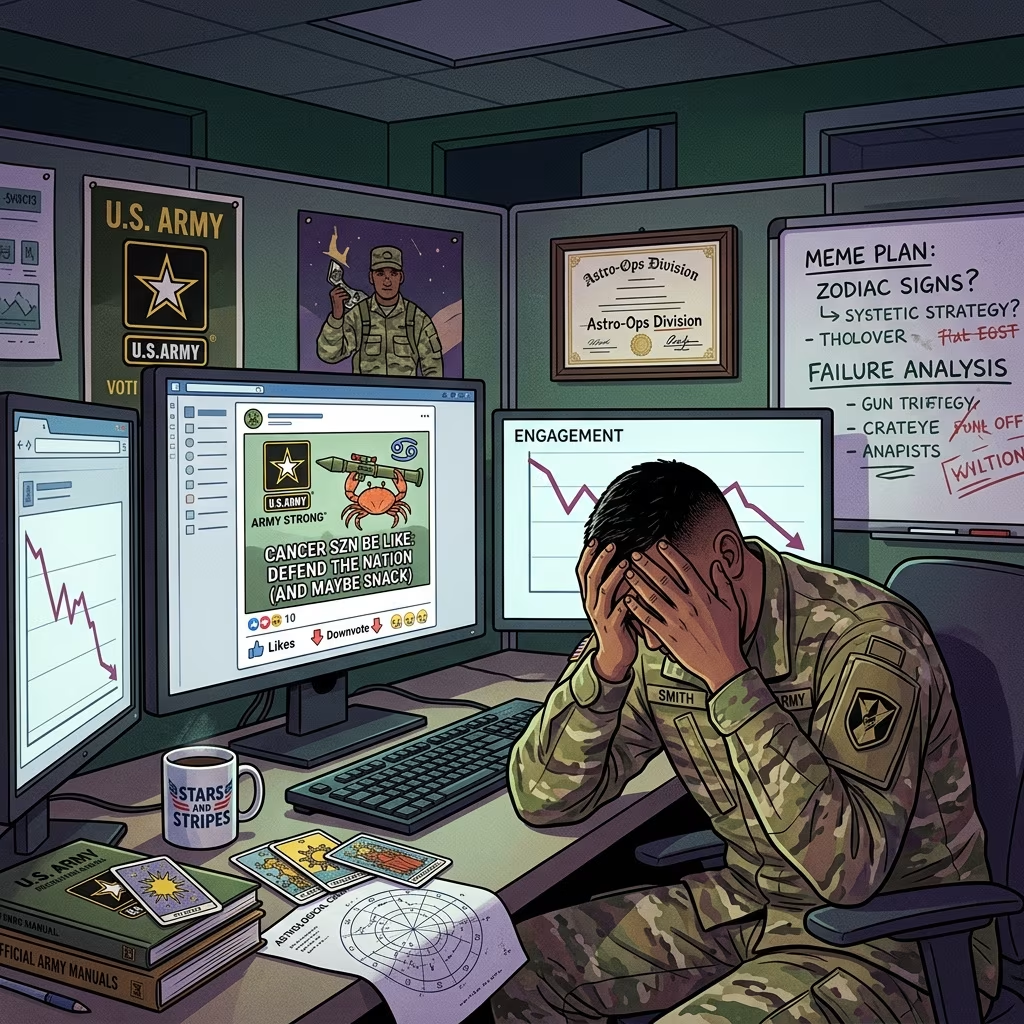
In early 2021, the U.S. Army’s official @GoArmy Instagram account published a bold attempt at engaging younger audiences: a series of memes pairing zodiac signs with military occupational specialties. The concept seemed engineered for virality—after all, astrology memes reign supreme on today’s social feeds. Yet, the result was almost universally panned as cringey and awkward. This article examines why the Army’s foray into astrology meme culture misfired, what it reveals about pop astrology’s place in youth and queer culture, and how brands stumble attempting to translate internet culture into marketing.
How Astrology Conquered Social Media
Astrology, once confined to the “horoscope” column in back pages of women’s magazines, has blossomed into a vibrant online subculture. Today, it spans infographics, mood boards, support groups, memes, and more, drawing massive, engaged followings on platforms like Instagram, Twitter, Tumblr, and Discord. The rise of meme accounts from creators such as Courtney Perkins (@notallgeminis) and multi-platform communities centering on Sun/Moon/Rising placements highlights astrology’s deep resonance with Gen Z and queer communities.
Contemporary astrology is less about predicting the future and more about offering customized, sometimes irreverent self-understanding. From astrology meme accounts dragging every sign for their quirks, to Discord channels supporting folks with water Moons, astrology has become a language for exploring identity, relationships, humor, and even trauma.
- Instagram Meme Pages: Comedians, astrologers, and fans create content riffing on zodiac stereotypes, daily mood forecasts, and “Which sign are you when…” scenarios.
- Apps & Calculators: Hyper-personalized astrology apps visualize birth charts and offer tailored readings, feeding an appetite for deeper, more communal engagement.
- Queer & Feminist Roots: Today’s pop astrology draws from earlier feminist zines and radical spaces, before its co-opting by glossy lifestyle magazines.
What Went Wrong: The Army’s Astrology Post
The viral @GoArmy Instagram story mapped each zodiac sign to an Army job specialty: for example, Capricorn as Human Intelligence Collector, Pisces as JAG attorney, Scorpio as Human Resources Specialist. Intended as a light-hearted way to spotlight Army career diversity, it instead landed with a thud across internet culture and military circles alike.
The problems were multifaceted:
- Missed Humor: Unlike organic astrology memes, which tease sign stereotypes and invite playful self-drag, the Army’s post supplied little actual humor or satire.
- Lack of Astrological Substance: The content offered no real astrology knowledge or relatable insight—just a superficial mapping with no context.
- Awkward Corporate Voice: The effort to “speak meme” came across as forced, demonstrating the classic brand error of co-opting youth subcultures without genuine understanding.
- Cultural Mismatch: The Army’s brand identity (discipline, seriousness, authority) clashes with the inside-joke, queer, irreverent spirit of astrology meme spaces.
Backlash was swift and unanimous. Among the responses:
- Astrology fans felt misunderstood; the post didn’t reflect the actual meme culture or its attitude toward sign-based identity.
- Those skeptical of astrology mocked the Army for pandering to “woke” youth and trivializing serious careers.
- Military veterans and conservatives found the approach disrespectful and out of touch with Army tradition.
Why Brand “Astrology Memes” Tend to Fail
What makes an astrology meme actually work? At their best, they punch up, using astrological archetypes to playfully roast or comfort. They are steeped in insider knowledge and cultural context. Branded or corporate attempts usually lack one or more of these ingredients, resulting in content that feels cynical, appropriative, or embarrassingly off-key.
- Astrology meme spaces have evolved as queer, feminist, and outsider zones—a way for marginalized groups to reclaim identity and foster community.
- Corporate meme attempts often ignore these origins, instead feeding back a shallow version of the format.
- Cringe factor increases when power structures (the Army, billion-dollar companies) attempt to “speak youth culture” without the lived community experience or humor that drives memes.
The Cringe Effect Explained
“Cringe” is more than an internet insult—it’s a cultural signal. Online, cringe often marks brand missteps: an attempt to relate to niche communities without belonging, or an earnest try at humor from an authority figure not in on the joke. The US Army’s meme campaign stands as a textbook example.
Comments ranged from: “Stop with this ‘woke’ nonsense” to “Glad I’m retired.” The consensus? When an institution tries to use the internet’s language without native fluency, the community notices—and recoils.
Is Astrology Inherently Radical? Myths and History
Some might assume today’s astrology memes are always tied to leftist, feminist, or queer communities. However, astrology’s history is more complex, as powerful right-wing figures have long turned to astrologers:
- Rudolf Hess (a Nazi leader) is cited for working with astrologers, though debates persist about Hitler’s personal involvement.
- J.P. Morgan, the legendary capitalist, famously said, “Millionaires don’t use astrology—billionaires do.”
- Ronald Reagan, US President, openly relied on astrologer Jeane Dixon for advice regarding schedules and national events.
Thus, astrology is a tool—one that’s been radical, reactionary, queer, or commercialized depending upon its context and users. Today, it’s a site of playful exploration and community-making for many marginalized youth, yet that is only part of its story.
Astrology Memes as Queer and Youth Culture
Astrology meme culture’s queer energy is palpable. Spaces like @NotAllGeminis or forums dedicated to water Moons are often led by or cater to LGBTQ+, feminist, and outsider audiences. For these groups, astrology offers:
- A playbook for identity that isn’t tied to assigned gender, family, or nation.
- A shared joke that pokes fun at the constraints of binaries (Aries vs. Libra, Sun vs. Moon, etc.).
- Room for self-invention, with roles shifting according to moods, signs, or social needs—far from the fixed, hierarchical structure of military culture.
It’s no wonder the Army’s meme felt especially alien: it attempted to map deeply personal, quirky, mutable archetypes onto rigid, bureaucratic roles.
Marketing to Gen Z: Why Brands Get Meme Culture Wrong
Gen Z is the first generation to be truly fluent in internet meme culture, and can spot inauthenticity instantly. Efforts to “go viral” often backfire, especially when:
- The content lacks lived experience: Real meme fluency comes from participating in the culture, not assigning a junior staffer to copy the format.
- Corporate messaging collides with genuine internet weirdness: Brands, by definition, have self-serving motives. Meme culture is built on subversion, ambiguity, and irony.
- The approach is tone-deaf to community norms: Attempts to “speak Gen Z” using outdated or shallow templates result in backlash and ridicule.
For all the Army’s efforts at appearing inclusive, bold, or relatable, the astrology meme strategy only emphasized its outsider status in internet culture.
The Real Lessons of the Meme Flop
The Army’s failed astrology meme teaches several lessons about digital culture, generational marketing, and the resilient weirdness of meme communities:
- Meme communities are not just formats—they’re living cultures, built on shared language, history, and experience.
- Cultural appropriation isn’t just about race or fashion: It’s about power, relevance, and who gets to laugh (and why) online.
- Gen Z’s humor is sophisticated, communal—and often hostile to brands who try to sell inclusion rather than build it from within.
- Internet cringe is a learning opportunity: it exposes the gaps between intent and impact, authority and authenticity.
Table: Comparing Organic vs Corporate Astrology Memes
| Feature | Organic Astrology Meme | Corporate Meme (e.g., Army) |
|---|---|---|
| Tone & Voice | Irreverent, insider, playful | Forced, performative, often awkward |
| Humor Style | Self-drag, community roasts, ambivalence | Surface-level jokes, fails to capture audience voice |
| Astrology Depth | References deep astro-knowledge & culture | Shallow, superficial sign-job mapping |
| Community Resonance | High: shared context and lived experience | Low: content perceived as outsider or exploitative |
| Purpose | Connect, entertain, comfort | Recruit, sell, control message |
Lasting Impact: Did Anyone Like the Army’s Meme?
Surprisingly, the Army reported that the post “performed above average” on Instagram, particularly with job roles like Ranger and Psychological Operations Specialist. But this metric is misleading: higher engagement here primarily signaled outrage, confusion, and mockery. In this way, the campaign illustrated Marshall McLuhan’s old maxim: “the medium is the message,” but missed the actual meaning of the medium and its communities.
Frequently Asked Questions (FAQs)
Q: Did the US Army create astrology memes to recruit Gen Z?
A: Yes. The official @GoArmy Instagram post mapped zodiac signs to Army careers in a meme-style campaign, explicitly seeking to connect with Gen Z’s internet and meme culture sensibilities.
Q: Why did the Army’s astrology meme campaign fail?
A: The campaign misread the humor and spirit of actual astrology meme culture, failed to provide meaningful or funny content, and clashed with the Army’s authoritative brand persona, making it appear awkward and out of touch.
Q: Is astrology really part of queer and youth culture online?
A: Yes. Astrology meme spaces are heavily influenced by queer, feminist, and outsider sensibilities, serving as both playful exploration and identity support systems—but astrology’s context and history are broad and not inherently radical.
Q: Have other powerful figures used astrology?
A: Absolutely. From Nazi leaders consulting astrologers to US presidents and billionaire financiers, astrology has long attracted people in power, regardless of ideology.
Q: Can brands ever succeed with meme marketing?
A: Brands can do well with meme culture if they participate authentically, hire creators from within communities, and show respect for the formats and voices involved—but missteps are more common than viral successes.