Astrology Can Explain Why Twins Have Such Different Personalities
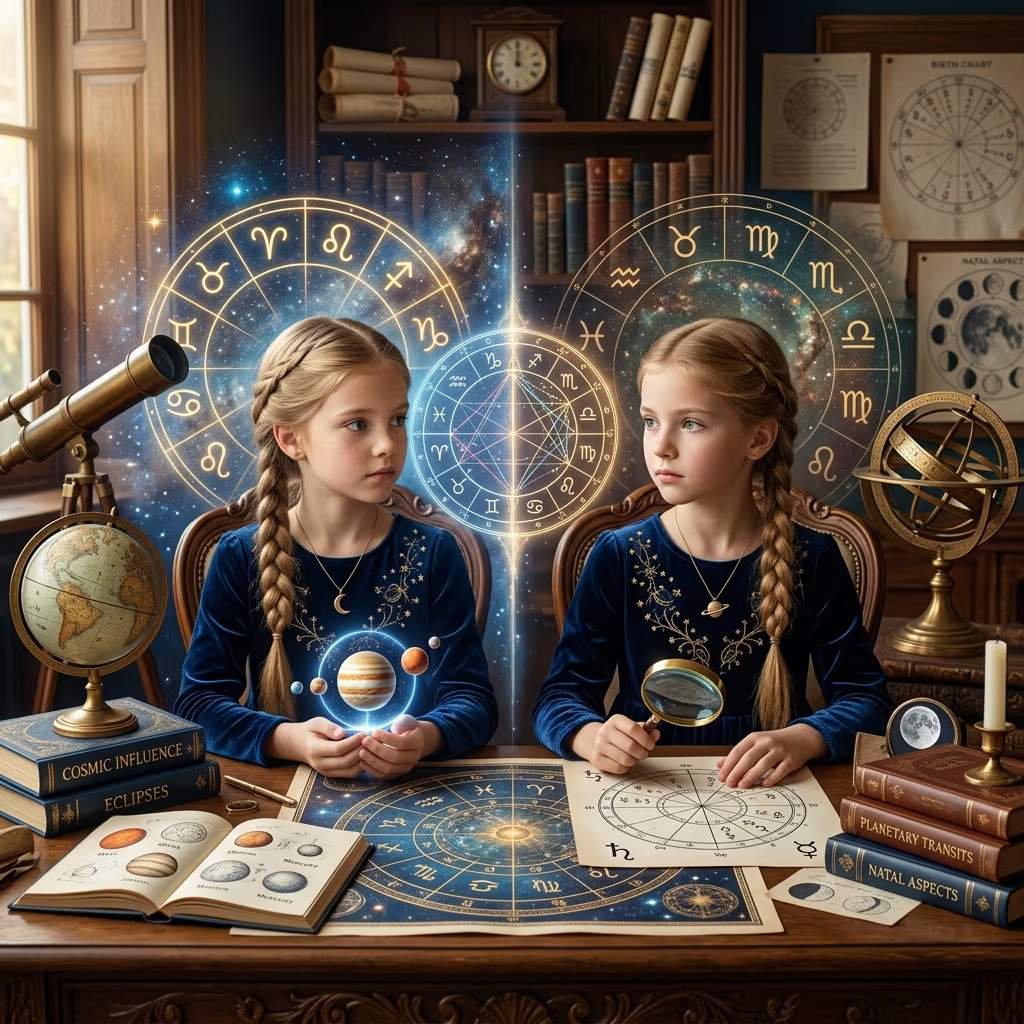
Anyone with a twin or who knows one has likely pondered: How can identical — or fraternal — twins born mere minutes apart look so alike and share core similarities, but emerge with strikingly different personalities, interests, and even destinies? Astrology offers a surprisingly nuanced explanation for this phenomenon, providing insight into why twin siblings often carve out distinct paths in life, despite having almost identical birth charts.
How Astrological Birth Charts Work for Twins
At first glance, twins — especially those born within minutes of each other — have practically identical astrological birth charts. Their Sun, Moon, and Rising signs typically match, forming what astrologers call the “Big Three” foundational pillars of one’s personality. Yet, a deeper look reveals crucial differences that can shape how each twin grows and experiences life.
- Sun Sign: Represents your core identity or ego.
- Moon Sign: Illuminates emotional patterns and instinctive reactions.
- Rising Sign (Ascendant): The mask you show the world and how you approach new experiences.
While the planetary positions may be almost identical, subtle variations in birth time — sometimes as little as a few minutes — can shift the planets across different astrological houses. These houses are twelve “sectors” of the birth chart, each representing major areas of life: personality, finances, communication, family, pleasure, health, relationships, transformation, philosophy, career, friendships, and the subconscious.
Why Even Small Time Differences Matter
Celeste Brooks, an acclaimed astrologer and founder of Astrology By Celeste, describes the system as follows: “The planets are the actors in our chart, and they each have a function to express. The signs they’re in are like the costumes they wear — how they express that function — and there are 12 different areas of life, the houses. They speak to where the action takes place.” Brooks emphasizes that even 24 minutes between twins’ births can shift which house the planets fall into.
- For example, one twin’s Sun sign might occupy the Third House (communication), indicating strengths in language, journalism, or media.
- The other twin’s Sun might sit in the Fourth House (home and family), suggesting a focus on nurturing, psychology, or human development.
This explains why two people with almost identical planetary signs can chart utterly different courses in their studies, careers, and passions.
Nature Versus Cosmic Nurture: Environment and Experience
Astrologer Tali Edut, known for her work as one-half of the AstroTwins, notes that the chart isn’t everything. She highlights the important interplay between cosmic wiring and life circumstances — what she calls “nature versus cosmic nurture.” Even twins can find themselves in very different environments, relationships, and experiences, which in turn activate different parts of their charts.
- Relationship choices can evoke different astrological themes early or late in life.
- Evolution over time and unique experiences help shape twins into “separate autonomous beings who just happen to have a lot of similarities.”
Birth chart analysis uncovers timing for key moves — in career, love, and personal growth — but the circumstances and choices each twin makes play a powerful role in their individual development.
Making Individual Birth Chart Readings Relevant for Twins
According to Edut, personalized astrological readings for twins are essential. “I’ll talk to the twins together about each of the planets in their chart, but invariably, when it’s time to actually give them the reading, they’re going to show up with different things that they’re each wondering about.” This highlights the need for astrologers to tailor interpretations for each twin’s evolving interests and concerns, rather than assuming identical personalities or life trajectories.
- Twins often ask about different issues: one may focus on career, the other on romance.
- Astrologers must address the unique paths each twin is navigating at any given time.
Astrological Houses: The Crucial Difference-Makers
The core reason for diverging personalities among twins often boils down to how planets land in different houses due to minute differences in birth time. Here’s a breakdown of what the twelve houses represent:
| House | Main Domain | Keywords |
|---|---|---|
| First | Identity & Appearance | Self, Personality |
| Second | Money & Value | Assets, Self-worth |
| Third | Communication & Siblings | Media, Messaging |
| Fourth | Home & Family | Roots, Parents |
| Fifth | Pleasure | Fun, Romance |
| Sixth | Health & Work | Routine, Service |
| Seventh | Balance & Partnerships | Marriage, Contracts |
| Eighth | Transformation | Sex, Death, Rebirth |
| Ninth | Purpose & Beliefs | Travel, Philosophy |
| Tenth | Enterprise & Career | Reputation, Authority |
| Eleventh | Friendship | Groups, Dreams |
| Twelfth | Subconscious | Secrets, Solitude |
Even tiny differences in planetary placements across these houses can dramatically influence how similar charts manifest for each person, leading to divergent interests and talents such as academic pursuits, creative ambitions, or family priorities.
Case Study: Planetary Placement and Twin Divergence
Imagine two fraternal twins born 24 minutes apart. Both have a Capricorn Sun, Virgo Moon, and Libra Rising. However, one has their Sun in the third house of communication and the other in the fourth house of home.
- The first may feel pulled toward journalism, writing, and openness.
- The second might be driven by interests in psychology, caring professions, or nurturing environments.
This simple shift in planetary placement offers deep insight into how nearly identical birth charts can set twins on divergent paths.
Interpretation Versus Destiny: The Role of Free Will
While an astrological chart can offer insight, it isn’t fate. Tali Edut notes, “We will always have this cosmic wiring and for twins, it is really identical. However, we are human beings with free will. We’re always co-creating with the universe. The astrology chart is not this sentence, it’s not this fate.” Each twin makes choices that engage distinct pieces of their chart at different times, resulting in independent journeys despite shared cosmic roots.
Advanced Techniques: Multiple Chart Systems for Twins
Some astrologers use different zodiac systems — like tropical and draconic charts — to reveal additional layers of difference between twins. María Blaquier, an author and renowned astrologer specializing in twins, recommends this advanced approach. Tropical charts begin at zero degrees Aries, aligning with psychological traits, while draconic charts start at the North Node, offering insight into emotional patterns and past experiences.
- Tropical Chart: Focuses on psychological traits and development.
- Draconic Chart: Delves into emotional themes, karmic baggage, and life lessons.
Blaquier analyzes major life events using both chart systems to see which aligns best for each twin, often finding the draconic system more fitting for one sibling, especially regarding emotional experiences and milestones.
Solar Arc Progressions: Predicting Life Events for Twins
Differences in birth time between twins become increasingly significant as they age, especially when using timing techniques like solar arc progressions. This system advances the birth chart by one degree per year to predict upcoming trends or events. While the general planetary aspects remain similar, solar arc placements can show major differences as twins grow older, sometimes leading to “big things” appearing at different ages for each sibling.
- Solar Arc Chart: Used to track significant life changes, with aspects slowly diverging over time.
- Twins born minutes apart might experience major life events — job changes, relationships — years apart due to subtle chart differences.
The Importance of Personal Agency and Environment
Astrology can outline cosmic tendencies, but lived experiences and individual choices matter deeply. Twins may have nearly identical charts, but environmental factors, parental influence, peer relationships, and personal decisions shape each one’s destiny. No horoscope can account for every twist of human free will and opportunity.
- Cosmic wiring remains (similar charts), but personality ultimately emerges from a complex blend of nature, nurture, and choice.
- Astrology can support understanding of self and sibling, but shouldn’t be seen as absolute destiny.
Expert Perspectives: Individualization and Twin Identity
Astrologers encourage twins to seek personal meanings in their charts and embrace their individuality. The tendency to “individuate” — to distinguish oneself from one’s twin — often propels siblings toward unique hobbies, academic fields, and relational patterns. Celeste Brooks highlights that this inner drive is both psychological and astrological, stimulated by variations in planetary house positions and personal experience.
- Twin identity is dynamic, constantly evolving through choices and external influences.
- Astrology is a tool for exploration, not a final blueprint.
Quick Reference Table: Twin Astrology Insights
| Factor | Twins’ Similarities | Twins’ Differences |
|---|---|---|
| Sun, Moon, and Rising Signs | Nearly identical | Often the same |
| Astrological Houses | Can be similar if birth times are very close | Tiny time gaps shift planets into different houses |
| Advanced Chart Methods | Same tropical chart | Draconic or solar arc charts highlight differences |
| Environmental Factors | Shared family upbringing | Distinct peer groups, experiences |
| Life Choices | Same cosmic wiring | Different career, romance, values |
Frequently Asked Questions (FAQs)
How can twins have different personalities if their charts are almost identical?
Minute differences in birth time shift the placement of planets into different astrological houses, which control distinct life areas. This, combined with environmental influences and personal choices, explains why twins can develop different personalities and interests.
What are astrological houses, and why do they matter for twins?
Astrological houses divide the chart into 12 sections, each representing domains like self, communication, family, and career. Planetary positions in these houses guide how energies are expressed. For twins, small time differences at birth can result in planets falling into different houses, leading to divergent paths.
Do twins always have exactly the same Sun, Moon, and Rising signs?
Usually, yes — twins born within minutes of each other have very similar Big Three signs. Exceptions occur if birth times cross a sign boundary, but this is rare. Differences become more pronounced in house positions and chart techniques beyond the basics.
Can different chart calculation systems (like tropical and draconic) explain twin differences further?
Yes. Some astrologers use both the tropical (psychological focus) and draconic (emotional, karmic focus) charts to gain insight into differences between twins. These methods commonly reveal key distinctions that might otherwise be overlooked.
Is a birth chart a complete explanation for personality differences?
No. While astrology provides valuable context, many other factors, including upbringing, peer influence, and individual preference, play a part. A birth chart is a tool for guidance, not an absolute determinant of fate.
Key Takeaways for Astrology Enthusiasts and Twins
- Small variations in birth time affect planetary house placements, even for twins.
- Twins’ personalities can diverge due to individualized experiences, relationships, and choices.
- Advanced chart techniques (draconic, solar arc) highlight differences for interpreting major life events.
- Personal agency and environmental factors shape destinies alongside cosmic influences.
- Astrology empowers self-understanding, but is best used as a guide, not a verdict.
Conclusion: Astrology gracefully accounts for both similarities and differences among twins, offering tools to explore identity while recognizing the power of experience and choice. For twins and astrology lovers alike, seeking personal meaning within the chart — and embracing the dynamic interplay of nature, nurture, and free will — is the truest path to understanding.
References
- https://www.cosmopolitan.com/lifestyle/a44724342/astrology-twins-different-personalities/
- https://astrostyle.com/astrotwins/
- https://www.cosmopolitan.com/lifestyle/a60386086/sun-moon-rising-sign-meaning/
- https://www.refinery29.com/en-us/twin-astrology-opposite-personality
- https://astrostyle.com
- https://www.cosmopolitanme.com/astrology/star-signs-dates-and-symbols-for-each-zodiac-sign
- https://www.elle.com/horoscopes/