Whether you’ve just met someone new, are debating whether to take things to the next level, or simply want to understand your partner (or your latest crush) on a deeper level, relationship compatibility tests and personality quizzes are everywhere. They claim to measure how well you match—and sometimes spark surprise conversations about values, habits, and the quirks that make relationships thrive… or drive you a little nuts. But how much can these tests actually tell us about long-term compatibility? And which ones are actually worth your time?
Why Are People So Obsessed with Compatibility Tests?
From well-known tools like the Myers-Briggs Type Indicator (MBTI) and the Five Love Languages, to zodiac compatibility calculators and endless Buzzfeed-style quizzes, the internet is packed with ways to check if your personalities—and your hearts—align. For many people, these tests do more than offer entertainment. They can:
- Start important conversations about core values, communication style, conflict resolution, and emotional needs.
- Reveal hidden areas of compatibility or potential tension beyond surface-level attraction.
- Help couples or singles clarify what they want and need in a healthy relationship.
- Provide a gentle entry point into deeper work, like couples therapy or meaningful self-reflection.
But not all quizzes are created equal, and not every result is as scientific (or helpful) as it claims. It’s essential to look at what these tests measure and how they approach compatibility.
What Does It Mean to Be Compatible with Someone?
In the simplest sense, compatibility means that your personalities, values, lifestyles, and expectations work well together—often leading to fewer conflicts and a more harmonious connection. But according to relationship experts, true compatibility isn’t always about being similar. Sometimes, differences create the balance and growth opportunities that make a partnership rich and rewarding.
Therapist Racine Henry, Ph.D., LMFT explains it this way: “Compatibility is a natural, effortless way of relating to another person and feeling a connection. It can also be the ability to work together well and compromise around tough issues.”
- Some couples are compatible because their personalities, interests, and priorities are similar.
- Others thrive because their differences complement each other—think analytical meets creative, introvert meets extrovert.
- Compatibility can also grow over time. Couples who learn to communicate and navigate challenges together often become more compatible, even if it didn’t feel natural at first.
The Science (and Limits) of Relationship Compatibility Tests
Relationship quizzes may seem fun and insightful, but experts caution that no single test can determine whether a relationship will work out. Human personalities and relationship dynamics are too complex for a quiz to provide a fail-safe answer.
- Similarity does not guarantee compatibility. Two people can appear to be perfect matches on paper but struggle in real life due to communication styles or conflict resolution differences.
- Opposites can attract—or clash. Tests may warn about conflicting traits, but many real-life couples thrive precisely because of their differences.
- Tests are a starting point, not an end point. They’re tools for starting conversations, highlighting patterns, and exploring key areas—not delivering your fate.
That said, some personality frameworks and quizzes are especially popular in the dating world and can provide helpful insights for singles and couples alike.
Popular Types of Personality and Compatibility Tests
Here’s a breakdown of the most common relationship and personality tests you’ll encounter—and what they try to reveal:
1. Myers-Briggs Type Indicator (MBTI)
The MBTI sorts people into 16 personality types across four key traits:
- Introversion (I) vs. Extroversion (E)
- Sensing (S) vs. Intuition (N)
- Thinking (T) vs. Feeling (F)
- Judging (J) vs. Perceiving (P)
Dating apps and matchmaking services sometimes use MBTI types to suggest compatible pairs—think “INFP + ENFJ” matches. However, psychology researchers debate its scientific backing. Still, for many, it opens discussions about decision-making, energy, and communication preferences.
2. The Big Five Personality Traits (OCEAN Model)
This scientific framework rates individuals on five spectrums:
- Openness: Curiosity and imagination
- Conscientiousness: Organization and dependability
- Extraversion: Sociability and outgoingness
- Agreeableness: Friendliness and compassion
- Neuroticism: Emotional stability
Many dating algorithms use these traits to match users with similar personalities or to foster complementary pairings. High compatibility often means similar levels on key spectrums—e.g., two highly agreeable people might resolve conflict more easily.
3. The Enneagram
The Enneagram is a nine-type system rooted in core motivations and fears. Types include:
- Type 1: The Reformer
- Type 2: The Helper
- Type 3: The Achiever
- Type 4: The Individualist
- Type 5: The Investigator
- Type 6: The Loyalist
- Type 7: The Enthusiast
- Type 8: The Challenger
- Type 9: The Peacemaker
Some dating sites now ask for your Enneagram type, arguing that understanding core drives (such as the need to feel loved, safe, or unique) helps predict how partners will connect or where friction could arise.
4. The Five Love Languages
Popularized by Dr. Gary Chapman, this quiz helps you (and your partner) identify which form of affection you value most:
- Words of affirmation
- Acts of service
- Receiving gifts
- Quality time
- Physical touch
Knowing your love languages doesn’t guarantee compatibility, but it does help partners understand and meet each other’s needs more consciously.
5. Zodiac Signs and Astrology-Based Compatibility
While not scientifically proven, astrological compatibility (“Are Gemini and Virgo a match?”) remains hugely popular. For some, zodiac readings offer playful insight—or a way to explore personal dynamics and belief systems.
Are Compatibility Tests Accurate or Just for Fun?
Despite their popularity, compatibility and personality tests are not crystal balls. Here’s what experts and recent research reveal:
- No test is 100% accurate. Human connection is beautifully unpredictable. Some couples that test “incompatible” wind up blissfully happy, while those with perfect scores sometimes struggle for years.
- Personality and compatibility quizzes offer insights, not guarantees. They point out areas worth discussing—like money, religion, raising kids, or communication style.
- You can use them as a jumping-off point for deeper conversations, but they shouldn’t dictate major relationship decisions.
What Do Compatibility Tests Typically Measure?
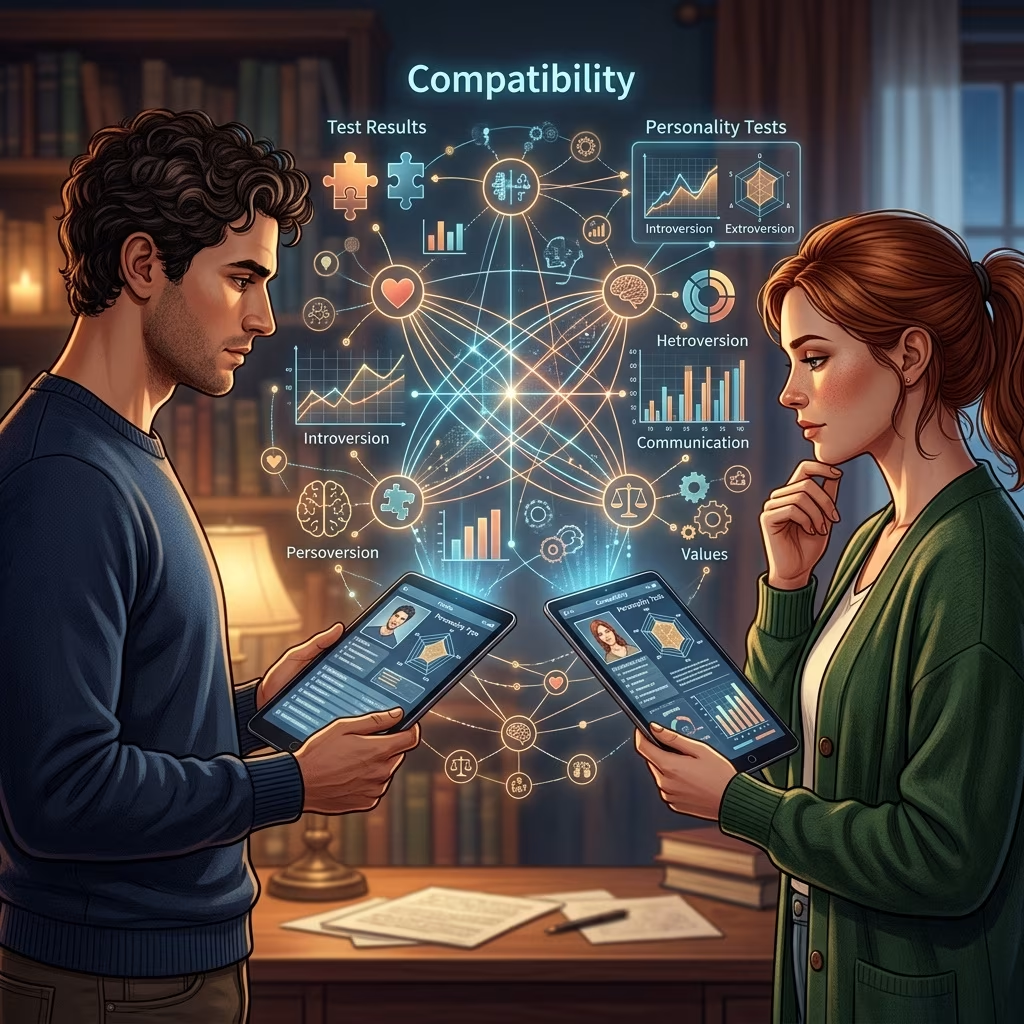
While each test has its own twist, most examine a combination of the following:
- Core values: Ideas about love, money, faith, family, and ambition.
- Lifestyle habits: Daily routines, cleanliness, socializing, travel preferences, work-life balance.
- Communication style: How you express needs and resolve conflict.
- Personality traits: Introversion/extroversion, openness, emotional stability, etc.
- Attachment patterns: Emotional needs and relationship expectations can play a big role, though not all quizzes address these directly.
How to Use Compatibility and Personality Tests Wisely
If you want to get the most out of these quizzes—whether on your own, with a partner, or through a dating app—try these best practices:
- Take results as conversation starters, not conclusions. Use mismatches as a way to talk about what really matters to you.
- Combine online quizzes with real experiences. Observe how you handle challenges together. Travel, try new things, and meet each other’s families—these are real-world “tests.”
- Consider professional support. Premarital counseling or couples therapy goes much deeper than any online quiz.
- Remember, compatibility can be built. Many couples become more compatible by learning, growing, and intentionally supporting each other over time.
Sample Questions to Explore With Your Partner
- How do you like to spend a typical weekend?
- How do you handle stress or conflict?
- What’s your approach to money and budgeting?
- What role do family and friends play in your life?
- How do you like to give and receive affection?
How Do Dating Apps Use Personality and Compatibility Testing?
Modern matchmaking algorithms blend personality theory with large-scale data: you answer dozens (or hundreds) of questions on values, habits, and traits. The app then suggests matches based on your responses. Some sites use advanced frameworks (like OCEAN or Enneagram), while others stick to “dealbreaker” or lifestyle questions.
Some platforms whose compatibility tests are especially influential include:
- eharmony: Deep-dive compatibility questionnaires help rank matches.
- Match.com: Offers both personality tests and interest-matching quizzes.
- OKCupid: Heavy on data and user-generated questions to refine their algorithm.
Some apps display your “match percentage” or compatible “scores”—but, again, it’s simply a tool for reflection and communication, not a predictor of relationship success.
A Closer Look: Which Tests Are the Most Useful?
| Test | What It Measures | Best Used For |
|---|---|---|
| Myers-Briggs | Four core traits of personality | Communication, decision-making, energy needs |
| Big Five (OCEAN) | Openness, Conscientiousness, Extraversion, Agreeableness, Neuroticism | Broad personality fit, resilience, social style |
| Enneagram | Core motives and fears | Deeper self-awareness, conflict triggers |
| Love Languages | Preferred ways of giving/receiving love | Meeting emotional needs, affection styles |
| Zodiac/Astrology | Birth sign compatibility, symbolic traits | Conversation starter, exploring beliefs |
Your Real Compatibility Test: Time and Experience
Ultimately, no quiz or app result will ever replace what the experts call the real test: spending time together. The best ways to check for compatibility are to:
- See how you each respond to stress, joy, disappointment, and change.
- Notice how you resolve disagreements and whether you grow from them.
- Pay attention to how you feel about yourself—and about life—when you’re together.
- Talk through big topics openly and often: goals, family, kids, money, values, faith, and what you want from love.
Relationship Compatibility and Personality Test FAQs
Q: Are compatibility tests accurate predictors of lasting relationships?
A: No test is fully predictive. Compatibility quizzes can reveal areas of similarity or potential friction, but real partnership success depends on communication, shared values, and growth over time.
Q: Which is the best compatibility or personality test for couples?
A: There’s no universal “best test.” Many find the Five Love Languages or Big Five frameworks genuinely helpful, but results are most useful when paired with open discussion and personal reflection.
Q: Is it a red flag if my partner and I get bad compatibility results?
A: Not necessarily. Many happy couples have clashing personalities on paper! The test is a prompt to talk openly about points of difference—not a mandate to end things.
Q: Can you become more compatible as a couple?
A: Yes. Compatibility can be enhanced with time, honest communication, and the skilled navigation of challenges together.
Q: How do I check my compatibility with someone without a quiz?
A: Spend quality time together in diverse settings; discuss hopes, fears, and values; and notice if your lifestyles, goals, and communication habits feel in sync.
Takeaway: Use Tests as Tools, Not Rules
Compatibility tests and personality quizzes are fun, sometimes insightful, and often revealing—but they’re just starting points. The best relationships blend similarities and differences with empathy, communication, and intentional effort, no matter what the quiz scores say. Use these tools to spark conversations and deepen your understanding—of yourself, your partner, and the love you want to create.
References
- https://www.mindbodygreen.com/articles/compatibility-test
- https://www.datingnews.com/industry-trends/the-role-of-personality-tests-in-online-dating/
- https://www.pointsincase.com/articles/relationship-compatibility-quiz-you-wont-find-in-cosmo
- https://www.cosmopolitan.com/sex-love/a26750731/relationship-dating-compatibility-personality-tests/
- https://www.cosmopolitan.com/uk/love-sex/relationships/a34586117/compatibility/
- https://academic.oup.com/sf/advance-article-pdf/doi/10.1093/sf/soae108/58742693/soae108.pdf