Aurora Forecast: Will the Northern Lights Be Visible Tonight?
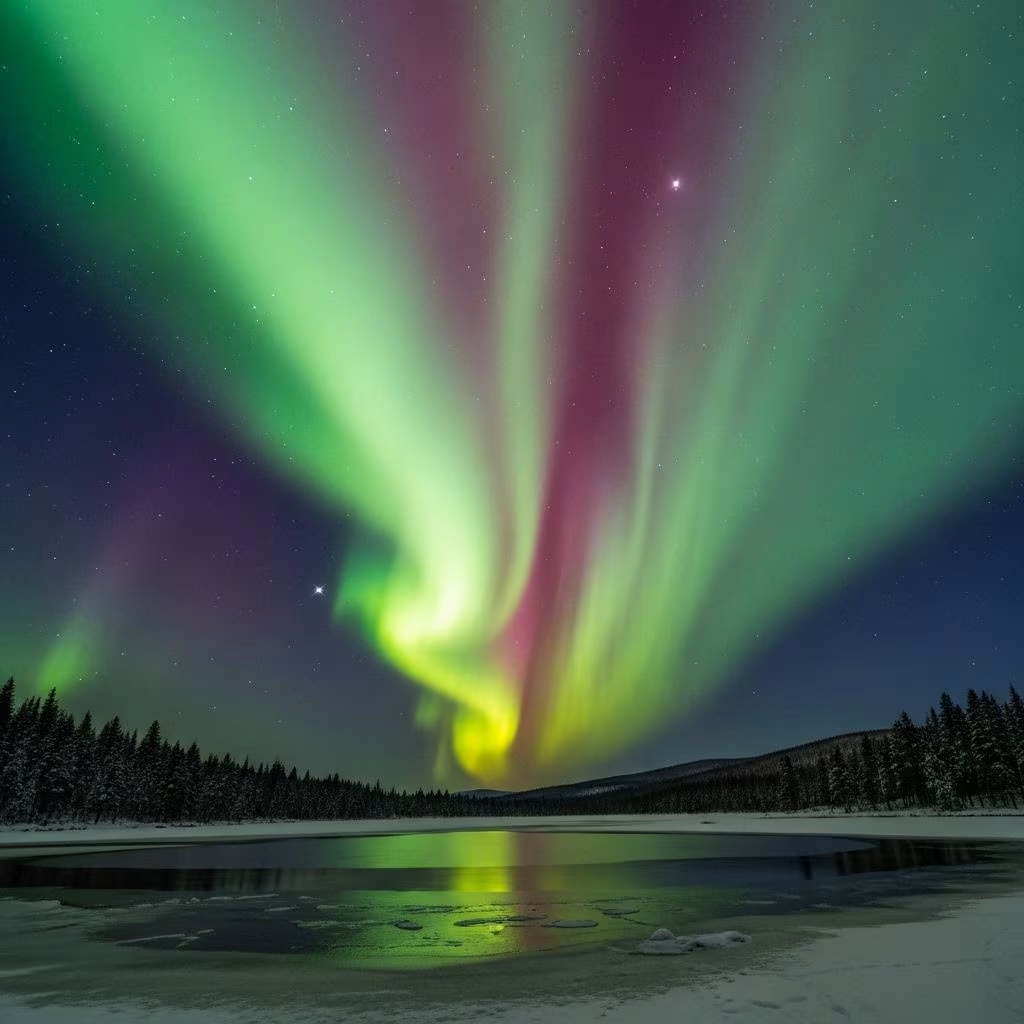
Each night, skywatchers across the globe look up in hopes of catching a glimpse of one of nature’s most mesmerizing phenomena: the aurora borealis, or northern lights. Our regularly updated aurora forecast brings you real-time insights into tonight’s auroral prospects, expert analysis on what to expect, and tips for optimizing your viewing experience.
Understanding the Aurora Forecast: The Fundamentals
The northern lights are the visible hallmark of geomagnetic activity triggered by solar wind interacting with Earth’s magnetic field. Several key metrics and space weather conditions help forecasters predict when and where auroras may be visible. Here’s what matters most:
- Kp Index: A global scale from 0 to 9, indicating the severity of geomagnetic activity. Higher Kp values mean stronger auroras, visible at lower latitudes.
- Bz Value: The north-south component of the interplanetary magnetic field. A strong southward Bz enhances the probability of auroras by allowing more solar particles to penetrate Earth’s magnetic shield.
- Solar Wind Speed and Density: Faster, denser streams provide more energetic particles to fuel vibrant displays.
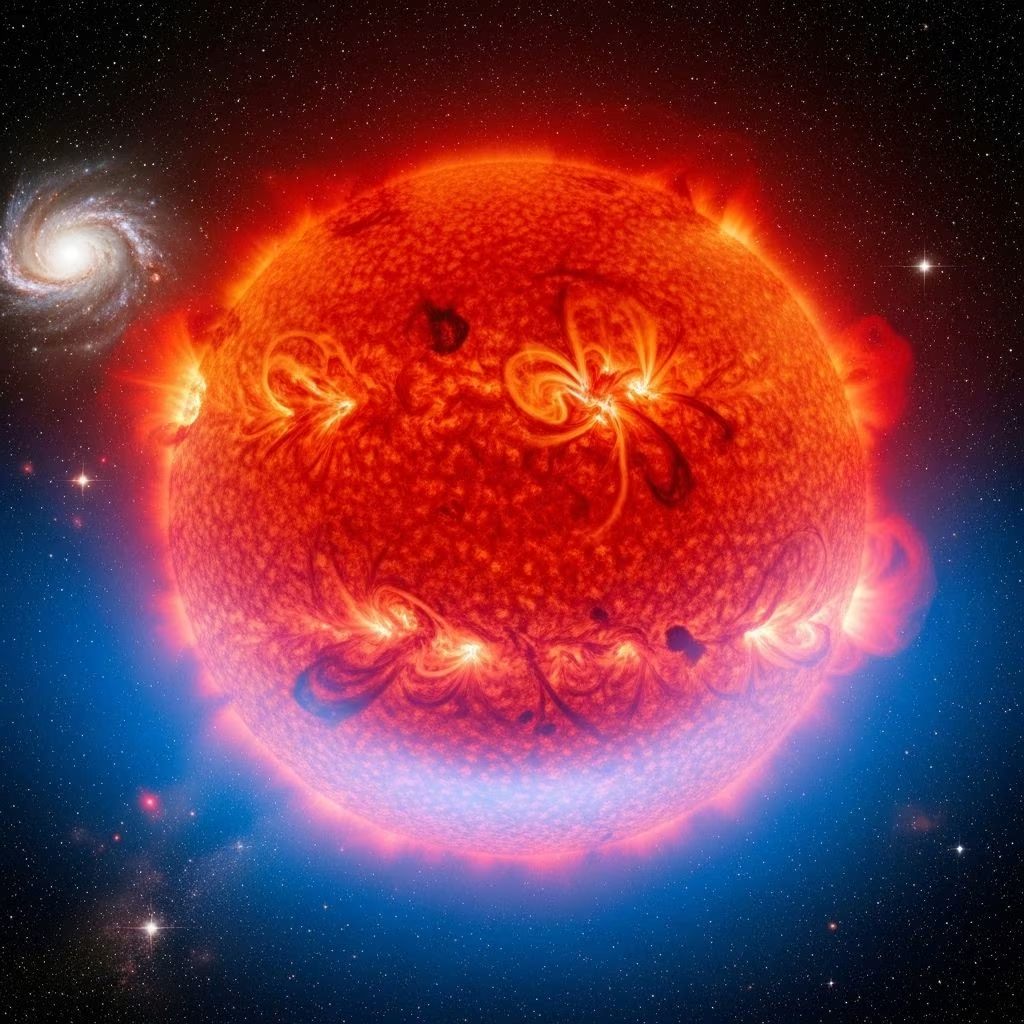
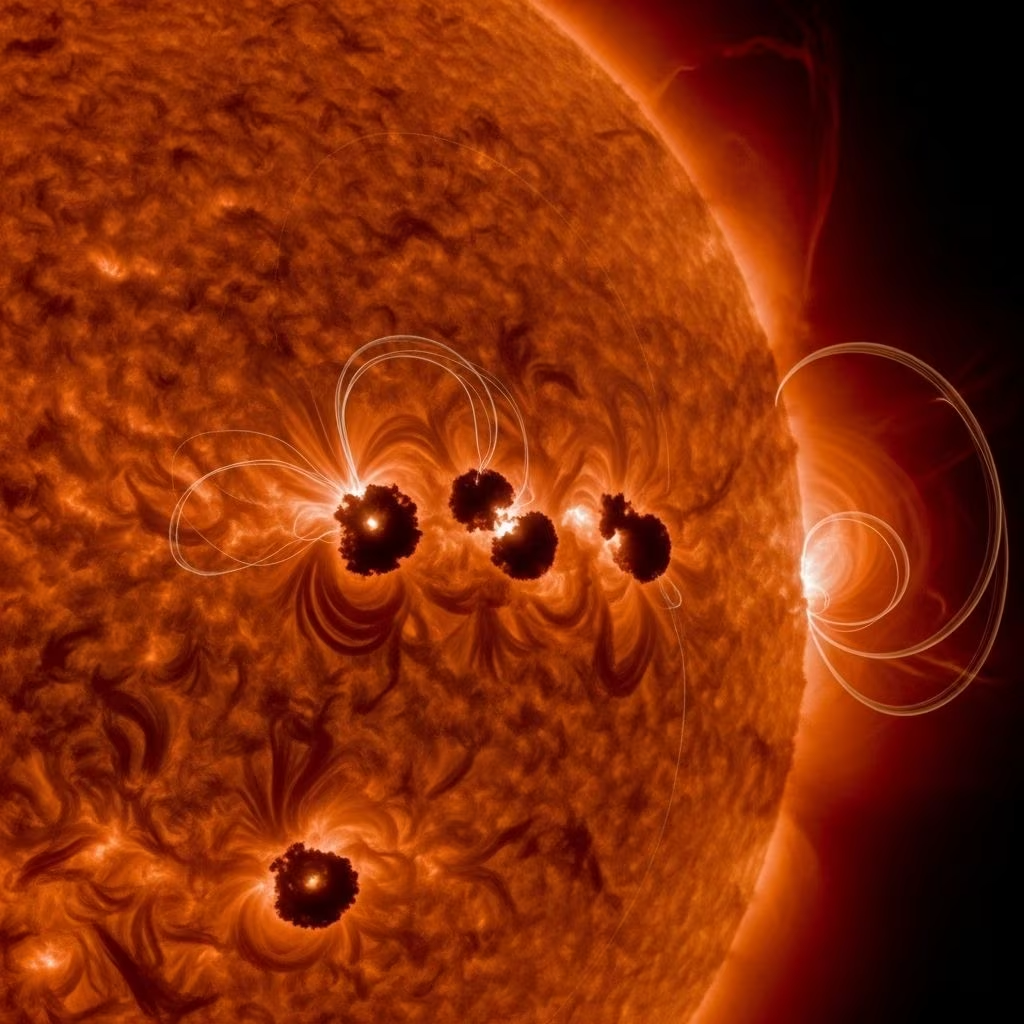
- Solar Events: Coronal mass ejections (CMEs) and coronal holes can drastically boost auroral activity when directed toward Earth.
Live Aurora Updates: This Week’s Forecast Breakdown
Wednesday, Sept. 24: Quiet Skies as Solar Wind Eases
As of tonight, the aurora forecast calls for calm conditions in most regions. Solar wind speeds, which previously peaked around 600 km/s, have been declining. Both NOAA’s Space Weather Prediction Center and the U.K. Met Office expect the auroral oval to contract, confining most activity to the highest northern latitudes, such as northern Canada, Alaska, and Greenland. Only faint auroras are anticipated in these polar regions, with little to no chance for mid-latitude sightings.
- Projected Kp Index: 2 (Low geomagnetic activity)
- Best viewing zones: High Arctic areas only
For the latest, consult NOAA’s 3-day forecast for updated timings and activity levels.
Tuesday, Sept. 23: Fast Solar Wind Boosted High-Latitude Auroras
Yesterday brought heightened auroral prospects at high latitudes, driven by persistently fast solar wind (500–550 km/s) streaming from a coronal hole on the sun. Forecasters noted unsettled to active geomagnetic conditions, with a minor (G1) storm possible. However, as solar wind conditions began to subside towards the end of the evening, so did the potential for visible auroras at lower latitudes.
- Projected Kp Index: 3 (Unsettled to active)
- Best viewing zones: Northern Canada, Alaska, Greenland; very low probability for northern Scotland
Monday, Sept. 22: Fast Solar Wind Stream Arrival
Earlier this week, a fresh stream of fast solar wind from a coronal hole began impacting Earth, increasing the likelihood of minor geomagnetic storm conditions (G1, with a slight chance of G2).
- Projected Kp Index: 3.67 (Active, with possibility of minor to moderate storms)
- Viewing notes: Strongest activity expected late evening through pre-dawn hours
- Potential aurora range: Northern regions, with rare potential for more southern visibility during brief Kp spikes
Upcoming: Watching for a Coronal Hole to Re-Energize Activity
Looking ahead to the end of the week, a small coronal hole, currently rotating into Earth’s view, could bring a new wave of fast solar wind and modest geomagnetic disturbance around September 27. While most activity remains confined to the polar regions, even minor solar disturbances during the equinox period can surprise observers with an occasional strong display.
- Projected Kp Index (weekend): 4 (Unsettled to minor storm conditions possible)
- Best chance for auroras: High-latitude locations, but keep an eye on official forecasts for any sudden intensification.
Spotlight on The Aurora Expert: Daisy Dobrijevic
The coverage and expertise behind our aurora reports come from Daisy Dobrijevic, a seasoned science journalist and devoted aurora enthusiast. With years of experience traveling the world’s top viewing locations, including Norway’s dramatic coastline and Sweden’s acclaimed Abisko National Park, Daisy describes witnessing the northern lights as a uniquely ‘magical’ experience. She has written up expert guides on what causes auroras, where to see them, and how to maximize your chances for an unforgettable night under the lights.
How Do Geomagnetic Storms Work?
Auroras result from the fast-moving solar wind and eruptions from the sun:
- Coronal Mass Ejections (CMEs): Explosions on the sun that hurl billions of tons of plasma toward Earth, sometimes sparking major geomagnetic storms and spectacular aurora outbreaks.
- Coronal Holes: Openings in the sun’s magnetic field that allow steady streams of fast solar wind to reach Earth, often sparking moderate aurora activity.
When these energetic solar particles encounter Earth’s magnetic field, they are funneled toward the planet’s polar regions along magnetic field lines. Collisions with atoms in the upper atmosphere release photons—the beautiful glowing arcs and curtains that define auroras.
The Science of Predicting Auroras: Key Indicators Explained
| Indicator | What It Means | Effect on Aurora |
|---|---|---|
| Kp Index | Global geomagnetic activity; scale 0–9 | Higher values = greater aurora visibility farther south |
| Bz Value | North-south component of IMF (Interplanetary Magnetic Field) | Strong southward Bz increases chance and strength of auroras |
| Solar Wind Speed | Speed of solar plasma reaching Earth | Faster wind feeds more energy into Earth’s magnetosphere |
| Solar Wind Density | Number of solar particles per volume | Higher density amplifies auroral intensity |
| CMEs/Coronal Holes | Major solar disturbances | Spark sudden, sometimes severe, geomagnetic storms |
How to Monitor the Aurora: Tools & Real-Time Resources
- NOAA Space Weather Prediction Center: Provides official alerts, forecasts, and the Kp index for North America and globally.
- U.K. Met Office: Issues space weather overviews and Europe-focused aurora predictions.
- SpaceWeatherLive.com: Live Bz values and detailed auroral data with maps and charts. A vital reference for up-to-the-minute activity readings.
- Aurora Forecast Apps: Dedicated apps notify you when conditions in your area are favorable.
Where and When to See the Northern Lights
For the best chance of witnessing the aurora:
- Head to high latitudes: Optimal viewing in Alaska, northern Canada, Norway, Sweden, Finland, and Iceland.
- Seek out darkness: Find locations far from city light pollution. National parks, wilderness areas, and rural stretches are ideal.
- Watch the geomagnetic forecasts: On high-Kp nights, auroras can dip further south, occasionally as far as northern U.S. states or the British Isles.
- Time your viewing: Peak auroral displays tend to occur between 10pm and 2am local time, but activity can happen anytime during the night when conditions are right.
Tip: During the autumn and spring equinoxes, auroras are statistically more frequent and intense because Earth’s magnetic field lines are optimally aligned with the solar wind—a phenomenon known as the “Russell-McPherron effect.”
What Do Different Aurora Colors Signify?
- Green: Most common; caused by oxygen molecules about 60 miles above Earth.
- Purple or Violet: From nitrogen molecules at high altitudes.
- Red: Rare; higher-altitude oxygen emissions.
- Blue: Caused by low-altitude nitrogen; rare and seen at strong storms.
Common Aurora Myths and Misconceptions
Despite their scientific explanation, auroras have inspired centuries of folklore:
- Some cultures believed the lights were spirits dancing or ancestors sending messages.
- Others thought auroras predicted war or significant life events.
- Modern myths sometimes exaggerate how often auroras reach southern latitudes—these occurrences, while dramatic, are rare and linked to major geomagnetic storms (Kp 7+).
Aurora Forecast Table: At-a-Glance Guide
| Date | Solar Wind/Geomagnetic Condition | Kp Index | Aurora Prospect |
|---|---|---|---|
| Monday, Sept. 22 | Fast wind from coronal hole | 3.67 | High latitudes, potentially strong |
| Tuesday, Sept. 23 | Lingering fast wind | 3 | High latitudes, minor to moderate |
| Wednesday, Sept. 24 | Solar wind easing | 2 | Polar regions only, faint displays |
| Sept. 25–27 (Weekend) | Coronal hole rotating into view | 4 expected | Could boost activity, remain tuned |
Frequently Asked Questions (FAQs)
Q: What is the Kp index and why does it matter?
A: The Kp index measures global geomagnetic activity on a scale from 0 (very quiet) to 9 (extreme storm). A higher Kp means auroras can be seen farther from the poles. Kp values above 5 indicate geomagnetic storms, with greater likelihood of seeing auroras at middle or even lower latitudes.
Q: Can the northern lights be forecast accurately?
A: Forecasts have improved due to satellites and real-time solar monitoring, but precise timing and intensities are difficult to predict beyond a few hours. High uncertainty remains due to the complex behavior of the solar wind and magnetic field interactions.
Q: Where can I get the latest real-time aurora information?
A: Reliable sources include NOAA’s Space Weather Prediction Center, the U.K. Met Office, and SpaceWeatherLive.com, which publishes live data on Bz field orientation and Kp index changes.
Q: Can auroras disrupt power or satellites?
A: Yes, severe geomagnetic storms can cause voltage irregularities in power grids, increase drag on satellites, and interfere with navigation and radio communications. However, such impacts typically accompany Kp 7+ events, not routine auroral activity.
Q: What should I do to maximize my chances of seeing the aurora?
A: Watch the Kp forecast and head north to dark locations, far from city light pollution. Check the sky from late evening to pre-dawn, and monitor real-time alerts on space weather websites or aurora forecast apps for your location.
Q: When is the best time of year to see the northern lights?
A: The months around the autumn and spring equinoxes (September and March) statistically have higher geomagnetic activity, but auroras can appear year-round if conditions are right. Darkness and clear weather are essential.
Expert Tips: How to Photograph the Aurora
- Use a tripod: To stabilize your camera during long exposures (5–30 seconds).
- Set a wide aperture (f/2.8–f/4): Allows more light into the lens, capturing faint auroral arcs.
- Adjust ISO sensitivity: Start with ISO 800–1600; higher for very faint activity.
- Manual focus: Focus on a bright star or set focus to infinity for clarity.
- Take multiple shots: The aurora can change rapidly, so experiment with settings and composition.
Summary: Key Takeaways for Tonight’s Aurora Forecast
- Quiet solar wind tonight (Sept. 24–25); auroras limited to polar regions—northern Canada, Alaska, and Greenland only.
- Kp index expected to remain low (around 2), with little prospect for sightings at mid-latitudes.
- Keep an eye on evolving forecasts as new solar features (like upcoming coronal holes) rotate into view, which could raise activity in coming days.
- Stay updated using trusted space weather sources and take advantage of aurora alerts and real-time apps for your region.
References
- https://www.space.com/stargazing/auroras/northern-lights-may-be-visible-in-these-18-us-states-sept-1-2-2025
- https://www.space.com/live/aurora-forecast-will-the-northern-lights-be-visible-tonight
- https://auroraforecast.com
- https://www.youtube.com/watch?v=uB0q8M-oDVc
- https://www.softservenews.com
- https://www.spaceweatherlive.com
- https://www.spaceweather.gov
- https://www.spaceweatherlive.com/en/auroral-activity/aurora-forecast.html
- https://www.auroraadmin.com/aurora-forecast-long-range/
- https://www.swpc.noaa.gov
- https://www.aurorahunter.com/northern-lights-forecast.html
- https://www.youtube.com/watch?v=XxbAzht2Eq0
- https://wtop.com/the-space-place/2025/09/eyes-to-the-skies-september-kicks-off-with-possibility-of-catching-northern-lights-across-dc-area/
- https://www.sciencespherex.com/2025/09/northern-lights.html?m=1
- http://neatodaymobile.nea.org/news/northern-lights-forecast-september-1
- https://www.spaceweather.gov/communities/space-weather-enthusiasts-dashboard