


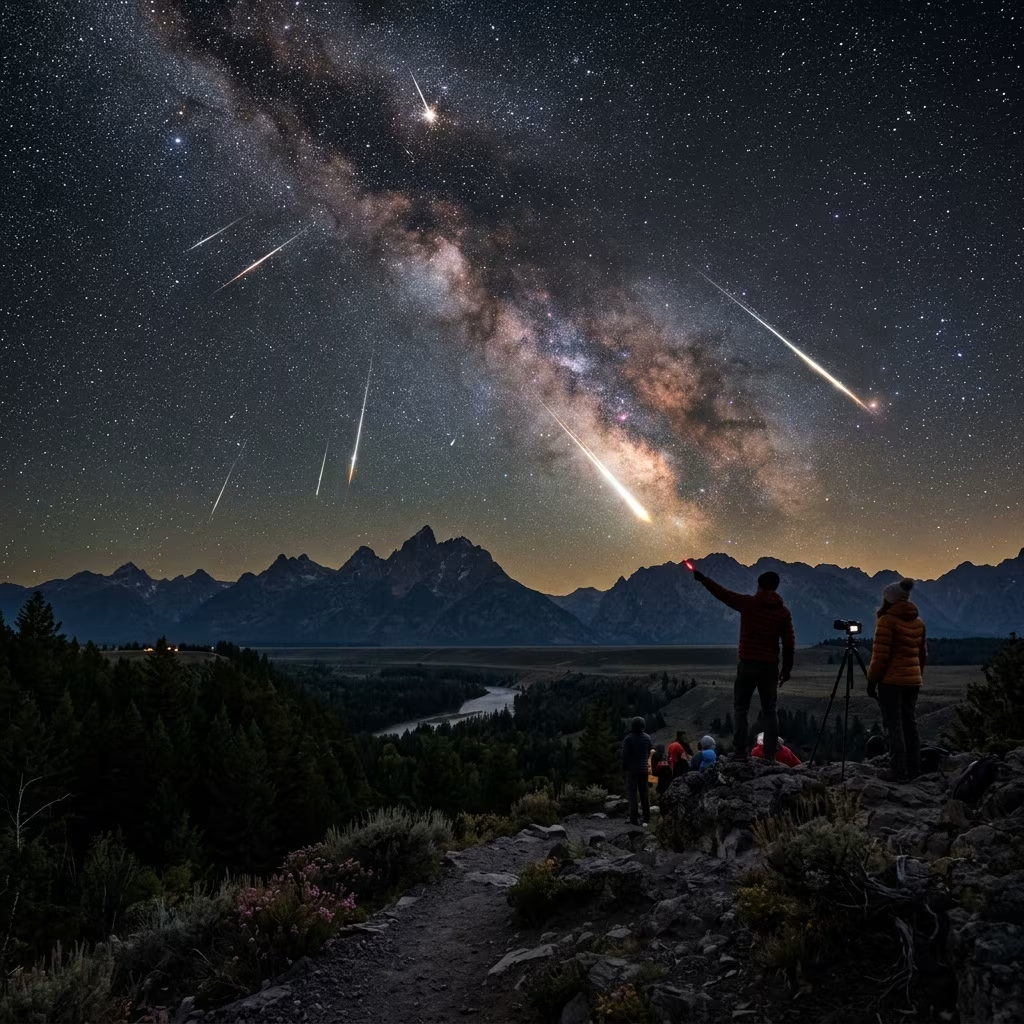
Meteor showers transform the night sky into a stage for some of nature’s grandest free shows. Each year, several key meteor showers offer stargazers a chance to witness brilliant trails of light as cosmic debris burns up in the Earth’s atmosphere. Whether you’re a casual observer or a seasoned astronomer, understanding the most notable meteor showers, their origins, and the best viewing strategies can enrich your stargazing experience. This comprehensive guide explores the greatest meteor showers, what causes them, and expert tips for catching these spectacles in action.
What is a Meteor Shower?
A meteor shower is a celestial event where numerous meteors—commonly called shooting stars—zip across the night sky. These meteors are caused when Earth passes through streams of debris left behind by comets or, less often, asteroids. As these fragments strike our atmosphere at high speeds, they burn brightly, producing the luminous streaks we see from the ground.
Most meteor showers recur annually, their timing and character determined by the orbit of their parent comet or asteroid and the location of the debris stream relative to Earth.
Top Annual Meteor Showers to Watch
While dozens of meteor showers occur each year, several stand out for their reliability, brightness, and the number of meteors visible per hour. Here are the most spectacular meteor showers to mark on your calendar:
- Perseids — August
- Geminids — December
- Quadrantids — January
- Lyrids — April
- Eta Aquarids — May
- Orionids — October
- Leonids — November
- Draconids — October
Perseids: The Summer Star Attraction
The Perseid meteor shower is often considered the best and most popular meteor shower of the year. Occurring each August, the Perseids delight observers with numerous bright, fast meteors streaking through warm summer skies.
| Comet of Origin | 109P/Swift-Tuttle |
|---|---|
| Radiant | Perseus constellation |
| Active Dates | July 17 – August 23 (Peak: August 12–13) |
| Expected Rate | 50–100 meteors per hour (ideal conditions) |
| Velocity | 59 km/s (37 miles/s) |
The Perseids’ high rates and brilliance stem from particles shed by Comet Swift-Tuttle, which orbits the Sun every 133 years. These particles hit Earth’s atmosphere at tremendous speeds, creating lengthy, colorful “wakes.” Perseids are also notable for their occasional fireballs: extra-bright meteors caused by larger comet fragments. Viewers in the Northern Hemisphere enjoy prime viewing, especially in rural locations far from light pollution.
How to Watch the Perseids
- Best seen after midnight and before dawn.
- Look towards the constellation Perseus, but meteors will appear to radiate across the sky.
- For optimal experience, allow 20–30 minutes for your eyes to adjust to darkness.
- Find a clear, open sky far from city lights.
- Bring a blanket or reclining chair for comfort.
Geminids: Winter’s Bright Display
The Geminid meteor shower is a December highlight. Many astronomers consider it as impressive as the Perseids, with exceptionally bright, colorful meteors that can rival or surpass summer’s best show. The Geminids are unique in that their parent body is not a typical comet, but an asteroid named 3200 Phaethon.
| Origin | Asteroid 3200 Phaethon |
|---|---|
| Radiant | Gemini constellation |
| Active Dates | December 4 – 17 (Peak: December 13–14) |
| Expected Rate | 100+ meteors per hour (under ideal conditions) |
| Color | White, yellow, blue, red (multicolored) |
The Geminids shine thanks to their rocky origins, which allow for slower, more robust meteors that often appear brighter and can be seen throughout most of the night.
Tips for Watching the Geminids
- Peak viewing occurs late evening through the early morning hours.
- Look toward the radiant in Gemini, near the bright stars Castor and Pollux.
- Dress warmly and bring hot drinks; winter temperatures can be freezing.
- Even with some moonlight, Geminids still impress with bright displays.
Quadrantids: New Year’s Early Surprise
The Quadrantid meteor shower brings in the new year with a brief, but sometimes intense, flurry of meteors each January. The Quadrantids’ peak is short-lived—just a few hours—but can rival the best shows when timed right. Their parent object, 2003 EH1, may be a piece of a faded comet or a rocky asteroid.
| Origin | Asteroid 2003 EH1 |
|---|---|
| Radiant | Constellation Boötes (near Big Dipper) |
| Active Dates | December 28 – January 12 (Peak: January 3–4) |
| Expected Rate | Up to 120 meteors per hour (very brief window) |
Quadrantids are best enjoyed from locations in the Northern Hemisphere under clear, dark winter skies.
How to See the Quadrantids
- Peak activity lasts only a few hours—check forecasts for best timing.
- Radiant rises after midnight; best viewing is usually before dawn.
- Layer up for the cold; bring extra blankets and thermoses.
Lyrids: Spring’s Oldest Meteor Shower
The Lyrid meteor shower helps break the winter drought for skywatchers, peaking each April. Known and recorded for over 2,700 years, the Lyrids remain a steady favorite, typically producing 10–20 meteors per hour under dark skies. Occasionally, the Lyrids offer outbursts of higher rates.
| Origin | Comet Thatcher (C/1861 G1) |
|---|---|
| Radiant | Lyra constellation (near bright star Vega) |
| Active Dates | April 15 – 29 (Peak: April 21–22) |
| Expected Rate | 10–20 meteors per hour |
Observing the Lyrids
- Best seen after midnight or in early morning hours.
- Lyrid meteors can be bright and may leave glowing dust trains.
- Spot Vega, one of the night sky’s brightest stars, as a guide.
Eta Aquarids: Comet Halley’s Gift
The Eta Aquarid meteor shower is a treat for early risers, peaking in early May. The Eta Aquarids boast a high rate of swift, faint meteors, and their parent body is the famous Halley’s Comet. The Southern Hemisphere is particularly rewarded, though northern observers can still enjoy the show at a lesser rate.
| Origin | Halley’s Comet |
|---|---|
| Radiant | Aquarius constellation |
| Active Dates | April 19 – May 28 (Peak: May 5–6) |
| Expected Rate | 20–60 meteors per hour (best in Southern Hemisphere) |
Viewing the Eta Aquarids
- Greatest activity happens in pre-dawn hours.
- Look low in the eastern sky (Aquarius).
- Dress for chilly spring mornings.
- Best rates occur south of the equator.
Orionids: More from Halley’s Comet
The Orionid meteor shower, peaking in late October, is the second annual meteor shower resulting from Halley’s Comet debris. The Orionids are known for fast, bright meteors radiating from the Orion constellation. They offer up to 20 meteors per hour and enjoy generally favorable fall conditions for observers worldwide.
| Origin | Halley’s Comet |
|---|---|
| Radiant | Orion constellation (near the famous ‘belt’) |
| Active Dates | October 2 – November 7 (Peak: October 21–22) |
| Expected Rate | 10–20 meteors per hour |
Tips for Watching Orionids
- Best viewed after midnight.
- The meteors are often very fast and can leave persistent trains.
- Look toward the eastern horizon for the best action.
Leonids: Famous for Meteor Storms
The Leonid meteor shower, peaking in mid-November, is legendary among meteor observers for its rare but spectacular meteor “storms,” when rates can surge to thousands per hour. These storms occur approximately every 33 years, linked to the 33-year orbit of their parent body, Comet Tempel-Tuttle. More typical years offer rates of about 10–20 meteors per hour.
| Origin | Comet Tempel-Tuttle |
|---|---|
| Radiant | Leo constellation |
| Active Dates | November 6 – 30 (Peak: November 17–18) |
| Expected Rate | 10–20 meteors per hour (up to thousands in storm years) |
How to View the Leonids
- Best viewing after midnight until dawn.
- Watch for bright, fast meteors radiating from Leo.
- High-altitude locations can enhance the spectacle.
Draconids: Unpredictable Cosmic Surprises
The Draconid meteor shower (or Giacobinids) stands apart for its unpredictability. Sometimes producing only a handful of slow-moving meteors, but on rare occasions unleashing dazzling outbursts, the Draconids are caused by debris from Comet 21P/Giacobini-Zinner. Peak activity usually falls in early October.
| Origin | Comet 21P/Giacobini-Zinner |
|---|---|
| Radiant | Draco constellation |
| Active Dates | October 6 – 10 (Peak: October 8–9) |
| Expected Rate | Variable—can range from a few to hundreds per hour |
The Draconids are best viewed in the evening, unlike most showers, and favor observers in the Northern Hemisphere.
Draconid Viewing Tips
- Peak often occurs during the early evening hours.
- Watch for slow, sometimes bright meteors radiating from Draco.
- Shower intensity varies widely—check predictions each year.
]
Why Do Meteor Showers Peak at Specific Times?
The timing of a meteor shower’s peak depends on when Earth travels through the densest part of a debris stream in space. While activity can last for days or weeks, the peak marks the period with the most meteors per hour. This window can be brief (as with the Quadrantids) or more extended (as with the Perseids or Geminids).
What Makes Some Meteor Showers Stand Out?
- Number and brightness of meteors: Perseids and Geminids are famous for their abundance and radiant trails.
- Color and fireballs: Some showers, like the Perseids, are noted for bright fireballs and vivid colors.
- Weather and timing: Comfortable weather and dark, moonless skies amplify the experience.
- Historical meteor storms: Rare “storms” during showers like the Leonids create legendary occurrences with thousands of meteors per hour.
]
Expert Tips for Watching Meteor Showers
- Check the Moon phase: Dark, moonless nights provide optimal viewing. Avoid nights close to the full moon, which can outshine fainter meteors.
- Travel away from city lights: Light pollution dramatically reduces visible meteors.
- Let your eyes adjust: Spend at least 20 minutes outside in darkness before expecting to see the maximum number of meteors.
- Lying back helps: Use a reclining chair or blanket so you can scan a wide swath of sky.
- Be patient and dress appropriately: Shower peaks may last hours; wear layers in cool seasons.
]
Meteor Shower Viewing Calendar Overview
| Name | Peak Dates | Rate (meteors/hour) | Best Hemisphere |
|---|---|---|---|
| Quadrantids | Jan 3–4 | Up to 120 | North |
| Lyrids | Apr 21–22 | 10–20 | Both |
| Eta Aquarids | May 5–6 | 20–60 | South |
| Perseids | Aug 12–13 | 50–100 | North |
| Draconids | Oct 8–9 | Variable | North |
| Orionids | Oct 21–22 | 10–20 | Both |
| Leonids | Nov 17–18 | 10–20 (higher in storms) | Both |
| Geminids | Dec 13–14 | 100+ | Both |
Frequently Asked Questions (FAQs)
Q: What causes a meteor shower?
A: Meteor showers occur when Earth passes through streams of debris left by comets or asteroids. The small particles burn up in Earth’s atmosphere, creating bright streaks of light.
Q: Where is the best place to watch a meteor shower?
A: The darkest possible location away from city lights, with a wide, unobstructed view of the sky, is ideal. Rural areas and high elevations work best.
Q: Do I need a telescope or binoculars to see meteor showers?
A: No special equipment is needed. In fact, the naked eye is best, as meteors move unpredictably across the sky.
Q: What is a radiant?
A: The radiant is the point in the sky from which a shower appears to originate. All meteors seem to come from this area, but may be visible anywhere in the sky.
Q: Can meteor showers be predicted exactly?
A: The general timing and peak dates of showers are predictable, but the exact number and brightness of meteors can vary from year to year due to changes in debris streams and visibility conditions.
Summary
From the prolific Perseids blazing in summer, to December’s dazzling Geminids, and the historic storms of the Leonids, meteor showers offer both scientific wonder and simple joy to skywatchers everywhere. Mark your calendar, plan ahead, and let the night sky’s spectacular meteor showers ignite your sense of cosmic curiosity.
References
- https://www.space.com/meteor-shower-from-4000-year-comet
- https://www.space.com/38390-draconid-meteor-shower-guide.html
- https://www.science.org/content/article/tonight-never-seen-meteor-shower-will-light-sky
- https://en.wikipedia.org/wiki/List_of_meteor_showers
- https://science.nasa.gov/solar-system/meteors-meteorites/perseids/
- https://en.wikipedia.org/wiki/Perseids
- https://www.iflscience.com/look-out-for-fireballs-the-best-meteor-shower-of-2025-is-about-to-commence-according-to-nasa-79994
- https://science.nasa.gov/solar-system/meteors-meteorites/geminids/
- https://astronimus.com/the-most-spectacular-meteor-showers-to-watch-each-year-a-stargazers-guide/
- https://cosmosmagazine.com/space/look-up-your-guide-to-some-of-the-best-meteor-showers-for-2017/
- https://www.youtube.com/watch?v=n-2btJ1HqVk
- https://bigthink.com/starts-with-a-bang/the-years-best-meteor-shower-is-here-and-the-geminids-are-better-than-ever/
- https://www.amsmeteors.org/meteor-showers/meteor-shower-calendar/
- https://www.astronomy.com/observing/think-the-perseids-are-the-only-shower-worth-watching-think-again/
- https://bigthink.com/starts-with-a-bang/the-birth-of-a-meteor-shower/


