Draco Constellation: Unlocking the Mysteries of the Dragon in the Sky
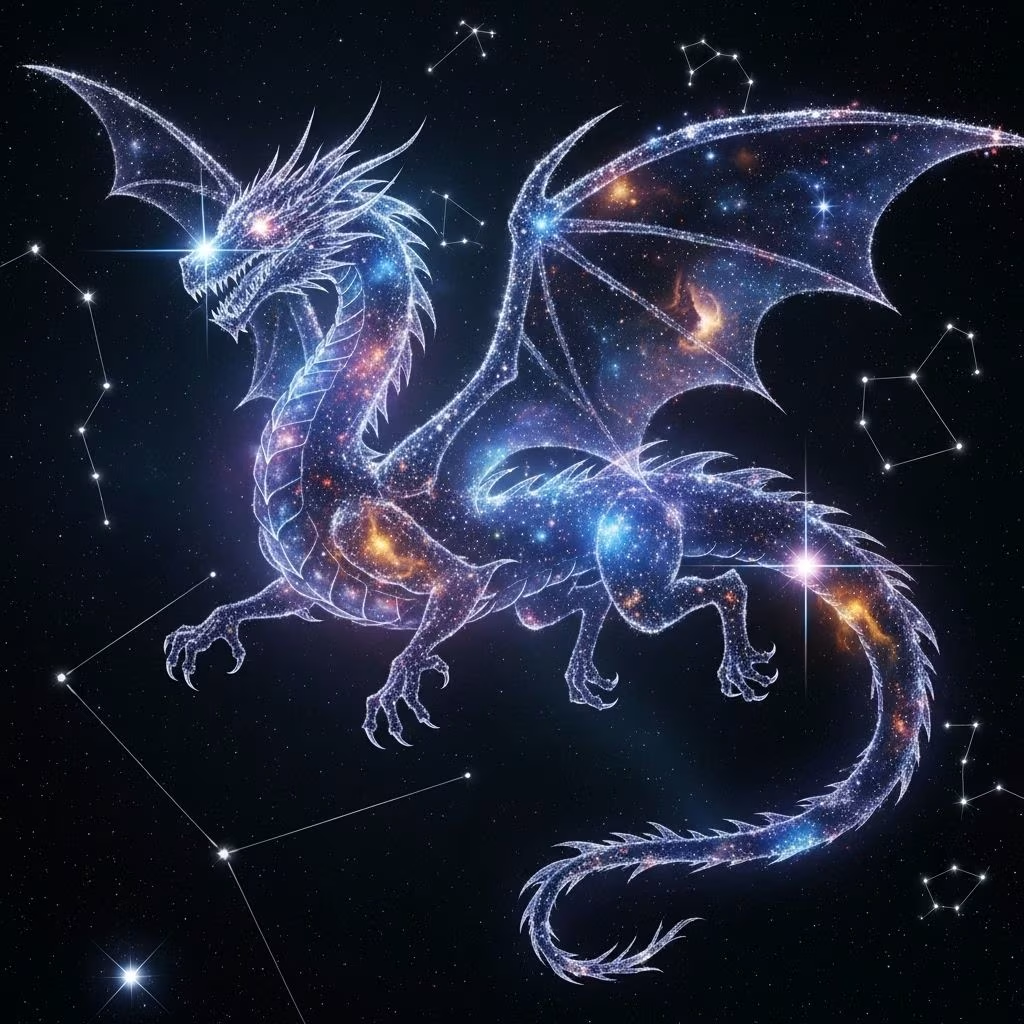
The Draco constellation, Latin for “dragon”, reigns among the northern sky’s most prominent and historic star patterns. Twisting sinuously between Ursa Major and Ursa Minor, its legends, celestial objects, and scientific intrigue have captured the imagination of astronomers and storytellers since antiquity. This article explores everything from Draco’s ancient mythos to its modern-day astronomical features, highlighting the wonders that make the celestial dragon a standout of the night sky.
Draco at a Glance
- Abbreviation: Dra
- Pronunciation: DRAY-ko
- Genitive form: Draconis
- Coordinates: Northern Celestial Hemisphere, visible between latitudes +90° and −15°
- Area: 1083 square degrees (eighth largest constellation)
- Family: Ursa Major group
- Primary meteor shower: Draconids
- Best viewed: Northern Hemisphere, all year round, most prominent during July
Locating Draco in the Sky
Draco forms a winding “S” curve, snaking between the Big Dipper (Ursa Major) and Little Dipper (Ursa Minor), making it a circumpolar constellation for much of the northern hemisphere. Its tail weaves around the Little Dipper, coming close to Polaris, the North Star, while its head is found just above the constellation of Hercules.
- Neighbors include: Ursa Major, Ursa Minor, Boötes, Camelopardalis, Cepheus, Cygnus, Hercules, and Lyra.
- It never sets below the horizon for most northern observers, hence classified as circumpolar.
Star Map of Draco
Draco can be visualized as a long, arcing dragon—with its head making a quadrilateral of stars, and its body looping between the dippers, winding back toward Cepheus. Its visibility reaches almost the entire northern hemisphere. Due to its shape, spotting it is easiest by first locating the neighboring dippers and tracing Draco’s sinuous path from head to tail across the sky.
Mythology and History: The Legend of Ladon the Dragon
Draco is inseparable from its myth: a dragon called Ladon, entwined with the legends of ancient Greece. In the most famous tale, Ladon was the multi-headed serpent set by the goddess Hera to guard the golden apples in the Gardens of the Hesperides—trees said to grant immortality to any who ate their fruit.
Hera’s solution to ensure the apples remained untouched by the nymphs: post Ladon as their eternal watchdog. However, Ladon would not survive the visit of Hercules, who, as one of his twelve labors, was commanded to steal the golden apples. Confronted by Ladon, Hercules slew the dragon (accounts vary as to whether he did so with brute force or cunning). To honor Ladon’s service, Hera immortalized him by placing his image among the stars—winding forever around the pole.
- First catalogued: By Greek astronomer Ptolemy in the 2nd century
- Other associations: Some myths also connect Draco with other legendary dragons, but Ladon’s role is the most iconic.
Stars of Draco: Names, Highlights, and Features
Draco is home to numerous stars, including giants and doubles, with at least 17 officially named by the International Astronomical Union (IAU).
Brightest Stars
| Star | Bayer/Designation | Magnitude | Distance (ly) | Special Features |
|---|---|---|---|---|
| Eltanin | Gamma Draconis | 2.24 | 154 | Brightest star in Draco. Orange giant, also known as “Zenith Star” of London. |
| Rastaban | Beta Draconis | 2.79 | 380 | Yellow-white giant, forms Drake’s “eye” with Eltanin. |
| Altais | Delta Draconis | 3.07 | 97 | Located in Draco’s tail. |
| Thuban | Alpha Draconis | 3.65 | 303 | Former North Star around 2700 BCE; very close to the north celestial pole in ancient times. |
| Edasich | Iota Draconis | 3.29 | 101 | First giant star with an exoplanet discovered via radial velocity. |
Other Named Stars in Draco
- Aldhibah
- Alrakis
- Alruba
- Alsafi
- Athebyne
- Dziban
- Fafnir
- Funi
- Giausar
- Grumium
- Taiyi
- Tianyi
Draco also contains nine stars with known exoplanets.
Notable Deep Sky Objects in Draco
Draco hosts an impressive selection of deep space wonders, from nebulae to galaxies:
- Cat’s Eye Nebula (NGC 6543): A striking planetary nebula resembling a greenish “cat’s eye,” among the sky’s most well-studied nebulae.
- Spindle Galaxy (Messier 102 / NGC 5866): Edge-on lenticular galaxy, debated identity but a beautiful sight in moderate telescopes.
- Tadpole Galaxy (Arp 188): Spiral galaxy with a trailing “tail” of stars resulting from a galactic collision.
- Splinter Galaxy (NGC 5907): Exceptionally thin edge-on spiral.
- Draco Dwarf Galaxy: Satellite of the Milky Way, faint and challenging but significant for studying galaxy evolution.
The Draconids Meteor Shower
Each October, Draco becomes the source of the Draconids meteor shower. While not always prolific, this shower is known for spectacular outbursts when Earth passes through dense regions of debris left by comet 21P/Giacobini-Zinner. Under ideal circumstances, the Draconids treat observers to hundreds of meteors per hour, with slow-moving, bright trails that radiate from Draco’s head.
- Peak activity: Around October 8-10 each year
- Origin: Comet 21P/Giacobini-Zinner
- Best viewed: Early evening, radiating from near Eltanin and Rastaban
Draco’s Place in Astronomical History
Draco’s placement surrounding the north celestial pole and proximity to ancient navigation markers gave it special significance for early sky-watchers:
- Ptolemy’s Catalogue: Included Draco as one of the 48 classic constellations of antiquity.
- Prehistoric North Star: Thuban was the pole star around 2700 BCE—an important wayfinder for ancient Egyptians and other cultures.
- Legacy: Still referenced in star lore and astronomy for its unique placement and deep sky treasures.
How to Observe Draco
Draco is best viewed in the evening from spring through fall, but remains visible all year in northern latitudes. For observers:
- Locate Ursa Major and Ursa Minor, then trace Draco’s tail snaking between them.
- Its head is easiest to find, marked by the quadrilateral shape formed by Eltanin, Rastaban, Altais, and Grumium, just north of Hercules.
- Use binoculars or a backyard telescope to find the brighter stars and deep sky treasures mentioned above.
- During the Draconids, look northward after dusk for the best chance to catch meteors radiating from Draco’s head.
- For deep sky objects, dark skies and larger telescopes are ideal—especially for the Cat’s Eye Nebula or the Spindle Galaxy.
Quick Facts and Fun Trivia
- Draco is the eighth largest constellation by area but not particularly bright.
- It is one of five circumpolar constellations in the northern sky.
- The winding shape inspired its mythological tie to dragons across many cultures, not just Greece.
- Eltanin shines almost 500 times brighter than our Sun, though it appears far dimmer from Earth.
- The constellation hosts the Draco Dwarf galaxy, a satellite of the Milky Way itself.
- Draco’s stars and shape have featured in literature, navigation, and science from antiquity to the present day.
Frequently Asked Questions (FAQs)
What does the name “Draco” mean?
“Draco” is Latin for “dragon.” The constellation’s serpentine shape inspired the classical name and its mythological associations.
Why is Draco important in astronomy?
Draco is important both as a circumpolar constellation for navigation and for its former status as the northern pole star’s host (Thuban). Its deep sky objects and meteor shower add scientific interest.
Can you see Draco from the southern hemisphere?
Draco is best visible from the northern hemisphere. It’s very low on the horizon or entirely invisible from most southern hemisphere locations.
Which is Draco’s most famous star?
Eltanin (Gamma Draconis) is Draco’s brightest and most prominent star, while Thuban has historical significance as an ancient pole star.
What is the best time to view the Draconids meteor shower?
Early October is best, typically around the 8th to 10th, soon after nightfall in the northern hemisphere.
What’s the shape of Draco like?
Draco appears as a long, winding “S”-shaped pattern in the sky, snaking around the Little Dipper and arcing toward Hercules—with its “head” marked by a quadrilateral grouping of four stars.
How can I find Draco easily?
Locate the Big and Little Dippers, find the region between them, and look for a faint, twisting line of stars ending in a distinctive four-star head above Hercules.
References
- https://en.wikipedia.org/wiki/Draco_(constellation)
- https://www.constellation-guide.com/constellation-list/draco-constellation/
- https://theplanets.org/constellations/draco-constellation/
- https://starregister.org/draco.php
- https://www.go-astronomy.com/constellations.php?Name=Draco
- https://theskylive.com/sky/constellations/draco-constellation
- https://lovethenightsky.com/draco-constellation-guide/
- https://kids.britannica.com/students/article/Draco/341192
- https://www.solarsystemquick.com/universe/draco-constellation
- https://kids.kiddle.co/Draco_(constellation)
- https://interstellarium.com/en/constellations/draco/
- https://skyandtelescope.org/astronomy-news/meet-the-draco-constellation-the-dragon-between-the-dippers/
- https://chandra.harvard.edu/photo/constellations/draco.html
- https://arabiannightsrum.com/stars/circumpolar-constellations/draco/
- https://usvao.org/draco-constellation-facts/
- https://www.space.com/draco-constellation-stargazing-guide.html
- https://www.astronomytrek.com/constellations/draco/
- https://www.centreofexcellence.com/the-draco-constellation/
- https://www.aquilae.space/draco-constellation/
- https://www.planetguide.net/draco-constellation/