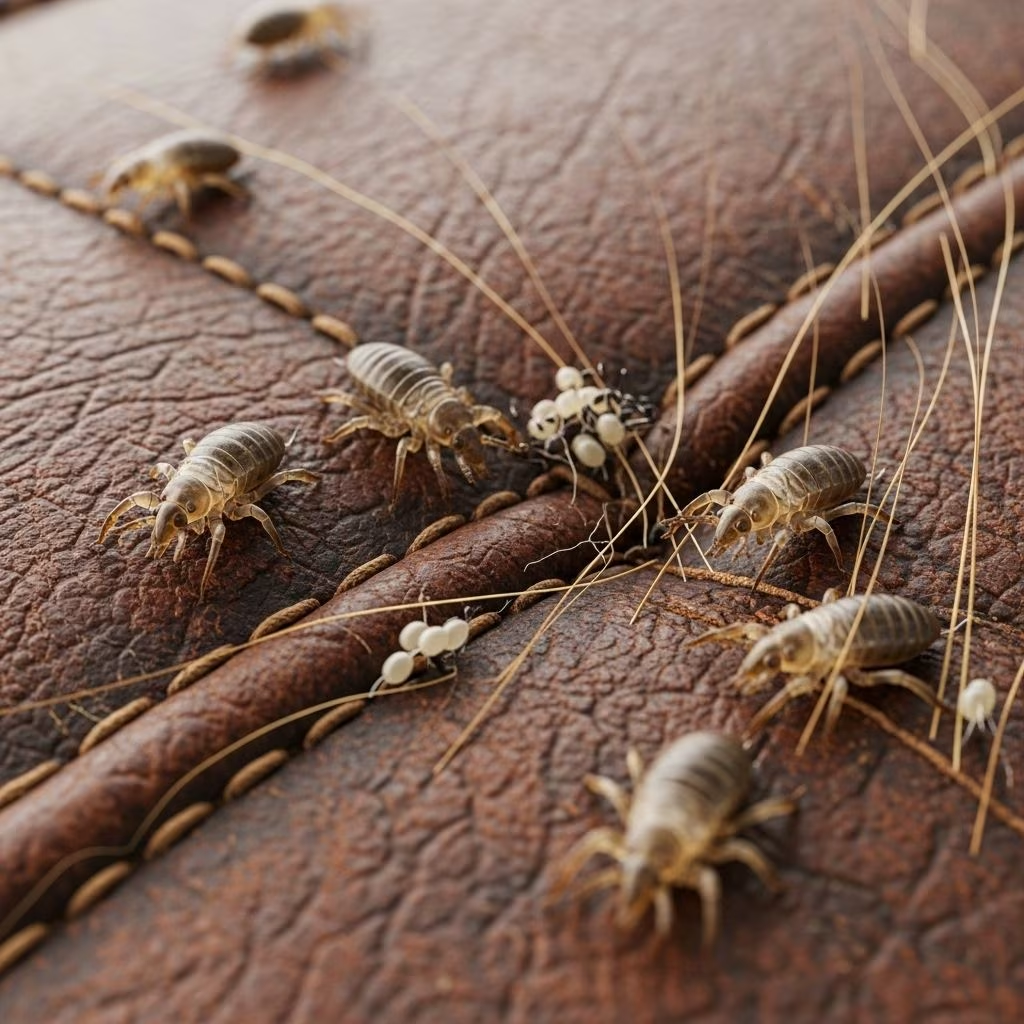
Lice infestations are a significant concern for families, caregivers, and anyone managing a household or shared space. If someone you know has lice, you might wonder: can lice live on leather — such as your sofa, car seats, or favorite armchair? Understanding where lice can survive is essential for thorough cleaning, treatment, and peace of mind.
Understanding Lice: What Are They?
Lice are small parasitic insects that live on humans. There are three main types of lice that affect humans:
- Head lice (Pediculus humanus capitis): Live on the scalp and in hair, feeding on blood.
- Body lice (Pediculus humanus corporis): Live on clothing and bedding, occasionally moving to skin to feed. Less common in the U.S.
- Pubic lice (Pthirus pubis): Usually infest pubic hair but can be found in coarse body hair elsewhere.
Head lice are by far the most common concern for households, schools, and public spaces. Body lice and pubic lice have unique characteristics, but the focus in this article will be primarily on head lice and their interaction with leather materials.
Do Lice Live on Leather?
Lice are specialized parasites that need the warmth and steady access to blood on the human scalp to survive.
- Lice cannot thrive or survive for long on leather surfaces, such as couches, car seats, or clothing, because these environments do not offer them what they need.
- Leather is too smooth for lice to cling to; their claws are designed to hold onto hair, not flat or slick surfaces.
- Without access to a human host, lice will die within one to two days on non-human surfaces, including leather, due to dehydration and lack of food.
This means that, while it is possible for lice to briefly be present on leather surfaces when they fall off a host, it is very unlikely for lice to spread from leather to another person or to thrive on those surfaces.
How Long Can Lice Survive Off a Human Host?
- Lice require regular blood meals and cannot survive more than 24-48 hours off a human scalp.
- Nits (lice eggs) also need specific heat and humidity found on the body. Off a human, nits will not hatch and typically die within about a week.
| Surface | Typical Lice Survival Time |
|---|---|
| Human scalp | Full life cycle (up to 30 days) |
| Leather (furniture, car seats) | 1–2 days |
| Fabric/Upholstery | 1–2 days |
| Pillows/sheets | 1–2 days (nits die in less than a week) |
Key takeaway: After 1–2 days, lice on leather or upholstery die due to lack of sustenance and are not a source of continuing infestation.
Is There a Real Risk of Getting Lice from Leather Furniture or Car Seats?
It is highly unlikely to acquire lice from leather surfaces, for several reasons:
- Lice are adapted for gripping hair, not flat or slippery surfaces like leather.
- Without human blood, lice quickly become dehydrated and die.
- Car-to-person or couch-to-person transmission is very rare, especially when the surface is leather compared to fabric.
Unlike fabric seats or plush furniture, where clinging is easier, leather’s slick surface makes it even less hospitable for lice — they can’t hold on and may be wiped away easily.
How to Clean Leather and Upholstery After Lice Exposure
Even though the risk of lice transmission from leather surfaces is low, it is understandable to wish to clean thoroughly if there has been a possible lice exposure at home or in your vehicle. Here are proven, safe, and simple methods for dealing with lice on leather and other furniture types:
For Leather Furniture and Car Seats:
- Wipe down the surface with a damp cloth; the slickness of leather means lice cannot anchor themselves and are removed effectively with simple cleaning.
- Use gentle soap and water if you desire a deeper clean, but overuse of harsh chemicals is unnecessary and may damage the leather.
Professional or specialty cleaners, or lice-specific pesticide sprays, are not needed and not recommended for leather or vinyl surfaces.
For Fabric or Upholstered Furniture:
- Vacuum and use a lint roller on all soft surfaces to physically remove any lice or nits that may be present.
- Wash removable cushion covers and throw pillows in hot water (at least 130°F / 54°C) and dry on high heat for at least 40 minutes, if fabric allows.
- If vacuuming is not possible, a sticky lint roller is a practical substitute for picking up loose lice.
Important:
- Do not use lice-specific pesticide sprays on furniture. Lice have developed resistance to these sprays, and most are toxic or unnecessary for household surfaces.
- Never use harsh or abrasive chemicals on leather, as this can cause lasting damage.
Other Surfaces and Garments: What to Do
- Pillows and sheets: Wash in hot water and dry on high heat. Lice and nits usually die within days, but this ensures a clean environment.
- Clothes and hats: Machine wash and dry on high heat when possible. Store unwashable items in a plastic bag for two weeks to allow any lice to die off naturally.
- Hairbrushes and combs: Soak in hot water (at least 130°F / 54°C) for 5-10 minutes.
How Are Lice Most Commonly Spread?
Lice do not jump, fly, or survive long away from the human scalp. The most common way lice spread is:
- Direct head-to-head contact—by far the most frequent means of transmission.
- Sharing personal items like combs, hats, scarves, headphones, and occasionally, bedding.
Rarely, lice may transfer from contaminated furniture or bedding, but the probability drops dramatically if more than 24-48 hours have passed since exposure.
Preventing a Lice Re-infestation: Best Practices
- Treat all affected individuals with medicated lice treatments as soon as possible after discovery.
- Avoid sharing personal items, such as hats, hair accessories, and hairbrushes.
- Wash or isolate clothing, pillowcases, and surfaces that came into recent contact with someone who has lice.
- Clean and vacuum living spaces regularly, with extra attention to high-use areas like beds, couches, and car seats.
- Stay vigilant and check for lice in all close contacts to prevent a cycle of reinfestation.
Common Myths About Lice and Leather
- Myth: Lice can survive for weeks on furniture, car seats, or carpets.
Fact: Adult lice die within 1–2 days away from a human host. - Myth: All fabrics and leathers need to be sterilized with harsh chemicals after lice exposure.
Fact: Gentle cleaning methods are sufficient and safer, especially for leather. - Myth: You can get lice by sitting on a recently infested leather couch or seat.
Fact: Leather is a particularly poor environment for lice and does not support their survival or transmission.
Frequently Asked Questions (FAQs)
Q: Can lice lay eggs (nits) on leather or other furniture?
A: No. Lice lay eggs only on human hair, close to the scalp. Nits found on inanimate surfaces cannot survive or hatch successfully.
Q: How soon should I clean after discovering lice in my home?
A: Clean as soon as possible, especially personal items and bedding. Wipe down leather and vacuum soft surfaces that were in contact with the infested person in the last 48 hours.
Q: Is it necessary to replace or deep clean all my furniture if someone has lice?
A: No. A simple cleaning — vacuuming, wiping, laundry — is sufficient. Deep cleaning, chemical treatments, or replacing furniture are unnecessary and excessive.
Q: What about cars with leather seats?
A: Wipe down car headrests and seats with a damp cloth if there’s been direct exposure. Car interiors, especially leather, are typically not a source of lice transmission, but routine cleaning promotes hygiene.
Q: Can I use home remedies or essential oils on leather furniture for lice?
A: It’s best to avoid oils or strong substances on leather, as these may discolor or damage the material. Mechanical removal (wiping, vacuuming) is all that’s required.
Key Takeaways
- Lice cannot survive or spread effectively from leather furniture, car seats, or other similar surfaces.
- Simple cleaning with a damp cloth for leather and vacuuming/fabric washing for upholstery is all that’s necessary.
- Direct head-to-head contact remains the main way lice spread; environmental cleaning offers peace of mind and helps minimize reinfestation.
Additional Resources
- Centers for Disease Control and Prevention (CDC): Lice general information
- National Pediculosis Association: Guidelines for Environmental Cleaning
- Your healthcare provider or local public health office
References
- https://www.youtube.com/watch?v=Dz1OgE9V0SE
- https://myliceadvice.com/how-long-lice-live-on-couch/
- https://www.medicalnewstoday.com/articles/can-lice-live-in-carpet
- https://www.healthline.com/health/head-lice
- https://www.healthline.nu/lice/
- http://fclib.org/Floyd%20County%20Times%20(renamed)/The_Floyd_County_Times_1986/November%2005,%201986.pdf
- http://www.bio-nica.info/biblioteca/Jermy2002ForestManual.pdf