Central serous retinopathy (CSR), sometimes called central serous chorioretinopathy (CSCR), is an eye condition that causes fluid to collect under the retina, often affecting the macula. This results in blurred or distorted central vision. Macular degeneration, commonly referring to age-related macular degeneration (AMD), is another condition that causes loss of central vision due to degenerative changes in the macula. Understanding the relationship between CSR and macular degeneration is crucial for early diagnosis, treatment, and the protection of your eyesight.
Understanding Central Serous Retinopathy (CSR)
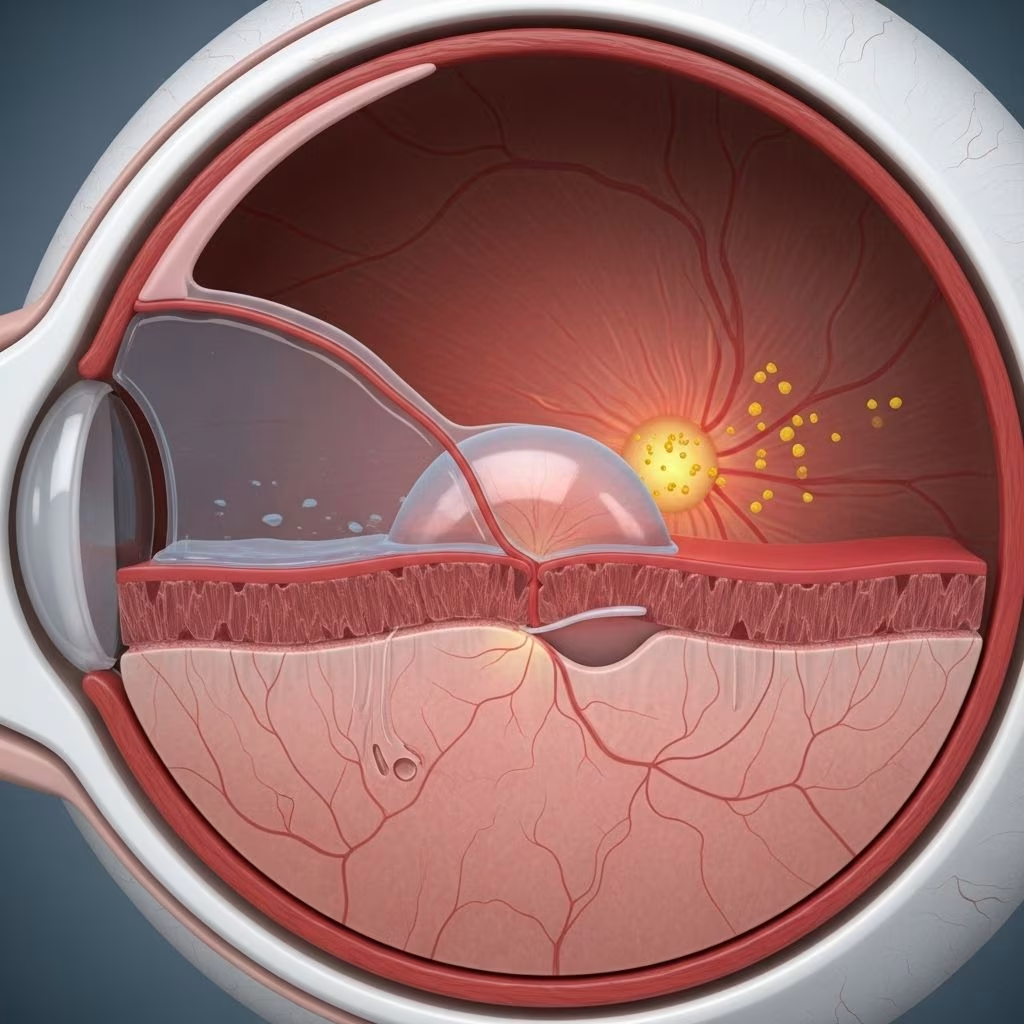
Central serous retinopathy is characterized by the accumulation of serous fluid underneath the macula (central part of the retina). This fluid disrupts normal retinal function, which can result in distorted and blurred vision. Most often, CSR affects only one eye, though it can occur in both, usually in people aged 20 to 50, with a strong male predominance. Although CSR often resolves spontaneously within a few months, recurrent or chronic cases can contribute to lasting visual impairment. Aging, however, can increase its risk and complexity.
Symptoms of CSR
- Painless blurred vision
- Distortion (straight lines appear wavy)
- Blind spots or dark areas in central vision
- Dulled or faded color perception
- Micropsia (objects appearing smaller than normal)
- Increased sensitivity to light
- Difficulty distinguishing objects against similar backgrounds
- Fluctuating vision, sometimes varying day to day
Clarifying Macular Degeneration: What Is AMD?
Macular degeneration, typically referring to age-related macular degeneration (AMD), involves degenerative damage to the macula, resulting in a gradual or sudden loss of central vision. AMD is the leading cause of irreversible central vision loss among people over 50. There are two main forms:
- Dry (non-neovascular) AMD: Characterized by the buildup of drusen (tiny yellow deposits) and gradual thinning of the macula.
- Wet (neovascular) AMD: Marked by abnormal blood vessel growth and leakage under the retina, causing more rapid and severe vision loss.
CSR vs. Macular Degeneration: Similarities and Differences
| Central Serous Retinopathy (CSR) | Macular Degeneration (AMD) | |
|---|---|---|
| Typical Age of Onset | 20–50 (also seen in older adults) | 50+ |
| Sex Predominance | More common in men | Equal in both sexes |
| Key Symptom | Painless blurred/distorted vision | Loss of central vision, with slow or rapid onset |
| Natural Course | Often resolves on its own (acute), but can recur or become chronic | Chronic, progressive, vision loss often irreversible |
| Pathology | Serous fluid buildup under retina | Macular cell degeneration; drusen; bleeding (in wet AMD) |
| Treatment Goals | Promote fluid reabsorption, reduce recurrence | Slow down vision loss, stabilize vision |
| Risk Factors | Stress, corticosteroids, hypertension | Genetics, age, smoking, cardiovascular disease |
Can CSR Lead to Macular Degeneration?
Current medical knowledge indicates that CSR does not directly cause macular degeneration. However, there may be overlaps and risk connections:
- CSR and AMD affect similar anatomical areas (the retina and macula), but have distinct underlying mechanisms.
- Genetic studies have found that some risk genes for CSR overlap with those for wet AMD, suggesting a potential genetic predisposition for both conditions in certain individuals.
- Patients with a history of CSR may have a slightly increased risk of developing exudative AMD later in life, especially if they have persistent or recurrent CSR or other risk factors associated with AMD.
- Both conditions can sometimes be difficult to distinguish, especially if CSR presents atypically in older adults or if there is concurrent retinal damage.
Despite these connections, most experts agree that while CSR can increase the risk for certain macular complications, it does not convert or progress into classic AMD in the vast majority of patients.
Genetic Links Between CSR and AMD
- At least five genetic loci have been associated with elevated CSR risk, three of which are also implicated in AMD development.
- Some genetic variations that increase CSR risk appear to reduce AMD risk, while others may confer susceptibility to both conditions.
- Theories suggest shared pathways involving choroidal circulation and abnormal vascular responses could be responsible for cross-risk in some patients.
Risk Factors and Causes
CSR Risk Factors
- Male sex (3:1 to 5:1 male-to-female ratio)
- Ages 20–50, but also seen in older adults
- High-stress lifestyle, so-called “Type A” personalities
- Use of corticosteroid medication (oral, inhaled, topical, or injected)
- Hypertension and poor cardiovascular health
- Obstructive sleep apnea
- Caffeine and stimulant use
- Pregnancy
- Helicobacter pylori infection
- Elevated endogenous cortisol levels
Macular Degeneration (AMD) Risk Factors
- Age over 50 (strongest risk factor)
- Family history of AMD (genetic risk)
- Smoking (major modifiable risk factor)
- Cardiovascular disease, hypertension
- High cholesterol
- Poor diet lacking in leafy greens and antioxidants
- Obesity
- Excessive sunlight exposure without eye protection
Diagnosis: CSR Versus Macular Degeneration
Correctly distinguishing CSR from different types of AMD is critical, as treatments and prognosis differ significantly. Both conditions require a thorough eye exam and specialized retinal imaging.
Key Diagnostic Tools
- Ophthalmoscopy: Dilated retinal exam for fundus features
- Optical Coherence Tomography (OCT): Visualizes retinal layers, detects subretinal fluid, and assesses choroidal thickness
- Fluorescein Angiography (FA): Highlights leakage patterns (e.g., “smokestack” in CSR, classic or occult neovascularization in AMD)
- Enhanced-depth OCT: Can help measure choroidal thickness (increased in CSR, not in AMD)
Characteristic Features on Imaging
- CSR: Dome-shaped serous elevation; sharply bordered neurosensory detachment; possible pigment epithelial detachment; generally increased choroidal thickness
- AMD: Presence of drusen, subretinal hyperreflective material, fibrovascular pigment epithelial detachment, possible hemorrhages
Outcomes and Long-Term Vision Prognosis
Most acute CSR episodes resolve within three to six months with restoration of visual acuity, but:
- About 30–50% of people experience recurrences.
- Chronic or recurrent CSR can lead to permanent photoreceptor loss, pigment changes in the retina, and subtle persistent visual deficits, even if the macula appears dry.
- CSR does not usually cause AMD, but it can cause similar symptoms and long-term vision challenges if chronic.
AMD, and especially its wet form, often leads to progressive and sometimes severe central vision loss which is typically irreversible. Early intervention and regular monitoring are crucial in minimizing vision loss for both conditions.
Treatment and Management
CSR Treatments
- Observation: Most first-time, non-severe cases resolve without treatment. Removing or reducing corticosteroid use may help.
- Medical therapy: Certain medications (such as mineralocorticoid antagonists like eplerenone or spironolactone) may help chronic cases, under specialist guidance.
- Laser photocoagulation or photodynamic therapy: May be considered in persistent or vision-threatening cases.
- Address underlying risk factors: Managing blood pressure, stress, and avoiding unnecessary steroids is important.
Macular Degeneration Treatments
- Anti-VEGF injections: Slow the progression of wet AMD by blocking abnormal blood vessel growth.
- Nutritional supplements: AREDS2 formula vitamins to help slow dry AMD progression.
- Lifestyle modifications: Smoking cessation, blood pressure control, healthy diet rich in antioxidants, regular exercise.
- Low vision aids: Assist individuals with significant vision impairment.
Protecting Your Macular Health
- Report any new or changing visual symptoms promptly to your eye doctor.
- Get routine, comprehensive eye exams—especially after age 40 or if you have a risk factor for either condition.
- Manage systemic conditions such as hypertension and cardiovascular disease.
- If you use corticosteroids for other health issues, consult your healthcare provider about possible eye risks.
- Wear sunglasses to protect against ultraviolet light exposure.
- Maintain a healthy diet rich in leafy greens, lutein, and omega-3s.
Frequently Asked Questions (FAQs)
Q: Does having CSR mean I will develop macular degeneration?
A: No, CSR does not directly cause AMD. However, both can rarely coexist, and certain genetic risk factors may overlap in predisposed individuals. Having CSR does not mean you are destined to develop macular degeneration.
Q: Are the treatments for CSR and AMD the same?
A: No, treatments differ because the causes are distinct. CSR is often self-limiting or may require treatments targeting fluid leakage, while AMD (especially wet AMD) is treated with anti-VEGF injections and nutritional approaches.
Q: Can CSR cause permanent vision loss?
A: Most people recover fully from CSR, but persistent or recurrent episodes may result in lasting changes to central vision due to damage to retinal cells.
Q: How can I lower my risk for both CSR and AMD?
A: Avoid smoking, manage blood pressure and cholesterol, eat a healthy diet, use sunglasses outdoors, and manage stress effectively. See your eye doctor regularly, particularly if you have a family or personal history of eye disease.
Q: When should I contact a doctor?
A: If you notice sudden changes in your vision (such as blurring, distortion, or new blind spots), seek urgent medical advice. Prompt diagnosis of any eye disorder can help prevent permanent damage and supports better long-term outcomes.
Summary
Central serous retinopathy and macular degeneration are separate retinal conditions with different causes, courses, and treatments. While CSR does not usually progress to AMD, similarities and occasional overlaps—especially with advancing age or genetic predisposition—highlight the importance of accurate diagnosis. Timely professional eye care, managing risk factors, and adopting vision-protective habits are your best strategies for maintaining healthy sight as you age.
References
- https://pmc.ncbi.nlm.nih.gov/articles/PMC9976102/
- https://www.rnib.org.uk/your-eyes/eye-conditions-az/central-serous-retinopathy-csr/
- https://www.medicalnewstoday.com/articles/can-central-serous-retinopathy-lead-to-macular-degeneration
- https://eyesoneyecare.com/resources/link-between-csr-and-amd-differential-diagnosis-cheat-sheet/
- https://www.healthline.com/health/macular-degeneration
- https://pmc.ncbi.nlm.nih.gov/articles/PMC5189979/
- https://www.nature.com/articles/s41433-025-03894-z
- https://www.medicalnewstoday.com/articles/macular-degeneration-foods-to-avoid