What Is Leukemia Inhibitory Factor (LIF)?
Leukemia inhibitory factor (LIF) is a versatile protein classified as a cytokine belonging to the interleukin-6 (IL-6) superfamily. Despite its name, LIF affects not just leukemia cells but also plays significant roles in a broad range of biological processes such as embryonic development, maintenance of stem cells, nerve and muscle repair, and immune regulation.
- First discovered as a factor that could halt the proliferation of myeloid leukemia cells
- Pleiotropic functions: LIF operates differently across cell types, tissues, and biological contexts
- Broad receptor distribution: LIF receptors are found on numerous cell types, giving LIF systemic effects
How Does LIF Work? Understanding Its Mechanisms
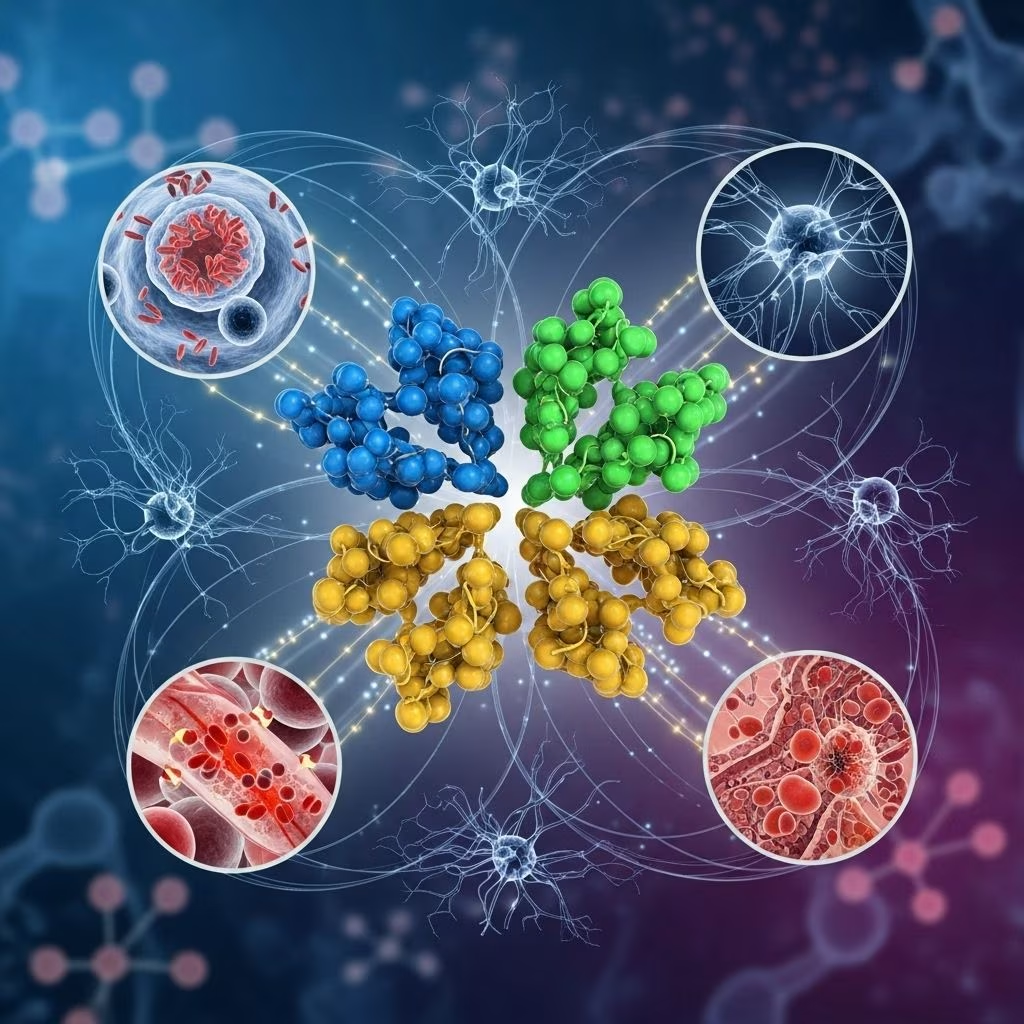
LIF works by binding to a specific receptor complex on the cell surface—comprising the low-affinity LIF receptor (LIFR) and a protein called gp130. This interaction triggers several intracellular signaling pathways:
- JAK/STAT3 pathway: The main route in stem cells. Activation leads to genes that help maintain cell pluripotency (the ability to become any cell type)
- PI3K/Akt pathway: Involved in cell survival, metabolism, and response to stress
- MAPK/ERK pathway: Controls cell proliferation and differentiation
The outcomes of LIF signaling are context-dependent: for instance, it maintains stem cell pluripotency but can also trigger differentiation of certain leukemia, bone, and neural cells.
Roles of LIF in the Human Body
LIF is integral to wide-ranging bodily functions. Here are its principal areas of influence:
1. Embryonic Development and Stem Cell Maintenance
- LIF prevents differentiation in mouse embryonic stem (ES) cells, maintaining their self-renewal capacity
- It is naturally produced in the developing embryo’s trophectoderm and is vital for supporting the inner cell mass, the source of embryonic stem cells
- Human LIF supports growth of neural progenitor cells
2. Immune Regulation
- LIF has complex regulatory effects on the immune system, sometimes protecting tissues or controlling inflammation, but also potentially suppressing immune responses
- It helps protect against certain immunopathologies, including inflammatory bowel disease and graft-versus-host disease
3. Tissue Repair and Regeneration
- LIF expression often increases in response to tissue injury (especially nerves and muscles) and aids in regeneration
- Supports regeneration in organs like the intestine, nervous system, and muscle tissue
4. Hematopoietic and Bone Systems
- Plays a role in the growth and differentiation of blood cells, particularly influencing certain leukemic and myeloid cell lines
- Affects bone remodeling and development
5. Endocrine and Reproductive Systems
- LIF is vital for female fertility: It is needed for embryonic implantation
- LIF knockout mice display infertility due to implantation failure
Clinical Significance of LIF
LIF’s wide-reaching roles make it an important subject of medical research. Its clinical significance is particularly noted in:
Cancer: Tumor-Suppressor and Oncogenic Effects
- LIF can suppress tumor growth in certain blood cancers like leukemia
- Conversely, in solid tumors (lung, bladder, prostate, thyroid, uterine, biliary tract), elevated LIF levels are associated with worse outcomes and therapy resistance
- LIF’s role as an immune suppressor allows some tumors to evade immune attack, impacting the effectiveness of treatments like immune checkpoint inhibitors
| Cancer Type | LIF Role | Clinical Implication |
|---|---|---|
| Leukemia | Tumor-suppressive | May inhibit leukemic cell proliferation |
| Solid tumors (lung, prostate, etc.) | Oncogenic/promotes survival | Associated with resistance to immunotherapy and poor outcomes |
Stem Cell and Regenerative Therapies
- LIF is a key supplement in laboratory culture of mouse embryonic stem cells, enabling researchers to maintain cell pluripotency
- Potential applications include tissue regeneration, repair of nerve and muscle injury, and generating new cells for transplantation
Immunological Disorders
- LIF’s immune-modulating effects may be harnessed to alleviate or prevent autoimmune and inflammatory diseases
- Research is ongoing into using LIF-based therapies to control conditions like inflammatory bowel disease and graft-versus-host disease
Therapeutic Opportunities and Challenges
LIF’s diverse and sometimes opposing roles in different tissues and disease states create both opportunities and challenges for therapeutic use:
- LIF-based therapies could promote tissue regeneration or treat certain immune-related disorders
- Conversely, blocking LIF may make some cancers, especially solid tumors, more vulnerable to immune attack or chemotherapy
- Therapeutic strategies must account for LIF’s cell- and tissue-specific effects, as boosting LIF in the wrong context may encourage tumor growth
LIF in Stem Cell Research and Applications
LIF is central to stem cell biology, especially in sustaining pluripotency in the laboratory. Here’s how it is used:
- Mouse embryonic stem cells: Require LIF to maintain their undifferentiated, pluripotent state during culture
- Human applications: Human LIF less effective for keeping human embryonic stem cells pluripotent, but helps expand neural stem cells
- Supports research in cell replacement therapies, disease modeling, and drug discovery
- Continues to be assessed for generating transplantation-ready cells for regenerative medicine
Potential Side Effects and Risks
Since LIF interacts with many biological pathways, manipulating its activity can have unintended consequences:
- Excessive LIF activity can promote tumor growth in certain cancers
- Over-suppression of immune responses might increase susceptibility to infection or hinder anti-tumor immunity
- LIF-targeted therapies must be developed with precise targeting strategies to avoid systemic side effects
Summary Table: Major LIF Functions
| Biological System | LIF Function | Implications |
|---|---|---|
| Stem Cells | Maintains pluripotency, inhibits differentiation | Used for stem cell maintenance and research |
| Immune System | Regulates inflammation and immune responses | Potential therapy for autoimmune, inflammatory disease |
| Nervous System | Promotes neuron survival and regeneration | Treatments for nerve injury, degenerative disorders |
| Cancer | Tumor suppressor in leukemia, oncogenic in solid tumors | Cancer therapy: inhibition or enhancement as context demands |
| Reproductive System | Essential for embryo implantation and female fertility | Infertility research and reproductive medicine |
Frequently Asked Questions About Leukemia Inhibitory Factor (LIF)
Q: Why is it called leukemia inhibitory factor if it affects many tissues?
A: The name comes from its original discovery as a protein that halted myeloid leukemia cell proliferation. However, scientists later found LIF has broad, context-dependent functions impacting many cell types and tissues, not just blood cells.
Q: How is LIF used in stem cell research?
A: LIF is routinely added to mouse embryonic stem cell culture media to maintain pluripotency and prevent differentiation. This allows scientists to grow stem cells in the lab over long periods.
Q: Can LIF be used to treat diseases?
A: Potentially, yes. Boosting LIF may help tissue regeneration or treating inflammatory/autoimmune diseases, while inhibiting LIF could make some cancers more responsive to treatment. More research and clinical trials are needed to determine its safety and efficacy in therapy.
Q: Is LIF important for fertility?
A: Yes, LIF is essential for embryo implantation during early pregnancy. Deficiency in LIF can lead to implantation failure and female infertility, as demonstrated in animal models.
Q: Are there risks associated with LIF therapy?
A: Yes. Because LIF impacts immune function and cell growth, overuse could suppress immunity or encourage tumor growth in some settings. Therapies must be carefully targeted and controlled.
Takeaway
Leukemia inhibitory factor (LIF) is a highly versatile cytokine involved in regulating stem cells, immunity, regeneration, and cancer. Its broad roles make it a promising target for a wide array of therapies, but its dual nature means any treatments based on LIF will require precision, nuance, and deep biological insight to avoid harmful effects.
References
- https://pmc.ncbi.nlm.nih.gov/articles/PMC9931620/
- https://www.nature.com/articles/336690a0
- https://www.sigmaaldrich.com/US/en/technical-documents/technical-article/cell-culture-and-cell-culture-analysis/stem-cell-culture/leukemia-inhibitory-factor-protein
- https://pmc.ncbi.nlm.nih.gov/articles/PMC4581962/
- https://www.healthline.com/health/leukemia/leukemia-inhibitory-factor
- https://www.myleukemiateam.com/resources/leukemia-inhibitory-factor-explained
- https://academic.oup.com/jleukbio/article/117/1/qiae178/7739967