As the use of tasers—also known as conducted energy weapons (CEWs)—has become increasingly widespread in law enforcement and personal defense, growing attention has focused on their potential impact on health, particularly the risk of heart complications. While generally considered non-lethal, tasers have, in rare cases, been associated with serious cardiac events, generating ongoing debate within the medical and law enforcement communities.
Understanding How Tasers Work
A taser is a hand-held device that shoots two small metal darts attached to wires, capable of delivering up to 50,000 volts of electric shock. The major purpose is to incapacitate a person quickly by disrupting the body’s neuromuscular system, providing law enforcement with a way to subdue suspects without resorting to lethal force. Though designed to be safe with effects that typically dissipate within minutes, the rare but documented cardiac effects warrant careful consideration.
- Tasers are used by law enforcement for apprehending suspects and by civilians for self-defense.
- The typical taser delivers an intense electrical pulse affecting muscle and nerve function.
- Recovery is often quick, but certain people may face higher risks.
Can Tasers Cause a Heart Attack?
Discussions of tasers and the heart often conflate “heart attack” with “cardiac arrest,” but these are two very different medical events:
- Heart Attack: Primarily a “plumbing” issue, occurring when blood flow to part of the heart is blocked by a clot or narrowed arteries, leading to heart muscle damage.
- Cardiac Arrest: An “electrical” problem where the heart suddenly stops pumping, often due to abnormal electrical activity disrupting the heart’s rhythm (arrhythmia).
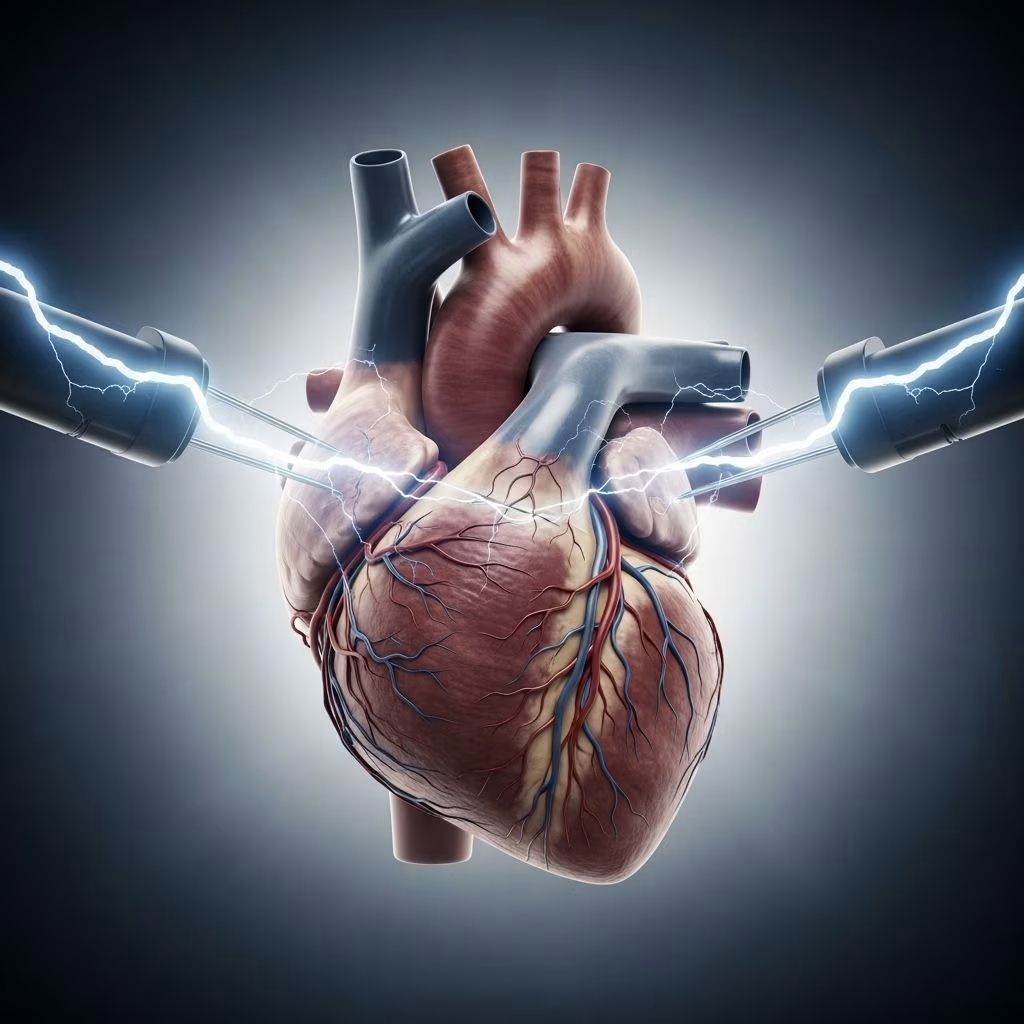
While most medical sources agree that a taser is much more likely to cause cardiac arrest than a classic heart attack, the risk is still considered very low for the vast majority of healthy individuals. Tasers can, however, pose a danger if the electrical current disrupts the heart’s rhythm or reaches the heart muscle directly.
Cardiac Arrhythmias Induced by Tasers
One of the best-documented risks is an arrhythmia known as ventricular fibrillation (VF), in which the lower chambers of the heart (ventricles) beat rapidly and erratically. This chaotic rhythm prevents the heart from pumping blood effectively and can quickly become fatal without prompt medical intervention.
- Research has shown that taser shocks can, in rare cases, induce VF even in healthy individuals.
- Most incidents of VF relate to direct or near-heart probe placement, higher voltage, or prolonged exposure.
- Physical injury from collapsing after a taser shock is also a secondary (but important) risk.
Scientific Studies and Ongoing Debate
The relationship between taser use and cardiac arrest remains controversial, with studies showing conflicting results:
| Study | Main Findings |
|---|---|
| Wake Forest Baptist Study | In a review of 1,201 real-life taser uses, including 178 chest shots, no cases of cardiac complications were found, even when probes could have delivered a shock across the heart area. |
| Circulation (2012) | Peer-reviewed cases showed tasers can lead to sudden cardiac arrest, with fatal consequences, especially when the dart contacts are near the chest and heart. |
| Chicago Animal Study | Experiments on pigs showed that tasers can induce dangerous arrhythmias and sudden cardiac arrest if delivered across the heart area. |
Summary:
- Some evidence suggests the risk to heart health from tasers is very low, particularly with typical device use.
- Nonetheless, best practices now recommend avoiding aiming for the chest or heart area to minimize any possible cardiac interference.
How Can Tasers Affect People With Heart Conditions?
Not everyone faces the same risk after taser exposure. For individuals with cardiac disease, implanted devices such as pacemakers, or a history of arrhythmia, the shock may pose a higher risk. Key points include:
- People with undiagnosed heart rhythm disorders may be more vulnerable to arrhythmia following a taser shock.
- Those with coronary artery disease may experience additional complications if an arrhythmia or cardiac arrest occurs.
- There are rare reports of people with no heart disease history who suffered cardiac compromise after taser administration.
- Pre-existing cardiac risk factors, medication use (such as those affecting heart rhythm), or electrolyte imbalances may all increase susceptbility.
Most healthy people, including young adults, are unlikely to experience significant long-term heart damage after taser exposure, but caution is always warranted, especially if the device contacts the chest area.
What Happens in the Body During Taser Use?
The effects of a taser are mainly due to disruption of the body’s natural electrical signals. The device delivers short, high-voltage pulses through conductive wires or direct contact. Within seconds, an affected person may:
- Lose voluntary muscle control and collapse
- Experience intense pain or muscle spasms
- Undergo brief disorientation
- Sustain secondary injuries from an uncontrolled fall
If the probes penetrate the skin over the chest, there’s a rare but increased chance of cardiac electrical disturbance leading to arrhythmia or cardiac arrest.
Immediate and Long-term Effects
Most individuals recover rapidly from the initial neuromuscular incapacitation created by taser use. However, clinicians warn that effects on the heart or nervous system may manifest in several ways:
- Short-term: Temporary muscle paralysis, falls and related injuries, stress response (elevated heart rate, adrenaline surge), rare arrhythmia or cardiac arrest.
- Long-term: Most healthy victims experience no persistent problems, though those with pre-existing heart disease or who experience arrhythmia may require follow-up care.
- Rarely, survivors of cardiac arrest after taser exposure may suffer neurological deficits if resuscitation is delayed.
When Is Medical Attention Needed After Taser Use?
Any person who loses consciousness, experiences chest pain, irregular heartbeat, confusion, or trouble breathing after a taser shock should seek immediate emergency medical care. Signs that warrant urgent evaluation include:
- Loss of consciousness (even briefly)
- Palpitations or abnormal heart rhythm
- Chest pain or discomfort
- Difficulty breathing
- Seizures or sudden muscle weakness
- Lingering confusion or impaired memory
- Injuries resulting from an uncontrolled fall
Paramedics or emergency doctors may perform:
- Electrocardiogram (EKG) to look for abnormal heart rhythms
- Blood tests for heart damage markers
- Observation for delayed cardiac complications
For victims with a known history of cardiac conditions, or who are taking medications that may alter heart rhythm, observation in a healthcare setting is strongly advised after taser exposure.
Safety Guidelines and Prevention Measures
Recognizing the potential—if rare—risks associated with tasers on heart health, several safety recommendations have emerged:
- Law enforcement agencies are advised to avoid targeting the chest area with the device whenever possible.
- Taser manufacturers have updated guidance recommending shots below the chest to reduce risk of accidental cardiac interference.
- Close monitoring is essential when a person becomes unresponsive after taser exposure; rapid initiation of CPR improves outcomes in the rare case of cardiac arrest.
- Suspects with unexplained or new loss of consciousness after a taser event should be transported to a hospital for evaluation.
Understanding the Nuances: Key Facts and Misconceptions
- The vast majority of taser exposures are not associated with serious injury or death.
- Cardiac complications are extremely uncommon, but not impossible, especially under certain conditions (direct heart proximity, underlying disease, prolonged pulses).
- Safety remains a subject of scientific debate, and ongoing research seeks to clarify the risks in various real-world scenarios.
- Falling and associated trauma—such as head or bone injury after loss of muscle control—are more common than direct cardiac issues and also require attention.
Frequently Asked Questions (FAQs)
Are tasers safe for people with pacemakers?
While tasers are designed to minimize risk, people with pacemakers or implanted defibrillators face a theoretical risk that electrical current could disrupt their device’s function, particularly if probes deliver a shock over the chest. Anyone with an implanted cardiac device should be closely monitored after taser exposure, and evaluation by a healthcare provider is strongly advised.
Can a person die from a taser shock?
Though rare, taser shocks have been implicated in sudden cardiac death, especially if factors such as chest placement, underlying heart disease, or prolonged shocks are present. Immediate medical attention and resuscitation can be lifesaving in these cases, and device use guidelines have evolved to reduce these risks.
Is it possible to experience a heart attack, not just cardiac arrest, from a taser?
Tasers are more likely to cause an arrhythmia or cardiac arrest rather than a traditional heart attack. Nonetheless, indirect effects—such as a sudden stress response or fall—could theoretically trigger a heart attack in susceptible individuals. The terms shouldn’t be used interchangeably.
What should bystanders do if someone collapses after a taser shock?
If a person collapses or does not regain consciousness within seconds of taser use, call emergency medical services immediately. Begin CPR if they are not breathing. Prompt defibrillation with an automated external defibrillator (AED) can be lifesaving in cases of electrical cardiac arrest.
Are there alternatives to tasers that carry less risk?
Other less-lethal devices, such as pepper spray or physical restraints, may carry their own risks but do not affect the electrical system of the heart. However, in many encounters, tasers remain preferred over firearms for minimizing risk of fatal injuries when used correctly.
The Bottom Line
Tasers serve a critical role in law enforcement and self-defense, reducing fatal encounters, but are not risk-free. While most exposures cause only temporary pain and muscle dysfunction, there remains a rare but serious risk for dangerous arrhythmias and cardiac arrest, particularly in vulnerable individuals or when the device is activated near the heart. Awareness, rapid medical attention, and adherence to evolving best practices help minimize these risks and improve outcomes.
References
- https://www.medicalnewstoday.com/articles/244968%231
- https://www.healthline.com/health/heart-attack/heart-impact-from-taser
- https://newsroom.wakehealth.edu/news-releases/2012/06/wake-forest-baptist-study-suggests-tasers-dont-cause-cardiac-complications
- https://en.wikipedia.org/wiki/Taser_safety_issues
- https://pmc.ncbi.nlm.nih.gov/articles/PMC2374856/
- https://www.ahajournals.org/doi/10.1161/circulationaha.113.005504
- https://www.hmpgloballearningnetwork.com/site/eplab/articles/are-tasers-safe-heart
- https://www.ahajournals.org/doi/10.1161/circulationaha.112.097584
- https://www.healthline.com/health/heart-attack