Understanding Kidney Lymphoma
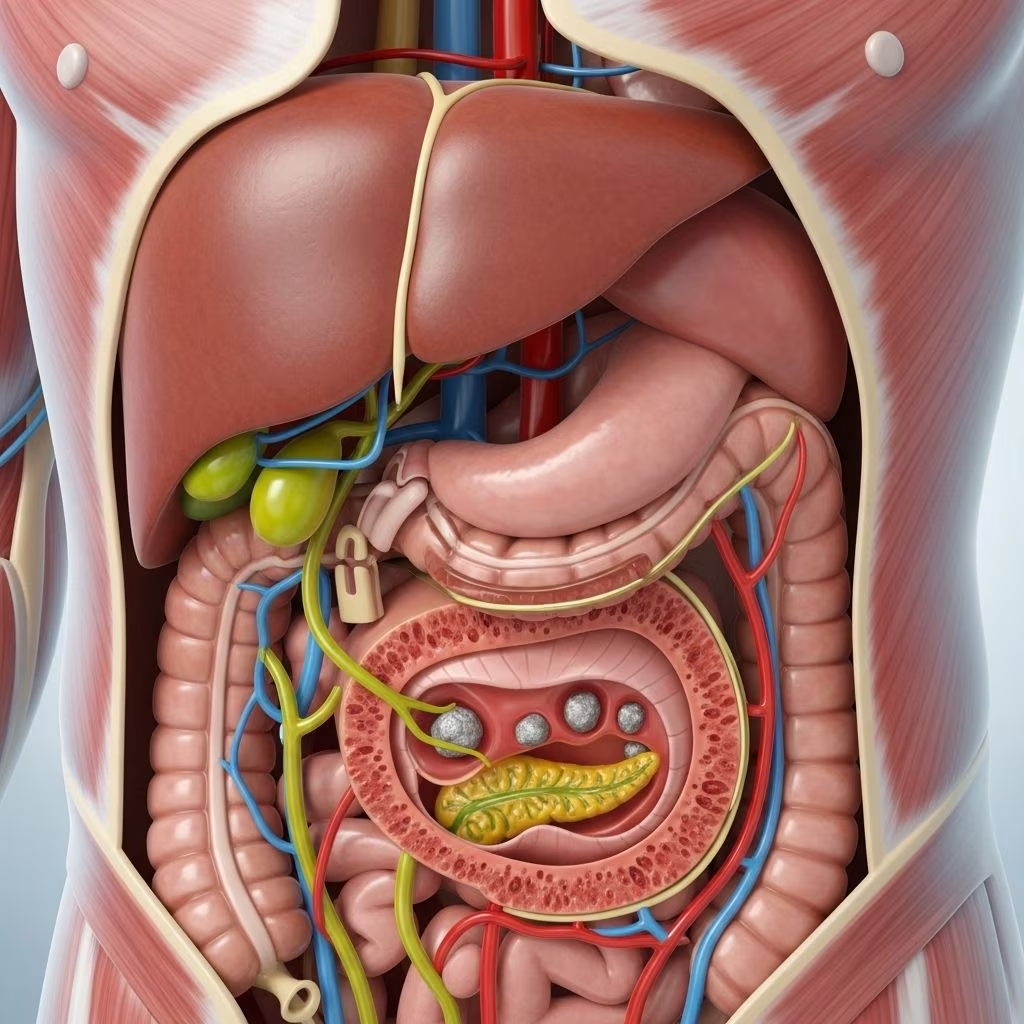
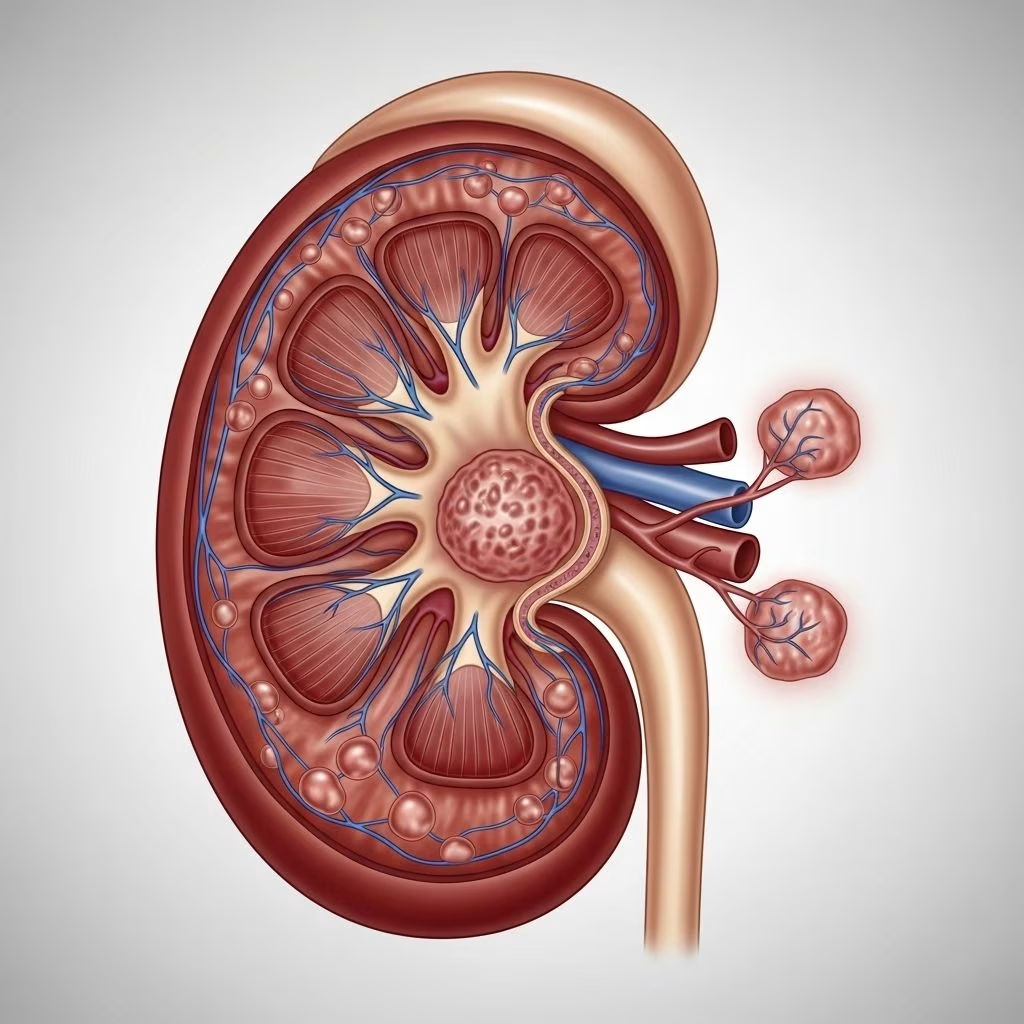
Kidney lymphoma represents a rare but serious progression of lymphoma, a cancer originating in the immune system that can eventually spread to vital organs like the kidneys. Non-Hodgkin’s lymphoma is the most common type associated with renal involvement, typically occurring when the cancer reaches an advanced stage and involves multiple organ systems. Sometimes, though rarely, lymphoma primarily originates in the kidneys, accounting for less than 1% of all kidney lymphomas.
How Kidney Lymphoma Develops
- Origin: Begins in the immune system and spreads through lymph nodes, spleen, liver, lungs, or kidneys.
- Types: Non-Hodgkin’s lymphoma most often leads to kidney involvement.
- Rarity: Primary kidney lymphoma is exceptionally rare.
Kidney Lymphoma Symptoms
Symptoms in kidney lymphoma frequently overlap with those of other medical conditions. This makes diagnosis challenging, especially in the early stages. Kidney lymphoma generally presents when disease is advanced, and may include:
- Fever
- Chills
- Fatigue and weakness
- Swollen or distended abdomen
- Enlarged lymph nodes
- Unintentional or rapid weight loss
- Reduced or lost appetite
- Pain, lump, or mass in lower back or flank
- Frequent infections
- Chest pain or discomfort
- Easy bruising or bleeding
- Shortness of breath
- Blood in urine (hematuria)
- Night sweats
- Acute kidney failure (less common, but possible)
- Swelling or edema
Symptoms may appear suddenly or gradually and can sometimes be mistaken for those of other health conditions, including kidney infections, other forms of kidney cancer, or even chronic kidney disease.
Kidney Lymphoma Diagnosis
Because symptoms are unspecific, diagnosis relies on a combination of clinical evaluation, laboratory work, imaging, and tissue analysis.
Key Diagnostic Steps
- Medical history and physical examination: Reviewing symptoms, history, and risk factors.
- Blood tests: Evaluate overall health, kidney function, and markers of inflammation. Includes complete blood count (CBC), erythrocyte sedimentation rate (ESR), kidney function tests.
- Urine testing (urinalysis): Checks for infection, blood, or abnormal cells.
- Imaging studies:
- Ultrasound scan: Detects masses or kidney swelling.
- CT (computed tomography) scan: Identifies mass, assesses spread, distinguishes from other kidney tumors. Can reveal singular or multiple masses, diffuse kidney infiltration, organ enlargement, and lymphadenopathy elsewhere.
- Renal biopsy: Removal of a small sample of kidney tissue for pathological examination. Crucial for definitive diagnosis and avoiding unnecessary nephrectomy.
- Bone marrow biopsy: Important for staging and assessing systemic involvement.
| Test/Procedure | Purpose | Key Findings |
|---|---|---|
| Physical Exam | Check for masses, swelling, lymphadenopathy | Abdominal mass, swollen nodes |
| Blood Tests | Evaluate kidney function, inflammation | Elevated creatinine, abnormal CBC/ESR |
| Urinalysis | Assess blood/protein/abnormal cells | Hematuria, signs of infection |
| Imaging (CT scan) | Visualize mass, spread | Renal masses, lymphadenopathy |
| Biopsy | Pathology for definitive diagnosis | Cancer cell type, grade |
| Bone Marrow Exam | Assess systemic lymphoma | Lymphoma extent |
Early diagnosis can improve treatment options and outcomes, but kidney lymphoma often goes undetected until it has progressed significantly.
Treatment Options for Kidney Lymphoma
The treatment plan is highly personalized and depends on the stage of kidney lymphoma, the patient’s general health, and whether disease is localized or part of systemic lymphoma. Treatments may involve one or more of the following:
- Chemotherapy: The mainstay and often first-line treatment. Medications are administered orally, intravenously, or a combination, designed to kill cancer cells throughout the body.
- Radiation therapy: Used in certain cases to target and destroy cancer cells in the kidneys and other involved areas.
- Targeted therapy: Drugs that specifically attack cancer cells, minimizing damage to healthy cells.
- Chimeric antigen receptor (CAR) T cell therapy: An advanced immune-based treatment, where patient’s T cells are genetically engineered to target lymphoma cells.
- Monoclonal antibody therapy: Engineered antibodies attack specific lymphoma cells and can block tumor growth; generally administered intravenously.
- Antibiotic therapy: May be recommended if infection is present or suspected alongside cancer.
- Surgery: While surgery to remove part or all of the kidney may be needed in some circumstances, most cases rely on systemic therapy rather than surgical intervention.
- Stem cell transplant: For advanced or resistant cases, replaces damaged blood cells with healthy stem cells, aiding in the reconstitution of the patient’s immune system.
- Watchful waiting: Appropriate for slow-growing or early-stage disease, where active intervention is delayed but patient is closely monitored by clinicians.
| Treatment | Method | Common Indications |
|---|---|---|
| Chemotherapy | Systemic drugs (oral/IV) | Main treatment for most cases |
| Radiation Therapy | Targeted X-rays | May be combined with chemotherapy |
| Targeted Therapy | Specific drug targeting cancer cells | For advanced or resistant cancer |
| CAR T Cell Therapy | Immune cell engineering | Specialized cases, clinical trials |
| Monoclonal Antibodies | IV engineered proteins | Lymphoma cell targeting |
| Surgery | Partial/total kidney removal | Rare, when necessary for local disease |
| Stem Cell Transplant | Bone marrow replacement | Advanced/refractory cases |
| Watchful Waiting | Close observation, no treatment | Slow-growing, early-stage lymphoma |
Living with Kidney Lymphoma
Receiving a kidney lymphoma diagnosis often leads to rapid changes in daily life, and managing not only the physical impact but also emotional and psychological challenges is important for overall well-being.
Support Strategies
- Medical follow-up: Regular appointments to monitor progress, adjust treatments, and address new symptoms.
- Nutritional support: Dietitian guidance can be beneficial, as weight loss and loss of appetite are common symptoms.
- Infection risk management: Enhanced precautions due to weakened immunity from both lymphoma and treatment.
- Mental health support: Counseling and access to support groups help patients and loved ones cope with anxiety, stress, and uncertainty.
- Palliative care: Pain and symptom management, along with comfort-oriented therapy, may be appropriate, especially for advanced disease stages.
Survival Rates and Prognosis
Prognosis for kidney lymphoma is closely linked to whether the disease is part of systemic lymphoma or a rare primary form. Kidneys affected by lymphoma are often a sign of advanced disease, which complicates management and affects survival rates. Generally, the outlook depends on:
- Type and stage of lymphoma
- Extent of kidney and systemic involvement
- Patient’s age and overall health
- Response to initial treatments
Even with aggressive therapy, kidney lymphoma can have a serious prognosis, especially in primary forms or when both kidneys are involved. Early intervention improves outcomes, and advances in targeted and immunotherapies may offer improved survival and quality of life for some patients.
Frequently Asked Questions (FAQs)
Q: Is kidney lymphoma the same as kidney cancer?
A: No, kidney lymphoma arises from immune cells and often represents spread from systemic lymphoma, while kidney cancer typically originates from the kidney’s own cells (such as renal cell carcinoma).
Q: Who is at risk of developing kidney lymphoma?
A: Individuals diagnosed with non-Hodgkin’s lymphoma, older adults, and those with advanced disease stages are at higher risk. Primary kidney lymphoma is very rare.
Q: Can kidney lymphoma be cured?
A: Some cases respond well to chemotherapy and immunotherapy, especially if diagnosed early and treated aggressively. Long-term remission is possible but depends on type, stage, and patient response.
Q: What is the role of surgery in treating kidney lymphoma?
A: Surgery to remove the kidney is rare and generally reserved for very specific cases. Most kidney lymphomas are treated with systemic therapies targeting cancer cells throughout the body.
Q: What lifestyle changes support coping with lymphoma?
A: Healthy nutrition, regular follow-up, infection precautions, physical activity and mental health support are all vital for improving quality of life during and after treatment.
Sources and Support for Living with Kidney Lymphoma
- Work closely with your healthcare team for diagnosis, treatment, and follow-up.
- Join accredited support groups (online or in person) for emotional guidance and shared experiences.
- Seek out reputable information sources, such as national cancer organizations.
- Access dietary, palliative, and psychological support as needed for symptom management and better life quality.
- Consult your healthcare provider if you develop new symptoms, side effects, or have concerns about your treatment plan.
Kidney lymphoma is a rare, serious progression of lymphoma requiring specialized medical care, rapid intervention, and holistic patient support — awareness and timely diagnosis can dramatically improve treatment options and outcomes.
References
- https://www.medicalnewstoday.com/articles/kidney-lymphoma
- https://www.healthline.com/health/kidney-cancer/kidney-lymphoma
- https://www.urology-textbook.com/renal-lymphoma.html
- https://mdsearchlight.com/cancer/renal-lymphoma/
- https://www.ncbi.nlm.nih.gov/books/NBK526034/
- https://www.mayoclinic.org/diseases-conditions/lymphoma/diagnosis-treatment/drc-20352642
- https://my.clevelandclinic.org/health/diseases/22225-lymphoma
- https://my.clevelandclinic.org/health/diseases/9409-kidney-cancer-overview
- https://pmc.ncbi.nlm.nih.gov/articles/PMC10042228/
- https://www.mdanderson.org/cancerwise/how-i-knew-i-had-lymphoma–survivors-describe-their-symptoms.h00-159700701.html