How Long Does It Take for Water to Pass Through Your Body?
Understanding how water moves through your body is essential for managing hydration, supporting bodily functions, and dispelling common myths about digestion. When you drink water, some of it is absorbed surprisingly quickly, while the rest is managed by complex processes involving your digestive and urinary systems. This article explores what happens to every glass you drink, how water absorption compares to food and other liquids, and the factors influencing your body’s water handling.
Overview: Water’s Journey Through the Body
- Absorption begins within minutes: Water can be absorbed in as little as 5 minutes after ingestion, with peak absorption around 20 minutes.
- Rapid elimination: Excess water is filtered by the kidneys and exits the body as urine or sweat, much faster than solid food is processed.
- Hydration and homeostasis: The body tightly regulates water balance, ensuring that cells, organs, and tissues receive what they need while eliminating excess.
Digesting Water: A Specialized Process
Unlike food, water doesn’t require breakdown in the stomach. Instead, it follows a streamlined path through your digestive tract that allows for swift absorption and utilization.
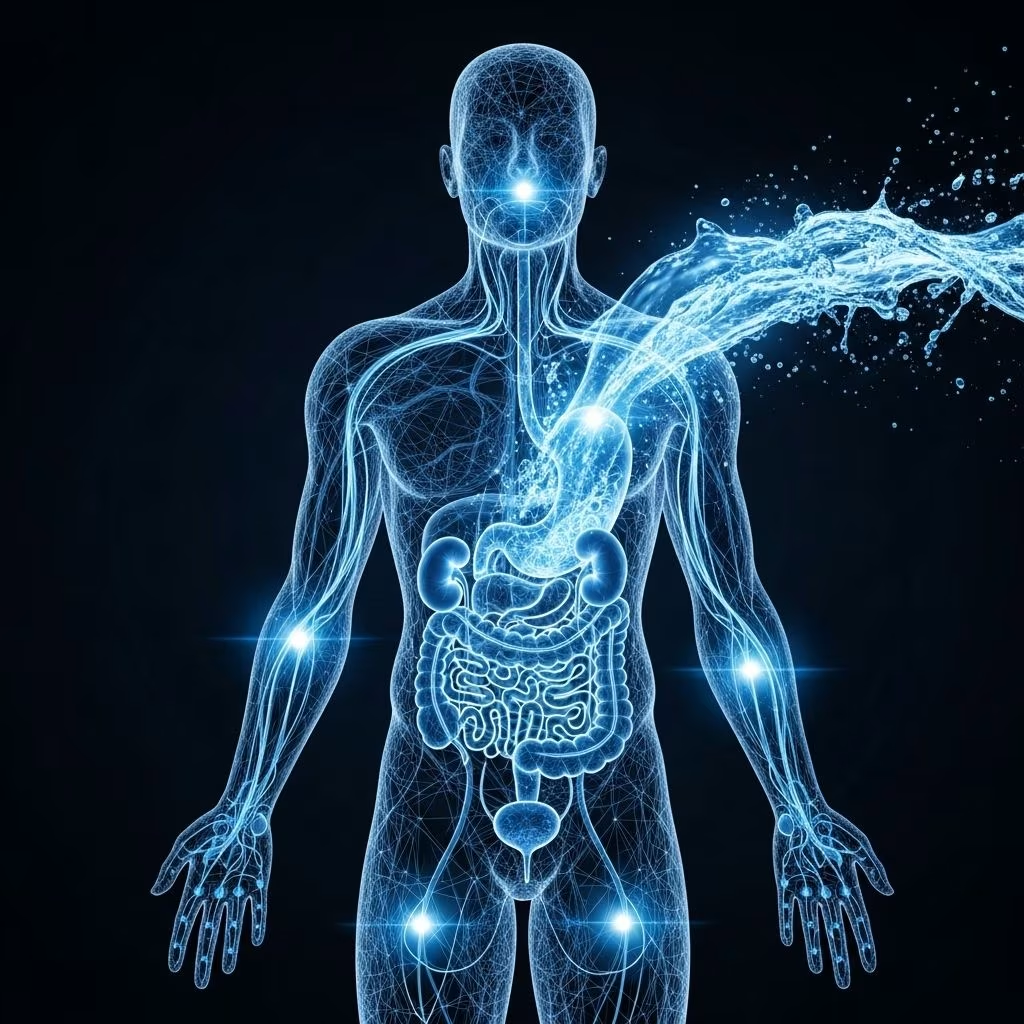
Step-by-Step: What Happens After You Drink Water?
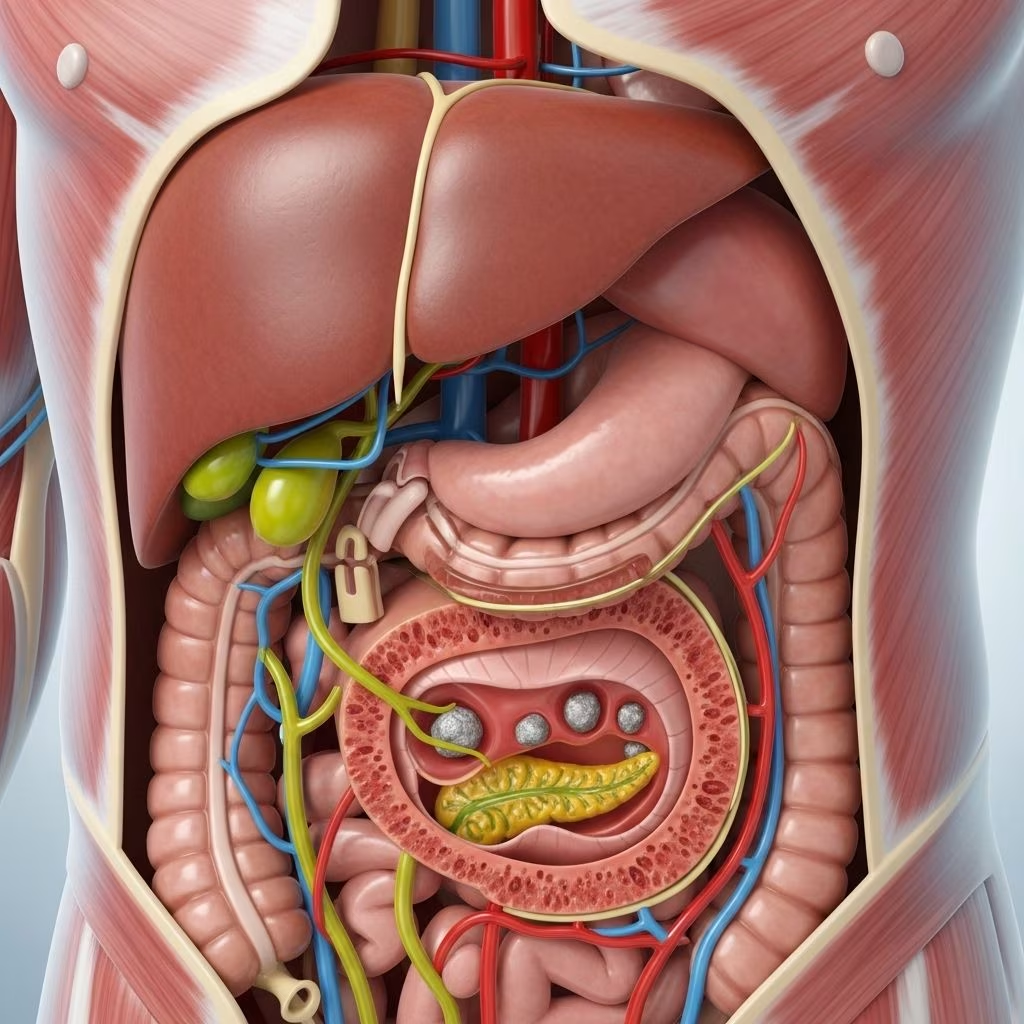
- Entry into the stomach: Water quickly passes through the esophagus and enters the stomach. Unlike food, it does not linger long or require extensive digestive action.
- Transit to the small intestine: Water rapidly moves from the stomach to the small intestine, typically within minutes.
- Absorption in the small intestine: The majority of water is absorbed here, diffusing directly through the epithelial cells that line the intestine. This process is efficient and nearly all the water you drink reaches your bloodstream via this route.
- Further absorption in the large intestine: Any remaining water is absorbed in the colon, where stool formation also takes place. The body reclaims water here to maintain hydration.
- Distribution and elimination: Absorbed water enters the bloodstream, circulates to organs and tissues, and any excess is filtered by the kidneys and excreted as urine.
How Long After Drinking Water Is It Absorbed?
Water absorption starts within 5 minutes of ingestion and peaks around 20 minutes. Your body does not wait to absorb water: as soon as it reaches the small intestine, it diffuses directly into the blood.
- Kidneys constantly filter blood to remove excess water and wastes.
- When you’ve had more than your body’s immediate needs, urine production can increase within 30–60 minutes after drinking.
- You may also lose some water through sweat or, to a lesser degree, in stool.
Water vs. Other Liquids: Do They Move Differently?
The way water is processed stands in contrast to other drinks:
| Beverage Type | Digestion & Absorption |
|---|---|
| Plain water | Rapid absorption, minimal processing, bypasses most stomach digestion |
| Infused waters (lemon, herbal) | Similar to water; negligible digestion required |
| Juices, sodas | Contain sugars and additives; require some breakdown and absorption in the small intestine, slightly slower |
| Tea, coffee | Absorbed nearly as fast as water; caffeine acts as a mild diuretic, causing more frequent urination |
| Alcoholic beverages | Absorbed rapidly, some in the stomach, but affects hydration due to diuretic properties |
| Milk and shakes | Require digestion (protein, fat, lactose) in stomach and intestine, absorption takes longer |
Takeaway: Liquids with fewer solids and less sugar move faster through your digestive tract, while thicker or sugar-laden drinks require more processing and are absorbed more slowly than water.
Water vs. Food: A Key Difference in Absorption
While water is rapidly absorbed and eliminated, food takes much longer to process because it needs to be broken down into absorbable components:
- Food: Moves from mouth to stomach (seconds to minutes), stays in the stomach for 2–6 hours, passes through the small intestine over 3–5 hours, and can spend 12–48 hours in the colon before elimination. Total transit: 24–72 hours depending on food type and individual differences.
- Water: Minimal stomach retention, peak absorption within 20 minutes, elimination in urine can begin as soon as 30 minutes after drinking.
Why the Difference?
Food consists of complex carbohydrates, proteins, and fats that need physical and chemical breakdown by digestive juices and enzymes. Water, by contrast, does not need to be digested, only absorbed, allowing for swift transit.
Factors That Affect Water’s Transit Through the Body
The rate at which water is absorbed and eliminated varies by individual and circumstance. Major factors include:
- Stomach contents: Drinking water on an empty stomach leads to faster absorption. When your stomach contains food, water mixes with the solid material and moves through more slowly.
- Age: As we age, transit times can slow and kidney function may decrease, affecting water absorption and elimination.
- Physical activity: Exercise increases water use in the body and speeds up circulation, promoting more rapid absorption and sweat loss.
- Hydration status: If the body is already hydrated, kidneys excrete excess water more quickly to maintain balance.
- Health conditions: Kidney, liver, or gastrointestinal disorders can disrupt the usual process.
How Does Water Leave the Body?
Once absorbed, water joins the bloodstream and is distributed throughout the body. Excess water—and the waste products filtered from the blood—leave via several routes:
- Urine: The kidneys are constantly filtering the blood, removing excess water, salts, and waste, which is stored in the bladder and urinated out.
- Sweat: Water is also lost through skin, especially during heat or exercise, as the body regulates temperature.
- Breath: A small but continuous amount of water vapor exits with every exhalation.
- Stool: The colon reclaims as much water as possible, but some is always lost during bowel movements.
Comparison Table: Water vs. Food Digestion Timeline
| Process | Water | Solid Food |
|---|---|---|
| Stomach retention | Few minutes | 2–6 hours |
| Small intestine transit | Immediate, peak absorption at 20 minutes | 3–5 hours |
| Large intestine (colon) passage | Minimal, unless excess remains | 12–48 hours |
| Total time until elimination | Can start at 30 minutes (urine) | 24–72 hours (stool) |
Key Takeaways
- Water is absorbed rapidly—within 5 to 20 minutes after drinking.
- Unlike food, water does not require digestion and directly enters the bloodstream from the intestines.
- Excess water is eliminated quickly—often within an hour—as urine or sweat.
- Food takes far longer, requiring thorough digestion and a transit time across the gastrointestinal tract.
Frequently Asked Questions (FAQs)
Q: Can drinking large amounts of water at once be harmful?
A: Yes, consuming too much water too quickly can overwhelm the kidneys, leading to water intoxication or hyponatremia (low blood sodium). This is rare in healthy people but can occur during intense exercise or drinking contests. Moderation is key.
Q: Does cold water absorb faster than warm water?
A: There is limited scientific evidence to suggest a significant difference. Temperature might affect gastric emptying slightly, but absorption in the small intestine is usually rapid for both cold and warm water.
Q: Is drinking water with meals good or bad for digestion?
A: Drinking water with meals does not dilute digestive juices to an extent that impairs nutrient absorption. In fact, it can help break down food and aid in swallowing.
Q: How can I tell if I’m absorbing water properly?
A: As long as you regularly urinate clear or pale yellow urine, your body is balancing water intake and output effectively. Persistent thirst, dark urine, or infrequent urination can signal dehydration or absorption issues.
Q: How quickly does water improve hydration?
A: Drinking water can replenish hydration status within 30–60 minutes, depending on your body’s needs, activity, and environment.
Tips for Optimal Hydration
- Drink water throughout the day instead of consuming large quantities at once.
- Increase intake during exercise, hot climates, or when ill.
- Pay attention to signs of dehydration—thirst, dry mouth, headache, and reduced urination.
- Remember that food, especially fruits and vegetables, contributes to total water intake.
References
- Healthline: How Long Does It Take for Water to Pass Through Your Body?
- ScienceLearn: Food’s Journey Through the Digestive System
- ScienceABC: How Are Water and Other Fluids Digested in the Human Body?
References
- https://www.healthline.com/health/digestive-health/how-long-does-it-take-for-water-to-pass-through-your-body
- https://www.youtube.com/watch?v=Og5xAdC8EUI
- https://www.sciencelearn.org.nz/resources/1849-food-s-journey-through-the-digestive-system
- https://www.scienceabc.com/humans/how-are-water-and-other-fluids-digested-in-the-human-body.html
- https://www.niddk.nih.gov/health-information/digestive-diseases/digestive-system-how-it-works
- https://www.mayoclinic.org/diseases-conditions/indigestion/expert-answers/digestive-system/faq-20058340
- https://my.clevelandclinic.org/health/body/7041-digestive-system
- https://www.healthline.com/health/how-long-does-it-take-to-digest-food
- https://en.wikipedia.org/wiki/Human_digestive_system
- https://www.youtube.com/watch?v=_T_vmcLyTzI