How Long Does It Take for Water to Pass Through Your Body?
Water plays an essential role in human health, participating in nearly every bodily function. When you drink a glass of water, its journey through your body is surprisingly fast and efficient compared to solid food. Understanding how quickly water moves from your mouth to elimination can help you optimize hydration and comprehend the unique processes of digestion.
Table: Water and Food Transit Times
| Substance | Average Absorption Time | Time to Elimination |
|---|---|---|
| Water | 5–20 minutes | Varies based on hydration status (urine in 30 min–2 hrs) |
| Food | 3–6 hours (stomach & small intestine) | 24–72 hours (stool) |
Digesting Water: An Accelerated Process
Unlike food, water does not need to be broken down by enzymes or acids. Its molecular simplicity allows it to rapidly diffuse through the digestive tract. Once you drink water, it takes:
- 5 minutes for initial absorption to begin
- 20 minutes for peak absorption
- Rapid filtration and elimination via the kidneys
The digestive organs are minimally involved compared to the process required for food. Water travels:
- Through the stomach, which only briefly holds the liquid
- Into the small intestine, where most absorption occurs
- To the bloodstream, quickly reaching tissues and cells
Water vs. Other Liquids
All fluids move faster through the digestive system than solids, but the rate varies depending on composition:
- Pure Water: Absorbed fastest, minimal processing needed
- Juices & Sugary Drinks: Take slightly longer due to sugars requiring minimal digestion
- Dairy or Fatty Liquids: Absorption slowed as fats require enzymatic breakdown and bile
Water’s simplicity is key to its rapid absorption, whereas other drinks may linger in the stomach due to their ingredients.
Water vs. Food: Key Differences in Digestion Times
Solid food undergoes complex digestive stages:
- Chewing and enzymatic breakdown in the mouth
- Acid and enzyme exposure in the stomach for 2–6 hours
- Absorption in the small intestine over 3–5 hours
- Passage through the large intestine (colon) can take 12–48 hours
In contrast, water bypasses most of these steps, making its journey considerably shorter.
Factors That Influence How Your Body Absorbs Water
Not everyone absorbs and eliminates water at the same rate. Key factors include:
- Hydration status: Dehydrated bodies retain water longer
- Amount consumed: Larger quantities prompt faster elimination via urine
- Kidney health: Impaired kidneys can slow water filtration and output
- Activity level: Physical exertion increases sweat and water use
- Age: Kidney and digestive efficiency may slow with age
- Hormonal status & medications: Can influence urine output and water retention
Water absorption primarily happens in the small intestine, though portions are also absorbed in the large intestine. Excess water is filtered out by the kidneys, which are continually active.
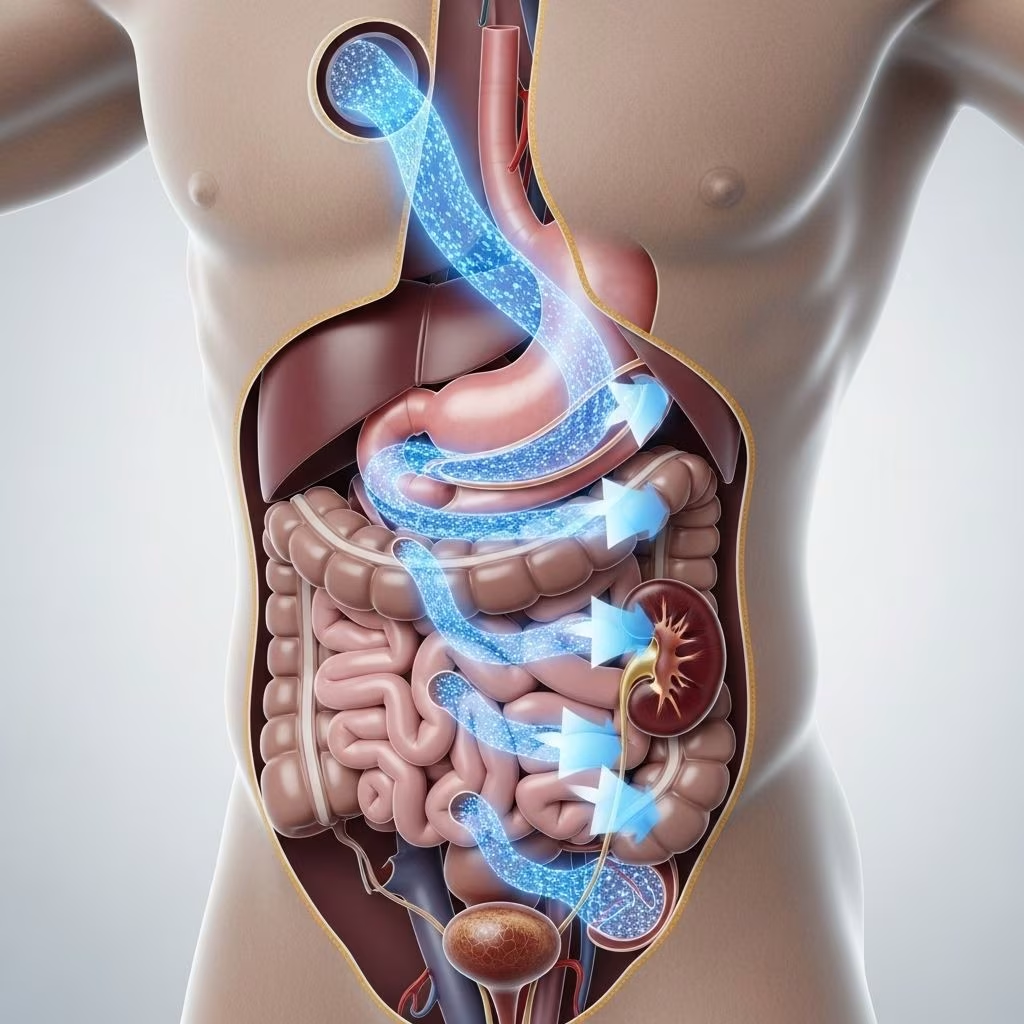
How Water Moves Through the Digestive Tract
- Swallowed & temporarily held in the stomach
- Quickly passed into the small intestine
- Absorbed through epithelial cells into the bloodstream
- Excess transported to the kidneys for filtration
- Eliminated via urine, sweat, and feces
How Water Leaves the Body After Absorption
- Urine: The primary system for disposing excess water. Kidneys filter out surplus, sending it to the bladder.
- Sweat: Regulates body temperature by expelling water through skin when overheated.
- Stool: A small amount of water remains and is expelled with waste after the colon extracts most fluid.
The kidneys are constantly monitoring blood to maintain water and electrolyte balance. If more water is consumed than the body needs, urine production increases rapidly, sometimes within 30 minutes of drinking a large quantity.
Water Absorption Compared to Nutrient Digestion
- Carbohydrates, proteins, fats: Require thorough enzymatic digestion before absorption.
- Water: Directly passes through cell membranes via osmosis.
- The small intestine’s villi (tiny fingerlike projections) provide a massive surface area for water (and nutrients) to enter the bloodstream.
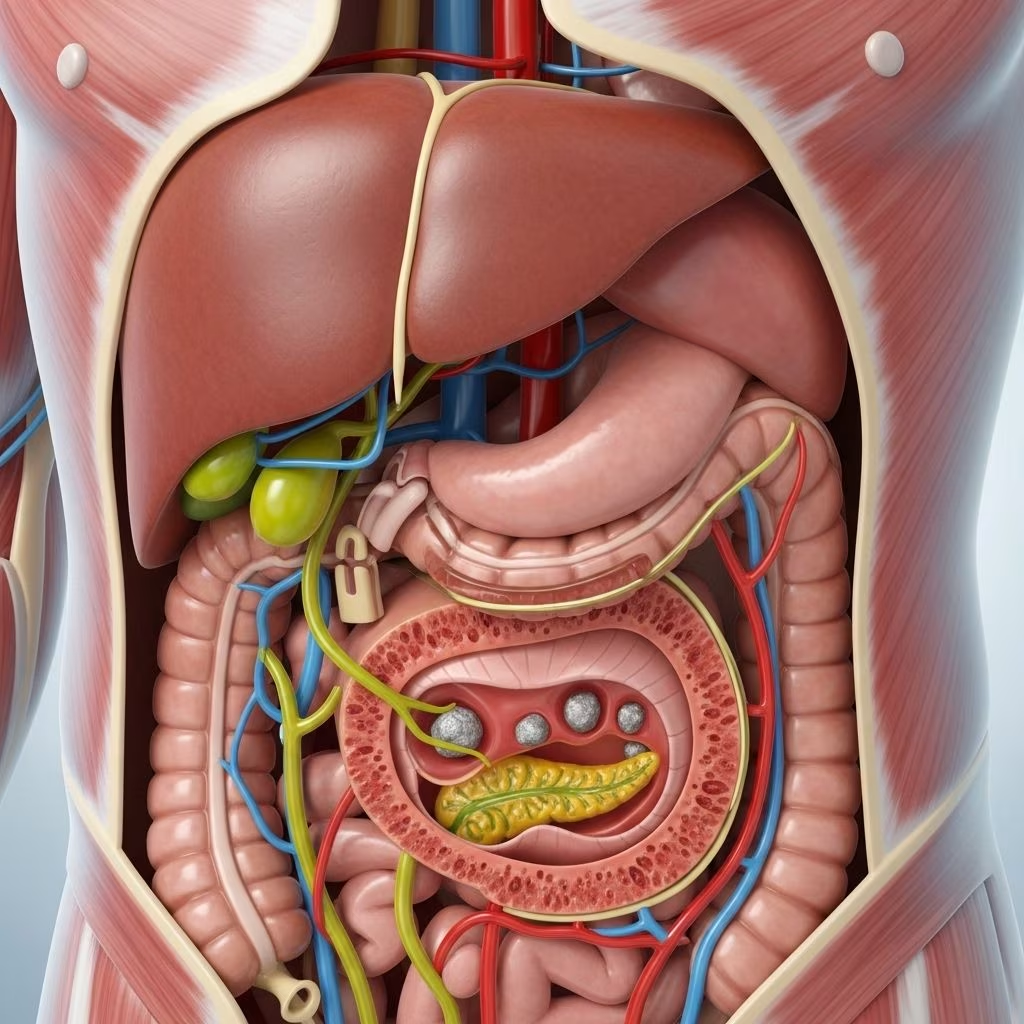
Digestive Tract Components
| Organ | Role in Water Absorption |
|---|---|
| Stomach | Brief holding, minimal absorption |
| Small Intestine | Main absorption site |
| Large Intestine (Colon) | Absorbs remaining water, forms stool |
| Kidneys | Filter excess water from blood, produce urine |
Practical Implications for Hydration
Because water moves through your system so efficiently, adequate hydration throughout the day ensures constant support for cellular and organ functions. Important benefits include:
- Temperature regulation
- Toxin removal via urine
- Cushioning for joints and tissues
- Optimized digestion for nutrients and food
Thirst is the most reliable signal that the body requires more water. Remember, frequent urination after drinking a lot of fluids is a sign that your body is operating as intended.
Frequently Asked Questions (FAQs)
How long does it take for water to be absorbed?
Initial absorption can start within 5 minutes, peaking 20 minutes after ingestion.
Will I need to urinate soon after drinking water?
Yes, especially if you drink a large amount. Excess fluid is typically eliminated by the kidneys rapidly, often within 30 minutes to two hours depending on your body’s needs.
Why does food take longer to pass through the digestive system than water?
Food must be broken into nutrients through enzymatic processes, while water is absorbed directly and quickly.
Where is most water absorbed in the body?
The small intestine absorbs most water, with the colon absorbing remaining fluids before waste is eliminated.
Can differences in hydration status or health affect absorption time?
Yes, dehydration, kidney health, certain medications, or age can impact how quickly water is processed and eliminated.
Key Takeaways About Water Transit Through the Body
- Water may be absorbed in as little as 5 minutes and peak absorption occurs at 20 minutes after drinking.
- Unlike solid foods, water moves quickly from the stomach to the small intestine and into the bloodstream.
- Most excess water is rapidly eliminated via urine due to continuous kidney filtration.
- Solid foods take 24–72 hours to be processed and eliminated; water can begin the exit process much faster.
Supporting Healthy Water Absorption
To keep your body hydrated and ensure efficient water absorption:
- Drink water slowly and consistently throughout the day.
- Listen to your body’s thirst cues.
- Limit excessive intake of dehydrating substances such as caffeine and alcohol.
- Monitor urine color; pale urine usually indicates proper hydration.
Summary: The Journey of Water Through the Human Body
Water’s journey from mouth to elimination is one of the most rapid and efficient processes in the human digestive system. Thanks to the unique properties of water molecules and the role of the small intestine and kidneys, excess fluid is absorbed quickly and removed via urine far faster than food is processed and eliminated. This efficient system helps maintain your health, regulate body temperature, and support every cellular function. Staying hydrated enables your body to operate at its best—so keep your water bottle handy and let the science of digestion do its work.
References
- https://www.healthline.com/health/digestive-health/how-long-does-it-take-for-water-to-pass-through-your-body
- https://www.youtube.com/watch?v=Og5xAdC8EUI
- https://www.sciencelearn.org.nz/resources/1849-food-s-journey-through-the-digestive-system
- https://www.scienceabc.com/humans/how-are-water-and-other-fluids-digested-in-the-human-body.html
- https://www.niddk.nih.gov/health-information/digestive-diseases/digestive-system-how-it-works
- https://www.mayoclinic.org/diseases-conditions/indigestion/expert-answers/digestive-system/faq-20058340
- https://www.healthline.com/health/how-long-does-it-take-to-digest-food
- https://my.clevelandclinic.org/health/body/7041-digestive-system
- https://en.wikipedia.org/wiki/Human_digestive_system
- https://www.exactsciences.com/news-events/articles/how-exactly-does-digestion-work-