Prone Positioning in Respiratory Care: An In-Depth Guide
Prone positioning—where a patient is placed face down—has emerged as a critical intervention in respiratory care, especially for individuals battling severe lung conditions such as Acute Respiratory Distress Syndrome (ARDS) and those needing mechanical ventilation. This comprehensive guide explores the science behind prone positioning, its practical applications, physiological benefits, risks, and what patients and caregivers should know.
What is Prone Positioning?
Prone positioning involves placing a patient on their stomach so that the chest faces downward. This position is distinct from the supine position, where the patient lies on their back. Proning may be performed in hospital settings by healthcare professionals—either with or without mechanical ventilation—as part of supportive therapy for respiratory distress. In certain cases, especially during the COVID-19 pandemic, awake proning has also been introduced for non-intubated patients.
Why Is Prone Positioning Used?
The primary goal of prone positioning is to improve oxygenation in patients facing difficulties in breathing due to serious conditions such as ARDS, severe pneumonia, or COVID-19. It also plays a vital role in the management of patients who require mechanical ventilation, leveraging gravity and pulmonary physiology to optimize lung function.
How Does Prone Positioning Work?
When a patient lies in a prone position, several physiological changes occur that lead to improved respiratory outcomes:
- Redistribution of blood flow: Blood is redirected to better-ventilated regions of the lungs, leading to enhanced gas exchange and oxygenation.
- Homogenization of pressure gradients: The pleural pressure gradient across the lung fields becomes more uniform, allowing for more balanced alveolar ventilation.
- Increase in functional residual capacity (FRC): Prone positioning increases lung volume, which helps reduce atelectasis (collapse of lung tissue).
- Improved drainage of secretions: Gravitational effects facilitate the drainage of pulmonary secretions, helping to maintain clear airways.
- Reduced ventilator-associated lung injury: By supporting more uniform lung expansion and minimizing overdistension, prone positioning helps protect lung tissue from injury caused by mechanical ventilation.
Key Benefits of Prone Positioning
- Improved Oxygenation
- Studies show significant improvement in blood oxygen levels for patients in the prone position.
- Patients with ARDS or severe respiratory illness often require less time on ventilators.
- Reduced Mortality Rates
- Research demonstrates that prone positioning, especially for durations exceeding 12 hours per day, can decrease mortality rates in ARDS patients.
- Lung-protective strategies combined with proning offer additional survival benefits.
- Improved Respiratory Mechanics
- The position supports more efficient movement of the diaphragm and reduces the work of breathing.
- Enhanced Lung Inflation and Lower Risk of Collapse
- Prone positioning encourages even alveolar inflation, reducing the risk of atelectasis (lung collapse).
- Facilitated Secretion Drainage
- Gravitational forces ensure more efficient clearance of secretions, reducing complications like pneumonia.
When Is Prone Positioning Used?
Prone positioning is most often utilized:
- For patients with moderate to severe ARDS.
- During mechanical ventilation for respiratory failure.
- In critical care settings for patients experiencing severe hypoxia (low oxygen levels).
- Increasingly in awake, non-intubated patients with COVID-19 or respiratory compromise, as directed by providers.
Duration of Prone Positioning
The duration of proning is key in determining outcomes. Research suggests:
- Proning for at least 12 hours daily is associated with reduced mortality.
- Longer sessions may lead to greater oxygenation benefits compared to shorter sessions.
- Durations under 12 hours tend not to significantly affect mortality rates.
Clinical Practice: Proning Procedure
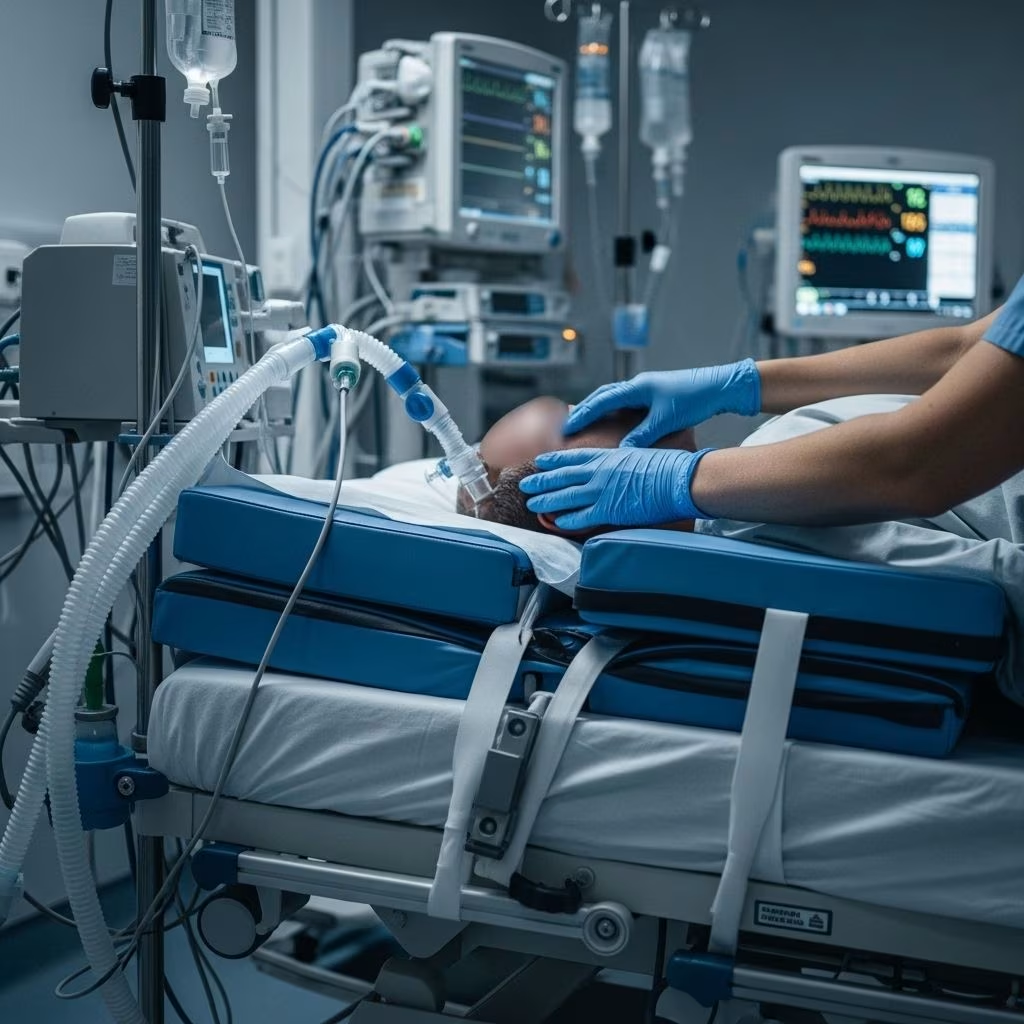
Prone positioning must be performed carefully to minimize risks. Stepwise approaches include:
- Monitoring vital signs before, during, and after proning.
- Ensuring all tubes and lines (like IVs and ventilator circuits) are secure.
- Regular repositioning to reduce pressure injuries.
- Multidisciplinary teamwork for safe execution.
Risks and Adverse Effects of Prone Positioning
Despite its proven benefits, prone positioning is not without risks. Some adverse effects have been documented in clinical studies:
- Pressure Sores (Ulcers): The risk of developing pressure sores increases during lengthy prone sessions due to constant pressure on the skin.
- Endotracheal Dislocation: Movement may result in the dislodging of endotracheal tubes, requiring vigilance and skilled handling.
- Loss of Venous Access: IV lines and catheters may be disrupted, especially during frequent turning.
- Cardiac Events: Rare; the incidence of cardiac complications does not significantly differ between prone and supine positions.
- Ventilator-Associated Pneumonia: Risk may decrease due to enabled secretion drainage, yet close monitoring is needed.
- Pneumothorax: The risk of lung collapse does not notably differ between prone and supine positions.
| Adverse Event | Increased Risk? | Relative Risk (RR) |
|---|---|---|
| Pressure sores | Yes | 1.23 |
| Endotracheal dislocation | Yes | 1.33 |
| Loss of venous access | Yes, but high heterogeneity | 1.98 |
| Cardiac events | No significant difference | 1.01 |
| Ventilator-associated pneumonia | No significant difference | 0.88 |
| Pneumothorax | No significant difference | 0.87 |
Prone Positioning in COVID-19
During the COVID-19 pandemic, prone positioning gained further attention due to its role in improving outcomes for patients with viral pneumonia and respiratory failure.
- Studies confirmed increased survival rates and reduced requirements for mechanical ventilation in patients proned for at least 12 hours daily.
- Awake proning was sometimes used for patients breathing on their own to prevent deterioration and reduce ICU admissions.
For many COVID-19 patients, proning was a low-cost and effective approach—provided it was implemented safely and with close professional oversight.
Special Considerations and Contraindications
Not all patients are suitable candidates for prone positioning. Contraindications include:
- Spinal instability or recent spinal surgery.
- Unstable pelvic fractures.
- High risk of airway difficulties.
- Severe obesity impeding safe positioning.
- Pressure ulcers or wounds on the front of the body.
- Pregnancy (special precautions needed).
Clinicians assess the benefits and risks before recommending prone positioning, individualizing the approach for each patient’s medical status.
What to Expect: The Proning Process
Patients and caregivers often want to know what happens during the proning procedure. Here is what the process typically involves:
- Preparation: Securing lines, checking airway devices, and assessing skin.
- Positioning: Rolling the patient onto their stomach with support pillows to relieve pressure spots.
- Monitoring: Continuously evaluating vital signs and oxygenation, adjusting position as needed.
- Care: Frequent skin inspections and repositioning to avoid pressure injuries.
Comfort and safety are priorities—healthcare teams use specialized protocols to minimize the risk of complications.
Frequently Asked Questions (FAQs)
How long do patients need to be in the prone position for it to be effective?
Current evidence recommends at least 12 to 16 hours per day, especially for those with ARDS.
Who benefits most from prone positioning?
Patients with ARDS, severe pneumonia, respiratory distress needing mechanical ventilation, and selected COVID-19 patients.
Can patients self-prone outside of hospitals?
Rarely, awake proning may be suggested for patients with milder breathing difficulties, but this should only be done under provider guidance.
What are the most common risks of proning?
Pressure sores, accidental tube or catheter displacement, and discomfort are possible risks. Most serious events are rare with proper technique.
Does prone positioning replace other respiratory treatments?
No, it complements existing therapies (such as mechanical ventilation and oxygen therapy) and is part of a broader supportive care strategy.
Summary Table: Prone vs. Supine Positioning in Respiratory Care
| Aspect | Supine Position | Prone Position |
|---|---|---|
| Oxygenation | Baseline or reduced | Significantly improved |
| Mortality in ARDS | Higher | Lower (esp. >12h/day) |
| Pressure injuries | Less common | Risk increases |
| Facilitates secretion drainage | No | Yes |
| Cardiac events | Rare | No significant increase |
Conclusion
Prone positioning is a vital intervention in managing severe respiratory distress, particularly ARDS and select cases of COVID-19. While its benefits—chiefly improved oxygenation and lowered mortality—are well documented, careful attention to technique, patient selection, and monitoring is essential to minimize risks and optimize outcomes for both intubated and non-intubated individuals.
References
- https://jtd.amegroups.org/article/view/3737/html
- https://www.bonefoam.com/blog/the-importance-of-prone-positioning-in-surgery
- https://my.clevelandclinic.org/health/treatments/25026-proning
- https://pmc.ncbi.nlm.nih.gov/articles/PMC7276676/
- https://pmc.ncbi.nlm.nih.gov/articles/PMC7966795/
- https://www.centrastate.com/blog/breast-cancer-therapy-protects-the-heart-and-lungs/
- https://www.nature.com/articles/s41598-021-04385-3
- https://aapm.onlinelibrary.wiley.com/doi/10.1002/acm2.12118