Insulin Syringe Sizes and Needle Lengths: Complete Guide for Diabetes Care
When managing diabetes, administering insulin properly is crucial. For many, that means choosing the right insulin syringe with an appropriate needle size and length. The options can seem overwhelming, but understanding the differences is vital for safety, comfort, and effective disease management. This comprehensive guide explains everything you need to know about insulin syringes, needle gauges, barrel sizes, and factors influencing the best choice for your needs.
Why Insulin Syringe Size and Needle Length Matter
Insulin syringes come in several sizes and lengths to meet the specific requirements of people requiring insulin for diabetes management. The selection of the appropriate syringe and needle is essential for:
- Accurate dosing: Matching insulin volume to syringe marking prevents dosing mistakes.
- Comfort: The right needle gauge and length reduce pain and anxiety during injections.
- Safety: Picking correct needle size avoids injecting insulin into muscle, minimizing risks like hypoglycemia.
- Efficacy: Ensuring insulin reaches the subcutaneous tissue for optimal absorption and blood glucose control.
Sizes and Lengths of Insulin Syringes and Needles
Insulin syringes are identified by two important dimensions:
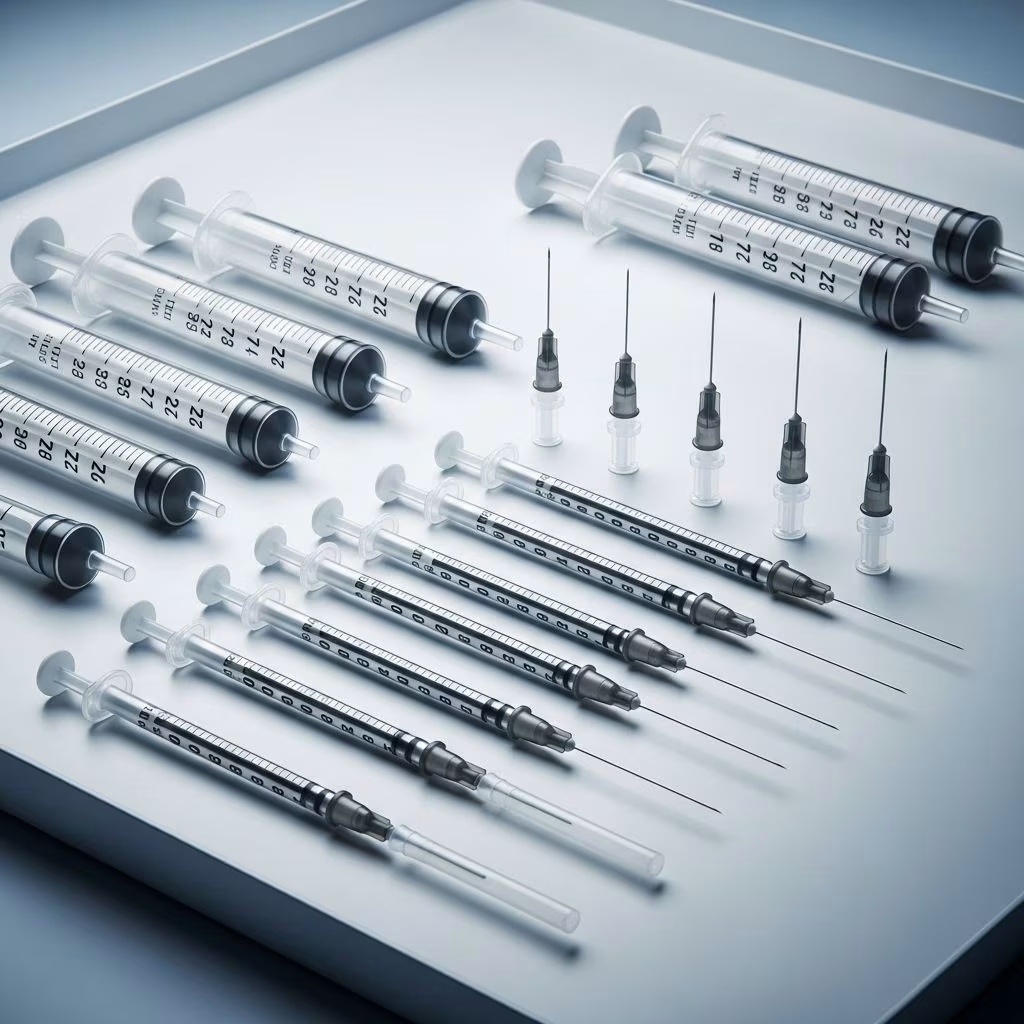
- Barrel size (volume): The amount of insulin the syringe can hold, measured in milliliters (mL).
- Needle length and gauge: How long and thick the needle is, affecting injection depth and comfort.
The most commonly available syringe barrel sizes include:
- 0.3 mL syringes: Used for doses under 30 units of insulin. Numbered at 1/2-unit or 1-unit intervals; ideal for children or people needing small precise doses.
- 0.5 mL syringes: Suitable for 30 to 50 units of insulin. Numbered at 1-unit intervals; best for medium doses.
- 1.0 mL syringes: Used for doses more than 50 units. Numbered at 2 units per interval; appropriate for people taking large doses.
Insulin is most commonly supplied in U-100 concentration (100 units/mL), so one mL contains 100 units.
Standard Needle Lengths and Gauges
Insulin needles are engineered to deliver insulin into the subcutaneous layer just beneath the skin. Standard needle lengths and gauges are:
- Needle lengths: Ranging from 4 mm to 12.7 mm (approximately 5/32 inch to 1/2 inch).
- Needle gauge: Refers to the thickness—higher gauge numbers mean thinner needles. Typical insulin needle gauges are 28 to 31, with 31G being thinnest and 28G thickest.
Shorter and thinner needles (higher gauge) are generally preferred by most individuals due to less pain and lower risk of intramuscular injection. The International Scientific Advisory Board for the Third Injection Technique Workshop recommends that most people use needles no longer than 8 mm, with 4 mm, 5 mm, and 6 mm being most common.
Insulin Syringe and Needle Size Chart
| Barrel size (mL) | Insulin units | Needle length | Needle gauge |
|---|---|---|---|
| 0.3 mL | < 30 units | 3/16 inch (5 mm) | 28, 29, 30, 31 |
| 0.5 mL | 30 – 50 units | 5/16 inch (8 mm) | 28, 29, 30, 31 |
| 1.0 mL | > 50 units | 1/2 inch (12.7 mm) | 28, 29, 30, 31 |
Note: Not all manufacturers offer every possible combination of gauge, length, and barrel size. Consult with your healthcare provider to determine the most suitable product for your needs.
Understanding Needle Gauge and Length
The choice of needle gauge (G) and needle length are both critical for a safe, comfortable insulin injection. Here’s what each means:
- Needle gauge: Lower numbers mean thicker needles (e.g., 27G); higher means thinner (e.g., 31G). Thinner needles are usually more comfortable and cause less tissue trauma, but thicker needles are better for very viscous medication and may be chosen for specific situations.
- Needle length: Short needles (4 mm–6 mm) are usually sufficient to reach the subcutaneous tissue and are less likely to cause accidental muscle injection.
General needle gauge breakdown:
- 31G (Ultra-fine): Thinnest and most comfortable, suitable for frequent injections, especially for those with needle anxiety.
- 30G (Fine): Slightly thicker, still comfortable, good for moderately viscous insulin formulations.
- 29G & 28G (Fine): Thicker, easier to draw up and inject viscous insulin, slightly less comfortable for some.
- 27G (Fine): Thickest, typically used less frequently, or for drawing up very viscous medication, or occasional intramuscular injection.
Recent studies and surveys show that most people with diabetes prefer shorter and thinner needles for convenience and to minimize pain. However, always consult your healthcare provider for recommendations based on your body type and clinical profile.
Parts of an Insulin Syringe
All insulin syringes, regardless of size, share the same basic components:
- Needle Cap: Covers the needle for safety and sterility before use.
- Needle: Delivers the insulin into the subcutaneous layer.
- Gasket: Helps create a seal and prevent leakage of insulin.
- Barrel: Holds the insulin; marked in units for precise measurement.
- Plunger: Moves inside the barrel to push insulin through the needle.
Types of Insulin Syringes
- Fixed needle syringe: The needle is permanently attached to the barrel. Available in various sizes (0.3, 0.5, 1.0 mL).
- Detachable needle syringe: Needle can be removed or replaced. Offers more flexibility, but may be less common for personal diabetes management.
Most syringes used for self-injection of insulin have fixed needles for ease and to reduce risk of dosing errors.
How to Choose the Right Syringe and Needle
Choosing the right insulin syringe and needle requires consideration of:
- Insulin dose: Match the syringe size to your daily or per-injection dose. Smaller volume syringes (0.3 mL) are best for small doses; larger sizes (1.0 mL) are used for higher doses.
- Body type and age: Shorter, thinner needles are generally appropriate for children and most adults. Your provider may recommend a longer needle based on body fat, skin thickness, or injection technique.
- Injection site: Abdomen, thigh, buttocks, and arm are common sites. Shorter needles are typically safe for all sites if injected at the correct angle.
- Comfort and preference: If you find needles uncomfortable, ask about ultra-fine or shorter options.
- Vision or dexterity problems: Larger markings on bigger syringes may be easier to handle and read for those with poor eyesight or arthritis.
- Recommendations from your healthcare team: Your doctor or diabetes educator will consider all these factors before making a suggestion.
Proper syringe and needle choices not only improve your injection experience but also help provide effective and safe diabetes management.
Tips for Safe and Effective Insulin Injections
- Always use a new sterile syringe and needle for each injection to reduce the risk of infection.
- Inject into the subcutaneous layer—the fatty tissue just beneath the skin—unless instructed otherwise by your doctor.
- Rotate injection sites to prevent lipodystrophy (changes in fat tissue from repeated injections in the same spot).
- Do not reuse needles, as this increases pain, dulls the needle, and may introduce bacteria.
- Dispose of used syringes and needles in a Sharps container according to local guidelines.
- Keep insulin stored per instructions (usually refrigerated or at room temperature if used within a month).
When to Consult Your Healthcare Team
Talk to your doctor, pharmacist, or certified diabetes educator if you:
- Are switching insulin brands or concentrations.
- Experience unexpected pain, bruising, or bleeding at injection sites.
- Notice inconsistent blood sugar readings after injections.
- Are unsure about which syringe or needle size to use.
- Have changes in weight, skin condition, or need special accommodations due to vision or hand strength concerns.
Frequently Asked Questions (FAQs)
Q: What is the best insulin syringe size for children?
A: For most children who require small and precise doses, a 0.3 mL syringe with a short (4 mm–6 mm) and thin (30G–31G) needle is typically recommended. Always check with your child’s doctor for individualized advice.
Q: Are shorter or thinner needles better for adults?
A: Most adults can use needles as short as 4 mm or 5 mm, and thinner needles (higher gauges) are generally more comfortable. Your provider may recommend longer or thicker needles in rare circumstances.
Q: Can I reuse insulin syringes and needles?
A: No, syringes and needles are designed for single use. Reusing them increases the risk of infection, pain, and damage to the skin and tissue.
Q: How do I know which syringe markings correspond to my insulin dose?
A: Syringe barrels are marked in units, usually in increments of 1 or 2 units. Always match your prescribed dose to these markings. Use a syringe with the smallest barrel size that accommodates your usual dose for the most accurate measurement.
Q: Is there a risk of injecting insulin into muscle?
A: Using shorter needles (4 mm–6 mm) and proper injection technique greatly reduces the risk. Injecting into muscle can increase insulin absorption rate and risk of hypoglycemia.
Takeaway
Understanding insulin syringe sizes and needle lengths is essential for safe and effective diabetes self-management. Always consult with your healthcare team to ensure you use the right syringe for your dosage and to receive personalized training on injection technique. Your comfort and safety are paramount as you manage your diabetes with confidence.
References
- https://www.healthline.com/health/diabetes/insulin-syringes-sizes
- https://www.kmedhealth.com/what-is-the-insulin-syringe/
- https://www.adwdiabetes.com/articles/understanding-insulin-needle-gauges-27g-vs-28g-vs-29g-vs-30g-vs-31g
- https://www.mycomedical.com/post/insulin-syringe-needle-sizes
- https://www.medicalnewstoday.com/articles/insulin-syringe-sizes
- https://simplenursing.com/how-to-read-different-types-syringes/
- https://www.youtube.com/watch?v=_TnDr8cKums