Insulin Syringe Sizes and Lengths: Comprehensive Guide
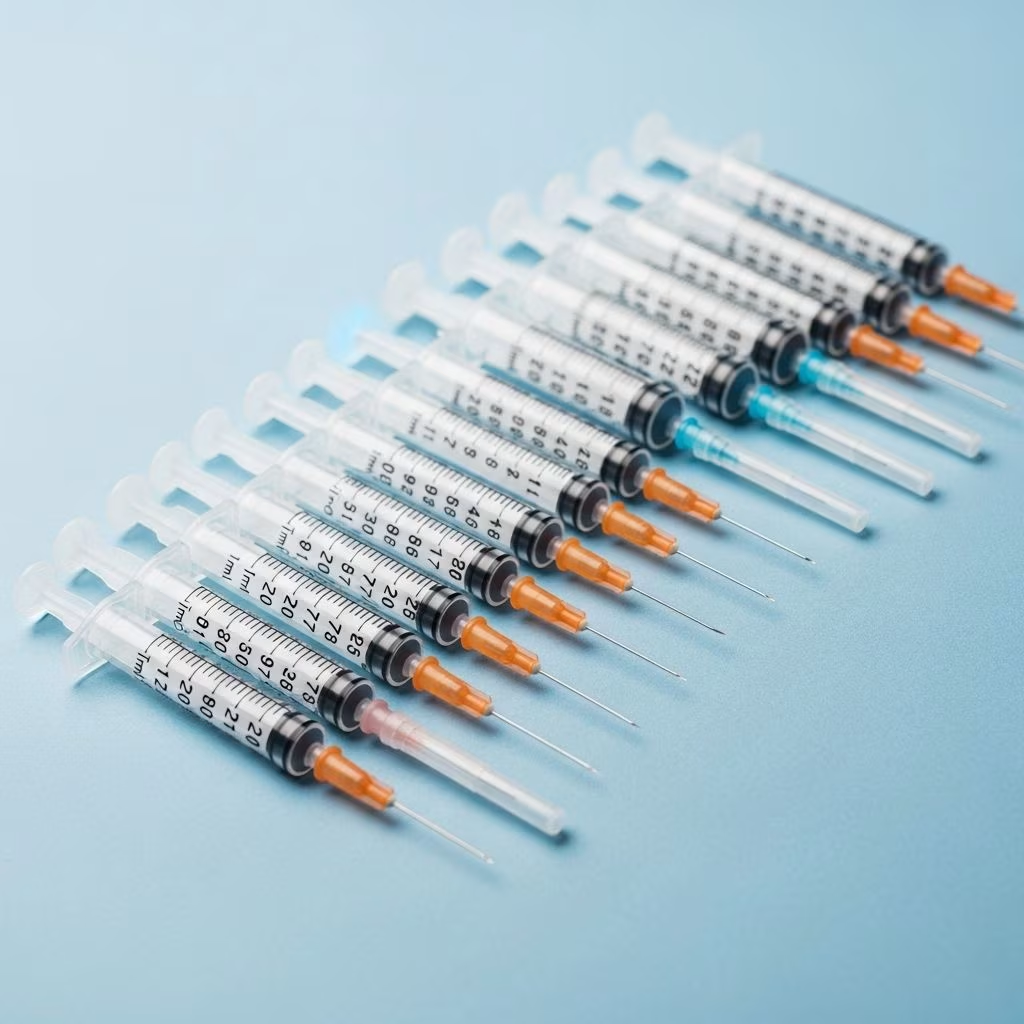
Insulin administration is fundamental to diabetes management, with syringe size and needle length playing a pivotal role in both efficacy and comfort. This guide provides an in-depth look at the various insulin syringe sizes, needle gauges and lengths, how to choose the appropriate equipment, and essential safety considerations for optimal diabetes care.
Understanding Insulin Syringes and Needles
Insulin syringes are designed to deliver measured doses of insulin directly into the subcutaneous tissue. Choosing the correct syringe and needle combination affects both dosing accuracy and injection comfort, making proper selection crucial for individuals managing diabetes.
Key Components of an Insulin Syringe
- Barrel: The cylindrical part that holds the insulin prior to injection. Marked with units for easy measurement.
- Needle: Thin and short compared to regular injection needles, minimizing discomfort and tissue trauma.
- Plunger: A rod that is pushed to deliver insulin or pulled to draw up fluid.
- Gasket: Rubber tip at one end of the plunger, ensuring a tight seal and smooth movement.
- Needle Cap: Protects the needle prior to use.
Types of Insulin Syringes
- Fixed Needle Syringes: Needle is permanently attached to the syringe, common sizes include 0.3 mL, 0.5 mL, and 1.0 mL.
This type often features a plunger cap for enhanced safety. - Detachable Needle Syringes: Needle can be removed or replaced, typically available in 0.5 mL and 1.0 mL sizes.
Sizes and Lengths of Insulin Syringes and Needles
Insulin syringes vary in both barrel capacity and needle length. Accurate matching to prescribed dosage and patient preference is vital for proper blood glucose control and injection comfort.
Barrel Sizes and Recommended Doses
- 0.3 mL Syringe: Designed for under 30 units of insulin. Numbered at 1-/2-unit or 1-unit intervals.
Ideal for children or persons needing very small doses. - 0.5 mL Syringe: Used for 30 to 50 units of insulin. Numbered at 1-unit intervals.
Suitable for moderate doses. - 1.0 mL Syringe: Holds more than 50 units of insulin. Numbered at 2-unit intervals.
Best for those who require larger insulin doses.
Needle Lengths and Gauges
Needles for insulin syringes are specifically designed to penetrate only the subcutaneous tissue, avoiding the muscle below. The choice of needle length and gauge depends on individual factors such as age, body composition, and comfort needs.
- Common Needle Lengths: Ranging from 4 mm (3/16 inch) to 12.7 mm (1/2 inch)
- Recommended Needle Sizes: Most guidelines favor 4 mm, 5 mm, or 6 mm for safety and comfort; occasionally, longer sizes may be needed in special scenarios.
- Common Needle Gauges: Thinner needles are indicated by higher gauge numbers. Typical gauges include 28, 29, 30, and 31; thinner needles (higher gauge) cause less pain and are easier to insert.
Insulin Syringe and Needle Size Chart
| Barrel Size (Fluid Volume) | Insulin Units | Needle Length | Needle Gauge |
|---|---|---|---|
| 0.3 mL | < 30 units | 3/16 inch (5 mm) | 28 |
| 0.5 mL | 30–50 units | 5/16 inch (8 mm) | 29, 30 |
| 1.0 mL | > 50 units | 1/2 inch (12.7 mm) | 31 |
Conversion Between Units, mL, and CC
- Syringes usually use mL or CC, but insulin syringes are measured in units.
- 1 mL (or 1 CC) = 100 units in an insulin syringe.
- To convert: Dosage (in mL) x 100 = units
Example: 1.5 mL x 100 = 150 units.
Choosing the Right Insulin Syringe and Needle Size
Selecting the appropriate insulin syringe and needle is crucial for accurate administration and minimizing discomfort. The choice should consider:
- Prescribed Dose: Matching barrel size with the recommended insulin units ensures precise administration.
- Age and Body Type: Children or lean adults often require shorter needles; higher body fat may require slightly longer needles, but most guidelines advise not exceeding 8 mm unless necessary.
- Needle Gauge: Thinner needles (higher gauge) are generally preferred for comfort and ease of insertion.
- Injection Technique: Correct technique minimizes risk of injecting insulin into muscle (which can alter absorption rate).
Expert Recommendations
- International Scientific Advisory Boards advise no medical reason to use a needle longer than 8 mm for most users.
- Shorter (4-6 mm) and thinner (higher gauge) needles are safer and preferred in studies for pain reduction and ease of use.
- Needle selection should always be individualized based on patient circumstances—such as size, age, and comfort preference.
Measuring Insulin Doses Using the Syringe
Proper measurement is the foundation of safe insulin administration. Insulin syringes provide clear markings for units, with interval lines for easy reading. Tips for accurate measurement:
- Check Markings: Confirm the syringe matches the required volume and unit count.
- In syringes:
– Every 0.01 mL = 1 unit
– 0.5 mL = 50 units - Read Dosage Carefully: Always use the same type of syringe as prescribed.
Safety Considerations and Best Practices
Using insulin syringes safely is essential to minimize risks, ensure proper absorption, and keep diabetes management on track. Consider the following best practices:
- Rotate Injection Sites: Prevents tissue damage and improves absorption.
- Use Needles Once: Re-use increases risk of pain, infection, and poor puncture.
- Dispose Properly: Use sharps containers to discard used needles and syringes safely.
- Store Correctly: Keep syringes sterile and avoid exposure to extreme temperatures.
- Follow Healthcare Guidance: Always use equipment recommended by care providers to match your individual needs.
Factors to Consider When Selecting Syringe Sizes
- Dosage Needs: Lower doses favor smaller barrel sizes for greater accuracy and less risk of overdose.
- Dexterity: People with limited hand dexterity may find larger syringes or detachable needles easier to handle.
- Patient Preference: Comfort and confidence lead to better adherence; studies show thinner, shorter needles are generally favored.
- Availability: Check what is accessible via pharmacy, insurance, or healthcare provider.
Frequently Asked Questions (FAQs)
Q: How do I know which insulin syringe size to choose?
A: Match your prescribed dose to the barrel size; 0.3 mL syringes are for under 30 units, 0.5 mL for 30–50 units, 1.0 mL for over 50 units.
Consult your healthcare provider for individualized advice.
Q: Are shorter needles safer than longer ones?
A: Yes. Shorter needles (4–6 mm) minimize the risk of injecting into muscle and are as effective for all body types, according to leading studies. Longer needles (>8 mm) are rarely needed and should only be used with medical guidance.
Q: What needle gauge is least painful?
A: Higher gauge numbers (29–31) correspond to thinner needles, which cause less pain and are easier to use for daily injections.
Q: Can I reuse insulin syringes or needles?
A: Reuse is not recommended due to increased risk of infection, tissue damage, and dulling of the needle, which can cause more pain.
Q: How can I convert units to mL or CC?
A: In insulin syringes, 1 mL = 1 CC = 100 units. Multiply mL needed by 100 to get unit dosage. Always follow provider instructions for accuracy.
Practical Tips for Comfortable Insulin Injections
- Warm the Insulin: Let refrigerated insulin reach room temperature to decrease stinging.
- Relax the Area: Gently massage the injection site before and after to minimize soreness.
- Inject Slowly: A controlled, steady movement helps reduce pain and tissue reaction.
- Change Needle Angle: For very thin persons, a 45-degree angle may be recommended; most people can use a 90-degree angle.
Insulin Syringe Selection: What to Discuss With Your Provider
- Dose Frequency: If you administer insulin more than once daily, comfort and ease of use become increasingly important.
- Body Type: For children, elderly, or very thin individuals, needle length should be assessed to avoid muscle penetration.
- Manual Dexterity: Individuals with arthritis or motor difficulties may require larger syringes for better grip.
- Personal Preferences: If a particular needle feels too painful or difficult to use, ask your provider about alternatives.
Summary Table: Syringe Sizes at a Glance
| Syringe mL Size | Insulin Units | Recommended For |
|---|---|---|
| 0.3 mL | Up to 30 | Small to moderate doses, children, precision needs |
| 0.5 mL | 30–50 | Standard adult doses |
| 1.0 mL | Above 50 | Large doses, adults requiring more insulin |
Conclusion
Selecting the right insulin syringe and needle size is vital to safe, comfortable, and effective diabetes management. Most people benefit from shorter and thinner needles, and the correct barrel size ensures accurate dosing. Always consult your healthcare provider before changing equipment, and prioritize safety in storage, disposal, and injection technique.
References
- https://www.healthline.com/health/diabetes/insulin-syringes-sizes
- https://hannspharmacy.com/how-to-measure-with-an-insulin-syringe/
- https://www.kmedhealth.com/what-is-the-insulin-syringe/
- https://www.mycomedical.com/post/insulin-syringe-needle-sizes
- https://www.medicalnewstoday.com/articles/insulin-syringe-sizes
- https://www.youtube.com/watch?v=_TnDr8cKums
- https://www.nphealthcarefoundation.org/media/filer_public/ef/e2/efe223b2-59eb-4dd2-9b39-407ab995e786/3_insulin_syringes.pdf
- https://www.health.state.mn.us/people/syringe/needleguage.pdf