


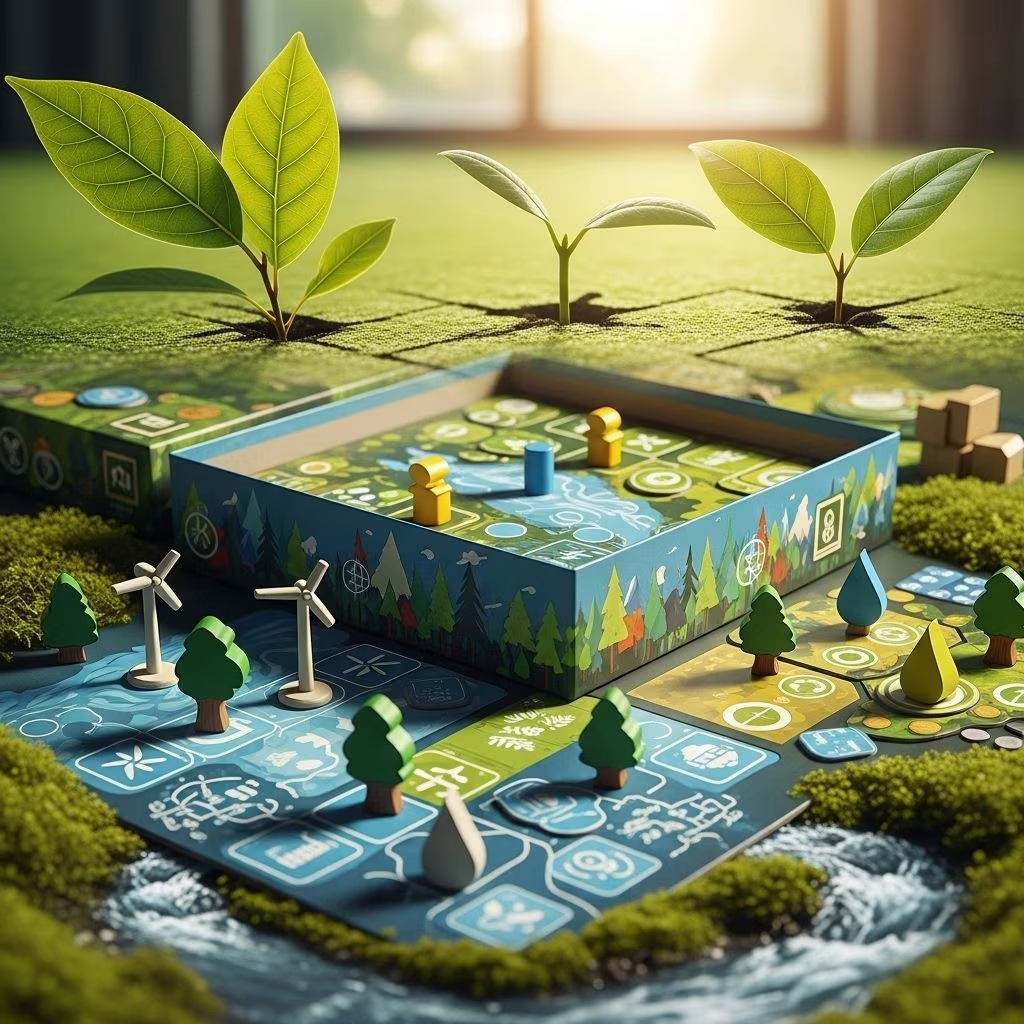
Playing Board Games for a Greener Future: Sustainability in Tabletop Gaming
Board games have long been sources of entertainment, social connection, and intellectual challenge. But in recent years, a new dimension has emerged: their role as catalysts for environmental awareness, sustainability education, and even real-world eco-friendly action. Board games and the broader tabletop industry are uniquely positioned to promote a greener future, both through the stories they tell and the way they’re manufactured and distributed. This article explores how gameplay can shape our connection to the natural world, and how the board game industry is evolving toward sustainable practices.
How Board Games Foster Environmental Awareness
At their core, many modern board games are more than just diversions—they also serve as tools for education and engagement. By immersing players in compelling storylines and challenging them with real-world inspired dilemmas, games can open eyes to ecological issues and even motivate sustainable behavior.
- Interactive Learning: Board games provide an accessible, playful means for people to learn about environmental challenges such as deforestation, ocean pollution, or climate change, all within a safe and engaging setting.
- Raising Awareness: Well-designed games can teach players about complex systems—how human activity affects the planet, or the ripple effects of choices both small and large.
- Fostering Empathy: Immersive storytelling and role-playing can help players see environmental issues from new perspectives, feeling the weight and urgency of ecological crises in a relatable way.
- Inspiring Action: Game mechanics can encourage players to take specific sustainability-inspired actions long after the game ends, building habits that align with real-world environmental stewardship.
For example, studies show that students exposed to environmental games are more likely to adopt pro-environmental attitudes and behaviors, understanding not only the interrelatedness of humans and nature, but also the value of eco-friendly actions.
The Rise of Environmental Games
Environmental—or eco-friendly—games represent a thriving branch of board gaming, specifically built around themes of conservation, sustainability, and environmental responsibility. These titles blur the lines between entertainment and education, merging fun with meaningful impact. Here’s how they’re making a difference:
- Increasing Environmental Literacy: By directly tackling ecological concepts, environmental games boost players’ understanding of nature, sustainability issues, and the consequences of different choices.
- Building Empathy for Nature: Players are asked to inhabit the roles of conservationists, scientists, or community leaders working to protect endangered species, foster renewable energy, or restore ecosystems, building a sense of responsibility and compassion.
- Promoting Collaboration: Many green games utilize cooperative mechanics, encouraging players to work together toward collective environmental goals—mirroring the real-world need for joint action.
- Inspiring Real-World Change: Through in-game choices that echo real-world dilemmas, these games challenge players to reflect on their personal impact and to carry new insights into their daily lives.
According to surveys, a significant majority of players—especially younger generations—believe that environmental games can teach them about sustainability and inspire them to get involved in environmental causes.
Popular Examples of Environmental Board Games
- Photosynthesis: Players plant and shape the ever-changing forest, competing to harness the sunlight while understanding the complexities of ecosystems and growth cycles.
- Wingspan: A bird-collecting strategy game that celebrates biodiversity and highlights the intricate connections within ecosystems.
- CO2: Second Chance: Players take the roles of energy companies navigating the powerful incentives and risks around fossil fuel dependency and renewable infrastructure, simulating real-world climate policy dilemmas.
- Evolution: Players adapt animal populations in changing environments, confronting issues like resource scarcity and the impacts of human activity on the food chain.
- Ecogon: Played with natural components, this game teaches about ecological interdependencies through hands-on, sustainable materials.
Sustainable Practices in Board Game Production
It’s not only the subject matter of board games that’s going green—the way games are designed, manufactured, and shipped is rapidly evolving to align with environmental best practices.
Eco-Friendly Materials
The board game industry relies heavily on paper, cardboard, and wooden components—materials that, when sourced responsibly, have a lower environmental impact than plastic or metal. However, not all paper and wood are created equal: the origins and certifications attached to these materials matter greatly.
- FSC Certification: The Forest Stewardship Council (FSC) label is an assurance that wood and paper products are sustainably sourced with zero deforestation, protection of endangered forests, fair labor practices, and respect for Indigenous rights. Games bearing this certification support robust ecological and social standards.
- Alternative Components: Some publishers have replaced traditional wooden or plastic pieces with innovative alternatives—dried beans, seeds, or even edible tokens—further minimizing environmental impact.
- Biodegradable Materials: New technologies are also being introduced, such as re-wood, a composite that combines wood waste with recycled binders to produce biodegradable board game bits that can serve as direct substitutes for conventional plastic components.
Reducing Carbon Emissions
Production and shipping contribute heavily to a game’s carbon footprint. Progressive publishers are experimenting with new methods to reduce these impacts:
- Local Manufacturing: Producing games closer to their final markets reduces the emissions associated with long-distance shipping. While some exceptions exist (e.g., factories powered by renewable energy), local sourcing typically leads to lower overall carbon costs.
- Renewable Energy: Factories using renewable power during production create fewer emissions compared to conventional manufacturing facilities.
- Carbon Offsetting: Some companies are investing in carbon offset projects—such as planting trees or supporting renewable initiatives—for every game produced, helping mitigate unavoidable emissions.
- Print-and-Play Formats: A growing number of designers are offering digital files for download so gamers can print their own materials at home, completely eliminating manufacturing and shipping emissions, though digital delivery also has energy costs.
- Hand Assembly: By assembling and packing games by hand, companies reduce the energy consumption associated with large-scale production.
The Green Games Guide and Industry Initiatives
A collaborative movement is underway among publishers, designers, and environmental advocates. Resources like the Green Games Guide have emerged to provide clear and actionable steps toward industry-wide sustainability, offering recommendations on:
- Choosing sustainable materials for components and packaging
- Optimizing box size and minimizing waste
- Encouraging eco-friendly shipping and fulfillment practices
- Building community support for sustainable options
Collectively, these efforts are helping make tabletop gaming part of the climate solution, not just a product of consumer culture.
Environmental Games: Bridging Virtual and Real-World Action
Many environmental board games go beyond play, encouraging meaningful real-life behavior change and even supporting tangible conservation efforts:
- Impactful Donations: Some environmental games direct a share of revenue toward conservation organizations or tree-planting projects, directly funding ecological restoration.
- Community Action: By simulating the need for collective effort—whether that’s cleaning up plastic waste, preserving habitats, or curbing carbon emissions—these games help players realize the power of coordinated action in the real world.
- Alternate Reality Gaming: Some designers incorporate real-world challenges and missions (sometimes using augmented reality), transforming cities and neighborhoods into arenas for collaborative environmental action.
- In-Game Incentives for Real-World Impact: Innovative titles link in-game progress with real-world metrics, such as games that plant a tree for a certain in-game achievement or completed campaign.
These trends highlight how gameplay can act as a catalyst, inspiring lasting changes for players and even broader circles.
Challenges and the Road Ahead
Despite promising developments, the road to fully sustainable board gaming is not without hurdles. Major challenges persist:
- Plastic Dependency: Many games, particularly in genres such as miniatures wargaming, still rely on plastic for durability and detail. Biodegradable alternatives are in development, but the transition is ongoing.
- Mass Production Realities: Large print runs, global shipping, and packaging waste remain obstacles for traditional publishers.
- Consumer Education: Players may not always understand the environmental costs of their favorite hobby, or may undervalue eco-friendly games in favor of more familiar options.
However, consumer demand for green products is on the rise, and the independent board game design community is pioneering change, proving that sustainability and fun are not mutually exclusive.
Board Games as a Platform for Environmental Advocacy
Board games are distinct from other forms of media in their ability to foster negotiation, debate, and collective problem solving. They create a space where people of all ages can experiment, make decisions, and see the outcomes play out in a low-risk environment. This makes them ideal tools for building ecological literacy and a sense of ecological stewardship.
Parents, educators, and activists are increasingly turning to tabletop games as a means to:
- Start conversations about climate change, habitat loss, and environmental justice
- Model real-life decision-making and resource management
- Foster collaboration and critical thinking skills
- Promote hope and agency, even in the face of complex, global issues
Building a Culture of Sustainability at the Game Table
Sustainability in gameplay isn’t just about the games we buy—it’s also about how we play and share them. Here are some tips for gamers looking to shrink their hobby’s footprint:
- Choose games made from sustainable or certified materials
- Support publishers with clear sustainability commitments
- Trade, donate, or sell games you no longer play to extend their life cycle
- Embrace print-and-play or digital versions when available
- Encourage local game nights to reduce travel and shipping needs
Every small action helps build momentum toward a greener industry and a more sustainable future for play.
Frequently Asked Questions (FAQs)
Q: How do board games enhance environmental awareness?
A: By simulating ecological systems and challenges, board games make complex issues accessible and relevant. They encourage players to see the consequences of actions and to empathize with the perspectives of conservationists, scientists, and other stakeholders.
Q: What certifications should I look for in eco-friendly board games?
A: The Forest Stewardship Council (FSC) certification is a key marker for responsibly sourced wood and paper. Look for recycling symbols, biodegradable materials, and information about renewable energy manufacturing on publisher websites or product packaging.
Q: Can board games really inspire real-world behavior change?
A: Yes. Effective games not only educate, but also motivate players to take action, such as reducing waste, supporting conservation projects, or adopting sustainable habits inspired by game scenarios.
Q: Are there ways to minimize my board gaming carbon footprint?
A: Consider buying locally made games, sharing or trading titles, supporting print-and-play releases, and prioritizing games with recognized sustainability certifications or visible eco-friendly practices.
Q: How is the board game industry responding to environmental challenges?
A: Leading publishers are transitioning to sustainable materials, offsetting carbon emissions, investing in renewable energy, and creating guides and programs to promote industry-wide change. Consumer pressure and grassroots designer innovation are pivotal drivers of progress.


