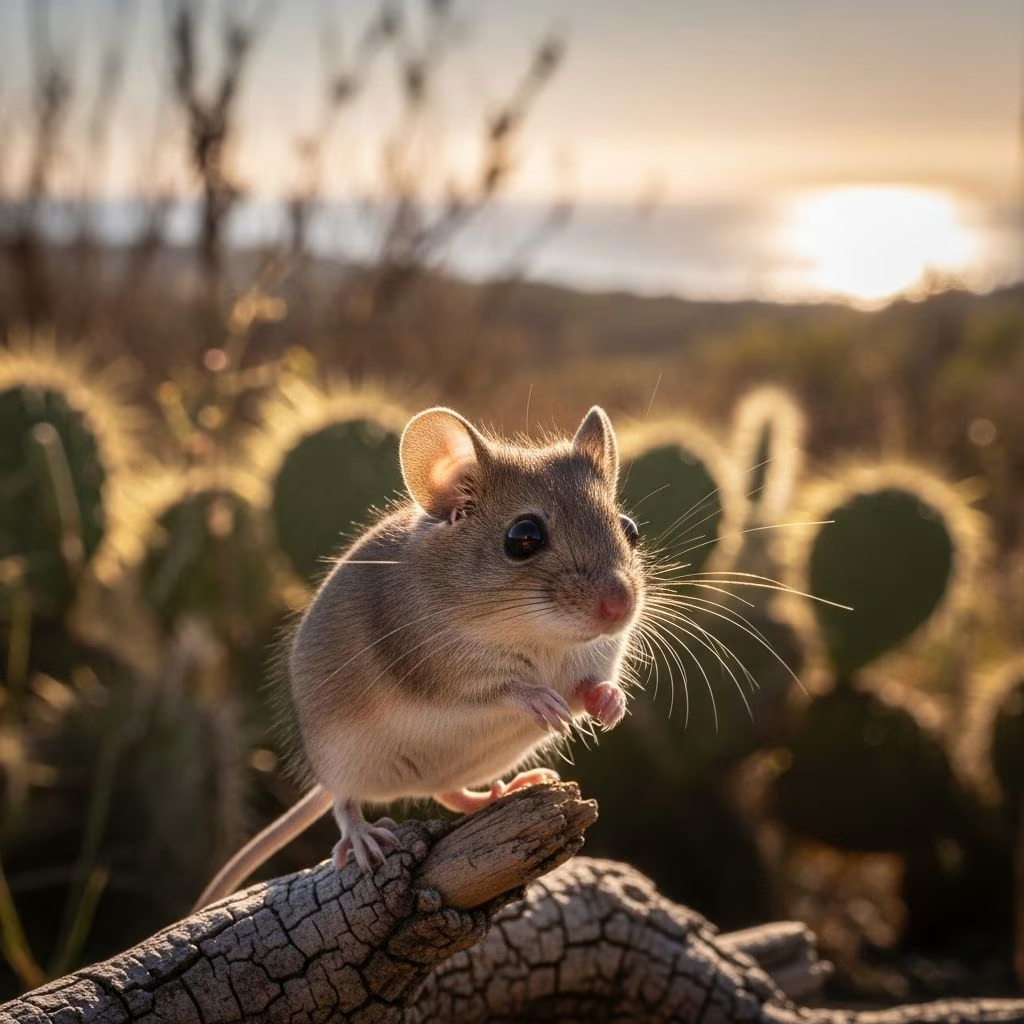
Pat the Pacific pocket mouse has achieved a unique milestone: certified by Guinness World Records as the oldest living mouse in human care. Behind this diminutive record-holder lies a compelling story of endangered species recovery, scientific innovation, and a dedicated conservation effort that has brought new hope to one of North America’s smallest and most overlooked mammals.
Breaking Records: Pat’s Historic Achievement
Born on July 14, 2013, at the San Diego Zoo Safari Park, Pat is the face of a unique conservation story. At the age of 9 years and 209 days, he earned the Guinness World Records title as the oldest living mouse in human care, smashing previous expectations for his species’ longevity both in the wild and in captivity. The title is not only a testament to Pat’s resilience but also to the world-class animal care and scientific management he received from the San Diego Zoo Wildlife Alliance.
- Pat’s age: 9 years, more than double the average Pacific pocket mouse lifespan in managed care, and nearly triple that in the wild.
- Ceremony: Guinness World Records representatives attended a recognition event at the park, joined by conservationists and regional partners.
- Namesake: Pat is named for acclaimed actor Sir Patrick Stewart, bringing a touch of celebrity cheer to the event.
This acknowledgement not only celebrates Pat but also highlights the often overlooked but ecologically crucial role of small, non-charismatic species like the Pacific pocket mouse.
Who Are Pacific Pocket Mice?
Pacific pocket mice (Perognathus longimembris pacificus) are the tiniest mice in North America, weighing around the same as three pennies. Their bodies are roughly the size of a human thumbprint, not including their long tails. Their name originates from small fur-lined lateral cheek pouches—literally “pockets”—used to transport seeds and nesting material.
- Habitat: Native to coastal scrublands, sandy dunes, and riverbanks within approximately two miles of the Southern California coast.
- Range: Historically extended from Los Angeles south to the Tijuana River Valley.
- Ecological function: Important seed dispersers and soil aerators due to their burrowing and caching activities.
Despite their small size, Pacific pocket mice significantly contribute to shaping their local ecosystems, supporting plant diversity and healthy soil structure.
From Near Extinction to Rediscovery
The story of the Pacific pocket mouse is one of both dramatic decline and hopeful resurgence. Due to extensive habitat loss—mainly from urban expansion and land development—this species saw catastrophic drops in population beyond the 1930s. By 1932, the species was presumed extinct after failing to appear for nearly 60 years.
- Rediscovery: In 1993, a tiny surviving population of Pacific pocket mice was found at Dana Point headlands in Orange County, California, shocking many who believed the species lost forever.
- Current Status: Only three isolated and fragile populations remain, separated by large urbanized distances.
This rediscovery spurred a renewed commitment from conservation organizations and government partners to halt the mouse’s slide into oblivion.
The Conservation Breeding Program: Saving a Species
Recognizing the grave risk of extinction, the San Diego Zoo Wildlife Alliance launched a targeted conservation breeding and reintroduction program in 2012. With partnerships that include the U.S. Fish and Wildlife Service, the California Department of Fish and Wildlife, and Orange County Parks, the program has achieved several major milestones:
- Carefully managed captive breeding to maintain and maximize genetic diversity.
- Science-based approach integrating behavioral, ecological, and genetic research.
- Wild reintroduction at new and historical sites, resulting in new self-sustaining subpopulations.
- Detailed health and genetic monitoring of every individual, including Pat, to ensure robust populations and prepare for successful releases.
The program’s ultimate goal is to return healthy, genetically diverse mice to their native habitats so they can thrive without human support.
Record-Breaking Breeding Success
In 2022, the breeding program marked new highs:
- Historical earliest recorded breeding season.
- 31 litters and 117 pups produced during the spring and summer—more than any previous year.
- Successful wild reintroductions, with some mice now breeding independently in the wild.
These results provide hope not just for the Pacific pocket mouse, but demonstrate effective strategies that may be applied to other endangered small mammals facing similar threats.
Why Small Mammals Matter: Ecological Importance and the “Overlooked” Factor
Pat’s Guinness World Record brought worldwide attention not only to his longevity but to the broader issue of the “overlooked” species—animals that, because of their subtlety or size, rarely capture public attention but are foundational to ecosystem health.
According to conservation leaders:
- Small mammals like pocket mice disperse seeds that regenerate plant communities.
- Their burrowing activity aerates soil and increases water infiltration, benefiting both flora and fauna.
- They serve as prey for a variety of predators, sustaining food webs.
Despite their critical roles, species such as the Pacific pocket mouse rarely become “flagships” for conservation appeal, which makes wins like Pat’s record especially important for raising awareness and support.
Challenges Remaining: Threats and Conservation Strategies
Even with groundbreaking successes, Pacific pocket mice face ongoing threats:
- Habitat Fragmentation: Urban barriers continue to isolate populations, limiting gene flow.
- Habitat Degradation: Invasive plants, altered fire regimes, and pollution reduce the quality of available environments.
- Climate Change: Changes in rainfall, temperature, and coastal weather may alter essential habitat features.
To counterbalance these risks, conservationists use advancing science to inform every stage of their work, from genetic assessments to habitat restoration and rewilding efforts.
Life in Care vs. Life in the Wild
| Aspect | In Human Care | In the Wild |
|---|---|---|
| Average Lifespan | Up to 4–5 years (Pat exceeded at over 9 years) | 2–3 years |
| Mortality Threats | Minimized (medical care, regular monitoring) | Predators, extreme weather, habitat loss |
| Diet | Specialized and regularly provided | Natural seeds and plants, variable based on season |
| Reproduction | Managed for optimal genetic diversity | Limited by habitat conditions and fragmentation |
The Human Element: Dedicated Teams and Ongoing Research
Pat’s story is also one of scientific dedication and teamwork. Teams of veterinarians, animal care specialists, and conservation biologists have worked over a decade to recover Pacific pocket mouse populations. They:
- Monitor every aspect of mice health and welfare, from diet to social structures.
- Study microbiome, physiology, and behavior to refine best care and eventual reintroduction protocols.
- Partner with local and federal agencies, as well as community volunteers, to restore habitats and educate the public.
Conservation scientists are also learning from the program to improve management of genetic diversity in wild populations, helping to future-proof not only pocket mice but also other imperiled small mammals and similar species.
From Record Holder to Conservation Ambassador
Pat’s place in history as the world’s oldest pocket mouse in care is more than just a number—it’s a means to ignite public curiosity and empathy for creatures living on the edge. His story brings into focus:
- The extraordinary measures required to prevent extinction for species most at risk.
- The importance of pushing past “charisma bias” in conservation—recognizing ecological value in every creature, regardless of size.
- A message of hope: with sustained commitment and science-driven strategies, even the most imperiled species can recover.
Frequently Asked Questions (FAQs)
Q: Why is Pat’s age such an achievement?
A: Pat lived over nine years—nearly triple the wild lifespan of a Pacific pocket mouse. His longevity is a testament to excellent care, scientific management, and offers a powerful symbol for conservation champions working to save even the smallest and most vulnerable species.
Q: What makes Pacific pocket mice endangered?
A: The Pacific pocket mouse is endangered due to drastic habitat loss and fragmentation from urbanization, continued pressures from development, and the isolation of small populations that can lead to inbreeding and reduced resilience.
Q: How do Pacific pocket mice help the environment?
A: These mice are keystone seed dispersers—they transport and cache seeds, aiding native plant communities. Their burrowing also improves soil health, supporting a variety of other life forms.
Q: Can Pacific pocket mice be seen by the public at the zoo?
A: Generally, Pacific pocket mice in conservation programs are not on public display, as stress and environmental control are closely managed for their health and breeding success.
Q: What’s next for Pacific pocket mouse conservation?
A: Scientists continue to refine breeding and reintroduction techniques, restore habitats, and conduct research on genetics, with the aim of increasing population numbers and stability, and ultimately seeing the species thrive without ongoing human intervention.
How You Can Help
Experts emphasize that even individuals and local communities can contribute to small mammal conservation by:
- Supporting conservation organizations and local wildlife programs.
- Raising awareness about the importance of even the tiniest species.
- Practicing habitat-friendly landscaping and advocating for native plant restoration in urban and suburban areas.
References and Acknowledgments
This article synthesizes information from the San Diego Zoo Wildlife Alliance, Guinness World Records, and the broader scientific literature on Pacific pocket mouse biology and conservation achievements. The work of Dr. Debra Shier and her teams, as well as countless agency and community partners, comes to life through the story of Pat and the ongoing effort to ensure a future for small but mighty species everywhere.
References
- https://sandiegozoowildlifealliance.org/pr/PPMWorldRecord
- https://sandiegozoowildlifealliance.org/story-hub/2023/02/21/tiny-mouse-big-deal
- https://www.latimes.com/california/story/2023-02-09/the-worlds-oldest-mouse-its-at-safari-park-and-now-a-guinness-world-record
- https://www.dvm360.com/view/endangered-mouse-receives-guinness-world-record-for-oldest-living-mouse-in-human-care