Is Uncertainty Now Our Friend in the Climate Fight?
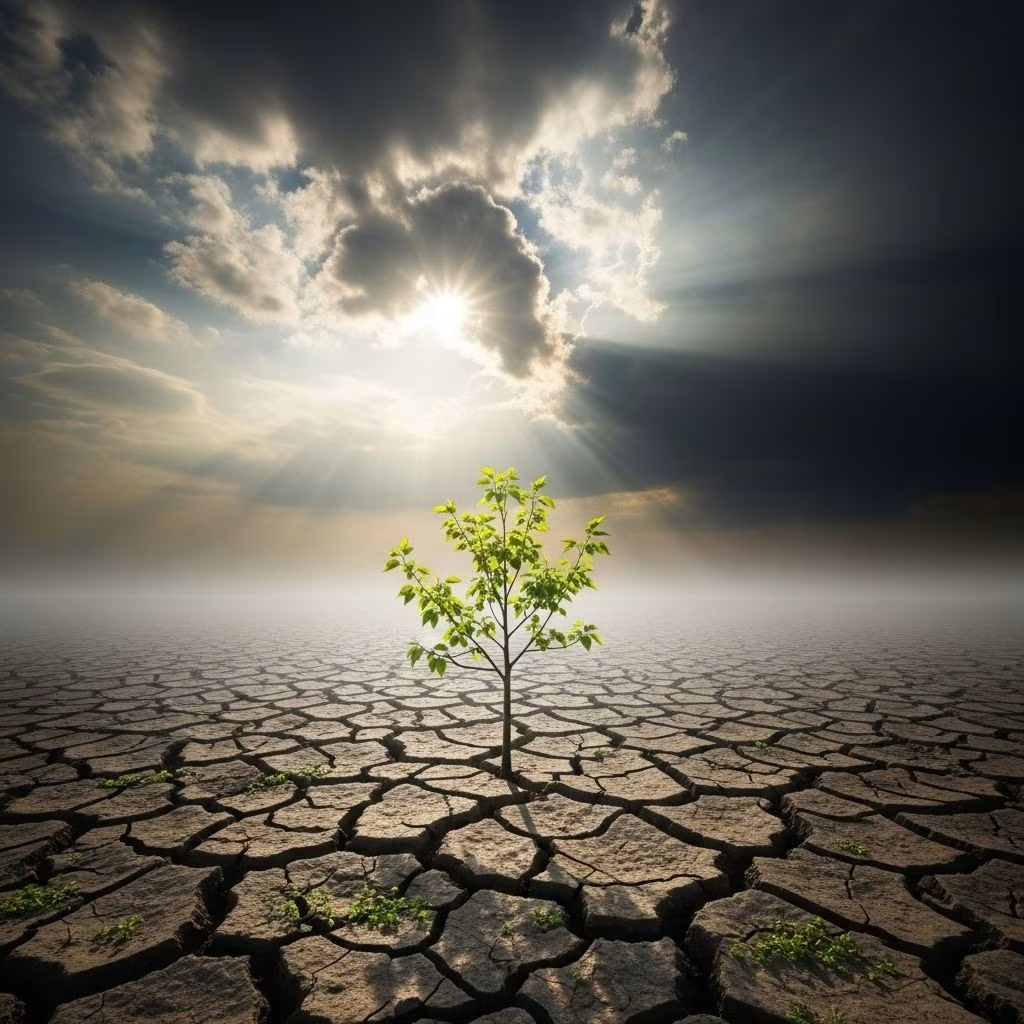
The fight against climate change is defined by unknowns. Despite advances in climate science, the proliferation of models, and growing investments in adaptation, uncertainty remains a constant presence in policy, planning, and personal action. But what if, instead of being a hindrance, this uncertainty could be reimagined as a strategic ally? Could a shift in perspective enable faster, more adaptive, and innovative responses to a rapidly warming planet?
Unpacking Uncertainty: Barrier or Opportunity?
Climate science is both powerful and imperfect. The latest assessments from the Intergovernmental Panel on Climate Change (IPCC) and various adaptation initiatives make it clear: while we can confidently predict rising temperatures, sea level increases, and more frequent extreme weather events, the precise timing, magnitude, and local impacts remain inherently uncertain.
This uncertainty shows up in many ways, including:
- Regional climate variability: Changes in rainfall and temperature vary widely even across small geographic areas.
- Socioeconomic unknowns: Economic growth, population movements, and technological breakthroughs all influence climate outcomes.
- Policy ambiguity: The effectiveness of current and future climate policies, as well as the political will to enforce them, is not easily forecasted.
Traditionally, uncertainty has been viewed as something to be minimized through more research or better prediction. In this model, policymakers and planners strive for certainty before making big investments or commitments. However, as impacts outpace projections and surprises become more frequent, there is a growing movement to rethink the role of uncertainty itself.
The Case for Embracing Uncertainty
Reframing uncertainty as a resource, rather than an enemy, opens up new possibilities for climate action. Scientists, urban planners, climate advocates, and decision-makers are increasingly recognizing that waiting for perfect clarity can result in harmful delays, while acting in the face of uncertainty can drive creativity and preparedness.
Key arguments for this paradigm shift include:
- Accelerating adaptation: Actions such as nature-based solutions, flexible infrastructure design, and adaptive governance allow communities to adjust as new information emerges.
- Enabling innovation: Uncertainty often fosters experimentation and pilots, encouraging out-of-the-box solutions that may outperform traditional approaches.
- Resilience instead of prediction: Building physical and social systems that thrive under a range of futures makes societies less vulnerable to surprises.
The Rigid Plan Pitfall
Conventional climate strategies often rely on detailed long-term plans and cost-benefit analyses that favor certainty. When the parameter shifts – a storm is worse than expected, a drought lasts longer than predicted, or global action falters – these plans can fail dramatically. Learning to operate in uncertainty means designing policies, infrastructure, and communities that can flex and adapt.
Lessons from Nature: Adaptation through Uncertainty
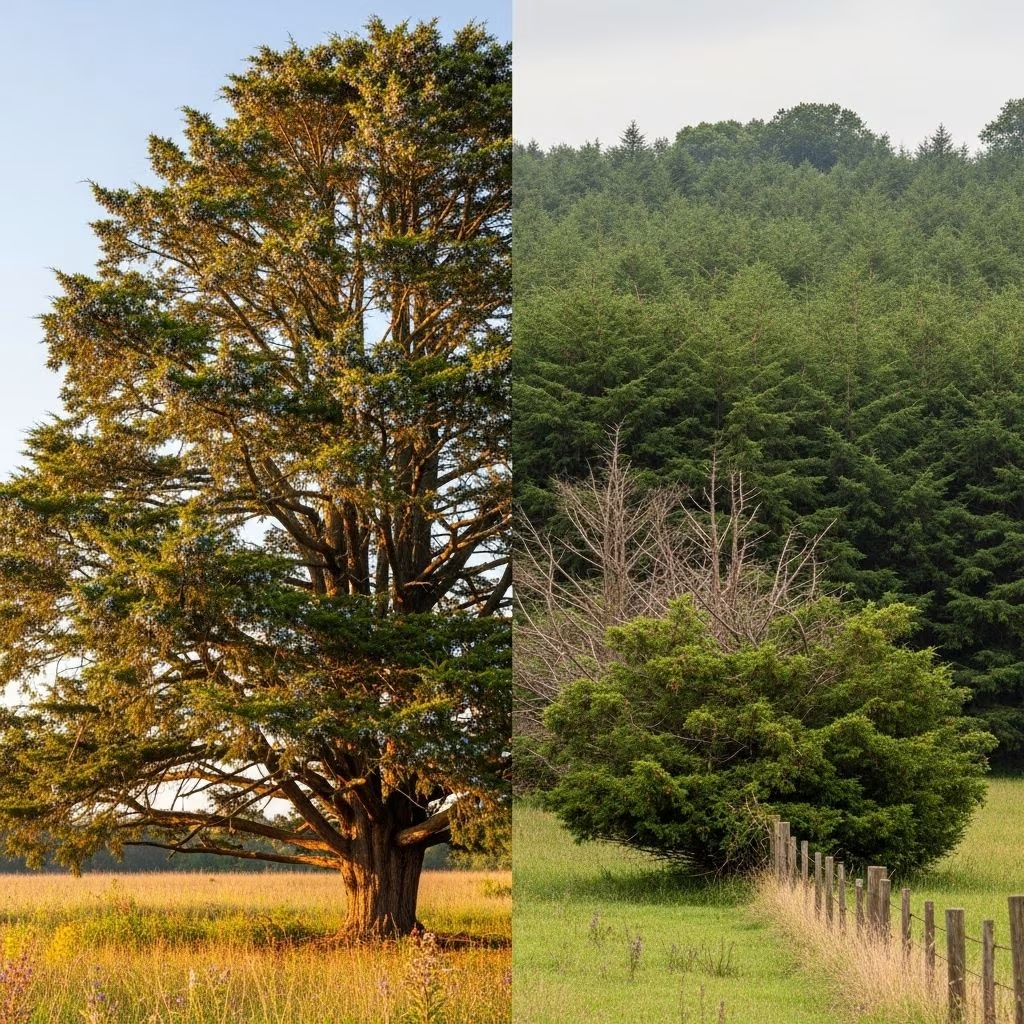
Ecological systems demonstrate how thriving amid uncertainty is not only possible but natural. Species and ecosystems have evolved to be robust under unpredictable conditions through traits like diversity, redundancy, and feedback sensitivity. Modern climate adaptation can take inspiration from these biological strategies:
- Diversity: Encouraging a wide range of solutions (e.g., multiple crop types, energy sources, or water strategies) so that not all are vulnerable to the same risks.
- Redundancy: Building backup systems and overlapping capabilities so that failures do not cascade.
- Feedback loops: Monitoring and quickly responding to changing conditions to minimize negative impacts and seize emerging opportunities.
For example, some coastal cities are focusing on multipurpose green spaces that can provide recreation in normal times and absorb floodwaters in storms, rather than relying solely on static sea walls whose specifications could be rendered obsolete by unexpected sea level changes.
Adaptive Governance and Flexible Planning
Adaptation is not just a matter of physical infrastructure; it requires flexible governance that can change direction as new information emerges. Some principles and practices leading this shift include:
- Iterative risk management: Regularly updating plans, funding streams, and priorities in response to the latest knowledge.
- Scenario planning: Exploring a wide range of possible futures rather than betting on a single outcome.
- Participatory decision-making: Engaging communities to make processes transparent, responsive, and locally relevant.
- Policy experimentation: Testing policies or approaches on a small scale before broader implementation, allowing failure and rapid course correction.
From Delay to Action: Overcoming Paralysis by Analysis
One of the greatest risks of over-emphasizing uncertainty is political and social paralysis—inaction justified by the need for more data. However, the cost of delay is steep. As climate impacts accelerate and compound, the margin for error shrinks. Many experts argue that “no regrets” actions—steps that are likely to be beneficial regardless of how the future unfolds—offer a way forward amid uncertainty.
- Energy efficiency: Saving energy delivers climate, economic, and health gains in almost every scenario.
- Restoring ecosystems: Healthy forests, wetlands, and grasslands store carbon, buffer floods, and support biodiversity, paying dividends under a broad spectrum of climate outcomes.
- Risk reduction basics: Early warning systems, emergency planning, and infrastructure maintenance mitigate potential harm without requiring perfect foresight.
The question shifts from “How likely is a high-impact event?” to “How vulnerable are we if it happens?” and “How can we make ourselves less exposed, whatever comes?”
The Social Dimension: Navigating Uncertainty Together
Uncertainty is not just scientific; it is psychological and social. People’s sense of uncertainty can lead to anxiety, denial, resistance, or sometimes collective resolve. A productive approach needs to focus on building trust, transparency, and collaboration so that communities can respond creatively and cohesively.
- Communication: Honest conversations about what is known, what is not, and what is at stake form the backbone of engaged citizenry.
- Education: Empowering people with skills to assess and respond to uncertainties increases adaptive capacity across sectors.
- Equity and justice: Vulnerable populations are often at greater risk from both climate impacts and uncertainty itself. Fair, inclusive adaptation strategies are essential.
Case Studies: Innovation Born of Uncertainty
Across the world, uncertainty is driving transformative climate responses. A few notable examples include:
- Rotterdam, Netherlands: Adopting a “Room for the River” approach, the city converted flood-prone neighborhoods into green infrastructure, creating multifunctional spaces that adjust to varying conditions.
- Indigenous adaptation in the Arctic: Communities confront unprecedented shifts in ice, wildlife, and weather by maintaining flexible livelihoods and intergenerational knowledge-sharing rather than clinging to static assumptions.
- Australian bushfire response: Policy moved from rigid fire suppression to dynamic, landscape-wide management that integrates traditional burning, adaptive zoning, and responsive emergency services.
Uncertainty in the Policy Arena
Governments and international bodies wrestle with the role of uncertainty in everything from emissions targets to adaptation funding. Traditionally, critics of climate action have weaponized uncertainty to block or delay policy. Increasingly, however, cities, states, and corporations are setting “adaptive pathways”—strategies with built-in points of review and adjustment, explicitly recognizing uncertainty as ongoing rather than temporary.
| Traditional Approach | Uncertainty-Embracing Approach |
|---|---|
| Wait for certainty before acting | Act now, adjust as more is learned |
| One optimal solution | Multiple plausible pathways |
| Rigid regulatory timelines | Flexible triggers and reviews |
| Top-down control | Inclusive, participatory governance |
Frequently Asked Questions (FAQs)
Q: How does uncertainty impact climate action?
A: Uncertainty can cause delays if policymakers wait for perfect information, but embracing it can encourage resilience, innovation, and sustained adaptation.
Q: What is an adaptive pathway in climate planning?
A: Adaptive pathways are flexible strategies that include regular review points and the ability to change direction in response to new information or situations.
Q: Why is uncertainty unavoidable in climate science?
A: Variability in natural systems, the unpredictability of human society, and limits on scientific forecasting all contribute to unavoidable uncertainty.
Q: What is a ‘no regrets’ climate action?
A: No regrets actions provide benefits regardless of which climate scenario unfolds, such as energy efficiency or ecosystem restoration.
Q: Does uncertainty mean we should delay climate investments?
A: No. Strategic, flexible action is increasingly important as impacts worsen. Timely, adaptive investments are more valuable than ever.
Conclusion: Making Uncertainty an Ally
In the climate fight, uncertainty is an inescapable reality. But by recognizing it as an opportunity—fuel for creativity, adaptability, and resilience—we can move forward more rapidly, inclusively, and effectively. The future will not be engineered through perfect forecasts but shaped by our willingness to innovate, collaborate, and adapt in the face of the unknown. Uncertainty, once a foe, may now be a vital friend in the effort to secure a livable planet.