What Is ENERGY STAR?
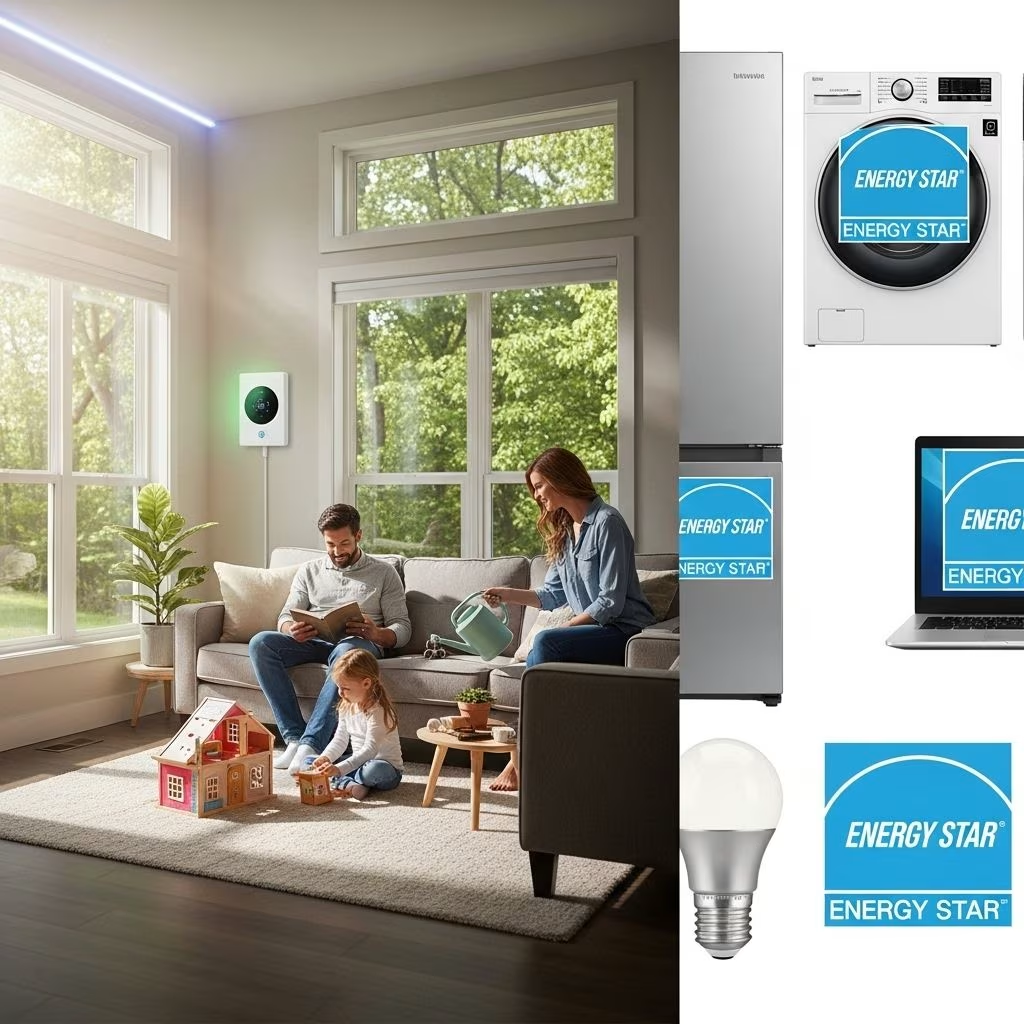
ENERGY STAR is a government-backed symbol for energy efficiency recognized across the United States and internationally. Since its inception in 1992, the program has played a pivotal role in guiding consumers, businesses, and industries toward products and practices that use less energy, save money, and reduce environmental impact. Displayed as a blue label, ENERGY STAR certifies the top-performing, cost-effective products, homes, and buildings in energy use and environmental protection.
Origin and Administration of ENERGY STAR
The ENERGY STAR program was founded by the U.S. Environmental Protection Agency (EPA) in partnership with the Department of Energy (DOE). Its roots trace back to the EPA’s Green Lights Program of the early 1990s, which encouraged organizations to upgrade lighting systems for greater efficiency. This initiative laid the groundwork for ENERGY STAR, evolving to cover over 75 product categories today, from appliances and electronics to commercial equipment.
- Managed by: EPA and DOE
- Supported by: Businesses, utilities, manufacturers, retailers, and millions of households
How Does ENERGY STAR Work?
ENERGY STAR establishes energy efficiency specifications for products and buildings. Independent testing confirms whether products meet or exceed these rigorous standards. Those that qualify earn the ENERGY STAR label, helping consumers identify the most energy-efficient options. The program is voluntary but widely adopted, driving market transformation toward sustainability.
Major Program Elements
- ENERGY STAR Products Program: Sets specifications, testing procedures, and verification for consumer appliances, electronics, and commercial equipment.
- Home Performance with ENERGY STAR: Promotes energy-efficient home retrofits through outreach and trusted research.
- ENERGY STAR Commercial Building Energy Asset Score: Provides rating for building energy performance and guidance for improvement.
What Does the ENERGY STAR Label Mean?
Products and buildings featuring the ENERGY STAR label have met strict guidelines for energy use, often performing well above similar non-certified models. The label is a credible, unbiased signal for energy savings, guiding smarter consumer choices.
| ENERGY STAR Feature | What It Means |
|---|---|
| Certified Product | Tested to use less energy while delivering equal or superior performance |
| Building / Home | Uses advanced design and construction to maximize efficiency and comfort |
| Portfolio Manager | Tracks water, waste, and energy use for ongoing improvement |
Which Products Are ENERGY STAR Certified?
ENERGY STAR certification covers a broad and expanding range of products. The program continuously updates categories to reflect technological advancements and market needs.
- Appliances (Refrigerators, washing machines, dishwashers)
- Electronics (Computers, monitors, TVs)
- Lighting (LED bulbs, fixtures)
- Heating and Cooling (HVAC systems, thermostats)
- Commercial Equipment (Food service, water heaters, data centers)
- Building Materials (Windows, insulation)
Consumers can rely on the label when shopping for everyday products—from kitchen appliances to office electronics and smart home devices. Over 300 million ENERGY STAR products were purchased in 2019 alone, with more than two-thirds of U.S. households making an ENERGY STAR purchase that year.
Spotlight: ENERGY STAR “Most Efficient”
In recent years, ENERGY STAR introduced the “Most Efficient” designation for exemplary products that blaze the trail in energy savings within their category. This helps consumers find the very highest performing options.
The Benefits of ENERGY STAR
The impact of the ENERGY STAR program extends across economic, environmental, and public health dimensions. These results are measurable and significant—creating a win-win for consumers and the planet.
- Saves Money: Americans have saved over $500 billion on energy bills since the program’s inception.
- Cuts Pollution: Avoids 4 billion metric tons of greenhouse gas emissions, equivalent to taking 100 coal plants offline for a year.
- Improves Air Quality: Fewer fossil fuels burned means less nitrogen oxides, particulate matter, and smog—directly benefiting respiratory and cardiac health.
- Boosts Public Health: Lower pollution leads to fewer asthma attacks, respiratory illnesses, and heart disease—especially in communities near power plants or major highways.
- Powers the Economy: Supports more than 800,000 jobs in manufacturing and installation, with a market value of ENERGY STAR products exceeding $100 billion annually.
By the Numbers
- 5 trillion kilowatt-hours of electricity saved (since 1992)
- $39 billion saved on energy costs annually
- More than 4 billion metric tons of greenhouse gas emissions avoided
- 90%+ national brand recognition for the ENERGY STAR label
Why ENERGY STAR Matters More Than Ever
As global concerns about climate change and energy use intensify, the ENERGY STAR program delivers scalable solutions for households, businesses, and communities. It has become one of the most successful voluntary initiatives by the U.S. government and a model for similar international programs. In 2022 alone, ENERGY STAR actions prevented 400 million metric tons of carbon pollution.
ENERGY STAR’s Growing Role and Initiatives
Over the years, the ENERGY STAR program has continually evolved to address changing technologies, market realities, and consumer needs. Its mission encompasses:
- Expanding Product Categories: Now includes data centers, commercial water heaters, and electric vehicle chargers.
- Updating Standards: Regularly revises requirements for over 80 product categories to maintain leadership in efficiency.
- Tracking More Than Energy: Portfolio Manager now follows water, waste, and materials usage for holistic management.
- National Call to Action: Initiatives like replacing 300 million light bulbs.
- Tenant Recognition: Recognizes energy-efficient commercial tenant spaces.
- Partnerships: Engages 40% of Fortune 500 companies and thousands of organizations for mass impact.
How to Find ENERGY STAR-Certified Products and Buildings
Consumers can find ENERGY STAR labels at major retailers, online stores, and with utility companies offering incentives. The program’s official website provides searchable databases for products, homes, and commercial buildings that meet the certification standards.
- Look for the blue ENERGY STAR label when shopping.
- Consult retailer guides for energy-efficient models.
- Check ENERGY STAR’s online search tool for certified products and rebates.
- Review building scores for commercial properties and multifamily housing.
ENERGY STAR and Tax Incentives
Various federal, state, and local governments offer tax incentives for ENERGY STAR purchases, upgrades, and home/building retrofits. These incentives increase affordability and further encourage smart energy choices.
ENERGY STAR Around the World
While ENERGY STAR originated in the U.S., elements of the program and label have been adopted in Canada, Japan, Switzerland, and formerly the European Union. It serves as a global model for credible, transparent energy efficiency standards and consumer labeling.
Frequently Asked Questions (FAQs)
Q: Does ENERGY STAR guarantee savings for every product?
A: ENERGY STAR ensures products meet stringent energy efficiency criteria. Actual savings depend on usage patterns, local utility rates, and previous product performance.
Q: What’s the difference between ENERGY STAR and EnergyGuide labels?
A: ENERGY STAR certifies products meeting high efficiency standards. The EnergyGuide label estimates annual energy use and operating cost, helping consumers compare products side-by-side. Many appliances bear both labels.
Q: How is the ENERGY STAR label awarded?
A: Manufacturers submit products for independent laboratory testing. Only products meeting or exceeding EPA-defined standards qualify for the label.
Q: Can buildings and homes be ENERGY STAR certified?
A: Yes. Newly constructed homes and commercial buildings, as well as retrofitted existing properties, may earn certification by meeting advanced efficiency standards in design, construction, and operation.
Q: What happens if ENERGY STAR funding is reduced or eliminated?
A: Cutting ENERGY STAR would risk significant setbacks in energy cost reduction, public health improvement, and climate action. The program’s benefits far exceed its modest budget, providing hundreds of dollars in savings for each dollar invested.
Why Choose ENERGY STAR?
- Save money on utility bills through lower energy use.
- Reduce your household or business’s carbon footprint.
- Improve indoor air quality and health outcomes.
- Support U.S. jobs and innovation in green technology.
- Join a movement for a cleaner, healthier, and more sustainable future.
Energy-Efficient Living Starts with ENERGY STAR
The ENERGY STAR label signals wise choices for your wallet, health, and world. Whether shopping for new appliances, improving your home, or managing a commercial property, ENERGY STAR is a powerful ally in building a greener life. Its trusted, science-backed standards and broad reach make it foundational to sustainable living for millions.
Steps for Consumers
- Learn about ENERGY STAR when selecting products and services.
- Ask about ENERGY STAR certification with contractors or building managers.
- Explore local incentives to offset costs of upgrades.
- Use ENERGY STAR’s online resources for tips on maximizing efficiency.
Related Resources
- ENERGY STAR official website – product & rebate finder
- EPA and DOE appliance standards portal
- Local utility energy efficiency programs
- Home retrofit guides and commercial building rating tools
Final Thoughts
ENERGY STAR is more than a symbol—it’s a nationwide commitment to saving energy, saving money, and saving our environment. Making ENERGY STAR the standard for your purchases and renovations puts you on the path toward healthier, cost-effective, and sustainable living.
References
- https://www.lung.org/blog/energy-star-program
- https://www.energy.gov/eere/buildings/energy-starr
- https://en.wikipedia.org/wiki/Energy_Star
- https://www.ase.org/category/appropriations/energy-star-facts
- https://www.energystar.gov/about
- https://www.epa.gov/newsreleases/us-epas-energy-star-program-launches-new-resources-help-americans-make-energy
- https://www.energystar.gov
- https://www.energystar.gov/saveathome/improvements/benefits