


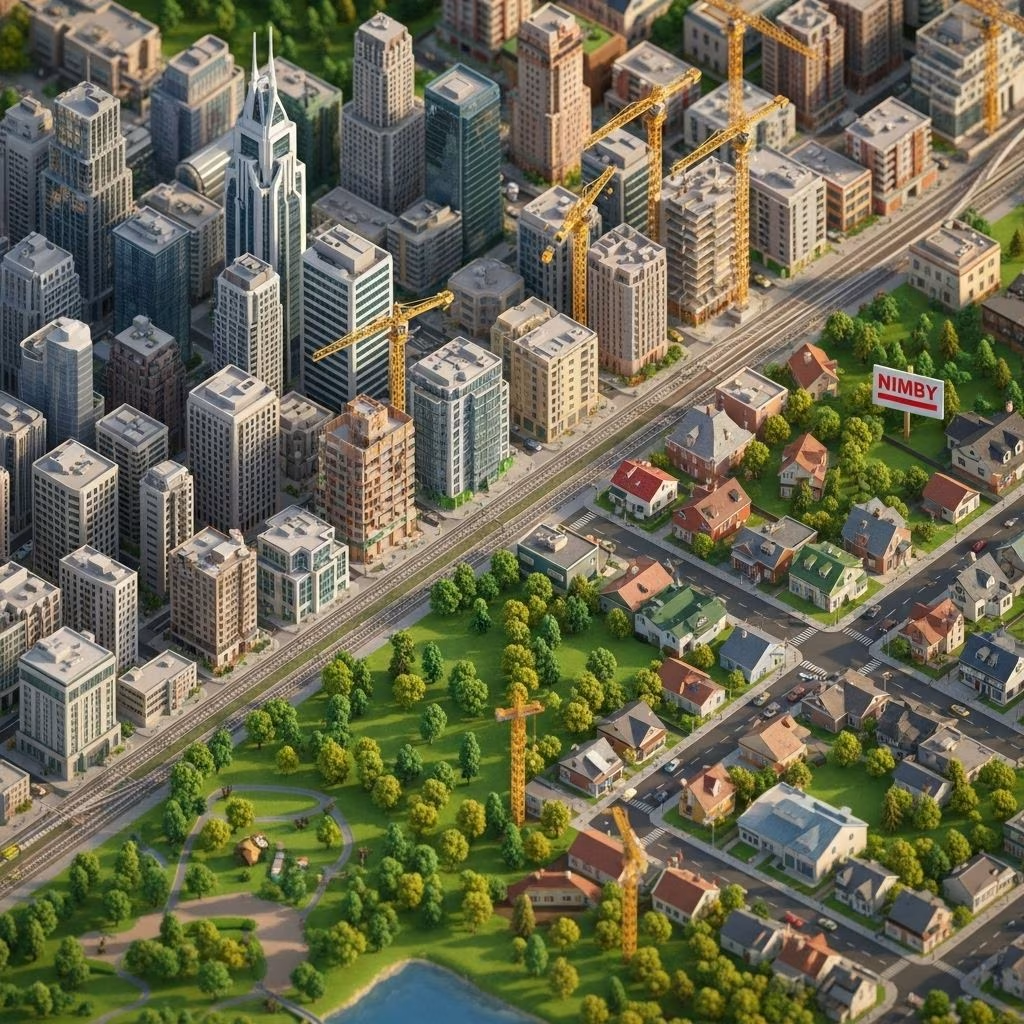
Sim Nimby: The Satirical City-Building Game That Lets You Build Nothing
City-building video games often depict the fantasy of urban development, where players mold thriving metropolises limited only by their creativity and resource management skills. Sim Nimby, however, shatters this optimistic illusion with a dose of biting satire, transforming the genre by forcing players to accept that sometimes, progress is impossible. Through its pixelated interface, Sim Nimby lampoons the real-world phenomenon of NIMBYism—Not In My Backyard—and exposes how this mindset can bring urban growth to a frustrating halt.
What Is Sim Nimby?
Sim Nimby is a browser-based parody inspired by classic city simulation games like Sim City, yet instead of inviting players to build freely, it confronts them with an unwinnable scenario: every attempt to construct anything is immediately rejected. The game, created by Brooklyn-based advertising creatives Owen Weeks and Steve Nass, uses static, 1990s-style graphics evocative of familiar city-building titles. But here, the fun ends as soon as you start clicking.
- Click on any part of the map—whether housing, transit, or public amenities—and an alert appears: “ERROR. CAN’T BUILD IN NIMBYVILLE.”
- The error is followed by a rotating assortment of 54 tongue-in-cheek, anti-development slogans sourced from the real world and exaggerated for humor.
- The experience is intentionally circular, reflecting the inescapable gridlock many real city planners and developers face.
The message is clear: in the face of relentless NIMBYism, all plans for growth, modernization, and improvement are doomed to wither before they ever begin.
The Origins: From Sim City Fantasy to Satire of Futility
Weeks and Nass’s idea for Sim Nimby grew not from activism, but from a blend of personal frustration and creative curiosity. Having both lived in cities like San Francisco and Brooklyn, the creators witnessed first-hand the paradox of residents decrying homelessness while simultaneously opposing new housing initiatives that could alleviate the crisis. For Nass, these experiences, especially repeated conversations steeped in self-contradiction, proved to be “galvanizing, even radicalizing.”
Rather than create another power fantasy, the team decided to emphasize the obstacles urbanists and policy makers encounter. In their words, they could have added more gameplay, but “the whole point is you can’t build anything.” The game thus becomes less a conventional game and more a piece of interactive commentary—a kind of digital protest highlighting the absurdities of NIMBY attitudes.
The Gameplay: An Exercise in Frustration
Unlike its genre peers, Sim Nimby offers no victory screen, no progression, and no means to actually influence the virtual environment. Here’s what you’ll find when playing:
- A static city interface reminiscent of 1990s management sims, meant to evoke nostalgia while quickly undercutting expectations.
- No resource management or urban design—just the constant rebuttal of any proposal.
- A randomized selection of protest slogans as your only in-game feedback—for example:
- “Public transport would transport the public here.”
- “The only thing urban I want to see in my neighborhood is Keith Urban.”
- “Apartment buildings cause crime. Where do you think the people who killed Batman’s parents lived?”
- Other memorable lines include “Sorry, but I’ve devoted my life to the most pressing issue of our time: anti-bike activism,” and “Keep our local fiefdom weird.”
Through these faux complaints, the game aims to mirror the unyielding resistance real urban projects often encounter—sometimes with logic, often with contradiction, and nearly always with a kind of humorous obstinacy.
NIMBYism in the Real World: More Than Just a Game Obstacle
The satire at the heart of Sim Nimby is rooted in reality. Across America, but especially in its most expensive and stratified cities, NIMBY sentiment has significantly slowed new housing, infrastructure, and sustainable transit projects. The attitudes and processes reflected in the game have real consequences:
- Inflated housing costs: Scarce new development restricts supply and drives up prices, making it harder for new residents, renters, and even small businesses to afford urban life.
- Infrastructure gridlock: Even practical proposals for public transit or bike lanes are often subjected to multi-year approval processes, as stakeholders object on grounds ranging from aesthetics to property values.
- Bureaucratic hurdles: Layers of regulation and endless community meetings can stymie well-intentioned projects before a single foundation is laid.
While city-building games typically gloss over these layers of red tape, Sim Nimby plunges players right into the heart of the problem: actual urban progress is not just about vision—it’s about overcoming a chorus of entrenched objections.
Common NIMBY Arguments Satirized by Sim Nimby
- “Won’t someone think of the property values?”
- “Live, laugh, love showing up to these town halls and stopping your building.”
- “Housing? Surely there must be other ways to deal with the unhoused.”
- “We need more parking, not more housing.”
- “Preserving neighborhood character is our duty.”
Some slogans are deliberately absurd, but many echo the types of rhetoric heard in city council meetings across the country, making the game’s humor stingingly relevant.
The Creators: Frustration Turned Into Satire
Owen Weeks and Steve Nass, both in their 30s and living in Brooklyn, never intended for Sim Nimby to become a crusade. Their backgrounds in advertising meant they were familiar with satire and wit, and they saw an opportunity to channel their growing exasperation with urban stalemate into something more accessible—and shareable. Nass’s perspective is especially shaped by his time in San Francisco, a city famous for both its high-tech wealth and fierce local resistance to new development.
The creators drew deeply on personal experience, as well as on headlines and community meeting transcripts, to develop a robust list of “anti-everything” slogans. Their hope: embolden a broader conversation about how cities can adapt, grow, and become more accessible if only these cycles of opposition could be broken.
How Sim Nimby Differs from Traditional City-Building Games
Classic city simulators like Sim City and Cities: Skylines thrill players with the joys and challenges of urban growth. While these games may present players with natural disasters, budget shortfalls, or environmental constraints, rarely do they offer an accurate portrayal of the bureaucratic and communal inertia that halts real-world progress.
| Game | Main Gameplay Loop | Obstacles | Outcome |
|---|---|---|---|
| Sim City (classic) | Build and expand a diverse city; balance needs and budgets | Resources, disasters, budgeting | Thriving (or failing) city shaped by choices |
| Cities: Skylines | Detailed management of urban growth, transit, infrastructure, and zoning | Congestion, pollution, public demand | Customizable city with myriad solutions to problems |
| Sim Nimby | No real construction is possible—satirizes opposition to every proposal | Obstacle is perpetual community resistance (NIMBYism) | Player is left with gridlock, emblematic of real-world urban struggles |
In this way, Sim Nimby is less a traditional simulator and more an educational tool by way of humor. It calls attention to deeply rooted social and political forces that shape our cities—whether we’re playing a game or living in them.
Beyond Satire: What Can We Learn From Sim Nimby?
While Sim Nimby may amuse or frustrate, it also serves a larger function: reframing the public’s understanding of why city-building and affordable housing remain so elusive. By boiling the developer’s experience down to an endless stream of refusals, it exposes:
- How procedural barriers and hyper-localism can immobilize projects essential for wider public good.
- The contradiction at the heart of many anti-development arguments: recognizing city problems while refusing tools that could solve them.
- The broader impact on affordability, inclusivity, and urban resilience.
The game’s creators hope to galvanize new, creative discussion around housing policy, city planning, and the urgent need to balance local concerns with future-oriented growth. In their vision, acknowledging the roots and realities of NIMBY thinking is the first step towards forging cities that work for more than just their loudest residents.
Frequently Asked Questions (FAQs)
Q: Is Sim Nimby a real city-building game?
A: No. Sim Nimby is a parody game designed to highlight the frustration of city planning in the face of NIMBY opposition. You can’t build anything—every attempt is blocked by tongue-in-cheek slogans.
Q: Who created Sim Nimby and why?
A: The game was created by Owen Weeks and Steve Nass, Brooklyn-based advertising copywriters. Their aim was to dramatize the hurdles developers and planners face from anti-development sentiment, especially in major U.S. cities.
Q: What does NIMBY stand for?
A: NIMBY means “Not In My Backyard.” It refers to residents who oppose new development or proposed changes near them, even when those changes might benefit the wider community.
Q: What lessons does Sim Nimby teach about urban planning?
A: The game shows that even the best-laid plans can be stymied by resistance rooted in fear of change, property values, and bureaucratic complexity. It encourages reflection on how local opposition impacts broader social and economic wellbeing.
Q: Can Sim Nimby help inform real-life urban policy?
A: While not a policy tool, Sim Nimby is valuable for sparking dialogue by making the hidden barriers to progress more visible and ripe for debate.
Key Takeaways
- Sim Nimby is a satirical browser game that simulates the impossibility of urban development when every effort is blocked by local opposition.
- The game is less about winning or losing and more about exposing real frustrations in American city planning.
- It draws attention to the bureaucratic and social hurdles that drive up housing costs, hinder transit, and stifle change.
- With humor and pointed commentary, it encourages broader reflection on how to build cities that are sustainable, equitable, and welcoming to all.
References
- https://www.vice.com/en/article/good-luck-playing-sim-nimby-the-game-where-you-cant-build-anything/
- https://reason.com/2022/12/02/sim-nimby/
- https://www.rockpapershotgun.com/nimby-rails-has-made-me-a-train-person
- https://archinect.com/news/article/150330014/sim-nimby-meet-the-city-building-game-that-doesn-t-allow-players-to-build
- https://opoulos.itch.io/simnimby
- https://news.ycombinator.com/item?id=32894870


