


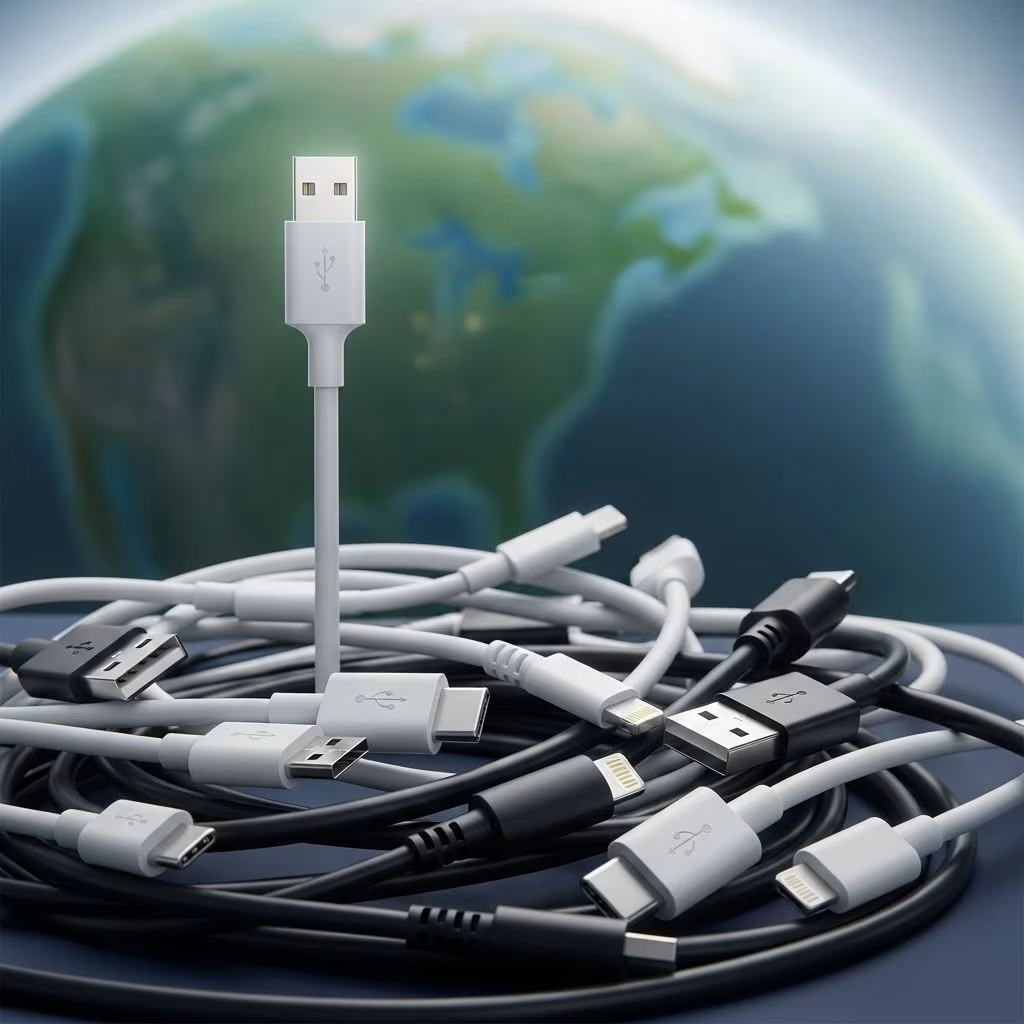
Why Standardizing Charging Cables Matters for Our Carbon Footprint
In the digital age, it’s common for households to have drawers full of tangled charging cables. Each new smartphone, tablet, or device often arrives with a proprietary connector, leading to a confusing array of cords that generate unnecessary electronic waste (e-waste) and contribute to our carbon footprint. The movement to standardize charging ports, especially in the European Union, is more than a matter of convenience—it is a pivotal step towards a more sustainable future for consumer electronics.
The Growing Issue of Charging Cable Waste
Every year, millions of charging cables are manufactured, purchased, and discarded worldwide. As technology and device designs evolve, many older cords quickly become obsolete. This cycle creates heaps of e-waste, which is often challenging to recycle due to mixed materials and the presence of hazardous components. E-waste represents a rapidly growing segment of global waste, with charging cables forming a significant, yet often overlooked, portion.
- Obsolete connectors: Frequent changes in charging technology render many cables useless after only a couple of years.
- Mixed materials: Cords often mix plastics, metals, and electronics, making recycling complex and expensive.
- Global scale: Billions of chargers are estimated to be unused or discarded worldwide, straining recycling systems and landfills.
EU Steps Up: Mandating Universal Charging Standards
Recognizing the scale of the problem, the European Union (EU) Parliament made headlines by passing legislation that requires a universal charging port for a wide range of consumer electronics. Beginning in autumn 2024, most portable devices—phones, tablets, e-readers, cameras, headphones, and more—sold within the EU will need to feature a USB Type-C port as the common charging interface.
- Devices affected: The standard applies to approximately 15 categories, including smartphones, tablets, e-readers, earbuds, digital cameras, headphones, headsets, handheld consoles, and portable speakers.
- Laptop compliance: Laptops have a slightly extended deadline of 40 months after the law’s entry into force to comply.
- Charging speed: The legislation also harmonizes fast charging speeds, allowing any compatible charger to charge devices quickly and efficiently.
Consumers can expect to use a single charging cable for a host of devices—a win for convenience, cost savings, and the environment.
How Standardization Decreases E-Waste and Carbon Emissions
The implications of standardized charging go far beyond tidier drawers. Streamlining ports and cables directly reduces manufacturing demand, lowers the carbon emissions associated with production and shipping, and makes it easier to recycle and reuse compatible cords.
- Fewer cables produced: Manufacturers can focus on a universal product rather than creating different cables for each device.
- Extended cable life: Consumers reuse the same cables across multiple devices, postponing disposal.
- Lower resource use: Reduced cable production means less mining, refining, and energy spent manufacturing plastics and metals.
- Efficient recycling: Recycling a standardized cable is simpler and more cost-effective than processing many types with variable materials.
| Impact Area | Positive Outcome |
|---|---|
| Resource Extraction | Reduced demand for metals and plastics |
| Manufacturing Energy | Lower emissions from streamlined production |
| Logistics | Fewer shipments, less packaging waste |
| E-Waste Volume | Significant decrease in cables sent to landfill |
| Consumer Convenience | One cable for multiple devices |
USB Type-C: The New Standard Explained
USB Type-C is a universal charging and connectivity format designed for broad compatibility, faster data transfer, and greater power delivery. Its symmetrical, reversible connector simplifies use and supports high-speed charging and data transmission for everything from phones to laptops. Unlike prior USB designs, USB-C can deliver up to 240W of power, making it suitable even for powerful laptops.
- One-size-fits-most: USB-C fits into a wide range of devices, reducing fragmentation in the market.
- Durability: Improved connector design is robust and suitable for repeated use.
- Data and Power: Supports both fast charging and high-speed data transfer.
The adaptability and robust performance of USB-C make it an ideal choice for universal standardization.
Universal Power Delivery: Energy Efficiency and Environmental Impact
USB-C’s specification incorporates advanced Power Delivery (PD). This allows a single charger to supply everything from low-power earbuds to high-powered laptops, reducing the proliferation of unique, energy-inefficient power adapters.
| Type | Max Current | Max Voltage | Max Power |
|---|---|---|---|
| USB 2.0 | 500mA | 5V | 2.5W |
| USB 3.x (single lane) | 900mA | 5V | 4.5W |
| USB Type-C | 3A | 5V | 15W |
| Power Delivery SPR | 5A | Up to 20V | 100W |
| Power Delivery EPR | 5A | Up to 48V | 240W |
- Efficient charging: Smart power management reduces wasted electricity.
- Fewer adapters: Single high-capacity chargers replace multiple incompatible power bricks.
- Lower environmental footprint: Less manufacturing and shipping of bulky adapters and cables.
Consumer Benefits: Simplicity, Cost Savings, and Functionality
Beyond the environmental advantages, universal charging standards offer considerable practical benefits to everyday users.
- Ease of use: No more searching or buying aftermarket replacements for each new device.
- Cost savings: No need to purchase a new cord or charger with every device upgrade.
- Repairs and upgrades: Standard ports simplify repair and increase access to replacement components.
- Travel convenience: Carrying a single charger streamlines packing and reduces clutter.
Potential Concerns: Innovation vs Standardization
While the push for universal standards promises clear environmental and consumer wins, some critics argue that mandated formats could slow technological innovation or limit manufacturers’ freedom.
- Design limitations: Some manufacturers argue that proprietary ports allow for smaller or sleeker device profiles.
- Potential barriers to progress: Mandatory technology standards may slow adoption of future breakthroughs.
- Freedom to sell: Some argue manufacturers should have the option to differentiate products based on charging design.
However, the EU legislation is focused on “wired” chargers and allows for innovation in wireless charging—a technology increasingly common in high-end smartphones and devices. This strikes a balance between environmental protection and space for advancement.
What’s Next? Global Implications and Possible Expansion
The European Union’s new standard could set a precedent for other regions. With the global tech marketplace so interconnected, it’s likely that manufacturers will adopt USB-C universally, further multiplying the positive effects on e-waste and the carbon footprint.
- Worldwide adoption: Once a standard is set in a large market, corporations often follow suit globally.
- Further regulation: Other governments may consider similar laws as awareness of e-waste grows.
- Wireless future: Standardization may focus next on universal wireless charging protocols.
The Role of Consumers and Manufacturers
Manufacturers are responding by updating product lines to feature USB-C. Meanwhile, consumers are encouraged to reuse old cords, recycle responsibly, and support companies pursuing sustainable solutions.
- Choose certified cables: Ensure compatibility and avoid counterfeits that may be unsafe or less efficient.
- Support green innovation: Prefer brands committed to e-waste reduction and recycling programs.
- Proper disposal: Use electronic recycling centers for unwanted cables and chargers.
FAQs: Standardizing Charging Cables and Environmental Impact
Q: What does ‘standardizing charging cables’ mean?
A: It means manufacturers agree on a universal charging port and connector, such as USB-C, for most electronic devices, allowing a single cable to work across many gadgets.
Q: Why does the EU mandate USB Type-C?
A: USB Type-C is powerful, universally compatible, and supports both fast charging and high-speed data transfer, making it a practical solution for device standardization.
Q: How does standardization reduce e-waste?
A: Using a common cable means fewer cords are produced and discarded, simplifying recycling and lessening landfill stress.
Q: Will device innovation slow as a result?
A: While some innovation may be channeled into compatible formats, standards like USB-C allow significant technical progress. Wireless charging remains open for further innovation.
Q: How much energy can be saved?
A: Standardized power delivery improves energy efficiency. Less energy is required to manufacture, ship, and operate universal cables and chargers compared to multiple proprietary systems.
Q: What can I do with my old charging cables?
A: Reuse for compatible devices, donate working cables, or recycle at approved electronics recycling centers to keep them out of landfills.
Sustainable Charging—A Simple Shift, Big Change
Standardizing charging cables is a pragmatic and impactful solution to e-waste, promising to reduce our environmental footprint, save consumers money, and simplify technology. As universal plug standards like USB-C become commonplace, the future of sustainable electronics appears a little bit brighter—one cable at a time.


