Ben & Jerry’s New Approach to Tackling Dairy Methane
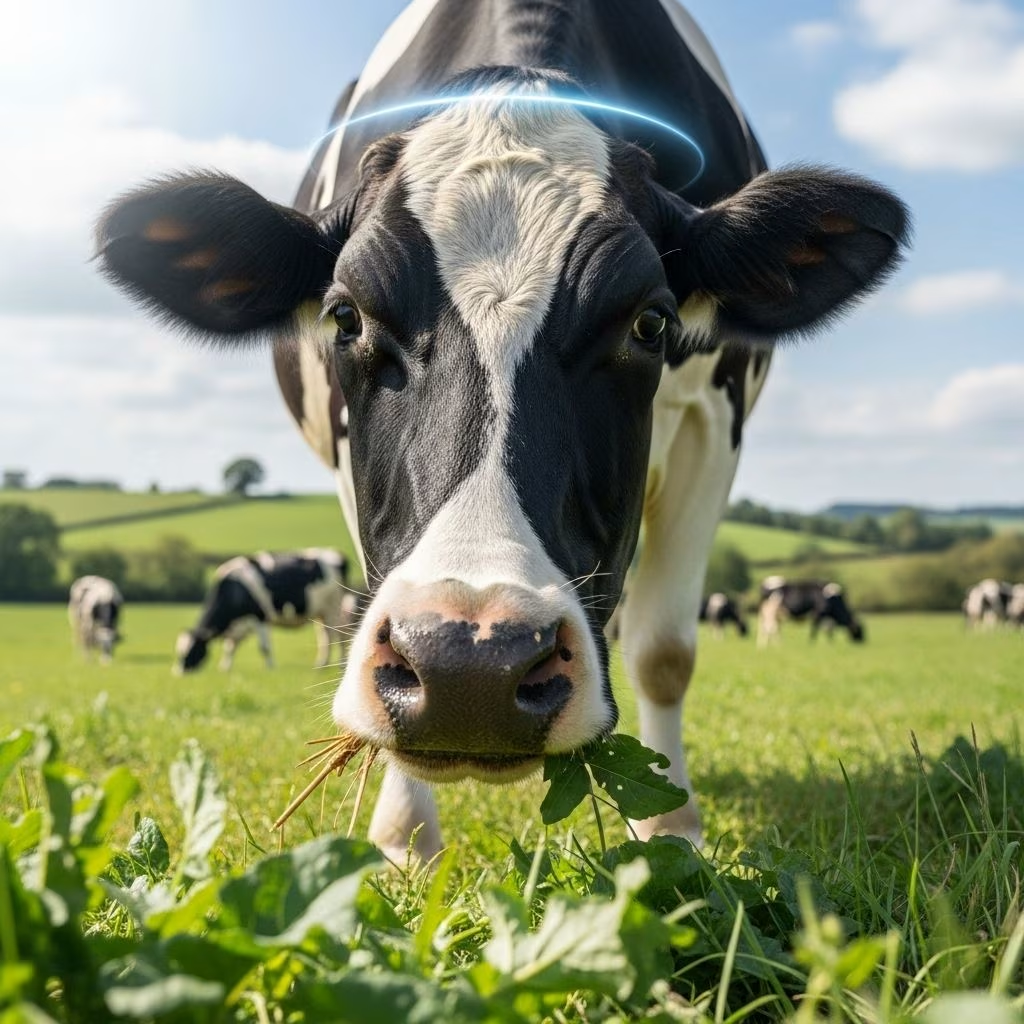
Ben & Jerry’s, famed for its iconic ice cream, has taken a bold step in addressing one of the dairy industry’s most persistent environmental challenges: methane emissions. Methane, primarily produced by cows during digestion and manure decomposition, is a potent greenhouse gas linked to climate change. Through innovative diet changes, technology, and farming practices, the company is piloting ways to halve its ice cream’s carbon footprint at the farm level.
Why Methane from Cows Matters
Methane is a greenhouse gas with a warming potential up to 80 times more potent than carbon dioxide over a 20-year span. While it persists for less time in the atmosphere than CO2, its immediate impact is significantly greater. Dairy and livestock farming is responsible for approximately 14.5% of global greenhouse gas emissions, and cows specifically generate around 40% of agricultural methane emissions through a process called enteric fermentation .
- Enteric fermentation: The natural digestive process in ruminants (cows, sheep, goats, and deer) where microbes in the rumen break down food, producing methane released via belching and, to a lesser extent, flatulence .
- Manure decomposition: Manure storage and handling on dairy farms produce additional methane as organic material breaks down anaerobically.
The challenge: How can the dairy industry keep producing food without compounding the climate crisis?
The Science of Cow Digestion and Methane
Cows are ruminant animals, meaning they have a complex, four-chambered stomach. The rumen—the largest compartment—can hold up to 25 gallons of food. There, specialized microbes ferment plant material, enabling cows to extract energy from tough grasses. However, this fermentation also produces large quantities of gas: up to 50 quarts per hour .
Most of this gas is expelled as methane during belching. Contrary to popular myth, only a smaller proportion escapes through flatulence.
- Every cow can burp up to 50 quarts of gas per hour, much of which is methane.
- Belching represents not only an emissions problem but also a loss of potential energy—up to 12% of the energy in a cow’s feed is lost as methane, meaning cows require more food for the same milk yield.
Project Mootopia: Ben & Jerry’s Methane Reduction Initiative
In 2022, Ben & Jerry’s announced the launch of Project Mootopia—a comprehensive program aiming to cut greenhouse gas emissions by 50% by 2024 at 15 of its milk-supplying farms .
The project rests on three pillars:
- Changing cow diets to reduce methane formation in the gut
- Revolutionizing manure management using technology
- Adopting regenerative practices for feed crop cultivation
1. Feeding Cows Seaweed: The Breakthrough Diet Solution
The most headline-grabbing part of Project Mootopia is a simple addition to the cows’ feed: red seaweed. The supplement, known as Brominata and produced by Blue Ocean Barns, consists of dehydrated red seaweed grown in controlled tanks in California and Hawaii .
- Scientific studies show that adding as little as 3 ounces of seaweed per day to a cow’s diet may cut methane emissions by up to 82% .
- The red seaweed acts as a natural ‘burp suppressant,’ inhibiting the specific microbes responsible for methane production during digestion.
- By reducing methane, cows retain more dietary energy for milk production, potentially lowering feed costs for farmers.
| Cow Feed Additive | Primary Effect | Methane Reduction |
|---|---|---|
| Red Seaweed (Brominata) | Disrupts methane-producing microbes | Up to 82% |
| Other Feed Additives (Garlic, Essential Oils) | Generally lower efficacy | 5–25% |
The seaweed supplement has been approved for sale by the California Department of Food and Agriculture and is already being piloted on a Vermont dairy farm that supplies Ben & Jerry’s .
2. Upgrading Manure Management: Technology for Emissions Control
Each cow produces about 80 pounds of manure daily. When stored or managed improperly, this manure decomposes anaerobically, emitting further methane. Ben & Jerry’s is investing in advanced “methane reduction technologies,” such as:
- Manure digesters: These collect and process manure, capturing methane to use as renewable energy, thereby preventing its release into the air .
- Solid-liquid separators: Devices that divide manure into useful bedding material for cows and other soil amendments, reducing greenhouse impact.
Manure digesters not only shrink emissions but can also provide valuable biogas for electricity or heat, improving farm sustainability.
3. Regenerative Feed Crop Farming
Diet and manure aren’t the only focus. Ben & Jerry’s is also pushing its partner farms to embrace regenerative agricultural practices in how they grow animal feed. These practices include:
- Growing more grass directly on the farm, minimizing imported feed and transportation emissions
- Planting cover crops and rotating crops to improve soil health
- Reducing synthetic fertilizer and pesticide use
- Enhancing biodiversity on farms
- Increasing carbon sequestration by keeping soils and plant roots healthy
By producing more on-farm feed with regenerative methods, emissions from feed crop production drop, and soil can absorb and store more atmospheric carbon dioxide.
The Broader Climate Context and Why Urgent Action is Needed
The Intergovernmental Panel on Climate Change (IPCC) warns that humanity’s window for averting the worst effects of climate change is rapidly closing. Agriculture, and especially animal agriculture, is a potent lever for action. Methane’s warming power makes it a key target for near-term climate impact—a rapid reduction can noticeably slow global temperature rise within just a few decades .
- Reducing methane is considered one of the most “quick win” actions for global climate policy.
- Consumers are increasingly demanding transparency and responsibility in how their food is produced.
- Leading brands like Ben & Jerry’s recognize both the climate risk and business opportunity in pioneering low-carbon dairy.
Challenges and Opportunities in Scaling Up
While early results are promising, scaling up special cow diets and regenerative farm practices to thousands of farms worldwide presents some clear obstacles and opportunities:
- Supply bottlenecks: Seaweed production must rapidly expand to supply sufficient quantities for the world’s dairy herds.
- Farmer adoption: Shifting long-standing farm practices and investing in new technologies requires incentives, education, and financial support.
- Regulatory approval: Feed additives must be tested and approved by relevant agricultural and food safety authorities globally.
- Economic impact: Farmers may benefit from reduced feed costs and new value streams (energy from digesters, carbon credits), but transition costs are real.
- Market demand: As climate-conscious consumers opt for products with smaller carbon footprints, innovations like seaweed-fed cow’s milk could become a valuable differentiator.
How Ben & Jerry’s Plan Fits Into Industry-Wide Change
Ben & Jerry’s is not acting alone. Dairy and livestock sectors globally are under pressure to measure, report, and cut their emissions. The company’s approach integrates cutting-edge research, collaboration with startups like Blue Ocean Barns, and direct support to farmers. Their pilot offers a roadmap for other brands and farms seeking to decarbonize dairy.
- Project Mootopia will inform industry standards and possibly inspire regulatory changes if proven successful.
- Early adoption may allow Ben & Jerry’s to shape how low-carbon dairy claims are measured, marketed, and certified in the future.
- There is a growing ecosystem of startups and research institutions devoted to methane reduction in livestock, from feed supplements to gene editing and vaccines.
Environmental and Economic Potential
The combination of dietary changes, manure management, and regenerative agriculture has the potential to:
- Halve total greenhouse gas emissions at participating dairy farms within two years.
- Lower operational costs for farmers through improved feed efficiency and by providing renewable energy or bedding from manure technology.
- Set new standards for what climate-friendly dairy can look like worldwide.
| Strategy | Direct Emissions Impact | Secondary Benefits |
|---|---|---|
| Seaweed dietary supplement | Up to 82% reduction in enteric methane | Lower feed costs |
| Manure digestion/separation | Limits methane from manure | Provides renewable energy and bedding |
| Regenerative feed production | Reduces nitrous oxide, sequesters carbon | Improves soil, biodiversity, resilience |
Frequently Asked Questions (FAQs)
Q: Why does feeding seaweed to cows reduce methane?
A: Certain red seaweeds contain compounds that disrupt the enzymes used by methane-producing microbes in the rumen, stopping most methane from forming during digestion.
Q: Are seaweed-fed cows and their milk safe for humans?
A: Yes, trials and regulatory reviews have found the seaweed supplements used in cattle feed do not affect milk’s safety or nutritional profile.
Q: What are regenerative agriculture practices?
A: These are farming methods designed to restore soil health, increase biodiversity, reduce synthetic inputs, and capture more carbon in the soil—all of which boost resilience and cut emissions.
Q: Can this approach make ice cream truly climate-friendly?
A: While manufacturing and transportation still emit carbon, attacking the cows’ methane footprint—the largest single source—represents a major step toward net-zero or ‘climate-smart’ dairy products.
Q: Is Project Mootopia unique to Ben & Jerry’s?
A: While Ben & Jerry’s may be among the first large brands to pilot seaweed feed additives and large-scale farm transitions, other companies and organizations are exploring similar solutions worldwide.
Looking Ahead: The Future of Climate-Smart Dairy
Ben & Jerry’s flagship sustainability project underscores how consumer brands can ignite change. By investing in science-based solutions and working directly with farm suppliers, the company is forging a blueprint for a lower-impact dairy industry—one seaweed snack and manure digester at a time. Consumers can expect to see—and taste—the difference, as climate, animal, and human health all benefit from a more thoughtful scoop of their favorite ice cream.
References
- https://www.ecowatch.com/ben-jerrys-cows-methane-emissions-diet.html
- https://theethicalist.com/ben-jerrys-cut-your-ice-creams-carbon-footprint/
- https://www.benjerry.com/whats-new/2022/01/reducing-enteric-emissions
- https://www.benjerry.com/whats-new/2022/05/mootopia
- https://www.allaboutfeed.net/animal-feed/feed-processing/ben-jerrys-battle-against-belching/
- https://www.theenergymix.com/ben-jerrys-pilot-project-to-halve-ice-cream-emissions-by-2024/