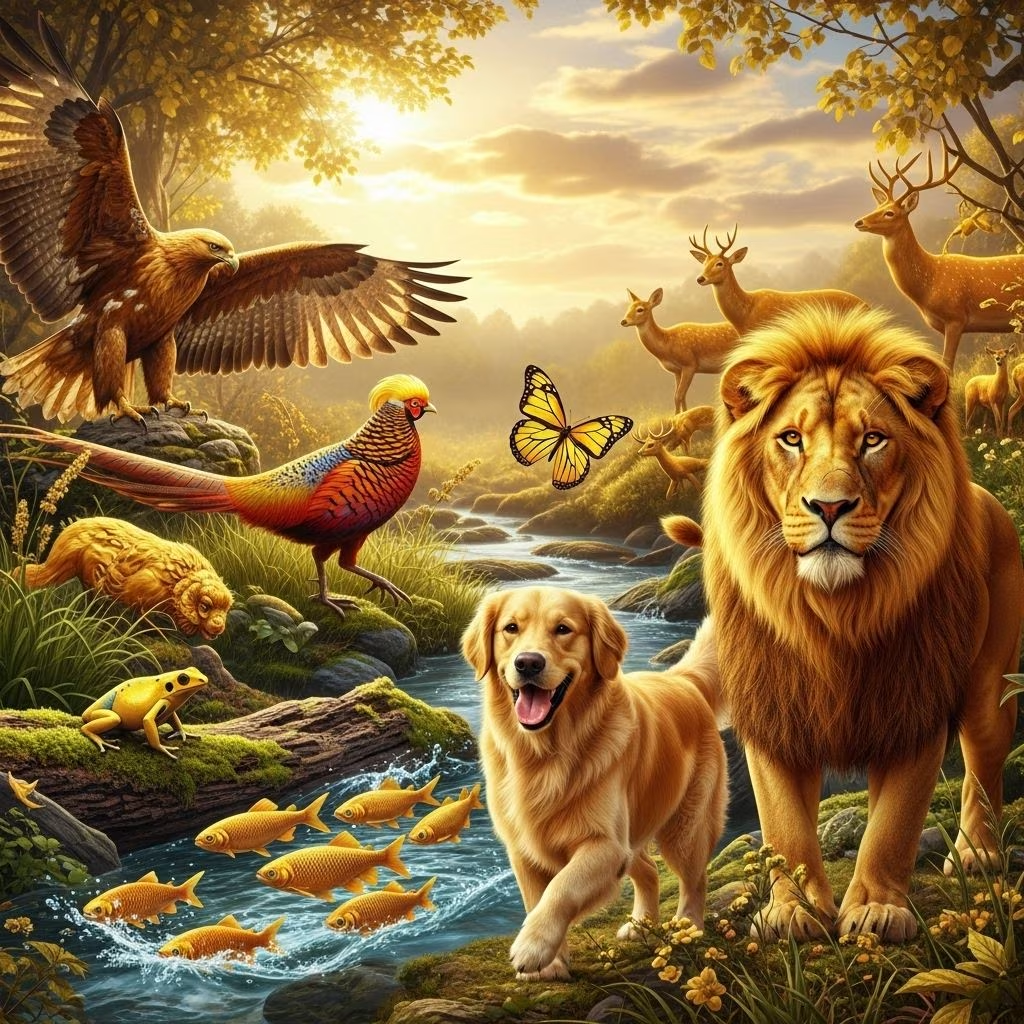
Gold has beguiled humans for millennia, evoking tales of mythical kings and magical transformations. King Midas, of ancient Greek lore, famously wished for a touch that would turn all he encountered into gold—a wish that quickly proved to be a curse. Yet in the real world, nature holds its own treasury: countless creatures shimmering in golden hues, each one an evolutionary marvel. This article journeys through the animal kingdom’s most resplendent golden members, exploring how and why these iridescent pigments evolved, and what their striking colors mean in the wild.
Why Gold? The Science Behind Animal Coloration
Golden coloration in animals is much more than decorative; it is a tapestry woven by evolution, chemistry, and genetics. The mechanisms underlying golden hues vary across species:
- Structural Coloration: Microscopic scales, feathers, or cuticles reflect and refract light to produce metallic sheens.
- Pigments: Organic molecules such as carotenoids and pterins absorb certain wavelengths and reflect others, giving skin, scales, or fur a yellow or gold appearance.
- Genetic Variation: Mutations or selective breeding can intensify or induce gold tones, as seen in some pet and livestock varieties.
These adaptations serve multiple purposes:
- Camouflage: Blending in with sunlit grasses or shimmering aquatic habitats.
- Mate Attraction: Brighter, more colorful individuals may signal good health or genetic fitness.
- Warning or Mimicry: Mimicking other dangerous species or advertising toxicity.
Golden Birds: Midair Treasures
Perhaps no class of animal sports golden hues as flamboyantly as birds. Their shimmering feathers often play a key role in communication and courtship.
Golden Pheasant (Chrysolophus pictus)
Native to forests of western China, the Golden Pheasant’s male is breathtaking: a golden-yellow crest, crimson underparts, and iridescent back feathers that shimmer with gold, green, and blue. Females are more subdued for camouflage during nesting. These birds rely on visual display to attract mates and intimidate rivals.
Golden Oriole (Oriolus oriolus)
This striking bird, found across Europe and Asia, is famous for its vivid golden-yellow plumage and melodic song. Males are brighter, using their color to win females, while females and juveniles are more olive to avoid predators. Orioles prefer canopies of mature deciduous forests.
Golden Eagle (Aquila chrysaetos)
Though not entirely gold, this majestic raptor’s nape feathers have a brassy sheen. It commands the skies across the Northern Hemisphere, symbolizing power and freedom in many cultures. The gold patches are most notable in the sun and serve as both camouflage and a signal to conspecifics.
Reptiles and Amphibians Glimmering in Gold
While most reptiles and amphibians favor greens and browns for camouflage, a few break the mold with dazzling gold hues.
Golden Poison Dart Frog (Phyllobates terribilis)
The world’s most poisonous frog sports a lustrous golden skin as a potent warning to would-be predators. Endemic to Colombian rainforests, it demonstrates how “aposematic coloration” can signal toxic defenses and deter predation.
Gold Dust Day Gecko (Phelsuma laticauda)
This small, striking lizard from Madagascar boasts bright golden specks across vivid green skin, reflecting sunlight and blending into leafy habitats. The spots help them hide from predators among sunlit leaves and bark.
Insects: Nature’s Living Goldsmiths
No group outshines insects in sheer gold variety. Their exoskeletons and scales refract and reflect sunlight in glorious, metallic brilliance.
Golden Tortoise Beetle (Charidotella sexpunctata)
Found in the Americas, this beetle’s dome can appear gold, silver, or red depending on iridescence and mood. The color results from microscopic structures in its cuticle; when disturbed, the gold can fade as fluids shift beneath the surface. Its coloration changes are used to deter predators and dazzle onlookers.
Golden Silk Orb-Weaver (Nephila clavipes)
Though technically an arachnid and not an insect, this spider earns its place for its legendary golden web, which can shimmer in sunlight. Found in tropical and subtropical regions worldwide, the silk’s coloration may attract prey or serve as camouflage among dry leaves.
Golden Stag Beetle (Lamprima aurata)
This Australian beetle’s metallic gold-green carapace makes it a prized specimen for collectors. The reflective exoskeleton, besides being stunning, may confuse predators and play a role in courtship.
Mammals With a Gilded Touch
Mammals rarely display true gold, but some species come admirably close, with fur that catches the sun in warm, yellowish tones.
Golden Lion Tamarin (Leontopithecus rosalia)
Once critically endangered, this Brazilian primate bears a fiery-orange mane and shimmering golden coat. The dazzling coloring helps them blend with shafts of sunlight in the rainforest understory and may strengthen social bonds within groups.
Golden Retriever Dog
Arguably the canine embodiment of ‘golden touch,’ Golden Retrievers sport luxurious, wavy gold fur, bred for both utility and striking good looks. Originally developed in Scotland for retrieving game from water, their coloration varies from pale cream to deep, lustrous gold.
Golden Hamster (Mesocricetus auratus)
Beloved as a pet, the golden hamster’s signature sandy-gold fur gave the species both its name and its popularity. The original wild type—native to Syria—has a rich golden-brown coat providing camouflage in arid grasslands and farmlands.
Fishes and Marine Life: Underwater Alchemists
Sunlit shallows and coral reefs are home to aquatic marvels boasting golden scales and glimmering fins.
Goldfish (Carassius auratus)
Originally native to East Asia, goldfish were selectively bred for golden hues over a thousand years ago. Their brilliant coloration in ponds and aquariums delights owners worldwide, ranging from lemon-yellow to deep orange-gold.
Golden Trevally (Gnathanodon speciosus)
This striking marine fish sports lateral golden stripes over a yellow body. Juveniles often school with larger predatory fish as a form of protection, using their color to blend in with sunlit water and distract would-be threats.
Golden Seahorse (Hippocampus kuda)
The yellow morph of the common seahorse exhibits bright golden hues, blending among sunlit corals and sea grasses. Their impressive mantle coloration helps avoid predators and aids in courtship.
Why Does Evolution Favor Gold? Functions and Theories
Gold coloration isn’t just for show—it offers adaptive advantages in varied environments. Scientists propose several reasons these hues have evolved:
- Sexual Selection: In many species, golden features are most vibrant in males to attract females. Signals of health and genetic fitness abound in brighter individuals.
- Predator Avoidance: Camouflage in sun-dappled environments (grasslands, forest canopies, or aquatic realms) can be enhanced by golden tones. For others, sudden flashes of gold can surprise or confuse enemies.
- Aposematism and Mimicry: Bright golds—especially when paired with blacks or reds—can signal danger or toxicity (as seen in certain frogs and beetles), warning would-be predators to stay away.
- Social Communication: Gold patches or tufts may help individuals recognize each other, show aggression, or establish social hierarchies.
- Human Influence: Selective breeding, especially in pets and livestock, has magnified golden traits well beyond what occurs in the wild.
Famous Folklore: The Psychology of Gold
No discussion of golden animals is complete without acknowledging the deep human fascination with gold. The story of King Midas and his fateful wish to turn all he touched into gold still resonates today. In the animal kingdom, gold is power, attraction, danger, and allure—sometimes all at once.
Gold’s symbolism extends far beyond wealth; it represents the extraordinary, the rare, the magical. Many cultures associate golden animals with luck, protection, or even a glimpse of the divine. These beliefs underscore the evolutionary and psychological power of the color gold in nature and myth.
Dangers and Challenges Facing Golden Animals
While gold coloration dazzles, it can also pose risks—especially when human demand and curiosity turn animals into targets.
- Some golden animals, like the golden lion tamarin or rare beetles, are critically endangered due to habitat loss and illegal wildlife trade.
- Catch and trade for the exotic pet market have reduced wild populations of some dazzling fish, birds, and amphibians.
- Pollution and climate change threaten sensitive species, many of which thrive only in specialized, sunlit habitats.
Conservation efforts worldwide now focus on protecting both these species and their gold-bright habitats.
Golden Animals in Art and Culture
Artists and storytellers have drawn inspiration from gold-toned animals for centuries. From illuminated manuscripts to folk tales and royal crests, golden birds, beetles, and beasts become living symbols of prosperity, beauty, or mysticism.
- Depictions in ancient Egyptian and Chinese art often feature golden animals as symbols of the sun or immortality.
- Modern advertising and literature frequently tap into the allure of gold, casting creatures like the golden eagle or goldfish as icons of luck or luxury.
Frequently Asked Questions (FAQs)
Q: What is the rarest golden animal in the wild?
A: The golden lion tamarin is among the rarest, with a limited habitat in Brazil’s Atlantic coastal rainforests and numbers only recently recovering thanks to dedicated conservation efforts.
Q: Are golden animals more vulnerable to predators?
A: Sometimes. While gold coloration can camouflage individuals in sunny or sandy habitats, it can also make them stand out; thus, the benefits depend on environment and species-specific behaviors.
Q: Can animals’ golden coloration change over time?
A: Yes. Some species, like the golden tortoise beetle, change color in response to mood, temperature, or environmental conditions. Others, such as goldfish, may change hue as they age or due to diet.
Q: How does structural coloration differ from pigmentation?
A: Structural coloration arises from microscopic physical structures, which scatter or refract light to create metallic or iridescent effects. Pigmentation is due to chemical compounds absorbing and reflecting specific wavelengths.
Conclusion: When Midas Meets Nature
For every tale of Midas’s greed, nature quietly offers its own riches—creatures whose golden glimmer is a triumph of adaptation and evolution. From dazzling birds in the treetops and gold-dusted beetles underfoot, to frogs and mammals sporting rare hues, gold remains one of life’s most magical colors. While the stories behind these hues are as complex as they are beautiful, each golden animal stands as a reminder of the wonders woven through the natural world. Protecting them ensures that their brilliance continues to inspire awe for generations to come.