


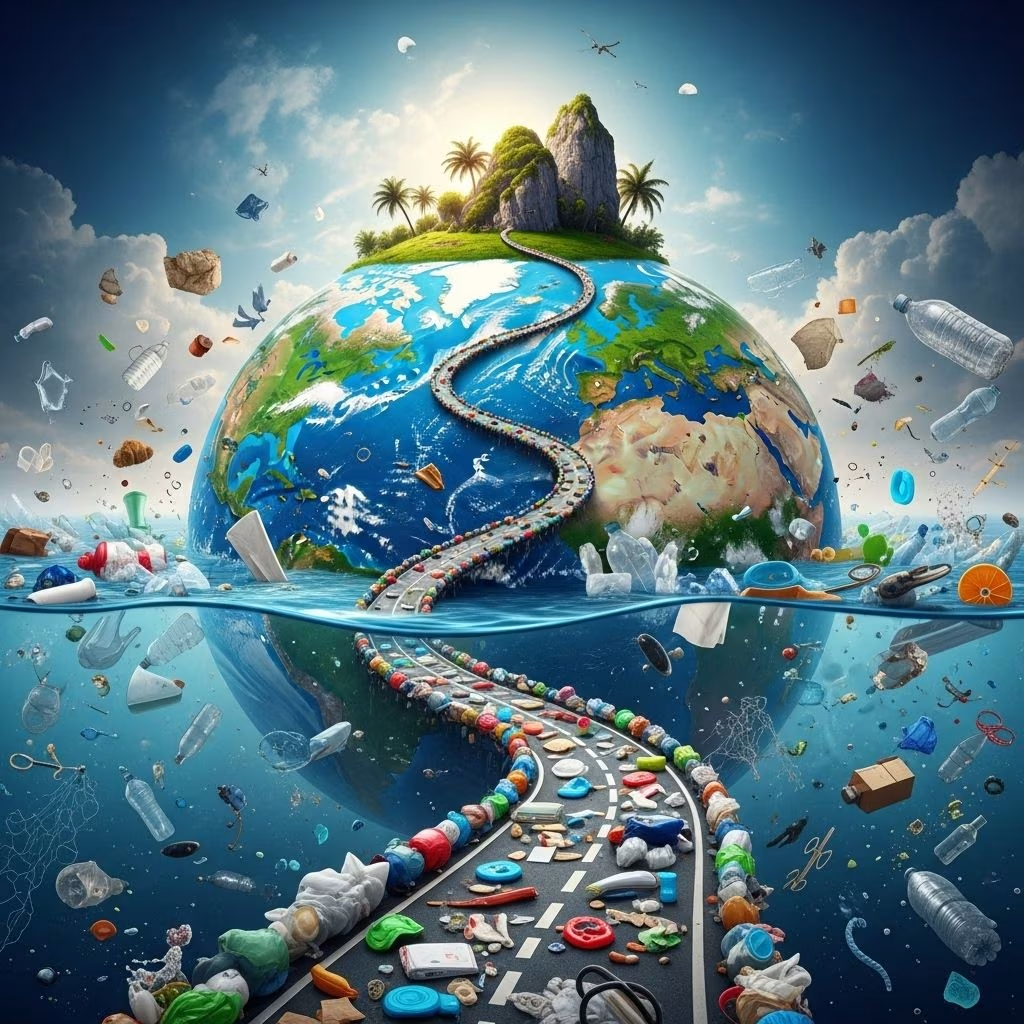
UN Plastics Treaty: The Road to a Global Solution for Plastic Pollution
Plastic pollution has emerged as one of the defining environmental crises of our time. With more than 460 million metric tons of plastic produced yearly and millions of tons leaking into our ecosystems, the world is at a critical juncture. Microplastics have been detected everywhere—from our oceans and soils to the food we eat and even within human bodies. Facing a future where global plastic waste could reach 1.7 billion metric tons by 2060, the international community has rallied to forge the world’s first legally binding treaty to confront this pervasive challenge.
The Historic Mandate: Towards a Legally Binding Instrument
The journey began in March 2022, at the conclusion of the fifth United Nations Environment Assembly (UNEA-5.2), where 175 nations agreed on an ambitious mandate—to craft a legally binding international instrument designed to target plastic pollution across its entire lifecycle. The resolution called for the establishment of an Intergovernmental Negotiating Committee (INC), tasked with drafting the treaty that would address plastic extraction, design, production, consumption, and disposal.
- INC’s Mission: Formulate a treaty addressing plastic pollution globally, from upstream (design and production) to downstream (waste management and remediation).
- Global Support: Over 1,000 civil society groups, scientists, and committed governments highlighted the urgent need for such a treaty.
- UN Guidance: The United Nations Environment Programme (UNEP) was authorized to facilitate the negotiating process and support consensus-building among member states.
Tracing Plastic Pollution: The Need for a Treaty
The ever-increasing plastic footprint is staggering:
- Annual Production: Over 460 million metric tons of plastic manufactured every year.
- Plastic Leakage: An estimated 20 million tons pollute natural environments annually, including marine, terrestrial, and atmospheric realms.
- Human Health Impact: Microplastics detected in air, water, food, and even human blood and lungs, raising concerns about long-term health effects.
The socioeconomic costs are equally alarming. Projections indicate that plastic waste could cost society up to $281 trillion cumulatively by 2060, with consequences rippling from waste management expenses to lost tourism and health impacts.
The Evolution of the Negotiating Process
From Consensus to Complexities: INC Meetings and Their Challenges
The negotiations have been marked by a sequence of intensive meetings known as INC sessions. Each session builds on the progress (or obstacles) of the last, with key differences emerging over the treaty’s ambition level and scope.
- INC-1 (December 2022, Uruguay): Delegates debated foundational topics, notably what constitutes the “full lifecycle of plastics” and how strictly the treaty should regulate production and trade.
- INC-2 to INC-5.1 (2023–2024): Sessions saw mounting disagreement between ambitious nations calling for mandatory production reductions and those preferring voluntary, country-specific action plans.
- INC-5.2 (August 2025, Geneva): Intended as the final round of negotiations, this session failed to reach consensus, exemplifying the immense challenges of global treaty-making.
Key Areas of Disagreement
- Scope: Lifecycle vs. Waste Management
- Production Controls: Should the treaty cap or reduce plastic production or just manage existing waste?
- National Action Plans vs. Global Standards: Should countries set their own targets, or adhere to binding international measures?
- Financing: Who pays for implementation, especially in low- and middle-income countries?
INC-5.2: Genevan Stalemate and Its Repercussions
At the August 2025 talks in Geneva, hopes were high for a historic breakthrough. Delegates, experts, and civil society representatives worldwide gathered to finalize and adopt robust treaty text. However, the outcome fell short of expectations, and the treaty’s fate remains uncertain.
Why the Talks Stalled
- Petrostate Influence: Oil and gas-producing nations pushed for weak or voluntary measures, fearing regulatory impacts on both plastic and fossil fuel industries.
- Lobbyist Pressure: The negotiating process faced heavy lobbying from the plastics and fossil fuel sectors, adding additional obstacles.
- Procedural Hurdles: Key participants from ambitious countries, civil society, Indigenous Peoples, and scientists voiced concerns over exclusion from critical discussions.
Ultimately, ambitious nations—backed by environmental advocates—rejected what they regarded as an inadequate, watered-down treaty. They preferred no agreement yet to a weak agreement now, believing that further delay was preferable to ineffective action.
Statements from the Process
UNEP Executive Director Inger Andersen expressed cautious optimism: “Despite these complexities, all countries clearly want to remain at the table,” she emphasized, noting the determination to keep negotiations alive. UN Secretary-General António Guterres regretfully acknowledged the setback but praised the collective will to end plastic pollution.
Country Stances and Negotiating Blocs
| Bloc / Country | Position | Key Concerns |
|---|---|---|
| High-Ambition Coalition (Norway, Rwanda, many African countries, Switzerland, Costa Rica, Ecuador, Peru) | Phase out certain plastics, reduce production, restrict toxic additives. Global solutions with binding targets. | Urgency, enforceability, lifecycle approach |
| Petrostates (U.S., Saudi Arabia, selected Asian countries) | Promote country-specific action plans, voluntary or non-binding targets. | Economic impact on plastics/fossil fuel sector, sovereignty |
| Many Developing Countries | Support binding measures, seek financial/technical support for implementation. | Equity, capacity-building |
Role of Civil Society and Science
- Over 1,000 organizations and scientists advocated for strong, enforceable measures.
- Frontline communities and Indigenous Peoples demanded solutions to both pollution and toxicity concerns.
- Industry and lobbyist participation sparked debate about fairness and openness in multilateral negotiations.
What’s Next for the Global Plastics Treaty?
Despite the disappointing conclusion to INC-5.2, the process is far from over. Delegates agreed to resume negotiations at an as-yet-unscheduled future meeting, with countries expressing broad commitment to keep working toward a treaty.
- Future Negotiations: Timing for the next round is under discussion; ambition remains to conclude talks by the end of 2025.
- Chair’s Text: The latest draft will serve as the foundation for renewed discussions, likely focusing on resolving the toughest issues such as production limits, binding nature, and financing.
- Public Mobilization: Environmental advocates and scientists are increasing pressure for a strong treaty, emphasizing public health, biodiversity, and climate connections.
Underlying Lessons
- Persistence Pays: Past international agreements, such as the Paris Agreement on climate change or the Montreal Protocol on ozone, also faced setbacks before breakthrough moments.
- Importance of Ambition: Leading voices maintain that only a truly global and binding solution—one that curbs both plastic production and toxic additives—can address the magnitude of the problem.
- Coalition Building: There is growing consensus among ambitious countries and civil society that working together is the only viable path forward.
Public Demand for Action
Public pressure is a driving force. The movement to end plastic pollution has never been more visible, from schoolchildren and scientists to grassroots organizations and world leaders. The calls for a robust, enforceable treaty center on key themes of:
- Reducing plastic production, especially of single-use and unnecessary items
- Banning harmful and toxic chemical additives
- Enshrining the right of all people and communities, especially frontline and Indigenous, to participate
- Promoting equity and financial support for less-resourced nations facing disproportionate pollution burdens
Frequently Asked Questions (FAQs)
Q: What is the main goal of the UN plastics treaty?
A: To create a legally binding international agreement that targets plastic pollution across its entire lifecycle, from design and production to disposal, intending to protect human health and the environment.
Q: Why did the most recent negotiations (INC-5.2) fail to produce an agreement?
A: The negotiations stalled due to deep divides between countries favoring strong, binding limits on plastic production and those preferring voluntary, country-specific measures. Intense lobbying from industry groups and disputes over fairness in the negotiation process contributed to the deadlock.
Q: What happens next in the treaty process?
A: Negotiations will continue, with future sessions planned. Countries remain committed to shaping an ambitious treaty that addresses unresolved issues, and advocates are pressing for even stronger action.
Q: How can individuals and communities contribute to the treaty’s success?
A: Engage in public advocacy, support organizations or coalitions fighting plastic pollution, reduce personal plastic use, and demand accountability from elected leaders for ambitious, effective policies on plastic reduction and waste management.
Q: What would a strong plastics treaty look like?
A: A strong treaty would mandate reductions in unnecessary plastic production, ban toxic chemicals, ensure equitable financing and technology transfer, and hold all nations to common, enforceable standards rather than voluntary action plans.
A Vision for a Plastic-Free Future
While the latest UN plastics treaty talks in Geneva ended without a final accord, the negotiations underscore the world’s determination to address plastic pollution at its source. From scientists and frontline communities to a growing coalition of ambitious nations, the movement for transformative, legally binding action remains resilient. The coming rounds of negotiation will be pivotal in deciding whether the world seizes this historic chance to end plastic pollution for generations to come.
References
- https://www.globalplasticlaws.org/un-global-plastics-treaty
- https://www.weforum.org/stories/2025/08/global-plastics-treaty-inc-5-2-explainer/
- https://www.plasticpollutioncoalition.org/blog/2025/8/15/ambitious-countries-reject-weak-un-plastics-treaty-in-geneva-switzerland-inc-5-2
- https://news.un.org/en/story/2025/08/1165658
- https://www.worldwildlife.org/pages/global-plastics-treaty


