


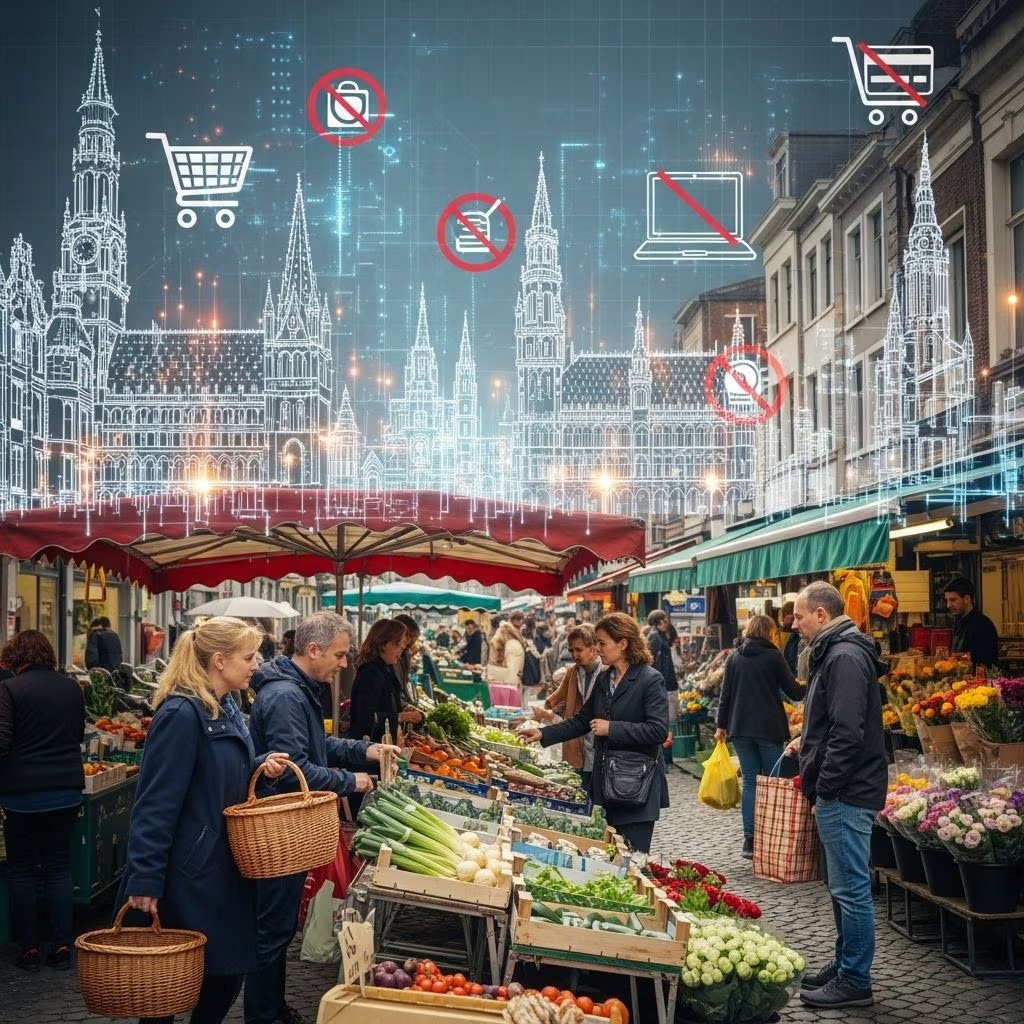
Belgium’s Bold Proposal: Abolishing Internet Shopping
In February 2022, Paul Magnette, the president of Belgium’s French-speaking Socialist Party (PS), attracted global attention by advocating for an unprecedented approach: the abolition of internet shopping in Belgium. His call, delivered during an interview and subsequently echoed in national discourse, has come to symbolize a deeper reckoning with the costs and consequences of e-commerce in modern society.
The Context: A Nation at a Crossroads
Belgium finds itself at a pivotal moment when questions about the future of work, urban vitality, and ecological responsibility intersect. As the federal government enters discussions about labor reforms—particularly the relaxation of rules around night work in the e-commerce sector—Magnette’s proposal injects new urgency into a debate already simmering on several fronts.
- E-commerce expansion has accelerated since the COVID-19 pandemic, reshaping consumer behavior and supply chains.
- Belgium’s stringent labor laws have made it more difficult for domestic firms to compete with neighboring countries like the Netherlands, where rules around night work and shipment logistics are more permissive.
- Socialists, represented by Magnette, now ask whether chasing this digital revolution serves the country’s best long-term interests.
Magnette’s Case Against E-Commerce
Paul Magnette’s critique of e-commerce is both social and ecological in nature. He argues that the relentless march of online shopping brings more harm than good, eroding foundational values and threatening public well-being.
- Night Work and Worker Health: Warehouses operate around the clock to meet consumer demands for same-day or next-day delivery. Magnette points to mounting evidence linking night work to adverse health outcomes—including chronic sleep deprivation, stress, and long-term illness—which he believes outweigh any economic gains.
- Urban Life and Local Economies: The rise of internet shopping, Magnette argues, accelerates the decline of traditional storefronts and vibrant urban centers. “Let’s make Belgium a country without e-commerce, with real shops and lively cities,” he declared, emphasizing the cultural and economic loss tied to shuttering brick-and-mortar stores.
- Ecological Impact: E-commerce amplifies delivery-related emissions, increases packaging waste, and contributes to broader patterns of unsustainable consumption. From an ecological standpoint, its widespread adoption signals regression rather than progress.
Quote from Paul Magnette
“I think e-commerce is not progress, but a social and ecological regression. Why do we accept having workers working at night in packing centres? Because people want to buy 24 hours a day and receive their parcels at home within 24 hours. Can we really not wait two days for a book?”
The Economics of E-Commerce in Belgium
The debate is unusually sharp in Belgium due to the nation’s placement at the crossroads of European logistics and labor.
- Competition with Neighboring Countries: The Belgian e-commerce market faces stiff pressure from companies choosing to base logistics operations in the Netherlands or France, where labor regulations for night work are less restrictive.
- Consumer Behavior: Approximately a quarter of Belgian consumer spending now occurs online, reflecting a clear appetite for convenience and digital access. Any move to ban or curtail e-commerce would have wide-reaching effects for both consumers and local firms.
- Industry Resistance: Belgian business groups and liberal politicians argue that relaxing night work regulations is essential for keeping companies—and jobs—within the country. They warn that without adaptation, Belgium risks a hollowing-out of its already fragile retail sector.
Social Costs and Worker Rights
Magnette’s vision reflects broader progressive concerns about workers’ rights in an era of digital transformation. At the heart of the matter lies a series of questions:
- Is the demand for 24/7 consumption worth the health and well-being of warehouse workers?
- Are flexible labor practices in e-commerce warehouses a gateway to exploitation and persistent job insecurity?
- What kind of work should require night shifts: only essential sectors (hospitals, police) or also logistics for consumer goods?
In his vision, night work should be restricted to truly essential professions, not extended to support ever-faster delivery of commercial goods.
Broader European Implications
Magnette’s position is not just a national one. As the leader of a major political party and an active voice in European debates, his vision touches on the ethical obligations of the European Union as it charts a path for the future of work.
Ecological Concerns, Urban Life, and the Retail Landscape
The environmental critique of e-commerce focuses on its impact throughout the supply chain:
- Delivery Emissions: Rapid, individualized deliveries increase traffic, emissions, and congestion.
- Packaging Waste: Online orders generate far more plastic, cardboard, and non-recyclable waste than traditional in-person purchases.
- Land Use and Urban Decay: As city centre shops close, former vibrant urban spaces risk being replaced with logistics warehouses on the periphery or across borders, erasing local character and undermining community cohesion.
Magnette and his supporters see the retail sector not just as an economic unit, but as the bedrock of social interaction and urban identity. Eliminating e-commerce, they argue, is a means to revive urban life, maintain walkable cities, and foster community resilience.
Counterarguments: Market Adaptation and the ‘Inevitability’ of Change
The proposal to abolish internet shopping is controversial and has met with strong pushback from various sectors:
- Loss of Convenience: For many consumers, e-commerce is not merely a luxury but a necessity. Those with limited mobility, rural residents, or those seeking niche products rely on online shopping for access and affordability.
- Competitiveness: Critics warn that a ban on e-commerce would simply drive Belgian consumers to foreign-based webshops, resulting in lost tax revenue, diminished control over labor practices, and weakened local businesses—rather than a real solution.
- Job Market Disruption: While e-commerce does transform retail jobs, it also creates them—in logistics, tech, customer support, and beyond.
Liberal parties and industry groups argue that the right approach is to update labor regulations and invest in the environmental sustainability of e-commerce logistics, not to abolish it altogether.
International Perspective: European Challenges and Social Democracy
Magnette’s position places him among a minority in Western politics willing to challenge the social and ecological costs of unchecked digital expansion. Across Europe, countries are struggling:
- How can governments help society reap the benefits of technological progress while avoiding its pitfalls?
- Should labor, tax, and environmental policies be harmonized to prevent regulatory arbitrage?
- Is the urban fabric—physical shops, public plazas, walkable neighborhoods—worth defending in an increasingly virtual world?
For Magnette, such questions are central to rebuilding social democracy at both national and local levels.
Public Response and Political Reactions
The discourse triggered by Magnette’s statements is multidimensional:
- Some segments of the public resonate with his defense of urban life, workers’ rights, and ecological priorities.
- Others view his proposals as unrealistic or counterproductive, potentially driving business and jobs overseas without solving the underlying issues.
- Industry voices warn of competitive disadvantage for Belgian firms.
- Liberal politicians highlight the importance of regulatory modernization and international harmonization rather than protectionism or outright bans.
The conversation continues, reflecting deeper national and European questions about the relationship between progress, technology, and well-being.
Pros and Cons of Abolishing Internet Shopping
| Pros | Cons |
|---|---|
| Helps protect worker health by reducing night shifts in logistics | Consumers lose convenience and access, especially people with limited mobility |
| Revitalizes city centers and supports local shops | Risk of driving Belgian consumers to foreign online stores, hurting local business further |
| Reduces packaging waste and delivery emissions | Potential job losses in tech, logistics, and warehousing sectors |
| Curbs unsustainable consumption habits | Unlikely to halt global trends without broader international action |
Frequently Asked Questions (FAQs)
Q: Is Belgium really considering abolishing all internet shopping?
A: No formal legislation exists to ban internet shopping in Belgium. Paul Magnette’s statement is a political proposal intended to spark debate about the social and ecological impacts of e-commerce.
Q: Why does e-commerce involve so much night work?
A: Consumers have grown to expect rapid, sometimes same-day, delivery for online purchases. Meeting these expectations requires warehouses to operate 24/7, including overnight shifts, leading to increased night work among employees.
Q: Would banning online shopping hurt Belgian consumers?
A: Many economists and consumer advocates believe it would reduce convenience and access, particularly for populations that rely on home delivery for daily needs or specialty items.
Q: What alternatives does Magnette suggest?
A: Magnette advocates for lively city centers featuring in-person shopping, stronger community engagement, and a focus on sustainable, local economies—rather than reliance on global logistics networks.
Q: How does e-commerce affect the environment compared to traditional shopping?
A: E-commerce is associated with additional packaging waste and more frequent, individualized delivery trips, both of which increase carbon emissions. However, the net environmental impact can vary depending on local infrastructure and consumer behavior.
Looking Forward: What Comes Next?
Belgium’s e-commerce debate is emblematic of a wider global reckoning about the costs and benefits of internet shopping. As societies grapple with the fallout of digital transformation, the balance between progress, sustainability, and social well-being remains up for discussion.
- Should governments intervene to protect local economies and urban spaces from the effects of digital disruption?
- How can policy makers ensure fair labor practices and ecological standards within a globalized marketplace?
- Is the future of retail best served by integrating e-commerce sustainably, or by reinforcing the primacy of physical spaces?
Paul Magnette has ensured that Belgium will be a laboratory for these vital questions—inviting the world to watch, debate, and learn.
References
- https://www.brusselstimes.com/205259/lets-make-belgium-a-country-without-e-commerce-urges-magnette
- https://www.letemsvetemapplem.eu/en/2022/02/14/belgicky-politik-navrhl-zakaz-nakupu-na-internetu/
- https://www.brusselstimes.com/1559256/ps-leader-calls-for-resistance-to-an-increasingly-radical-right-wing
- https://feps-europe.eu/four-main-dimensions-europe-paul-magnette/


