


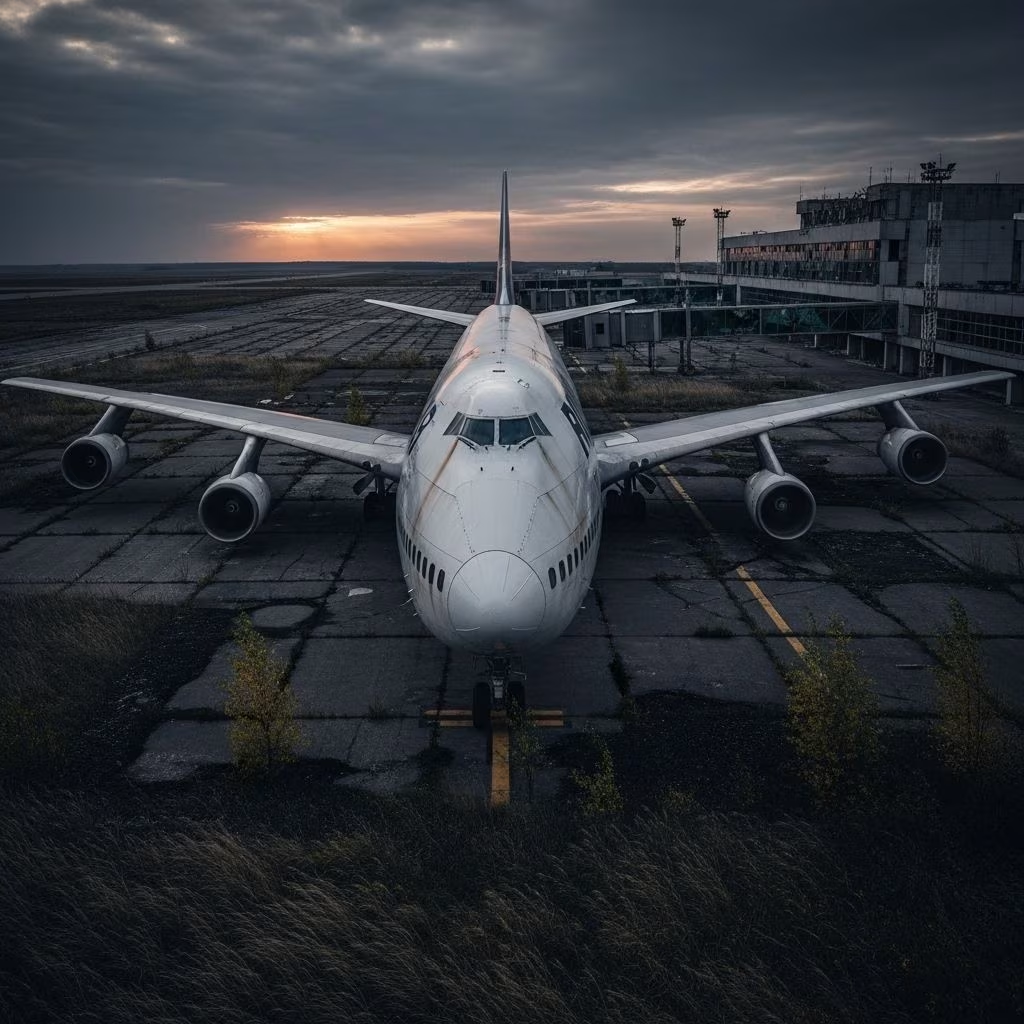
The Phenomenon of Ghost Flights in Europe
Across Europe’s skies, thousands of commercial airliners have taken to the air nearly empty—a striking phenomenon known as ghost flights. These are not rare, one-off events, but a persistent pattern with deep environmental, economic, and regulatory roots. Ghost flights have captured public concern for their role in wasting fuel, driving airline losses, and undercutting progress against climate change. Yet, as complex slot regulations and competitive pressures collide with public outcry, the practice continues to echo through the continent’s busiest airports.
What Are Ghost Flights—and Why Are They Flown?
Ghost flights refer to commercial flights operating with few or even zero passengers aboard. They surged into the spotlight in early 2020 as the COVID-19 pandemic gutted demand for air travel, but the practice is not new. Underlying the continued prevalence of ghost flights is one core issue: airport slot regulations.
- Airport slots are pre-scheduled permissions for airlines to take off or land at congested airports at a specified time.
- Slots are regulated through “use it or lose it” rules—typically requiring airlines to utilize at least 80% of slots in a given season to retain them for the next period.
- If airlines miss this threshold, they may lose access to valuable times at key airports, disrupting entire route networks.
During the pandemic, European regulators temporarily reduced utilization thresholds to as low as 50%-70% in recognition of plummeting demand. Nevertheless, tens of thousands of near-empty flights continued to be flown, as carriers scrambled to protect their competitive position at major airport hubs.
Beyond Slot Management: Other Causes for Ghost Flights
- Some ghost flights reposition aircraft or crews for operational reasons.
- Certain flights are run for maintenance checks or to keep pilot certifications current.
- Repatriation, cargo, or emergency operations account for a minority of cases.
Critics argue, however, that the scale and regularity of ghost flights indicate that slot retention remains the leading driver, especially when potential slot losses at main hubs can imperil entire airline route networks.
Quantifying the Problem: How Many Ghost Flights Are There?
Although airlines tend to emphasize that ghost flights are a small fraction of total operations, emerging data suggests the phenomenon is large and persistent.
| Country/Region | Ghost/Empty Flights (2019-2023/year) | Key Airports Impacted |
|---|---|---|
| United Kingdom | 5,000 flights with zero passengers; 35,000 with <10% capacity (since 2019) | Heathrow, Manchester, Birmingham, Luton, Bristol |
| Europe (Estimate by Greenpeace) | 100,000 ghost flights in just one winter season | Major hub airports across the EU |
Greenpeace revealed that in a single winter, up to 100,000 ghost flights may have crossed European skies—an estimate drawn from industry and regulatory reporting. UK Civil Aviation Authority (CAA) figures from 2019 onwards record a steady pulse of empty and near-empty flights, averaging over 1,300 per month, with particularly high numbers at primary international airports.
The Environmental Impact: Fuel Burn and Climate Change
While commercial aviation is responsible for about 2.5% of global CO2 emissions, ghost flights are emblematic of the industry’s inefficiencies. Even with few or no passengers, these jets burn thousands of gallons of fuel per trip.
- A single long-haul flight can emit as much CO2 as several hundred cars do in a year.
- Greenpeace estimates: one season of European ghost flights emitted as much carbon as 1.4 million cars annually.
- Beyond carbon dioxide, nitrous oxides and aviation contrails add further warming effects.
This wastefulness stands in sharp contrast to the urgent need to reduce emissions and meet EU climate targets. Flying empty jets for administrative reasons undermines the credibility and environmental commitments of airlines and the aviation industry at large.
The Economic Toll: Financial Losses and Inefficiency
Operating large commercial aircraft is expensive. Consider the costs that airlines incur per hour for fuel, crew, maintenance, airspace fees, and support services. With few or no passengers aboard, these outlays are rarely recouped through ticket sales or cargo revenue.
- In an industry already battered by pandemic losses, operating empty flights further strains finances.
- Every ghost flight diverts resources that could be better deployed or saved, adding to long-term operational inefficiencies.
Some airlines respond by offering heavy discounts in an attempt to fill seats, especially mirroring the ’empty leg’ deals familiar in private aviation, but with limited success in restoring profitability or sustainability.
The Regulatory Roots: Airport Slot Allocation and Market Competition
The slot allocation system’s origins lie in the need to fairly and efficiently manage takeoff and landing rights at highly congested airports—especially those in London, Frankfurt, Paris, Amsterdam, and other major hubs.
- Slots are frequently traded as assets—sometimes for millions of dollars—reflecting the market power conferred by favorable timings.
- Legacy “flag” carriers dominate the most valuable slots, with low-cost entrants fighting for access and visibility.
- Regulators apply “use it or lose it” rules to ensure that airlines don’t hoard scarce capacity.
However, the rigidity of current rules often leaves airlines with no practical way to protect essential slots except by flying near-empty planes, especially during periods of reduced demand, unexpected disruption, or network scheduling shocks.
The Pandemic Exception—and Its Shortcomings
During COVID-19 shutdowns, European and national regulators temporarily lowered slot utilization requirements. Initial relief moved the bar from 80% to 50%, later to 64%, and then 70%. Yet, for many carriers, these adjustments were not enough, particularly when faced with unpredictable travel bans or rapidly shifting border policies.
Airlines have argued for retaining more flexible rules and system-wide waivers, while some airports and governments fear that too much leniency could foster slot hoarding, discouraging competition and innovation.
Airlines, Airports, and Environmentalists: Differing Perspectives
The debate over ghost flights exposes deep divisions between stakeholders in the aviation ecosystem.
- Network carriers (e.g., Lufthansa, British Airways) argue they must maintain connecting traffic through big hubs to sustain long-haul routes and protect critical national infrastructure.
- Low-cost carriers (e.g., Ryanair, easyJet) claim that precious slots should be surrendered or filled with discounted seats instead of flown empty, opening the market to greater competition.
- Environmental groups and climate activists see every ghost flight as an emblem of regulatory dysfunction and unsustainable business practices, calling for urgent reforms and emissions reductions.
Airports, often reliant on traffic volume to fund infrastructure, have been cautious in supporting radical change, instead favoring incremental reforms or stricter enforcement of existing rules where appropriate.
Proposed Solutions: Ending Ghost Flights Through Reform
Observers agree that systemic reform is needed to end the wasteful practice of ghost flights, but the path forward is hotly debated. Proposed approaches include:
- Greater flexibility in slot rules during periods of extreme disruption (e.g., pandemics, wars, economic crises).
- Slot trading or auctions—E.g., economic models such as the London School of Economics “PAUSE” auction, which could allocate capacity via competitive bidding rather than administrative allocation.
- Mandatory surrender or temporary redistribution of unused slots.
- Environmental bans—Outright restrictions on short-haul flights where robust rail alternatives exist.
- Transparency enhancements—Requiring airlines and airports to publicly report unutilized slots and near-empty flights.
Each approach presents tradeoffs. Network carriers are wary of measures that might cut vital connectivity. Airports fear depressed revenues. Regulators worry about legal and practical hurdles. Environmentalists push for the boldest possible action, citing the urgency of the climate emergency.
Recent Industry Trends and the 2025 Outlook
Air traffic has rebounded sharply in Europe post-pandemic. However, bottlenecks, airspace restrictions (such as those resulting from geopolitical tensions), and chronic delays have severely tested airport and air traffic control capacity. According to recent overviews, flights are approaching or even exceeding pre-2020 volumes, yet operated within a constrained and less predictable environment.
- Delays, re-routings, and cancellations are now commonplace, especially at central European hubs.
- Capacity is being handled by only about 80% of pre-pandemic airspace, with many southern and central European countries managing more flights than in 2019.
The continued presence of ghost flights illustrates both the resilience and the unaddressed inefficiencies of the airline industry, making comprehensive reform ever more urgent.
Looking Ahead: Policy Recommendations and the Way Forward
To truly eliminate ghost flights, experts highlight several necessary policy shifts:
- Comprehensive slot system reform—Align slot retention requirements with actual demand and promote usable capacity allocation methods.
- Environmental integration—Prioritize emissions reduction and sustainability in all slot and route management decisions.
- Multimodal coordination—Encourage integration with high-speed rail, especially for short-haul domestic and intra-European routes.
- Increased data transparency—Stronger public reporting on slot use, flight occupancy, and airline practices.
- International cooperation—Europe’s airspace is highly interconnected, requiring joint action across national borders for enduring results.
Impact on Passengers and Travelers
While ghost flights are primarily an industry and policy concern, passengers also feel the effects:
- Flight scheduling irregularities, delays, and disruptions can increase when airlines focus on administrative flying instead of market demand.
- Ticket prices may rise as operational inefficiencies are passed on to fare-paying customers.
- Public trust in airlines’ environmental claims is undermined by continued reports of wasteful, empty flights.
Frequently Asked Questions (FAQs)
Q: What exactly are ghost flights?
A: Ghost flights are commercial flights flown with few or zero passengers, most often to retain valuable takeoff or landing slots at major airports.
Q: Why do airlines fly empty planes instead of cancelling routes?
A: To keep their slots. If they fail to use a minimum percentage of scheduled flights each season (usually 80%), they risk losing those slots to competitors.
Q: Are ghost flights still happening after the COVID-19 pandemic?
A: Yes. Although traffic has mostly rebounded, regulatory requirements and competitive pressures mean some ghost flights persist, especially during off-peak periods or network disruptions.
Q: What’s the environmental harm of ghost flights?
A: Ghost flights burn aviation fuel and emit greenhouse gases without delivering meaningful passenger or cargo benefit, driving up airline emissions and undermining climate action.
Q: What can be done to end ghost flights?
A: Policy reforms—such as modernized slot allocation, integration with rail, emissions-driven decision-making, and increased regulatory flexibility—are key to ensuring airlines fly only as needed and efficiently as possible.
Conclusion: Addressing the Ghost Flight Dilemma
As public awareness and scrutiny intensify, the era of ghost flights in Europe stands at a crossroads. Ending this practice will require stakeholder cooperation, smarter policy, and a renewed industry commitment to sustainability and operational efficiency. The environmental, social, and financial stakes could not be higher, making ghost flights a touchstone issue for the future of air travel.
References
- https://aviation.direct/en/globale-flugprobleme-im-ersten-halbjahr-2025-stoerungsquote-erreicht-neue-hoechststaende
- https://www.slashgear.com/1939219/ghost-flights-slot-holding/
- https://www.eurocontrol.int/summer-2025
- https://community.ricksteves.com/travel-forum/transportation/flightright-index-2025-ranking-of-worst-european-airlines
- https://www.euronews.com/travel/2025/09/22/airlines-struggle-with-strikes-and-aircraft-shortages-what-does-it-mean-for-your-travel-pl
- https://www.travelandtourworld.com/news/article/major-european-airports-hit-by-cyberattack-causing-chaos-for-travelers/


