The World’s First Vegan Violin Redefines Musical Craft
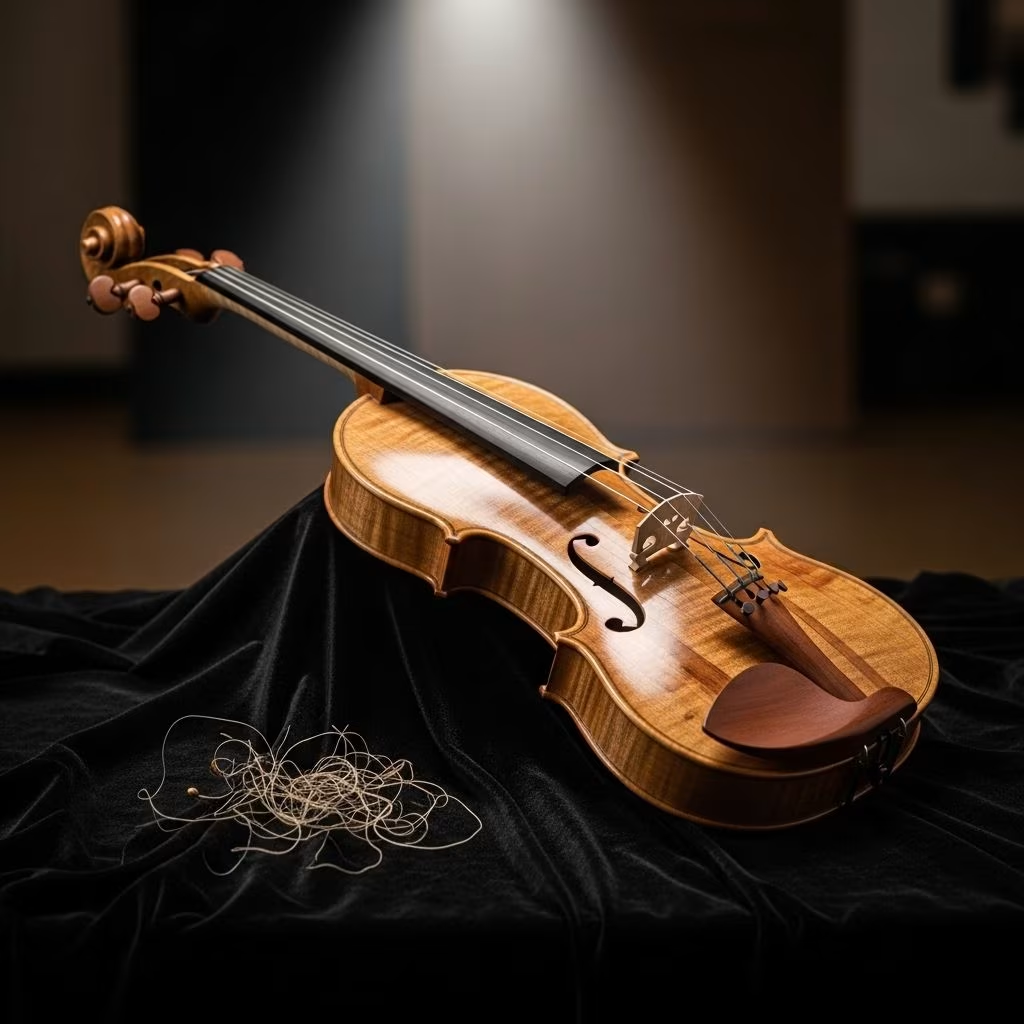
For centuries, the crafting of violins has involved a tight interweaving of artistry, acoustics, and animal-based materials. Yet as ethical consumer choices gain momentum, a new chapter in instrument-making has begun: the world’s first Vegan Society-certified violin. This pioneering instrument, hand-built by British luthier Padraig Ó Dubhlaoidh, promises musicians a way to harmonize their music with their morals, eschewing all animal-derived substances while maintaining traditional sound quality and beauty.
Why Create a Vegan Violin?
Historically, violins have relied heavily on animal products:
- Hide glues from connective tissues and bones, crucial for assembling and reinforcing the delicate wooden structure.
- Gut strings, usually derived from sheep or goat intestines, valued for their tone and response.
- Horsehair bows, plucked from horse tails to grip the strings and produce sound.
The ethical dilemma for vegan or vegetarian musicians has been acute: either compromise principles or forgo playing traditional instruments altogether. Ó Dubhlaoidh’s motivation sprang from this impasse, aiming to make music accessible to all, regardless of personal ethics. His solution is the first-ever violin to be officially approved by the Vegan Society, sparking global conversations about animal-free alternatives in the arts.
Rethinking Tradition: Materials in Classical Violin Making
The quintessential violin is a product of centuries-old artisanship, characterized by an intricate blend of wood, glue, strings, and bow hair. Typical construction materials include:
- Maple and spruce woods for the body
- Ebony for fingerboards, pegs, and tailpieces
- Animal-based adhesives (hoof or hide glue)
- Sheep gut, metal, or synthetic core strings
- Horsehair for bows
This established legacy has long anchored violin-makers, or luthiers, to animal products for practical and acoustic reasons. However, several of these materials raise ethical and environmental questions:
- Deforestation and endangered species (such as ebony)
- Animal welfare issues in sourcing guts and glues
- Sustainability of harvesting horsehair
Animal-Based Challenges
While alternatives exist for some components—such as metal or synthetic strings—inventors have hit bottlenecks with others, notably glue and bow hair. Hide and hoof glues offer unique advantages in strength and reversibility, enabling repairs and preventing wood from splitting. Most ethical attempts to bypass these have failed to match their acoustic performance and reliability, until now.
The Vegan Violin: Innovative Plant-Based Alternatives
Padraig Ó Dubhlaoidh’s vegan violin replaces every animal ingredient with environmentally friendly, plant-based substitutes, demonstrating innovation without sacrificing quality. His craft utilizes:
- Steamed pear wood, dyed black for purfling (the decorative inlay found on the violin perimeter)
- Poplar wood, another sustainable alternative to ebony in the fingerboard
- Wild berries and pure spring water as core ingredients for adhesives and coloration
- Plant-based glue, specially formulated to provide acoustic and physical stability, without the usual tension-inducing properties of animal-hide glues
Ó Dubhlaoidh’s studio separates vegan and non-vegan workspaces to avoid cross-contamination, underscoring his commitment to ethics and quality.
Vegan Certification and Impact
To ensure authenticity, the vegan violin underwent rigorous assessment and is now certified by the Vegan Society, the internationally recognized standard for vegan products. This assurance gives musicians confidence that:
- No animal testing or exploitation is involved
- No animal-derived ingredients are present at any stage
- Production processes abide by strict cruelty-free and sustainability principles
Does a Vegan Violin Sound Different?
One of the most critical benchmarks for any instrument is acoustic performance. Musicians and luthiers have long debated whether synthetic or plant-based materials can rival the warmth, clarity, and resonance of traditionally built violins. According to Ó Dubhlaoidh and expert listeners, the vegan violin matches—and arguably exceeds—these standards.
| Feature | Traditional Violin | Vegan Violin |
|---|---|---|
| Hide glue | Animal-based, induces tension | Plant-based, no such effect; improved acoustics |
| Gut strings | Sheep/goat intestines | Metal, silk, or synthetic core |
| Bows | Horsehair | Synthetic hair options |
| Purfling | Animal/wood blends | Pear wood, plant-based dyes |
The adhesive not only fulfills ethical requirements but reportedly “induces no powerful tensions on wooden components,” leading to acoustic improvements and potentially increasing instrument longevity. Musicians—vegans and non-vegans alike—are expressing interest for both sound and ethical reasons.
Environmental and Social Benefits
This breakthrough ripples far beyond vegan players. The use of renewable, locally sourced and non-animal materials addresses broad issues in sustainability:
- Reduces demand on endangered woods (e.g., ebony, ivory)
- Minimizes carbon footprint through use of local spring water and plant derivatives
- Fosters animal welfare and ethical awareness
- Encourages transparent and responsible manufacturing practices
Some manufacturers are taking similar steps, such as providing eco-friendly rosins and offsetting carbon emissions, demonstrating a wider shift toward green accessories and production.
Responding to Skepticism and Traditionalists
Despite its promise, the vegan violin has attracted skepticism from dyed-in-the-wool traditionalists. Common criticisms include:
- Concerns about longevity and aging compared to hide-glued violins
- Perceived compromises in acoustic quality
- Questions on whether synthetic bow hair can truly rival horsehair
- Arguments about the renewal and sustainability of certain animal products
Some maintain that “no synthetic hair is as good as horsehair,” though others have found synthetic alternatives satisfactory. With synthetic or silk-core strings and alternatives for thumb grips and purfling, most components can now be reimagined for vegans and environmentalists, but opinion remains divided on whether such changes dilute authenticity.
The Vegan Instrument Trend: Broader Implications
The late 2010s and early 2020s have seen a growing market for sustainable instrument accessories and ethical sourcing:
- Luthiers increasingly source woods from sustainable plantations.
- Bow tips and fingerboard details now often utilize recycled plastics or metals instead of ivory or endangered species.
- Rosin manufacturers now offer biodegradable, carbon-neutral options.
- Separate workshops, equipment and strict adherence to vegan standards are becoming best practice among ethical instrument builders.
This shift confirms a rising demand among musicians—not only vegans—for instruments that reflect their values and environmental concerns.
Practical Considerations for Vegan Musicians
The emergence of vegan instruments and accessories gives vegan and vegetarian musicians genuine agency over their choices:
- Wide availability of metal or synthetic strings (gut strings now optional)
- Alternative materials for tailpiece hangers and bow tips
- Eco-friendly rosins as viable replacements for traditional rosin
- Plant-based glues with comparable acoustic properties
However, the market is still young, and availability remains variable by region and supplier. Vegan musicians must assess product claims and certifications carefully.
Sustainable Sourcing: Beyond Veganism
Sustainability in instrument-making isn’t limited to the absence of animal products. Many luthiers are now focused on:
- Reducing deforestation (selecting woods from managed forests or using alternatives like pear and poplar)
- Minimizing chemical treatments and waste
- Offsetting production-related emissions
This holistic approach encourages musicians and makers—vegan and non-vegan alike—to reconsider every stage of design and production.
The Future of Vegan and Eco-Friendly Instruments
The world’s first vegan violin is more than a cultural statement—it’s a technical milestone that may pave the way for broader adoption of ethical and environmental principles across all instrument families.
- Large orchestras and conservatories may soon offer vegan-friendly instruments and accessories.
- Luthiers are innovating new recipes for plant-based glues and sustainable woods.
- Musicians have increased power to align their passions with their principles.
- Industry certifications and transparency practices are solidifying consumer trust.
While the process is incremental, the intersection of tradition and innovation promises a future where artistry and ethics are perfectly in tune.
Frequently Asked Questions (FAQ)
Q: What makes a violin vegan?
A vegan violin is crafted with no animal-derived materials, including glues, strings, bow hair, and decorative elements; every component is either plant-based, synthetic, or sourced responsibly from the environment.
Q: Is the sound quality affected by vegan materials?
Expert and listener reviews suggest that the sound quality of Padraig Ó Dubhlaoidh’s vegan violin matches or, in some acoustic respects, exceeds that of traditional violins, particularly thanks to innovative plant-based glue.
Q: What are the main materials used?
Steamed pear wood, poplar, wild berries, pure spring water, and a special plant-based glue are the primary materials, with synthetic strings and bow hair offered as animal-free alternatives.
Q: Is a vegan violin truly sustainable?
The vegan violin significantly reduces animal exploitation and the carbon footprint by using local and renewable resources and plant-based production techniques. Sustainability extends to careful wood sourcing and carbon-neutral manufacturing.
Q: Are there vegan options for other instruments and accessories?
Yes. Companies now offer eco-friendly rosins, synthetic strings, recycled bow tips, and faux-leather grips across instrument types. However, certification and full transparency practices vary, so musicians should research suppliers carefully.
Conclusion: Blending Ethics, Innovation, and Artistry
Ó Dubhlaoidh’s vegan violin stands as an emblem of how modern ethics, environmental stewardship, and technical innovation can converge to reshape even the oldest traditions. As instrument-makers and musicians quietly rewrite the rules for artistry, the vegan violin offers hope for a more inclusive, sustainable, and harmonized world of music.
References
- https://slippedisc.com/2022/01/meet-the-worlds-first-vegan-approved-violin/
- https://www.thestrad.com/being-green-sustainable-string-playing/14962.article
- https://www.violinschool.com/vegan-violin-playing/
- https://www.violinist.com/discussion/archive/18228/
- https://maestronet.com/forum/index.php?%2Ftopic%2F350886-vegan-violin-worlds-first%2F