


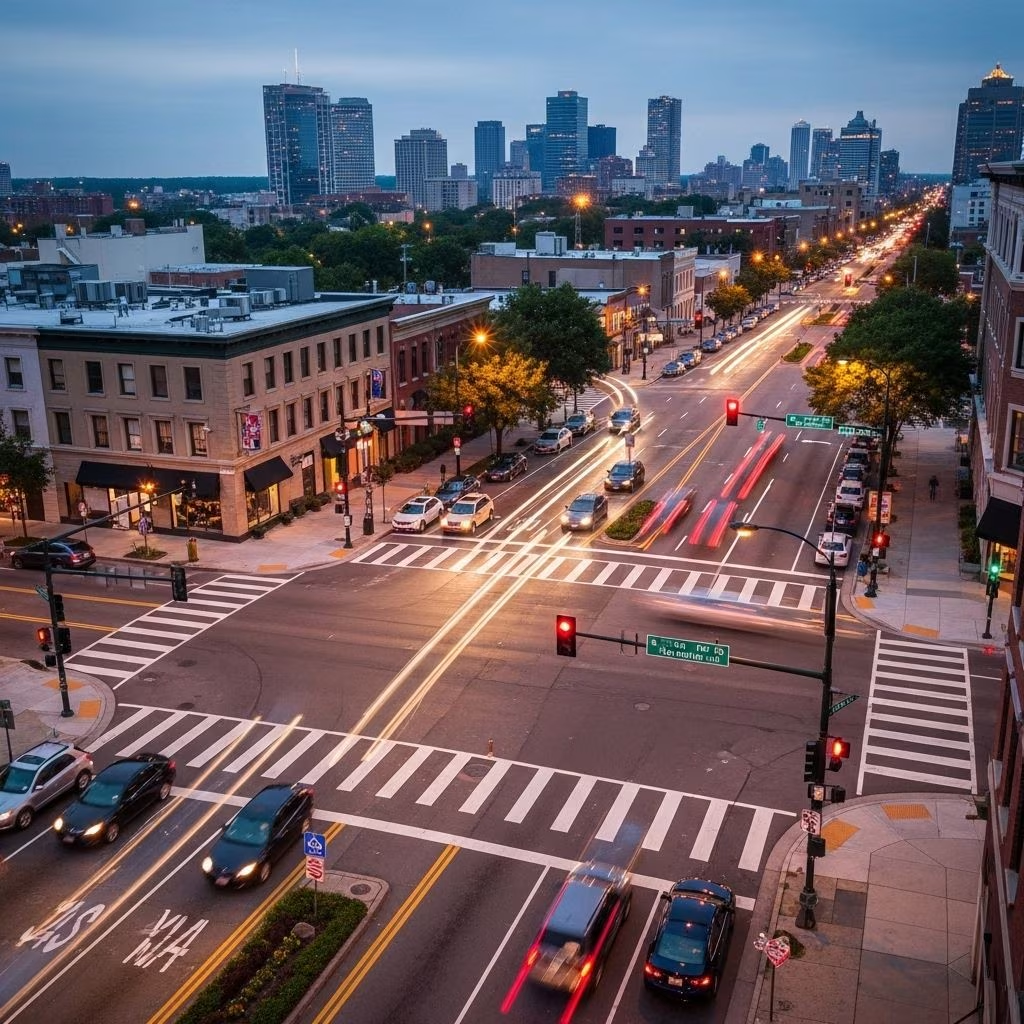
Why Urbanists Advocate for the End of One-Way Streets
For decades, one-way streets have dominated the design of many North American cities, especially those seeking a solution for congestion and traffic efficiency. However, a growing body of research and activism is urging cities to reconsider this approach. Evidence shows that converting streets to two-way traffic can yield a wide array of benefits, including improved safety, higher property values, stronger neighborhood vibrancy, and better economic outcomes for local businesses.
The History and Rationale Behind One-Way Streets
One-way streets became popular in the mid-20th century, coinciding with the rapid rise of automobile use in urban cores. City planners saw them as tools to accelerate traffic flow, clear congestion, and simplify driving patterns—particularly for commuters moving to and from employment centers. For many, this measure was synonymous with modernization and economic progress.
- Traffic Efficiency: One-way systems reduce the number of potential traffic conflicts, theoretically allowing for faster vehicle movement.
- Congestion Relief: By funneling traffic along more predictable routes, cities sought to avoid gridlock in crowded urban centers.
- Simplified Signage: Directional signage was easier to maintain, and street design became more standardized.
Yet these perceived advantages came with significant hidden costs. As evidence grows, the once-unquestioned wisdom of one-way streets has become subject to re-examination.
Negative Impacts: Safety, Livability, and Equity
A mounting body of data demonstrates that one-way streets are linked to several concerning urban problems, from increased traffic accidents to social inequity and property neglect. The following core issues are frequently cited in case studies and urban planning literature:
- Unsafe Conditions for Pedestrians and Cyclists: Studies consistently find that one-way streets allow for higher vehicle speeds, sometimes encouraging drivers to treat neighborhoods as thoroughfares rather than shared spaces. Faster cars increase the risk and severity of collisions, disproportionately endangering vulnerable road users such as pedestrians and cyclists.
- Reduced Property Values and Livability: Research in Louisville, Kentucky shows that blocks converted to one-way suffered lower property values and higher rates of home abandonment, crime, and poorly maintained infrastructure. Two-way street conversions were associated with increased property values, reduced crime, and improved neighborhood maintenance.
- Social Equity Impacts: Fast-moving traffic and unwelcoming urban design can deter community engagement, disproportionately affecting marginalized populations who depend on walking, biking, and public transit.
- Broken Neighborhoods: Signs of distress—such as poorly maintained sidewalks, abandoned homes, and loss of street trees—are more common on one-way thoroughfares than in neighborhoods featuring slower, calmer two-way streets.
Case Study: East Breckinridge, Louisville
The transformation of East Breckinridge Street in Louisville provides a telling example. After converting several multi-lane segments to one-way traffic, researchers recorded the following outcomes over 13 blocks:
- Increase in crime and traffic accidents
- Rise in foreclosures and abandoned structures
- Decrease in property values
- Poorly maintained sidewalks, often unusable for strollers, wheelchairs, or bikes
- Reduced presence of street trees, impacting air quality and aesthetics
Conversely, segments converted back to two-way flow experienced lower speeds, improved safety, and more mature trees, contributing to a healthier, happier street environment.
The Role of Street Trees in Safer, More Vibrant Streets
Street trees are far more than ornamental; they play a systemic role in how streets function and how neighborhoods thrive. Studies reveal several crucial functional benefits of street trees:
- Traffic Calming: Trees narrow the perceived width of the road, encouraging drivers to reduce speed. Lower speeds lead to fewer accidents and safer crossing conditions.
- Improved Pavement Longevity: Trees provide shade that helps pavement maintain a stable temperature, extending its lifespan by up to 60%.
- Economic Activity: Businesses on tree-lined streets enjoy up to 14% higher income compared to those on treeless roads.
- Stormwater Management: Tree roots create more absorbent soil, reducing street flooding and helping filter pollutants out of urban runoff.
- Sense of Place: Trees encourage walking, biking, and community interaction, transforming streets into public spaces rather than conduits for fast-moving vehicles.
A study of Breckinridge Street revealed stark differences in tree count between one-way and two-way blocks, with the latter sporting more robust vegetation and, as a result, more attractive and healthier street environments.
| Block | One or Two Way | Number of Trees |
|---|---|---|
| 1200 | One | 24 |
| 1300 | Two | 16 |
| 1400 | Two | 18 |
| 1500 | Two | 31 |
Common Myths About One-Way Streets Busted
- Myth: One-way streets are always safer for cars.
Fact: While traffic flow may be smoother, accident rates—especially involving pedestrians and bicycles—are typically higher on one-way streets. - Myth: One-way streets boost economic activity.
Fact: Evidence suggests two-way streets better support local businesses by increasing foot traffic and accessibility. - Myth: Tree planting is a luxury for aesthetics.
Fact: Trees are vital for street safety, infrastructure longevity, stormwater management, and urban character. - Myth: One-way streets reduce congestion.
Fact: Any reduction in congestion often comes at the cost of neighborhood health, walkability, and community vibrancy.
Benefits of Converting Back to Two-Way Streets
- Slower Car Speeds: Vehicle speeds drop when streets transition to two-way, reducing accident severity and making streets safer for all users.
- Increased Livability: Calmer streets encourage local investment, better property upkeep, and stronger social ties among neighbors.
- Economic Revitalization: Business districts see improved sales and more pedestrian activity after two-way conversions.
- Greater Accessibility: Two-way streets are easier to navigate for all modes, including transit, delivery vehicles, and emergency services.
- Crime Reduction: Slower traffic and greater neighborhood engagement correlate with lower rates of crime.
- Better Environment: More trees and green infrastructure increase the attractiveness and health of urban communities.
Table: One-Way vs. Two-Way Street Outcomes
| Feature | One-Way Street | Two-Way Street |
|---|---|---|
| Traffic Speed | High | Lower |
| Accident Rate | Higher | Lower |
| Pedestrian Safety | Poor | Improved |
| Property Values | Decrease | Increase |
| Crime Levels | Higher | Lower |
| Tree Coverage | Less | More |
How Cities Are Rethinking Their Streets
Across the United States and beyond, cities are embracing street conversions—returning one-way streets to two-way traffic and implementing complete streets policies. These reforms address not only transportation efficiency, but broader community well-being:
- Converting streets back to two-way increases overall traffic flow, but decreases accident rates and supports the economic health of businesses and residents.
- Complete street policies invest in infrastructure for all users—vehicles, transit, bikes, and pedestrians—making urban cores more inclusive and equitable.
- Adding green spaces and street trees enhances both the health and beauty of city neighborhoods.
Notable cities such as Louisville, Dallas, and Atlanta have reported significant improvements—lower crime, higher property values, and more resilient commercial corridors—after reversing one-way street segments.
Challenges and Considerations in Street Conversion
While the benefits of two-way street conversion are compelling, cities must address technical and social challenges in planning:
- Traffic Engineering: Proper design is required to accommodate turns, loading zones, and transit stops.
- Community Engagement: Residents and business owners should be involved in decisions, as changes can affect parking, traffic patterns, and perceived accessibility.
- Infrastructure Investment: Conversion projects may require upgrades to intersections, signaling, and sidewalks.
Despite these hurdles, conversions often pay off with dividends for safety, equity, and neighborhood stability.
Frequently Asked Questions (FAQs)
Q: Do one-way streets really lead to higher accident rates?
A: Yes, studies show that one-way streets encourage higher speeds and create more unsafe crossing conditions for pedestrians and cyclists. After conversion to two-way, accident rates drop noticeably.
Q: Will businesses lose customers if the street is converted?
A: Evidence suggests the opposite—two-way street conversions improve accessibility, increase foot traffic, and boost business revenue by up to 14% on tree-lined streets.
Q: Aren’t street trees just for aesthetics?
A: No. Trees fundamentally alter driver behavior, reduce flooding, filter air and water, and extend pavement life, making them essential urban infrastructure.
Q: What if my city has traffic congestion concerns?
A: While congestion can be a challenge, two-way street systems can balance vehicle flow with safety and neighborhood quality, especially when combined with other traffic calming and transit strategies.
Q: Is converting to two-way always feasible?
A: It depends on the context—factors such as block length, intersection design, and transit routes matter. Most cities find multiple segments where conversion brings clear benefit without major disruption.
Conclusion: Rethinking Streets for People, Not Just Cars
The evidence is clear: prioritizing two-way streets, greener corridors, and complete streets makes cities safer, more vibrant, and equitable. For planners, advocates, and residents, the time is right to challenge old assumptions and demand urban environments that support thriving, resilient communities.
References
- http://www.preservationkentucky.org/wp-content/uploads/2016/08/One_Way_Two_Way_Breckinridge.pdf
- https://socialsciences.uchicago.edu/news/one-way-or-two-way-change-two-way-increases-traffic-decreases-accidents-increase-property
- https://www.kittelson.com/ideas/myth-busters-are-street-trees-just-for-looks/
- https://trellis.net/article/evolution-tree-hugger/


